

I’m energized by the momentum I’m seeing at the intersection of behavioral analytics and AI workflows. "Chanaka is an AI Engineer at Amplitude, where he’s building the MCP server that brings Amplitude’s behavioral context directly into your AI tools." That single sentence captures a strategic inflection point for product organizations: AI that finally understands user behavior at the moment of decision.
Why does this matter? When behavioral analytics flow natively into our AI tools, we move from generic assistants to product-savvy copilots. Instead of prompting blind, I can ground my questions in Amplitude analytics—segment performance, cohort trends, and event funnels—so AI answers reflect real customer journeys, not hypotheticals. The result is sharper prioritization, faster discovery, and tighter feedback loops that directly support product-led growth.
From a technical standpoint, an MCP server becomes a clean, secure interface for LLMs to access behavioral analytics as-needed. That enables a retrieval-first pipeline that reduces hallucinations, improves context window management, and elevates prompt engineering quality. It also unlocks agentic AI patterns—where the assistant autonomously requests the right behavioral context to diagnose activation drops, spot anomalies, or recommend experiments. In short, it’s a unified analytics platform meeting LLMs for product managers where we actually work.
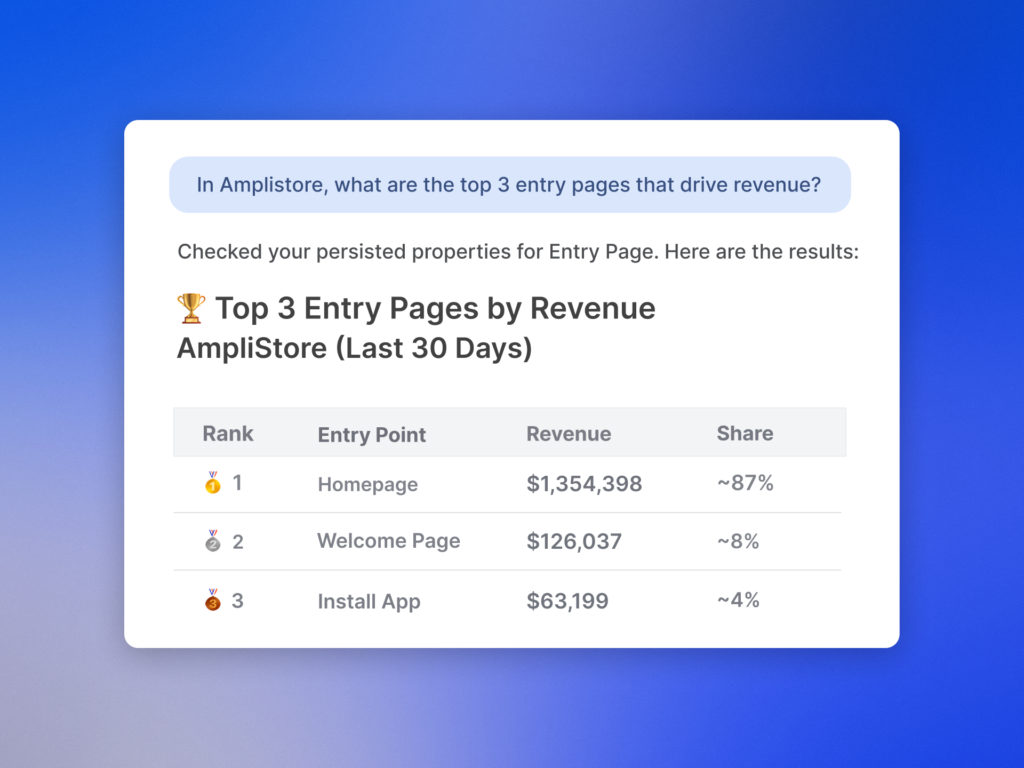
In day-to-day product management, this translates into practical wins. I can ask, “Which onboarding step is blocking user activation for the SMB segment?” and get an answer grounded in behavioral analytics with relevant visualizations or funnels. I can explore retention analysis by cohort without switching tools, then iterate on hypotheses and next-best actions inside the same AI-driven workflow. These tighter loops materially improve decision quality and team velocity.
There are governance considerations, of course. I advocate clear data access policies, strong privacy-by-design controls, and well-defined scopes for what the MCP server can retrieve. Start with high-value, low-risk datasets, pilot with a focused team, and instrument eval-driven development to measure accuracy, latency, and business impact. When done right, the AI Strategy becomes an execution engine—not just a slide.
My playbook: begin with one or two high-impact questions (e.g., activation blockers or churn drivers), wire them into the MCP-powered AI workflow, and quantify time-to-insight and decision quality improvements. As wins accumulate, expand to roadmap shaping, opportunity sizing, and experiment generation. The promise here is compelling—AI that doesn’t just talk about the product, but truly understands how customers use it, and helps us build the right things faster.
Inspired by this post on Amplitude – Best Practices.


Leave a Reply