I just finished listening to "Taste – All Things Product Podcast with Teresa Torres & Petra Wille," and as a product leader shipping AI-powered capabilities at HighLevel, Inc., I wanted to pressure-test the sudden obsession with "taste."
If you're curious, you can listen to this episode on Spotify or Apple Podcasts.
The core question landed perfectly for our moment: Is "taste" the must-have skill of the AI era — or just the latest tech buzzword in a world where AI is eating through design, delivery, and discovery?
Teresa pushes back hard, highlighting how slippery the term can be. "It's just this month's flavor of founder mode." She points out that "taste" is rarely defined, can't be easily taught, and too often becomes shorthand for "my preference trumps yours." Just as importantly, "It's not about your taste. It's about your customer's taste."
Petra adds needed nuance from years in the craft: pattern-recognition is real, and some people do develop sharper product sense over time. As she put it, "I am a strong believer that you develop product sense and taste over time. It's never finished."
Both threads lead back to familiar roots in product: product sense, founder mode, and the enduring myth of the lone visionary. They even grapple with the big question on everyone’s mind—Will AI Eat Taste Too?—and where that leaves product teams navigating GenAI, LLMs for product managers, and evolving product strategy.
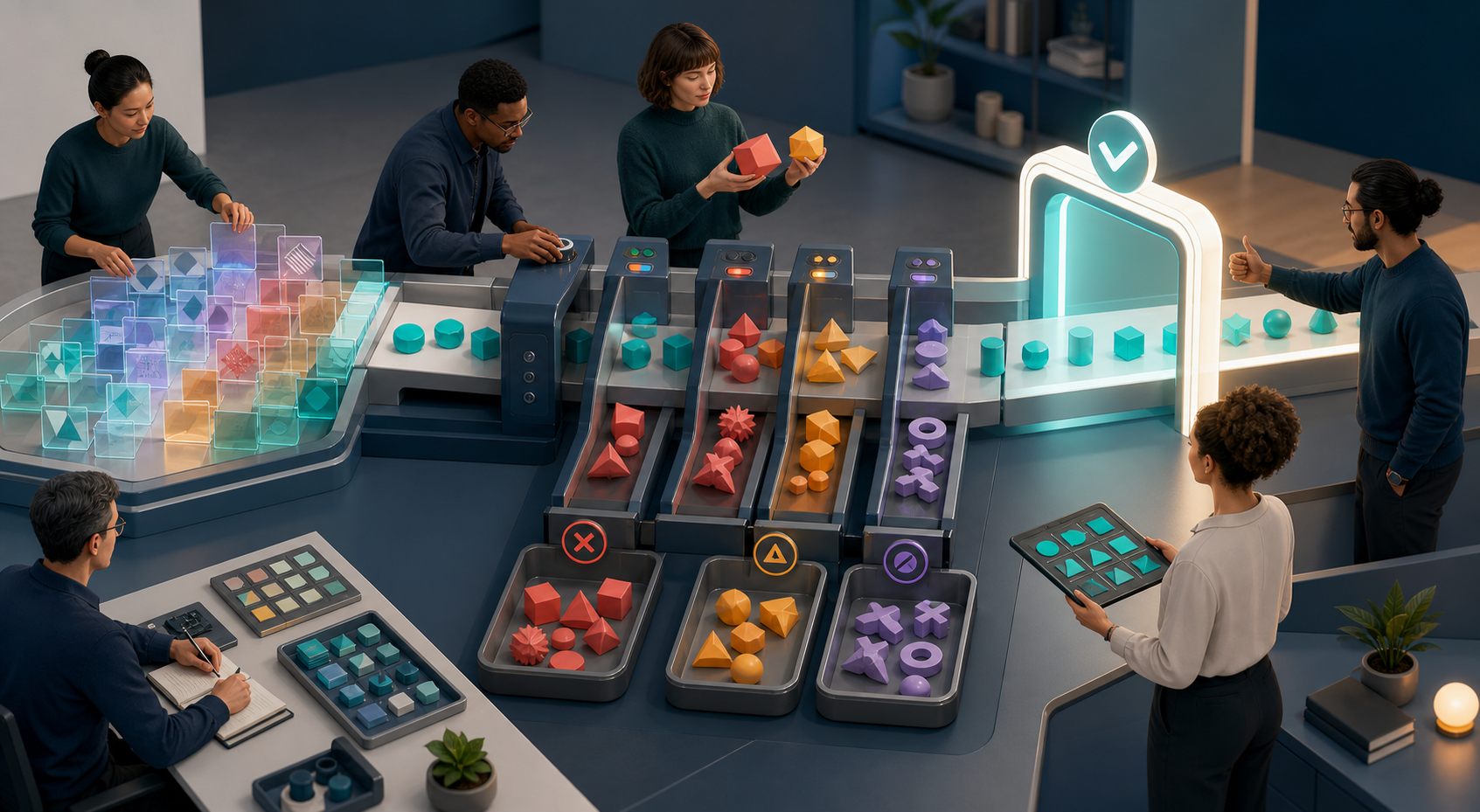
Here’s my take. "Taste" can be useful as a personal north star, but it is not a decision system. In my teams, we bias toward evidence: continuous discovery, customer interviews, discovery synthesis with opportunity solution trees, and tight collaboration in product trios. Opinion can start the conversation, but evidence should end it.
Practically, that means investing in the skills that compound: Discovery skills — understanding customers, matching solutions to real needs. Human-to-human interaction skills. Learning to collaborate with AI effectively. Critical thinking and judgment grounded in evidence.
On AI collaboration specifically, we treat GenAI as a force multiplier, not a decider. We prototype with AI to explore breadth, then narrow with qualitative and quantitative signals, ablation-style experiments, and clear success criteria. The bar I hold myself to is simple: taste without evidence is just opinion.
Three lines I underlined from the conversation:
"It's just this month's flavor of founder mode." — Teresa Torres
"It's not about your taste. It's about your customer's taste." — Teresa Torres
"I am a strong believer that you develop product sense and taste over time. It's never finished." — Petra Wille
If you want to go deeper, these references are helpful for sharpening judgment without falling into the "great man" theory trap.
Follow Teresa Torres: https://ProductTalk.org
Follow Petra Wille: https://Petra-Wille.com
Founder mode
Marty Cagan: Founder-Style Leadership
Vercel/v0 CEO Guillermo Rauch on building taste: from Lenny Rachitsky’s Linkedin post
Continuous discovery (Read Teresa’s Everyone Can Do Continuous Discovery—Even You! Here’s How
The "great man" theory
Steve Jobs and the myth of the lone product visionary
Have thoughts on this episode? Leave a comment below and share how your team balances product sense with evidence in the age of AI.
Inspired by this post on Product Talk.