I see the Director of Product, Growth & AI at Amplitude as a mandate to operationalize "viral and core growth strategies, user acquisition, and product engagement" with precision. From my vantage point, that means building a rigorous, metrics-first operating system grounded in Amplitude analytics and product-led growth principles, then layering in an AI Strategy that personalizes experiences without sacrificing control or safety.
I start by defining a clear North Star Metric and mapping a driver tree to expose causal levers across acquisition, activation, engagement, retention, and monetization. With behavioral analytics and cohort analysis, I quantify which user behaviors correlate with long-term value. I operationalize rapid experimentation through A/B testing with sensible minimum detectable effect (MDE) thresholds, guardrail metrics, and sequential testing to ensure we move fast while preserving measurement integrity.
For "viral and core growth strategies," I lean on durable growth loops more than one-off hacks. Viral loops might include collaboration invites, user-generated content, and shareable artifacts that make the product more valuable as it spreads. Core growth centers on frictionless activation: guided onboarding, in-app guides, product tours, progressive disclosure, and judicious tooltip design that connects users to the ‘aha’ moment quickly. Session replay and funnel instrumentation help isolate friction and systematically remove it.
On user acquisition, I connect performance channels and go-to-market strategy tightly to in-product activation. Rather than optimizing for clicks, I optimize for post-signup behaviors that predict retention. This includes improving landing page-message-product congruence, refining qualification (so top-of-funnel aligns with downstream value), and orchestrating lifecycle messaging that nudges users toward key activation milestones.
To deepen product engagement, I focus on leading indicators of retention and feature adoption. I segment by jobs-to-be-done and intent, then personalize in-app prompts to surface the right capability at the right moment. Retention analysis, pathing, and funnel breakouts inform which nudges to deploy and where—whether that’s smarter checklists, contextual education, or lightweight in-product interventions that turn sporadic usage into reliable habits.
AI raises the ceiling on what’s possible here. With a thoughtful AI Strategy, I use gen ai to personalize onboarding flows, recommend next-best actions based on behavioral signals, and summarize complex activity patterns into actionable insights for the team. I maintain strict measurement: every AI intervention ships behind feature flags, is evaluated through controlled experiments, and adheres to privacy-by-design principles. The outcome is a system that learns continuously while staying aligned to business and user outcomes.
Execution is where strategy becomes real. I rely on empowered product trios, continuous discovery with customers, and outcome-focused roadmaps that tie directly to the driver tree. This keeps the organization moving in sync: engineering prioritizes the highest-signal experiments, design accelerates comprehension and task success, and product ensures each release strengthens the core loop rather than adding ornamental features.
Ultimately, the blueprint is simple and disciplined: anchor on "viral and core growth strategies, user acquisition, and product engagement," quantify what matters with behavioral analytics, and iterate through well-instrumented experiments. Combine that with targeted AI augmentation, and you create a compounding growth engine that is both measurable and resilient.
Inspired by this post on Amplitude – Perspectives.
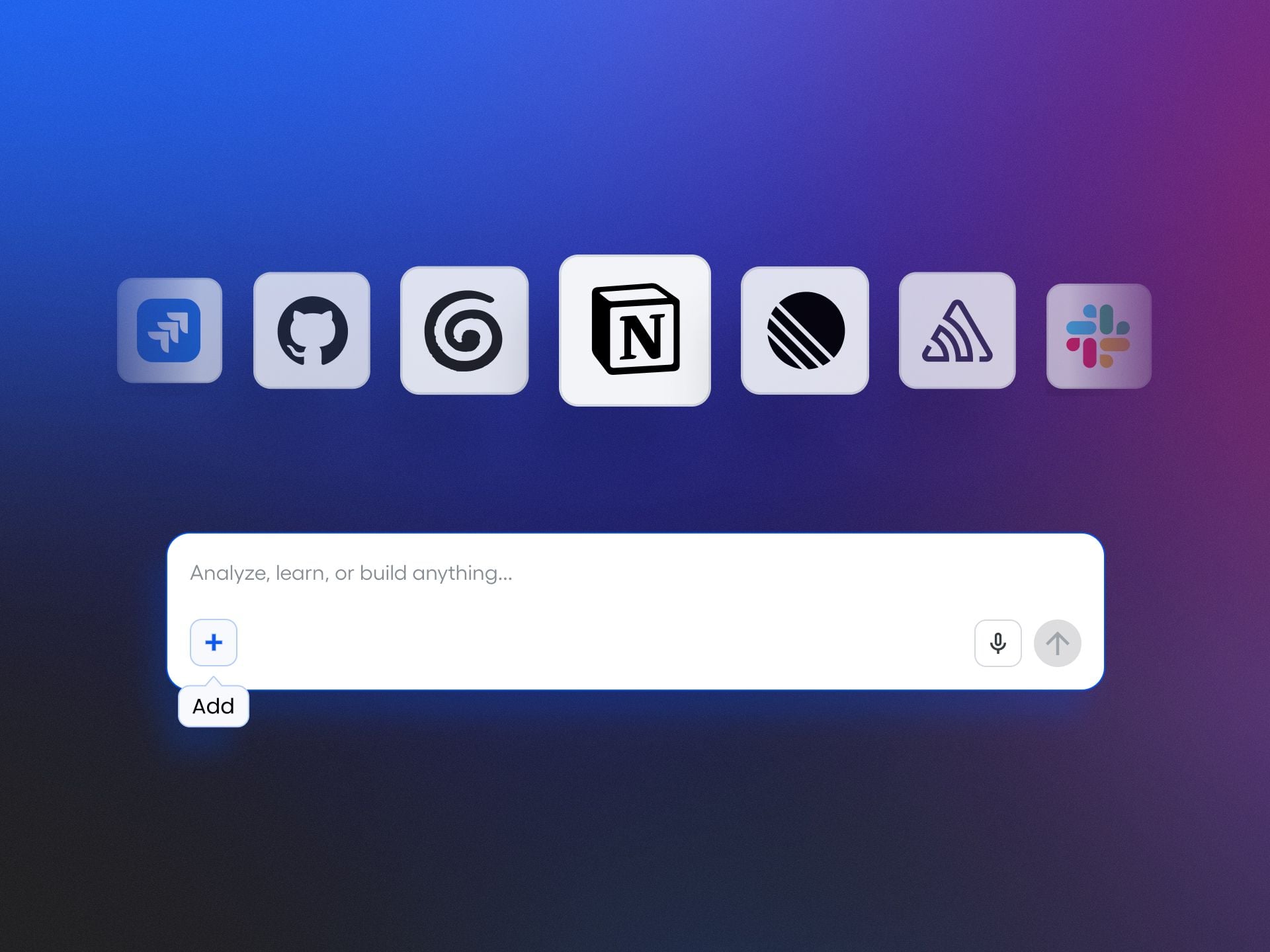
I’ve led enough multi-tool product organizations to know how quickly momentum erodes when insights and actions live in different places. When my teams bounce between Notion, Atlassian, Slack, Linear, and analytics dashboards, we pay a real tax in context switching. That’s why I’m excited about what Amplitude is enabling with Agent Connectors—bringing our daily work and our data-driven decisions into one fluid, agentic AI workflow.
Connect Notion, Atlassian, Slack, Linear, and more to Amplitude's Global Agent. Get richer analysis and take action across tools without leaving Amplitude.
Practically, this means I can treat Amplitude analytics as a unified analytics platform where analysis and execution finally meet. Instead of exporting charts or copying insights into docs, I can drive Agent Analytics directly from the same surface where I manage behavioral analytics, reducing friction and accelerating decisions. For my product strategy, that’s a meaningful shift—from “insight later” to “insight-to-action now.”
Here’s how I’d use it on a typical day: I ask the agent to synthesize signals from recent feature usage, spotlight anomalies, and then draft a concise summary for our Slack channel. In the same flow, I can prompt it to reference our Notion specs for context and queue next steps in Linear, keeping Atlassian stakeholders looped in without any extra swiveling between tabs. The value isn’t just faster execution; it’s tighter alignment across teams because the analysis and the plan live together.
From an operating model perspective, this is how I scale AI workflows responsibly. I can define clear prompts, approval paths, and ownership so the agent augments—not replaces—expert judgment. Data governance and permissions remain front and center: the agent sees what your teams are allowed to see, and we maintain auditability on critical workflow steps. The outcome is a trustworthy, repeatable system that compounds learning over time.
If you’re exploring agentic AI for product teams, start small and instrument your ROI. Pick one or two connectors (Slack and Notion are great first choices), define a measurable workflow—like pushing weekly retention insights and creating prioritized follow-ups in Linear—and iterate using continuous discovery. In my experience, the first wins appear as reduced time-to-insight, fewer meetings to align, and faster cycle time from observation to shipped change.
The big picture is simple: bring your work to your analytics, and your analytics to your work. With Agent Connectors, Amplitude’s Global Agent helps close the loop from understanding behavior to taking action—without leaving the place where your insights are born.
Inspired by this post on Amplitude – Best Practices.
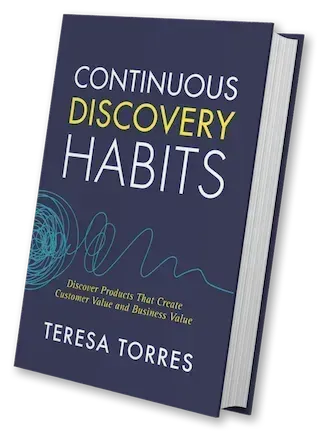
I’m celebrating the five-year anniversary of Continuous Discovery Habits by inviting you to read it with me this June. As someone who leads product management and coaches product trios, I’ve seen how a shared discovery practice tightens alignment, speeds up learning, and drives outcomes. This month, we’ll go deep on prioritizing opportunities—not solutions—and I’ll guide you step by step so you can apply the ideas on your own team.
Each month, I’m releasing an in-depth reading guide that includes:
We’ll discuss each month’s reading in the comments, and we’ll gather quarterly on a live call to unpack real-world applications, trade wins and missteps, and keep the momentum going.
Joining late? No problem. I monitor the comments on each reading guide throughout the year. Start with the current month or go back to January—whatever works for you. Ask for help, share what’s working, and connect with other readers at any point.
If you want to participate, grab a copy of the book (or dust off your old copy), share the “Spread the Love” videos with your team, block time for the exercises, and register for the community sessions. Let’s do this.
This Month’s Reading
Chapter:
Estimated reading time: ~16 minutes
This month's chapter will introduce you to:
Need a copy? Grab the book
Share the Love with Friends and Colleagues
We learn best in community. Use these short videos to spread the key ideas across your product trios, engineering partners, and stakeholders. Invite them to read along with you so your discovery cadence—and your product strategy—advance together.
Reflect & Discuss What You Read
When we reflect and discuss what we read, we absorb more and apply it faster. This chapter challenges a deeply ingrained habit: prioritizing solutions. I’ve been in those meetings—spreadsheets full of features, heated roadmap debates, and a creeping sense that we’re optimizing outputs rather than outcomes. The shift to opportunity-first thinking changed how my teams frame bets, sequence discovery, and communicate product strategy.
Individual Reflection
Team Discussion
Put It Into Practice
This month is all about shifting from solution-first to opportunity-first thinking. These short, focused exercises will help your product trio practice opportunity prioritization and improve decision speed without sacrificing product discovery rigor.
Exercise: Map Your Roadmap to Opportunities
Time: 45 minutesDo this: With your product trio
Take your current roadmap or backlog and work backwards. For each planned feature or solution:
This exercise often reveals that you're either:
Use these insights to inform your next prioritization conversation.
Exercise: Practice Two-Way Door Thinking
Time: 30 minutesDo this: With your product trio
Choose 3-5 recent or upcoming product decisions. For each one, discuss:
The goal is to calibrate your team's decision-making speed. Two-way door decisions should be made quickly with "just enough" evidence. One-way door decisions deserve more deliberation and data.
Go Deeper: Additional Reading
If you prefer an audio summary of this month’s reading, including the book chapters and the following resources, I’ve included an audio version for members at the bottom of this post.
Related In-Depth Guides
Supplementary Reading
Related Courses
Our Live Discussion Schedule
Our live discussion sessions are for registered members. Sessions are not recorded. Invitations will go out two weeks before the scheduled event—reserve time now.
Audio Summary
Prefer to listen? Stream the audio overview here: June — Prioritizing Opportunities (audio).
Ready to put continuous discovery into action? Grab the book, share the videos with your team, schedule the exercises, and join the community sessions. Opportunity-first product strategy is a muscle we can build together.
The chapters we will be readingA preview of the most important concepts we'll be learning aboutShort videos you can share with friends and colleagues to help spread the ideasIndividual and team discussion questions to help you absorb and engage with the readingTeam exercises to help you put the ideas into practiceAdditional reading to help you go deeper on the core ideasChapter 7: Prioritizing Opportunities, Not SolutionsWhy product strategy happens in the opportunity space, not the solution spaceHow to focus on one target opportunity at a time to deliver value iterativelyUsing the tree structure to simplify prioritization decisionsThe four criteria for assessing opportunities: sizing, market factors, company factors, and customer factorsWhy treating prioritization as a messy, subjective decision leads to better outcomes than scoring formulasThe concept of two-way door decisions and how they apply to opportunity prioritizationWork on one small opportunity at a time – Reduce your batch sizeGetting started with compare and contrast decisions – Choose the right target opportunityTurn big intractable problems into smaller, more solvable problems – The power of decompositionThink about your team's current roadmap or backlog. How much of your time is spent prioritizing features versus understanding and prioritizing customer opportunities? What would change if you flipped that ratio?Reflect on the last time you made a product decision. Did you treat it as a one-way door (irreversible) or a two-way door (reversible)? How did that framing affect your decision-making process and timeline?Consider the four assessment criteria (opportunity sizing, market factors, company factors, customer factors). Which of these does your team currently emphasize most? Which do you tend to overlook or underweight?As a team, list the top 5-10 items on your current roadmap or backlog. For each one, try to identify the underlying customer opportunity it addresses. If you can't clearly articulate the opportunity, what does that tell you about how you're making decisions?The chapter argues against scoring formulas (like RICE or ICE) for prioritization, calling them "made-up math." If your team uses a scoring system, discuss: What is it really measuring? Does it help you make better decisions, or does it just make subjective decisions feel more objective?Walk through a recent prioritization decision. Did you assess options in isolation ("should we build this?") or compare and contrast them? How might your decision have been different with a compare-and-contrast approach?Identify the customer opportunity it's meant to addressWrite it as something a customer might say (e.g., "I can't find anything to watch" not "We need better search")Look for patterns: Are multiple solutions addressing the same opportunity? Are some solutions disconnected from any clear customer need?Spreading yourself thin across too many opportunitiesOver-investing in a single opportunity with multiple solutionsBuilding solutions with no clear opportunity attachedIs this a one-way door decision (hard to reverse) or a two-way door decision (easy to reverse)?If it's a two-way door, what's the smallest step we could take to learn whether we're on the right track?What would we need to see to know we made the wrong choice?If we realize we're wrong, how quickly could we course-correct?Opportunity Solution Trees: Visualize Your Discovery to Stay Aligned and Drive OutcomesCustomer Interviews: Uncover Hidden Insights from Every ConversationPrioritize Opportunities, Not Solutions7 Key Benefits of Using Opportunity Solution TreesProduct in Practice: How 2-Way Door Decisions Helped Simply Business Learn FastProduct in Practice: Getting Started with Opportunity Solution Trees at SuperAwesomeProduct Discovery Fundamentals: Learn a structured and sustainable approach to continuous discovery.Tuesday, June 16, 2026: 9am-10am PDTThursday, September 17, 2026: 9am-10am PDTWednesday, December 16, 2026: 9am-10am PST
I’m continually inspired by platform specialists who champion their analytics platforms end to end. When I study their work, I look for the connective tissue between strategy and execution—how behavioral analytics informs decisions, how a unified analytics platform reduces tool sprawl, and how great documentation and enablement convert insights into habit across product, engineering, and go-to-market teams.
What consistently stands out is the rigor behind the scenes: clear data governance, privacy-by-design, and instrumentation standards that keep events trustworthy as products evolve. Platform scalability isn’t just about throughput; it’s about guardrails—naming conventions, schema versioning, and lineage—that let teams move quickly without sacrificing integrity. These are the unsung details that make insights reliable and repeatable at scale.
I also pay close attention to how experimentation gets operationalized. Thoughtful A/B testing, well-scoped feature flags, and crisp definitions of “minimum detectable effect (MDE)” ensure that experiments produce signal instead of noise. Driver trees, opportunity solution trees, and continuous discovery keep teams anchored on outcomes, while retention analysis translates curiosity into durable growth. This is the backbone of product-led growth: small, fast bets tied to measurable behavioral shifts.
Reliability and insight quality go hand in hand. Observability for event pipelines, anomaly detection to surface data drift, and targeted session replay help teams debug both product experience and analytics instrumentation. Paired with Web Vitals and clear ownership models, these practices shorten feedback loops, reduce blind spots, and keep platform credibility high—because trust is the real KPI behind every dashboard.
In my own practice, I translate these lessons into roadmaps that balance discovery with delivery, and align solutions engineering, product, and design around the same north-star metrics. The result is a culture where platform champions don’t just advocate for tools—they enable outcomes. If you’re scaling an analytics stack or elevating your product strategy, these principles will help you move faster, with confidence, and make every insight count.
Inspired by this post on Amplitude – Best Practices.
I’ve watched a once-reliable A/B testing playbook buckle under the weight of generative AI. Traffic patterns aren’t stable, LLMs update behind the scenes, prompts evolve weekly, and personalization reshapes cohorts mid-flight. The result is non-stationary data, diluted statistical power, and “wins” that don’t replicate in production. If your experimentation program feels slower, noisier, and less trustworthy, you’re not imagining it—and you’re not alone.
Learn why running more tests isn’t the answer to AI, and the three ways mature teams are shifting their experimentation programs.
First, I’ve shifted from test volume to an evaluation stack—what I call eval-driven development. Instead of defaulting to production A/B tests, we front-load learning with offline evaluations (golden sets, synthetic scenarios), automated regressions on prompts and policies, and pre-production canaries. We size experiments with a clear minimum detectable effect (MDE), use sequential or Bayesian methods to handle drift, and reserve full A/B runs for hypotheses with sufficient power and operational readiness. This layered approach accelerates decisions, reduces traffic waste, and restores trust in effect sizes.
Second, I’ve re-anchored our metrics and governance for AI-era reliability. We define a driver tree that links value creation to guardrail metrics such as latency, hallucination rate, cost per request, safety incidents, and user trust proxies. Persistent holdouts and long-lived control cohorts protect against platform-wide regressions, while anomaly detection highlights model or data shifts before they corrupt reads. Strong instrumentation—behavioral analytics, consistent event semantics, and product telemetry wired into Amplitude analytics—keeps our feedback loop tight and auditable.
Third, we rebuilt rollout mechanics to make delivery experimentation-native. Feature flags, progressive delivery, and targeted canaries let us test safely in production while gating exposure by segment, risk, or policy. Shadow mode and offline replay provide signal before real users see risk. Multi-armed bandits help with exploration when goals are clear and guardrails are enforced, but we resist over-rotating to bandits when measurement is fragile. Tightly integrating experiments into CI/CD and observability shortens the cycle from hypothesis to validated outcome.
In practice, here’s how I operationalize this shift. In 30 days, I audit the backlog, kill or consolidate tests that can’t meet MDE, and establish a minimal evaluation harness for prompts, policies, and safety checks. By 60 days, guardrail metrics are live with persistent holdouts and feature flags across AI surfaces. By 90 days, the team runs a balanced portfolio: offline evals for fast iteration, canaries for risk, and selective A/B testing for strategic bets—supported by continuous discovery to keep hypotheses grounded in real customer needs.
AI didn’t eliminate the need for experimentation; it raised the bar for rigor. By moving from volume to validity, from vanity lifts to guardrailed outcomes, and from monolithic launches to progressive delivery, I’ve seen experimentation regain its edge—fewer false positives, faster cycles, and clearer signal on what truly drives impact. That’s how we turn a brittle testing culture into a resilient, learning system built for LLMs and beyond.
Inspired by this post on Amplitude – Perspectives.
I build experimentation programs to drive measurable outcomes, not just dashboards. In my product leadership work, I’ve seen how the right operating model turns experimentation into a reliable growth engine—especially when paired with the analytical depth of Amplitude. My goal is to help teams move from ad-hoc tests to a disciplined system that compounds learning and impact.
Rigor starts with clarity. I translate strategic goals into testable hypotheses using driver trees, then structure A/B testing with a defined minimum detectable effect (MDE), guardrail metrics, and pre-registered decision criteria. This reduces p-hacking, shortens debate cycles, and makes outcomes auditable. I’m equally deliberate about risk: we monitor sample ratio mismatch, use feature flags for safe rollouts, and align on outcomes vs output OKRs so we celebrate business impact, not vanity wins.
Amplitude analytics is my backbone for behavioral analytics at every step. I instrument clean event taxonomies, build funnels and cohorts to track user activation and retention analysis, and centralize experiment readouts in a unified analytics platform. This lets product trios quickly see how treatments shift behavior, where friction hides, and which moments matter most for product-led growth. The result is a trusted, shared source of truth that accelerates continuous discovery.
At enterprise scale, governance matters as much as math. I often point to lessons inspired by Peacock’s experimentation program: standard naming conventions, centralized QA, CI/CD integration, and an active community of practice. Those practices keep velocity high without sacrificing validity, and they make wins repeatable across teams and surfaces.
Operationally, I anchor the program in clear roles (data, engineering, design, product), templates for hypotheses and readouts, and a tight feedback loop from deploy to decision. With Amplitude, solutions engineering partnerships, and disciplined experiment hygiene, teams learn faster, ship safer, and build products customers love. That’s how experimentation becomes a strategic capability—not a side project.
Inspired by this post on Amplitude – Perspectives.
I keep meeting talented product teams who can demo impressive proof-of-concepts but can’t get durable business impact into production. The difference isn’t raw ingenuity—it’s the operating model. As I’ve scaled AI initiatives in my own organization, one sentence has proven painfully accurate: "What the top 1% of AI-native product teams are doing differently – and why most won't catch up without rebuilding the operating model."
When I say “AI operating model,” I mean the end-to-end way we set strategy, discover value, build, ship, govern, and learn—specifically adapted for AI systems. If we try to bolt AI onto a classic software cadence, we stall. If we rebuild our operating model around AI’s unique constraints and compounding advantages, we accelerate.
It starts with strategy. I anchor our portfolio to explicit outcomes, not features—tying every initiative to measurable customer and commercial impact. Driver trees and an opportunity solution tree make tradeoffs transparent, while outcomes vs output OKRs prevent us from celebrating activity over results. This is how empowered product teams earn autonomy without losing alignment on the AI Strategy.
Next is discovery. Continuous discovery reframes “can we ship a model?” into “can we change a behavior or decision with acceptable risk?” I pair customer interviews with in-product telemetry and journey mapping to qualify moments of high value and high frequency. The litmus test: can we describe the target workflow in plain language and simulate success before training models? If not, we’re not ready.
Data foundations come third. A retrieval-first pipeline is now my default, not an afterthought. We invest in data governance, privacy-by-design, and observability so we can explain where answers come from, prove consent, and debug drift. Without trustworthy data and clear lineage, every downstream AI promise is fragile—and your AI readiness is mostly theater.
Then I insist on eval-driven development. Before we optimize prompts or tune models, we define offline and online evals that represent the real task, including safety and “gotcha” cases. We treat prompt engineering, context window management, and agentic AI patterns as hypotheses that must beat a baseline under repeatable tests. This moves debate from opinions to evidence.
Shipping is where most teams quietly stall. We integrate AI into our CI/CD with feature flags, shadow modes, and progressive rollouts, building MLOps into the same platform that runs our services. I watch DORA metrics to keep delivery velocity healthy, but I also watch AI-specific signals—input distribution shifts, response variance, and time-to-mitigation—so we catch regressions before customers do. Platform scalability matters more when inference costs and latency can spike overnight.
Governance isn’t a gate at the end; it’s a runway from the start. We operationalize AI risk management with tiered reviews, model and data cards, and clear escalation paths. The goal is not to slow down, but to reduce surprise—so product managers, engineers, and legal share the same playbook for safety, fairness, and regulatory compliance.
Value capture closes the loop. We connect product metrics to commercial levers like Net Recurring Revenue (NRR) and retention analysis, then shape packaging so customers pay for outcomes, not raw compute. This is where product-led growth meets sales-led growth: we demonstrate value in-product, then arm go-to-market teams with unambiguous proof.
So why are 80% of teams stuck? Three patterns recur: technology FOMO masquerading as strategy, fragmented data that can’t support high-quality retrieval, and a lack of evals that forces decisions by vibes. Add ad hoc governance and you get pilots that impress in slides but wither under real-world variance.
How do the top 1% think differently? They rebuild the operating model first. They position discovery around workflows, not models. They invest in retrieval-first architectures early. They standardize evals. They ship with guardrails. And they treat “learning per week” as a sacred metric—because compounding insight beats sporadic heroics.
If you need a 90-day plan, here’s the sequence I use. Week 1–2: run a content audit of data sources and map the top five repeatable workflows ripe for AI leverage. Week 3–4: define success metrics and offline evals for one beachhead use case. Week 5–8: build the retrieval pipeline, implement prompt baselines, and instrument observability. Week 9–12: ship behind feature flags, run A/B testing with safety thresholds, and iterate on failure cases. By the end, you’ll have a reusable blueprint—not just a demo.
Team design matters. I staff product trios (PM, design, tech lead) with forward deployed engineers or solutions engineering partners who sit with customers. That proximity reduces spec ambiguity and accelerates learning. It also sharpens our product roadmapping and sprint planning because we plan against outcomes, not outputs.
The hardest part is emotional, not technical: letting go of familiar software rituals that don’t serve AI. Once we accept that AI demands a different operating rhythm, progress feels lighter. The top 1% don’t have secret models; they have disciplined systems. Rebuild yours, and the compounding benefits will outpace any single model upgrade.
I build "GTM and analytics products for the AI era—tools that make hard calls simple." That guiding principle shapes how I design systems, prioritize roadmaps, and lead teams: we earn speed by engineering clarity. My north star is straightforward—turn noisy signals into trusted insights that move the business, without adding friction for customers or chaos for teams.
In practice, this starts with behavioral analytics. Whether you're using Amplitude analytics or a homegrown stack, the goal is the same: a unified analytics platform that captures clean events, enforces a clear taxonomy, and maps behaviors to outcomes. I focus on journey mapping, activation and retention analysis, and honest attribution so that every GTM motion ladders to real product usage, not vanity metrics.
Decisions should be testable and reversible. I operationalize experimentation with A/B testing, feature flags, and guardrailed rollouts. Minimum detectable effect, power analyses, and anomaly detection aren’t academic exercises; they’re the foundation for credible learnings. When a result is unclear, we tighten hypotheses, shrink blast radius, and iterate quickly—biasing for learning while protecting the customer experience.
AI changes the surface area of product work, but it doesn’t change the discipline. I treat LLMs for product managers as a capability, not a shortcut: eval-driven development, clear success criteria, and human-in-the-loop feedback remain non-negotiable. Privacy-by-design and data governance shape what we build; responsible prompts, retrieval strategies, and safety checks shape how it behaves in the wild. When the model is uncertain, the product should be honest about it—and offer a graceful fallback.
Great GTM is a system, not a launch day. I connect product strategy to go-to-market strategy through product-led growth loops: in-app guides that meet users where they are, onboarding that accelerates time-to-value, and signals that identify true qualified intent. Driver trees tie adoption to monetization so that marketing, sales, and success work from the same picture—making trade-offs visible and reversible.
Execution is where clarity compounds. Continuous discovery with product trios keeps problems crisp and solutions grounded in user truth. Product roadmapping and sprint planning follow outcome-first principles: fewer projects, clearer intents, stronger accountability. When teams can trace every backlog item to a metric that matters, they move faster with less oversight—and deliver results that stand up to scrutiny.
When we do all of this well, decisions feel simple because the work behind them is rigorous. That’s the promise of modern GTM and analytics in the AI era: no theatrics, just dependable systems that turn possibilities into predictable progress.
Inspired by this post on Amplitude – Best Practices.
I keep asking myself a simple, high-stakes question: what does it take to build an AI customer support agent that actually knows when it can't help — and says so?
Recently, I dug into how Jamie Hall (Co-founder & CTO), Xharmagne Carandang, and Rona Wang at Lorikeet are answering that question for enterprises in regulated industries. Their target outcome is refreshingly concrete: an agent that responds like the best customer support you’ve ever had — one that knows you, gets things fixed, and hands off gracefully when it’s out of its depth.
What resonated first was the honesty about early missteps. The team explored reflection tools and information dashboards before a healthcare startup reframed the job-to-be-done with a blunt directive: just help us clear the inbox. The earliest prototype wasn’t flashy — a command-line script spitting out a CSV — yet it paved the way for a scalable, measurable foundation.
Today, the system runs on a dual-agent architecture: a Concierge that handles customer tickets end-to-end, and a Coach that helps customers configure, test, and continuously improve it. That split is more than a technical choice; it’s a product strategy that separates operational resolution from the meta-work of quality, guardrails, and evaluation.
The backbone principle is "AI humility" — defaulting to a human handoff when uncertain. In practice, this isn’t about avoiding responsibility; it’s about preserving trust. When an agent signals uncertainty, it protects brand equity and customer experience while still accelerating the path to resolution.
Lorikeet integrates with Zendesk and Intercom instead of replacing them. That decision respects the entrenched workflows and analytics ecosystems support leaders already rely on, and it reduces adoption friction while enhancing existing queues, macros, and reporting.
The UX has evolved from a workflow builder to a conversational interface — and yet the blank chat box is still hard. Guardrails, prompts, and example-led onboarding help teams get started without forcing them to be prompt engineers. When you’re aiming for low cognitive load, a hybrid of guided steps and conversational nudges works better than a pure canvas.
One of the most nuanced patterns is "resolution in the loop": how human agents unblock the AI without taking over a ticket. Instead of a full manual escalation, humans can provide a targeted nudge — a missing piece of data, a policy citation, a link to a system of record — and let the Concierge finish the job. That collaboration preserves productivity while keeping humans in the quality loop.
Guardrails turned out to be deeply domain-specific — a cannabis company’s support tickets famously broke the team’s first approach. That’s a crucial lesson for regulated industries: policy nuance often lives in the edge cases. Lorikeet responded by making customer-configurable guardrails a first-class capability through the Coach interface.
Even more interesting, they’re flipping the configuration workflow so customers define "what good looks like" before they ever write a standard operating procedure. By anchoring configuration in outcomes and test cases rather than prose SOPs, teams move faster, reduce ambiguity, and get to measurable quality earlier.
The platform leans into eval-driven development: using AI to diagnose failure modes in traces and automatically suggest fixes. A "Trace Diagnosis Agent" surfaces root causes and remediation paths, shrinking the feedback loop from discovery to improvement.
Culturally, the product engineering cadence is customer-obsessed: every engineer asks weekly what they learned from a customer. That lightweight ritual is a forcing function for continuous discovery and keeps prioritization tethered to real-world tickets, not just internal hypotheses.
Here’s how I translate these lessons for any customer support AI strategy in regulated environments. First, ship with opinionated "AI humility" and measure handoffs as a quality feature, not a failure. Second, separate resolution from configuration via a dual-agent architecture so each can evolve independently. Third, integrate where your customers already work (Zendesk, Intercom) to accelerate time-to-value. Fourth, make guardrails domain-native and customer-configurable, and start with evals that define "what good looks like". Finally, invest in trace analysis and automatic fix suggestions to shorten the learning cycle.
If you’re scaling support in healthcare, financial services, or any high-stakes domain, these patterns are practical, defensible, and ready to operationalize. Build the Concierge to resolve, empower the Coach to continuously improve, and let "resolution in the loop" bind humans and agents into one reliable system of service.
I’ve spent my career building products on top of the internet, championing social media, and now scaling AI. Lately, I keep returning to an uncomfortable but necessary question: are we still building a net positive future—or have we drifted into something else entirely?
A recent long-form conversation in my podcast queue challenged me to do a deeper self-audit. If you want to hear the debate that sparked this reflection, you can listen on: Spotify | Apple Podcasts. What follows is my synthesis as a product management leader: the hard truths, the hopeful paths forward, and the practical actions I’m taking with my teams.
The moment that hit me hardest was a family member’s blunt assessment that the internet has become “net negative.” That phrase landed like a wake-up call—a reminder that those of us inside tech often operate in an echo chamber. We see our roadmaps, our metrics, our progress; the rest of the world experiences the second-order effects. As a leader, I have to seek out those outside-in perspectives with the same rigor I apply to any product discovery practice.
Another truth I can’t ignore: somewhere along the way, parts of our industry slid from “make people’s lives better” to “extract maximum value at any human cost.” You can see it in incentives that prioritize growth at all costs, in waves of layoffs that treat people as an expense line, and in platform behaviors that resemble a modern tycoon era. This isn’t just a moral critique—it’s a product strategy risk. Extractive models erode trust, weaken retention, and invite regulatory and reputational headwinds that no amount of optimization can out-execute.
The loneliness crisis is real, and technology has too often replaced human connection instead of augmenting it. Spend a week in San Francisco and you’ll notice what I call “isolation by design”—QR-code menus, autonomous Waymos, frictionless everything, but fewer genuine human moments. It’s efficient, yes, but alienating. No algorithm can substitute for physical touch, care, and community. As builders, we should design products that create on-ramps to real-world connection, not cul-de-sacs of infinite scroll.
We still have agency. “Don’t be evil” shouldn’t be a nostalgic slogan; it should be a minimum bar. Responsible product management means being a citizen of the ecosystems we influence: naming trade-offs clearly, instrumenting for externalities, and building AI risk management into our operating cadence. It also means stepping outside the industry narrative to ask neighbors, parents, teachers, and small business owners how our products actually land in their lives.
One idea that gives me hope is “mom and pop tech”: AI-enabled, hyper-local tools crafted for specific neighborhoods and communities. Think “inch wide, mile deep”—software that solves a real problem for a defined community rather than chasing a horizontal total addressable market. Consider ride share. The extractive platform playbook maximized liquidity but squeezed drivers and frayed local fabric. A community-owned alternative could optimize for safety, fair wages, and neighborhood vitality over blitz-scaled margins. That’s civic tech with a viable product strategy.
I’m also watching how social norms evolve. At a recent Elternabend at a German primary school, parents collectively agreed to delay smartphones until age 11 or 12—a striking shift from just five years ago when many 7–8 year olds had devices. Culture moves, sometimes faster than we expect. Product-led growth that ignores cultural momentum (or ethical guardrails) is fragile growth.
So what do we do on Monday morning? First, rebuild our discovery muscles outside the echo chamber: continuous discovery with the people most affected by our products, not just our power users. Second, measure what matters: add well-being, community impact, and qualitative trust signals to the same dashboards that track activation and retention. Third, resist technology FOMO—choose fewer bets and go deeper, especially where AI can be applied responsibly to unlock real-world value. Fourth, cultivate communities of practice that normalize responsible experimentation, privacy-by-design, and transparent communication. Finally, narrate the change: as product people, we are educators as much as we are builders; our stories shape what teams believe is possible.
If you’re looking for frameworks to anchor this work, revisit classics like Bowling Alone: The Collapse and Revival of American Community for context on social capital, and pair that with modern conversations on local resilience and community spaces. The future isn’t written yet. With clear principles, careful incentives, and the courage to narrow our scope in service of depth, we can still build technology that strengthens the bonds that make life worth living.
I’d love to hear how you’re approaching this in your organization—especially examples of “mom and pop tech,” AI Strategy in service of community, or product strategies that trade a little scale for a lot of human good. Join the conversation in the comments.
I often look to Amplitude and its core analytics product when I’m coaching teams and refining our own product strategy. The discipline required to turn raw event streams into actionable behavioral analytics mirrors what I expect from empowered product teams: precise instrumentation, clear decision points, and a relentless focus on outcomes.
Some of the most effective product managers I meet began their careers in the ed-tech and recruiting space. That early-stage, resource-constrained environment cultivates sharp prioritization instincts and a comfort with ambiguity—muscles that translate directly into building scalable analytics capabilities without losing speed or customer empathy.
In my practice, I anchor discovery and roadmap decisions in driver trees that connect north-star outcomes to measurable input metrics. That structure keeps product trios aligned on the questions that matter: What behaviors predict retention? Where does user activation stall? Which experiments will meaningfully shift our core metrics? Paired with continuous discovery, this approach ensures we ship learnings—not just features.
Tactically, I encourage teams to combine Amplitude analytics with a unified analytics platform mindset: centralize event taxonomy, standardize cohort definitions, and operationalize retention analysis alongside acquisition and activation. When we treat analytics as a product, not a tool, we unlock faster iteration loops, smarter A/B testing, and clearer trade-offs between depth and breadth in our product surface area.
Product-led growth hinges on narratives supported by evidence. I’ve found that clear opportunities emerge when we map journeys, quantify friction with session replay and funnels, and then validate solution ideas through small, reversible bets. This is where outcome-based roadmapping shines: we commit to moving a metric, not to a specific feature, and we let the data guide sequencing.
At the leadership level, I focus on execution readiness: crisp problem statements, decision logs, and CI/CD practices that reduce batch size and increase deployment frequency. The goal isn’t shipping more; it’s compounding learning. When teams internalize this mindset, analytics stops being a dashboard and becomes a competitive advantage.
Inspired by this post on Amplitude – Perspectives.
I just finished a standout conversation on AI engineering and product discovery that hit squarely at the questions I hear from product leaders every week: What does practical AI engineering actually look like for product managers, and how do we ramp without a traditional software background?
Listen to this episode on: Spotify | Apple Podcasts
Here’s the arc that resonated with me: a product leader goes from occasional tinkerer to spending 60% of her time on real engineering work—building AI-powered tools for continuous discovery, forming a licensing partnership with Vistaly, and quietly constructing "Teresa Bot," an AI discovery coach trained on everything she’s ever written. The journey is less about mastering every framework up front and more about structuring learning, tightening feedback loops, and shipping useful outcomes.
The most energizing throughline is the myth-busting: you don’t need a deep engineering pedigree to operate in this space. Curiosity, rigorous discovery habits, and eval-driven development will take you further than brute-force coding. As one moment put beautifully, "I know anything that I don't know how to do, Claude will teach me how to do. And Claude is infinitely patient." That captures the posture I expect modern PMs to adopt with LLMs and tools like Claude Code.
On the nuts and bolts, the discussion gets concrete about AI engineering in practice: context engineering, prompt writing, RAG, observability, and evals. This is the real stack—think retrieval-first pipeline design, prompt engineering guardrails, instrumentation for model drift, and continuous, automated evals to protect behavior as you iterate. If you’ve been dabbling with context window management but haven’t formalized your test harnesses or dashboards, this is your cue.
What I appreciated most is how directly discovery skills transfer. Framing assumptions, running tight customer interviews, mapping opportunity solution trees, and aligning stakeholders—these are precisely the muscles you need to shape problem spaces before you “vibe code” solutions. As one reflection nails it, "The moment I learned more about data science, all of my discovery work became so different." That’s the bridge from qualitative sense-making to measurable, model-centered learning.
The partnership with Vistaly is also a smart build vs buy case study. Rather than reinvent infrastructure, the choice to license purpose-built opportunity solution tree software keeps focus on the differentiated layer—learning systems and product outcomes. As it’s put plainly: "I don't want to build all that stuff. I don't really want to be a software company. I'm almost set up like an AI researcher." Product leaders should internalize this lens for platform choices across their AI roadmaps.
On "Teresa Bot," the implementation breadcrumbs are familiar and pragmatic: pair a solid retrieval-first pipeline (RAG) with clean content sources, keep prompts modular, enforce code review even for vibe coding, and stand up observability and evals early. I’ve had similar success using Claude Code for rapid iteration while treating every prompt and context change as a versioned artifact. That discipline pays dividends when you need to trace regressions or prove improvements.
If you’re a PM ready to lean in, start small and systematic. Pick one high-signal discovery workflow, model the knowledge you already have, and wire up basic evals before you scale. Keep a lab notebook, use programmatic tests to gate deployments, and measure outcome movement—not just model cleverness. This is where LLMs for product managers move from novelty to execution readiness.
Resources mentioned: Watch the episode on YouTube, Claude Code, Vistaly (opportunity solution tree software), Opportunity Solution Trees: Visualize Your Discovery to Stay Aligned and Drive Outcomes, Product Talk Academy, Just Now Possible Podcast, Vibe Coding Best Practices: Avoid the Doom Loop with Planning and Code Reviews, and the AI Evals for Engineers and PMs course on Maven.
What stood out to you—RAG design choices, eval frameworks, or the discovery-to-engineering mindset shift? Drop your thoughts below; I’d love to learn how you’re applying these patterns in your own product roadmaps.