
June 2026
- AI Strategy (315)
- Generative AI (106)
- IT Leadership (33)
- Leadership (76)
- Product Management (344)
- Product Management Leadership (306)
- Uncategorized (32)
-

Behavioral Analytics for AI Agent Activation and Retention
A practical framework for measuring an AI agent’s first useful outcome, repeat value, and behavior-triggered interventions without mistaking activity for trust.
-
Designing Awe: Intentional, Sensory-Rich Experiences to Elevate Product Leadership
Unforgettable experiences aren’t accidents—they’re designed with intention, sensory detail, and a clear point of view about who you serve. This episode explores how Petra Wille and…
-
Migrate Analytics Platforms Without Chaos: 7 Proven Lessons to Plan, Move, and Land Cleanly
Migrating analytics platforms doesn’t have to derail roadmaps or erode trust. I share seven battle-tested lessons—shaped by work with Human37 and Amplitude—that help teams align on…
-
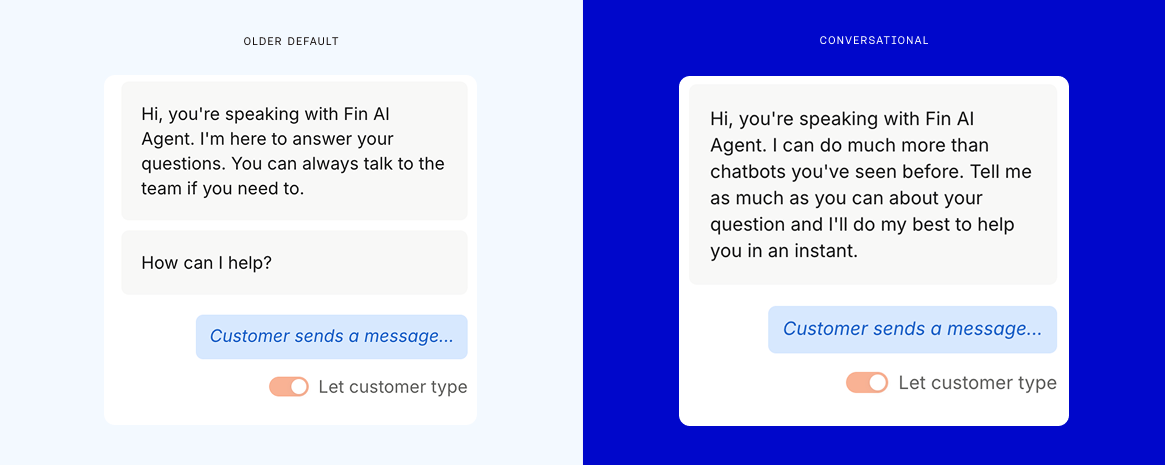
How I Make AI Agents Speak Like Our Team: A Conversation Design Playbook That Lifts CSAT
Your AI Agent will sound like an LLM unless you intentionally design how it communicates. I share a practical conversation design playbook covering tone, response structure,…
-

A Systematic Product Launch Strategy Beyond Announcement Day
A practical framework for aligning positioning, launch readiness, partner execution, and product analytics around sustained customer adoption.
-

AI Inference Economics: Optimize for Value, Not Cost
A practical framework for balancing AI inference cost, latency, and quality against conversion, retention, support demand, and revenue.
-
How I Use Novus, the First Product Agent, to Turn Rapid Releases into Measurable Wins
Rapid releases don’t have to blur what’s working. I use Novus to connect code velocity to customer outcomes with eval-driven development, observability, and continuous discovery—without drowning…
-
Stop Forcing Organizational Change: How I Create Impactful Product Habits Without Burnout
Organizational change is exhausting—so stop trying to force it. I focus on conditions that make change inevitable: leadership-level pain, real urgency, and awareness of credible alternatives.…
-
Why Product Engineers Are Transforming Software Delivery: Ownership, Speed, and Real Impact
Product engineers blend coding with customer insight, owning problems end to end and eliminating costly handoffs. By pairing continuous discovery with CI/CD, they shorten feedback loops…
-
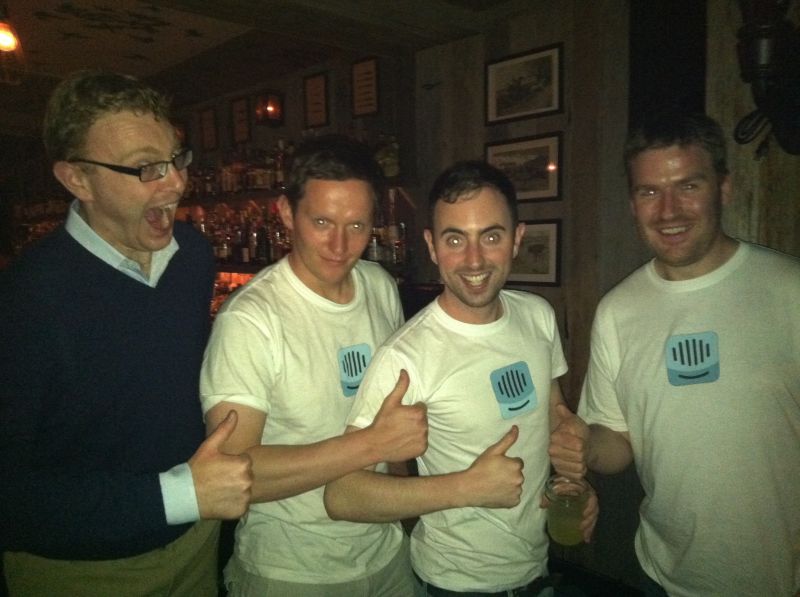
Salesforce to Acquire Fin for ~$3.6B: Powerful AI Synergy, Product Strategy Takeaways
Salesforce will acquire Fin for ~$3.6B, with the deal expected to close in the fourth quarter of Salesforce’s fiscal year 2027. The announcement caps a bold…
-
Claude Code for Product Managers: Accelerate Prototypes, Validate Faster, Ship with Confidence
Claude Code helps me turn ambiguous product ideas into testable prototypes, grounded analyses, and instrumented experiments in a fraction of the time. By pairing it with…
-

Beyond Black‑Box Scores: Custom AI That Elevates Trust & Safety Without Burnout
Off-the-shelf moderation scores miss nuance and force teams into painful manual review. In this episode, I explore how Musubi blends traditional ML with LLMs, policy optimizers,…
-

A Practical Model for Amplitude Behavioral Web Intelligence
A decision model for combining Amplitude analytics, zoning, heatmaps, replay, performance signals, and experiments without overstating the evidence.
-

Secure System Access for AI Agents: A Phased Control Model
A practical framework for giving AI agents narrowly scoped system access through phased permissions, independent controls, and measurable safeguards.
-

How Agentic Analytics Reshapes Product Development Roadmaps
A practical synthesis of how product agents connect behavioral analytics, controlled experiments, roadmap decisions, and accountable automation.
-

A Layered Playbook for Package Supply Chain Security
A practical framework for reducing package risk through delayed adoption, script controls, provenance checks, dependency pinning, and AI guardrails.
-

AI Agent Product Development: From Workflow to Autonomy
A practical framework for developing AI agents through focused workflows, bounded capabilities, measurable outcomes, and evidence-based autonomy.
-
Why We Made Fin the Most Open Agent: Instant HubSpot & Freshdesk Support With 76% Resolutions
Fin now runs as a Service Agent on top of HubSpot and Freshworks, so you can deploy world-class automation without leaving your helpdesk. Setup takes less…
-
Learning Together: The Small-Group Product Coaching Strategy That Accelerates Real-World Growth
If you want real behavior change—not just a shared vocabulary—small, intentional learning groups outperform one-off training and solo courses. In this reflection, I break down three…
-

From AI Builder to Agent Swarm: A Product Delivery Model
A practical model for combining AI Builders, selective agent parallelism, evaluations, and release controls across product discovery and delivery.
Weekly digest
One email a week on AI products, enablement and hiring. No fluff.
Browse topics
- AI Strategy (315)
- Generative AI (106)
- IT Leadership (33)
- Leadership (76)
- Product Management (344)
- Product Management Leadership (306)
- Uncategorized (32)
Work with me
45-minute consultation on AI product strategy, GTM and PM hiring — no charge.