Tag: unified analytics platform

  • Supercharge Insights with Amplitude Agent Connectors: Connect Notion, Slack, Linear & More

    Supercharge Insights with Amplitude Agent Connectors: Connect Notion, Slack, Linear & More

    I’ve led enough multi-tool product organizations to know how quickly momentum erodes when insights and actions live in different places. When my teams bounce between Notion, Atlassian, Slack, Linear, and analytics dashboards, we pay a real tax in context switching. That’s why I’m excited about what Amplitude is enabling with Agent Connectors—bringing our daily work and our data-driven decisions into one fluid, agentic AI workflow.

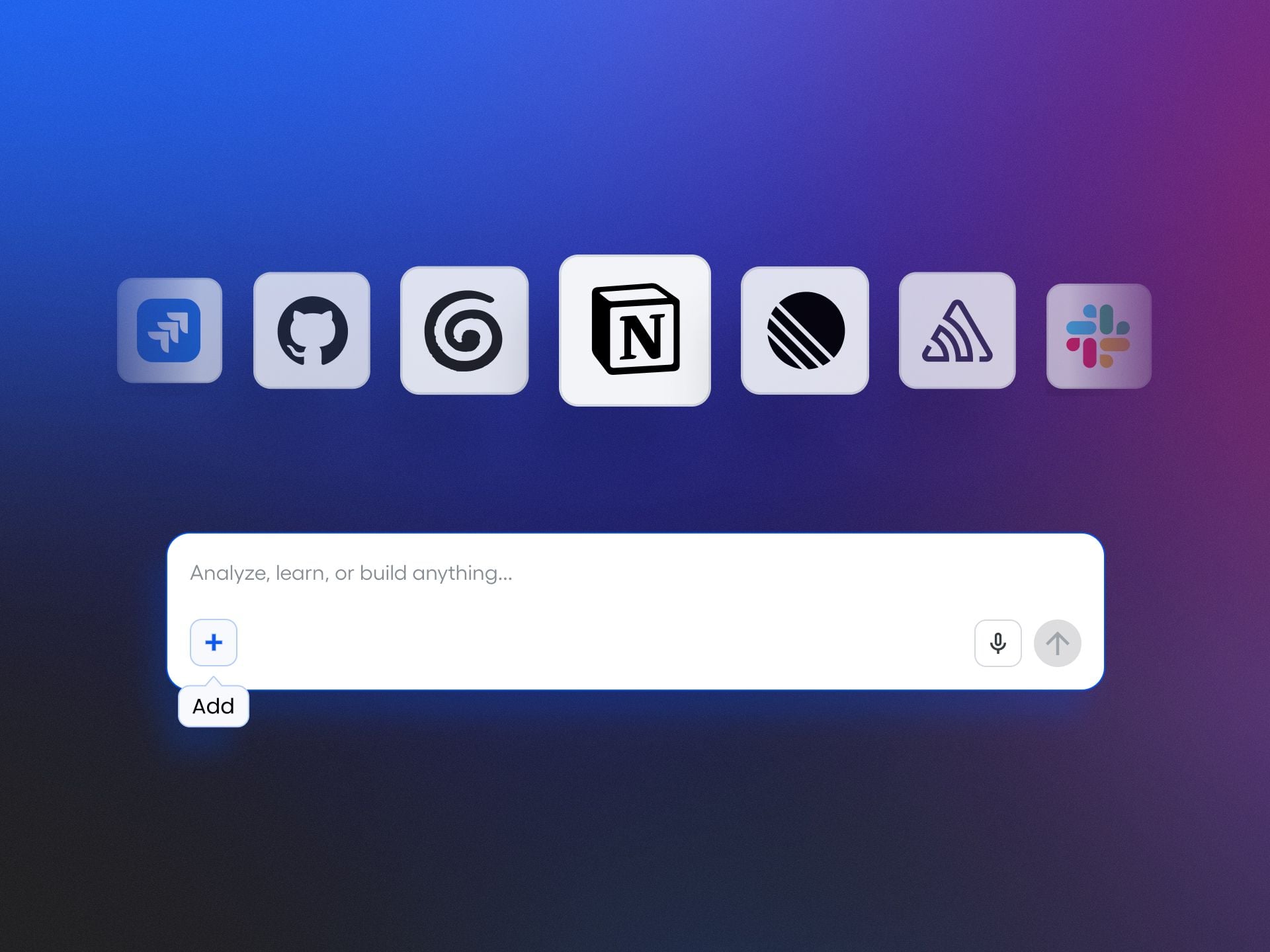
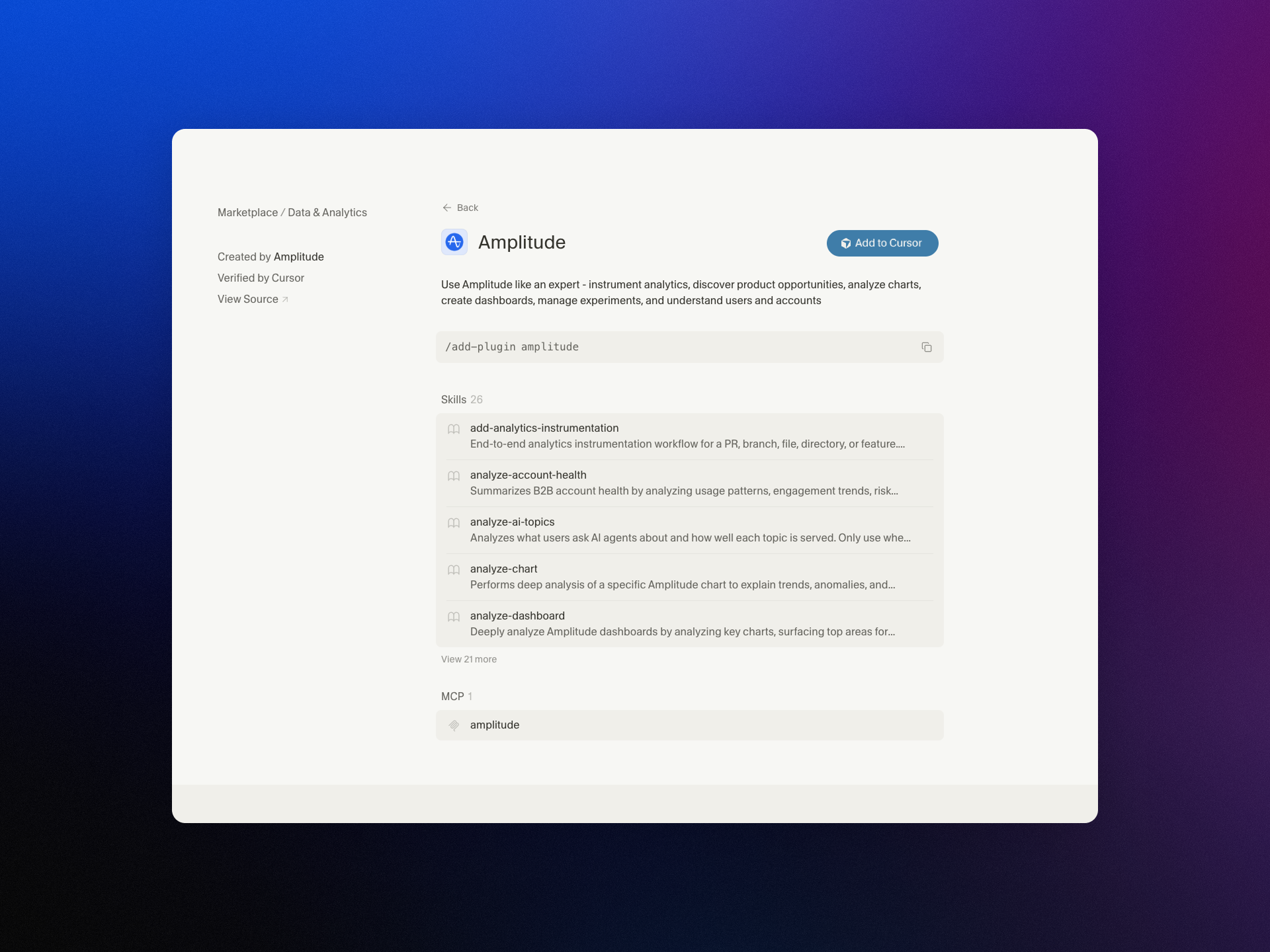
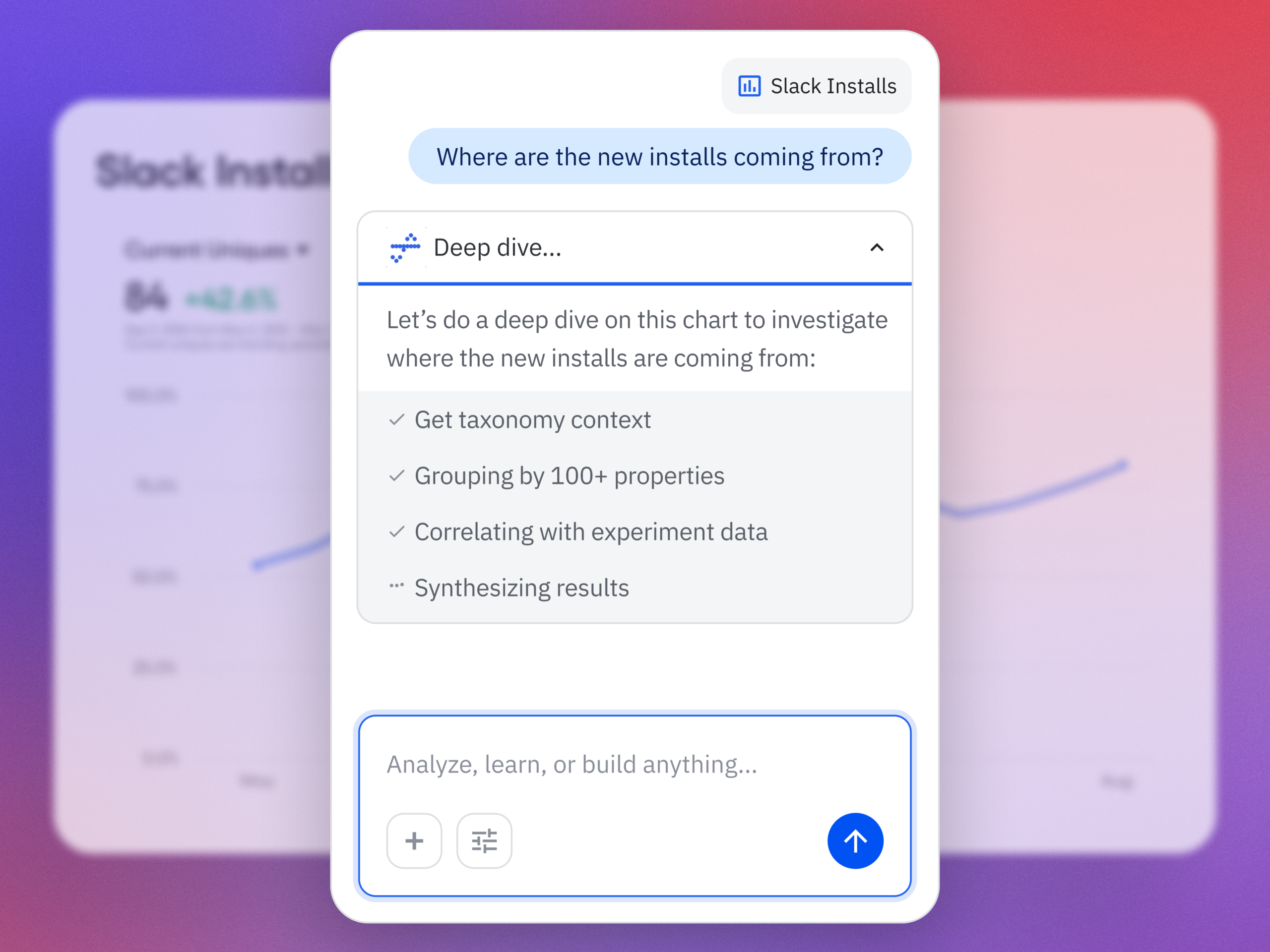
    Connect Notion, Atlassian, Slack, Linear, and more to Amplitude's Global Agent. Get richer analysis and take action across tools without leaving Amplitude.

    Practically, this means I can treat Amplitude analytics as a unified analytics platform where analysis and execution finally meet. Instead of exporting charts or copying insights into docs, I can drive Agent Analytics directly from the same surface where I manage behavioral analytics, reducing friction and accelerating decisions. For my product strategy, that’s a meaningful shift—from “insight later” to “insight-to-action now.”

    Here’s how I’d use it on a typical day: I ask the agent to synthesize signals from recent feature usage, spotlight anomalies, and then draft a concise summary for our Slack channel. In the same flow, I can prompt it to reference our Notion specs for context and queue next steps in Linear, keeping Atlassian stakeholders looped in without any extra swiveling between tabs. The value isn’t just faster execution; it’s tighter alignment across teams because the analysis and the plan live together.

    From an operating model perspective, this is how I scale AI workflows responsibly. I can define clear prompts, approval paths, and ownership so the agent augments—not replaces—expert judgment. Data governance and permissions remain front and center: the agent sees what your teams are allowed to see, and we maintain auditability on critical workflow steps. The outcome is a trustworthy, repeatable system that compounds learning over time.

    If you’re exploring agentic AI for product teams, start small and instrument your ROI. Pick one or two connectors (Slack and Notion are great first choices), define a measurable workflow—like pushing weekly retention insights and creating prioritized follow-ups in Linear—and iterate using continuous discovery. In my experience, the first wins appear as reduced time-to-insight, fewer meetings to align, and faster cycle time from observation to shipped change.

    The big picture is simple: bring your work to your analytics, and your analytics to your work. With Agent Connectors, Amplitude’s Global Agent helps close the loop from understanding behavior to taking action—without leaving the place where your insights are born.


    Inspired by this post on Amplitude – Best Practices.


    Book a consult png image
  • Decode How Amplitude AI Thinks: Proven Workflows to Get Actionable, High-Accuracy Results

    Decode How Amplitude AI Thinks: Proven Workflows to Get Actionable, High-Accuracy Results

    I’ve learned that the fastest way to unlock better AI outcomes is to understand how the system reasons, then partner with it deliberately. In product organizations, that means treating AI like a capable collaborator with a transparent process, clear inputs, rigorous checks, and measurable success criteria. When I work this way, my teams ship insights and experiments faster—and with far fewer surprises.

    Discover how Amplitude AI thinks and best practices for working with it. Partner with AI at each step of its process for more accurate, actionable outputs.

    Here’s the mental model I use. AI moves through a series of steps: clarify the goal, ingest context, retrieve and rank relevant information, reason through candidate solutions, draft an answer, self-critique, and refine. My job is to actively guide each step. I define the objective precisely, supply high-signal context, specify constraints, ask for structured reasoning, and require a quality bar before anything ships to stakeholders.

    Start by setting intent and success criteria. I write a one-sentence objective (“what problem are we solving now”), then define the evaluation rubric (“what good looks like”) up front. This small habit powers eval-driven development: it keeps AI outputs aligned with product goals, not just plausible-sounding text. I’ll often include target metrics and guardrails, such as confidence thresholds or required evidence from “Amplitude analytics.”

    Next, I curate the context. For analytics use cases, I provide event taxonomies, metric definitions, segments, and recent behavioral analytics trends to ground the model. A retrieval-first pipeline helps here: I scope the corpus, trim noise, and apply context window management so the model sees only what’s essential. The result is sharper, faster answers that map to our real data model and “unified analytics platform.”

    Then I shape the prompt. I use concise role framing, 1–3 high-quality exemplars, and explicit constraints (format, length, tone, citation requirements). I also ask the model to show its reasoning with a short, labeled scratchpad and to state uncertainties. This is practical prompt engineering—not magic—designed to make reasoning inspectable and reproducible across “AI workflows.”

    When tools are available, I encourage agentic AI patterns: let the system plan, call functions, and iterate. With “Amplitude AI,” I ask it to propose the next best analysis (e.g., segment drill-down, funnel step attribution, or anomaly detection), run it, summarize findings, then reflect on whether the next step changes. If you’re using “Amplitude MCP,” formalize these actions as callable tools so the model can chain them reliably.

    Quality is never an afterthought. I build lightweight evaluations into every loop: compare the model’s output against the rubric, check factual grounding, and A/B test alternative prompts for clarity and conversion where appropriate. Over time, these evaluations become our regression suite, giving us confidence as data, prompts, or model versions evolve. This discipline keeps LLMs for product managers aligned with shifting business priorities.

    Finally, I turn insights into action. I ask “Amplitude AI” for decision-ready artifacts—clear hypotheses, prioritized opportunities, and concrete next steps owners can execute. I require the model to cite the specific supporting events or segments and to flag assumptions. That last step is crucial: it invites human judgment where it matters and prevents automation from outpacing accountability.

    This approach doesn’t slow teams down; it speeds them up with focus. By guiding each step—intent, context, reasoning, tools, and evaluation—you transform AI from a black box into a reliable copilot. The payoff is tangible: clearer insights, faster cycles, and outputs stakeholders trust the first time they see them.


    Inspired by this post on Amplitude – Perspectives.


    Book a consult png image
  • How I Champion Platform Excellence: Lessons in Analytics, Scalability, and Product-Led Growth

    How I Champion Platform Excellence: Lessons in Analytics, Scalability, and Product-Led Growth

    I’m continually inspired by platform specialists who champion their analytics platforms end to end. When I study their work, I look for the connective tissue between strategy and execution—how behavioral analytics informs decisions, how a unified analytics platform reduces tool sprawl, and how great documentation and enablement convert insights into habit across product, engineering, and go-to-market teams.

    What consistently stands out is the rigor behind the scenes: clear data governance, privacy-by-design, and instrumentation standards that keep events trustworthy as products evolve. Platform scalability isn’t just about throughput; it’s about guardrails—naming conventions, schema versioning, and lineage—that let teams move quickly without sacrificing integrity. These are the unsung details that make insights reliable and repeatable at scale.

    I also pay close attention to how experimentation gets operationalized. Thoughtful A/B testing, well-scoped feature flags, and crisp definitions of “minimum detectable effect (MDE)” ensure that experiments produce signal instead of noise. Driver trees, opportunity solution trees, and continuous discovery keep teams anchored on outcomes, while retention analysis translates curiosity into durable growth. This is the backbone of product-led growth: small, fast bets tied to measurable behavioral shifts.

    Reliability and insight quality go hand in hand. Observability for event pipelines, anomaly detection to surface data drift, and targeted session replay help teams debug both product experience and analytics instrumentation. Paired with Web Vitals and clear ownership models, these practices shorten feedback loops, reduce blind spots, and keep platform credibility high—because trust is the real KPI behind every dashboard.

    In my own practice, I translate these lessons into roadmaps that balance discovery with delivery, and align solutions engineering, product, and design around the same north-star metrics. The result is a culture where platform champions don’t just advocate for tools—they enable outcomes. If you’re scaling an analytics stack or elevating your product strategy, these principles will help you move faster, with confidence, and make every insight count.


    Inspired by this post on Amplitude – Best Practices.


    Book a consult png image
  • How I Build High-Impact Experimentation Programs with Amplitude: Proven Practices at Scale

    How I Build High-Impact Experimentation Programs with Amplitude: Proven Practices at Scale

    I build experimentation programs to drive measurable outcomes, not just dashboards. In my product leadership work, I’ve seen how the right operating model turns experimentation into a reliable growth engine—especially when paired with the analytical depth of Amplitude. My goal is to help teams move from ad-hoc tests to a disciplined system that compounds learning and impact.

    Rigor starts with clarity. I translate strategic goals into testable hypotheses using driver trees, then structure A/B testing with a defined minimum detectable effect (MDE), guardrail metrics, and pre-registered decision criteria. This reduces p-hacking, shortens debate cycles, and makes outcomes auditable. I’m equally deliberate about risk: we monitor sample ratio mismatch, use feature flags for safe rollouts, and align on outcomes vs output OKRs so we celebrate business impact, not vanity wins.

    Amplitude analytics is my backbone for behavioral analytics at every step. I instrument clean event taxonomies, build funnels and cohorts to track user activation and retention analysis, and centralize experiment readouts in a unified analytics platform. This lets product trios quickly see how treatments shift behavior, where friction hides, and which moments matter most for product-led growth. The result is a trusted, shared source of truth that accelerates continuous discovery.

    At enterprise scale, governance matters as much as math. I often point to lessons inspired by Peacock’s experimentation program: standard naming conventions, centralized QA, CI/CD integration, and an active community of practice. Those practices keep velocity high without sacrificing validity, and they make wins repeatable across teams and surfaces.

    Operationally, I anchor the program in clear roles (data, engineering, design, product), templates for hypotheses and readouts, and a tight feedback loop from deploy to decision. With Amplitude, solutions engineering partnerships, and disciplined experiment hygiene, teams learn faster, ship safer, and build products customers love. That’s how experimentation becomes a strategic capability—not a side project.


    Inspired by this post on Amplitude – Perspectives.


    Book a consult png image
  • Turn Clicks into Revenue: How I Connect Behavior to Conversions with Persisted Properties

    Turn Clicks into Revenue: How I Connect Behavior to Conversions with Persisted Properties

    Every revenue story starts with a behavior: a tap, a scroll, a search, an “aha” moment. My job is to make sure we don’t just see those moments—we connect them directly to purchases so marketing, growth, and product can act with confidence.

    "Learn how Amplitude’s persisted properties and session analytics help marketing and growth teams connect behavioral data to purchase outcomes without engineering support." That sentence captures the promise I look for in a modern analytics stack: attribution that endures across sessions and analysis that moves at the pace of experimentation.

    Here’s how I frame it. Persisted properties let me carry forward the critical context behind a user’s journey—campaign touchpoints, audience attributes, and key in-product actions—so when a conversion happens, I can see the exact trail of behaviors that preceded it. Instead of losing signal between anonymous exploration and account creation, I keep the connective tissue intact and attribute outcomes to the interactions that truly mattered.

    Session analytics completes the picture. By understanding how users navigate within each visit—where they hesitate, what they repeat, and which micro-conversions predict success—I can link behavioral analytics to revenue outcomes with far greater precision. In practice, this means better funnels, smarter cohorts, and faster iteration cycles inside Amplitude analytics. When appropriate, I’ll also pair findings with session replay for qualitative context, but the core decision loops are driven by quantifiable behavior patterns.

    My operating rhythm is straightforward: I start by defining the purchase outcome clearly, then identify the minimal set of properties that must persist to tell the full attribution story. From there, I instrument events and validate that each persisted property is captured reliably across the journey. With clean inputs, I build conversion funnels, use cohorts to isolate high-intent behaviors, and apply driver analysis to separate correlation from causation. That’s how I isolate the behaviors that consistently generate qualified leads and high-value activations.

    The impact is both strategic and immediate. Marketing can test offers and channels with a unified analytics platform and know which touchpoints lift conversion, not just clicks. Growth can optimize user activation flows based on the behaviors that truly predict upgrade. Product can prioritize the moments that drive retention analysis instead of chasing vanity metrics. Most importantly, teams move from opinion to evidence without waiting in an engineering queue.

    In my experience, the real unlock comes when we use persisted properties to bridge pre-signup exploration with post-signup intent. That’s where product-led growth takes off: we can trace the first meaningful action to a downstream expansion event, tie it to a specific campaign or in-app guide, and then double down confidently. The result isn’t just better dashboards—it’s a tighter feedback loop between hypothesis, experiment, and measurable revenue impact.

    If you’re aiming to connect behavior to outcomes with clarity and speed, lean into persisted properties and session analytics. You’ll empower teams to discover the “moments that matter,” attribute them accurately to conversions, and iterate toward a repeatable growth engine—without slowing down your roadmap or depending on engineering for every new question.


    Inspired by this post on Amplitude – Best Practices.


    Book a consult png image
  • Inside Growth Engineering at Amplitude: My Playbook to Accelerate Product-Led Growth with Analytics

    Inside Growth Engineering at Amplitude: My Playbook to Accelerate Product-Led Growth with Analytics

    I’m often asked how leading growth teams turn insights into compounding business results. Few organizations illustrate this better than the Growth Engineering team at Amplitude. Drawing from their example and my own experience, I’ve distilled a practical playbook that any product organization can use to move faster, learn smarter, and scale impact.

    At the core is a disciplined blend of behavioral analytics and rapid experimentation. Amplitude analytics, as part of a unified analytics platform, enables precise event instrumentation, cohorting, and funnel analysis that surface where activation and retention truly break down. When I combine those signals with qualitative insights, I can prioritize fewer, higher-leverage bets that directly improve user activation and long-term retention.

    My growth loop always starts with clearly stated hypotheses, success metrics, and A/B testing power considerations, including a defined minimum detectable effect (MDE). I pair feature flags with staged rollouts to de-risk changes and accelerate iteration without compromising stability. This cadence turns every release into a learning opportunity, compounding knowledge across teams and time.

    Cross-functional execution is non-negotiable. I rely on tight “product trios” collaboration—product, engineering, and design—so we can ship small, measurable changes quickly, observe outcomes, and then widen scope with confidence. The Growth Engineering mindset keeps us grounded in real user behavior, not assumptions, and ensures our roadmap is fueled by evidence rather than opinion.

    Consider onboarding. Instead of a single redesign, I prefer a series of targeted experiments—tweaking progressive disclosure, refining tooltip design, and adding in-app guides where users predictably stall. Each test is instrumented end to end, from first action to activation event, and validated via retention analysis to confirm that short-term lifts turn into durable habit formation.

    When prioritizing, I map ideas to driver trees tied to our North Star metric. Behavioral analytics tell me which levers—time-to-value, depth-of-use, or frequency—will yield the biggest gain. That clarity focuses engineering effort on interventions that actually shift outcomes, not just outputs.

    If you’re building your own Growth Engineering capability, start with three moves: instrument ruthlessly so you can trust your signals, adopt feature flags to speed safe experimentation, and hold teams accountable to measurable, user-centric outcomes. Do this consistently and you’ll feel the compounding effect—faster learning cycles, stronger product-market fit signals, and a durable engine for product-led growth.


    Inspired by this post on Amplitude – Perspectives.


    Book a consult png image
  • From Ed‑Tech Roots to Core Analytics: Product Leadership Lessons Inspired by Amplitude

    From Ed‑Tech Roots to Core Analytics: Product Leadership Lessons Inspired by Amplitude

    I often look to Amplitude and its core analytics product when I’m coaching teams and refining our own product strategy. The discipline required to turn raw event streams into actionable behavioral analytics mirrors what I expect from empowered product teams: precise instrumentation, clear decision points, and a relentless focus on outcomes.

    Some of the most effective product managers I meet began their careers in the ed-tech and recruiting space. That early-stage, resource-constrained environment cultivates sharp prioritization instincts and a comfort with ambiguity—muscles that translate directly into building scalable analytics capabilities without losing speed or customer empathy.

    In my practice, I anchor discovery and roadmap decisions in driver trees that connect north-star outcomes to measurable input metrics. That structure keeps product trios aligned on the questions that matter: What behaviors predict retention? Where does user activation stall? Which experiments will meaningfully shift our core metrics? Paired with continuous discovery, this approach ensures we ship learnings—not just features.

    Tactically, I encourage teams to combine Amplitude analytics with a unified analytics platform mindset: centralize event taxonomy, standardize cohort definitions, and operationalize retention analysis alongside acquisition and activation. When we treat analytics as a product, not a tool, we unlock faster iteration loops, smarter A/B testing, and clearer trade-offs between depth and breadth in our product surface area.

    Product-led growth hinges on narratives supported by evidence. I’ve found that clear opportunities emerge when we map journeys, quantify friction with session replay and funnels, and then validate solution ideas through small, reversible bets. This is where outcome-based roadmapping shines: we commit to moving a metric, not to a specific feature, and we let the data guide sequencing.

    At the leadership level, I focus on execution readiness: crisp problem statements, decision logs, and CI/CD practices that reduce batch size and increase deployment frequency. The goal isn’t shipping more; it’s compounding learning. When teams internalize this mindset, analytics stops being a dashboard and becomes a competitive advantage.


    Inspired by this post on Amplitude – Perspectives.


    Book a consult png image
  • Stop Asking AI Anything: The 3 Outcome-Based Prompts That Unlock Real Product Insights

    Stop Asking AI Anything: The 3 Outcome-Based Prompts That Unlock Real Product Insights

    Too often I watch teams ping a global agent with vague AMAs and then wonder why they get generic summaries instead of decisive guidance. When I lead product reviews, I push the team to treat AI like a partner in decision-making, not a trivia engine. That simple mindset shift transforms how quickly we move from questions to confident action.

    AI isn’t built for AMA (ask me anything). Get recommendations for outcome-based questions for the best results with Amplitude AI.

    In practice, outcome-based prompting means I don’t ask an agent to “analyze the data.” I ask it to help me reach a specific product decision, grounded in behavioral analytics and connected to our outcomes vs output OKRs. To make that concrete, I always frame my prompts around three things.

    First, I state the outcome and metric. I name the business goal and the exact measure in Amplitude analytics that will validate success—activation rate, funnel conversion from A to B, or 8-week retention. I’ll reference the relevant events, segments, or driver trees so the agent has a crisp target. This is where product strategy meets measurement discipline.

    Second, I define the context and constraints. I specify the user cohort, the timeframe, and the surface area I care about—new self-serve signups in the last 30 days, first-session behavior on web only, or EU traffic where data governance rules apply. On a unified analytics platform, this context lets an agentic AI narrow its search to the highest-signal slices of behavioral analytics rather than pattern-matching across noise.

    Third, I declare the decision and deliverable. I tell the agent exactly what I will do next and the format I need to act: a ranked list of levers for an A/B testing plan, a recommended prompt engineering template for in-app guides, or a one-page brief I can hand to the growth team. Clear decisions lead to clear outputs; vague intents lead to vague answers.

    Operationally, I turn these three elements into reusable prompt templates, and I track their performance with Agent Analytics. I review traces to see which inputs drive the best recommendations, and I refine prompts the same way I iterate on product copy. For LLMs for product managers, this is the craft: small, testable improvements that compound into outsized impact.

    Here’s a quick example. When I needed to lift user activation, I asked for a prioritized set of friction points blocking first-value within 24 hours for new self-serve accounts, based on last month’s data. I defined activation as completing event X within Y hours, asked the agent to analyze top drop-offs in the funnel, and requested an action plan with two experiment ideas and success thresholds. The response mapped behaviors to interventions, connected to retention analysis, and gave me a prompt engineering snippet for the onboarding nudge we shipped the same week.

    If your AI workflow still starts with “What does the data say?”, you’ll keep getting broad narratives. Start with outcomes, sharpen the context, and specify the decision you will make. That’s how Amplitude analytics, paired with agentic AI, stops being interesting and starts being indispensable.


    Inspired by this post on Amplitude – Perspectives.


    Book a consult png image
  • Turn Customer Data into Real Experiences: What I Look For in a Brussels Strategy Partner

    Turn Customer Data into Real Experiences: What I Look For in a Brussels Strategy Partner

    I focus every day on turning raw customer signals into meaningful product experiences that create measurable outcomes. Human37 is a Brussels-based customer data strategy agency helping organizations turn data into real customer experiences. That statement sets a useful standard for the kind of partner I look for: one that helps us move beyond reports and into shipped value customers can feel.

    What matters most to me is the bridge between discovery and delivery—how insights inform product strategy and roadmaps without slowing execution. The strongest partners operationalize behavioral analytics within a unified analytics platform, connect qualitative learning with quantitative evidence, and make journey mapping a living artifact rather than a slide. Tools like Amplitude analytics can accelerate this work, but the real differentiator is the operating model that converts data into decisions and decisions into outcomes.

    When I evaluate a customer data strategy partner, I look for five things: rigorous data governance and privacy-by-design; clean event taxonomy and robust identity resolution; clear experimentation workflows that tie to activation and retention analysis; practical enablement for product teams (not just analysts); and a bias for product-led growth rooted in real user behavior. If a partner can’t articulate how insights ladder to user activation and long-term value, they’re not ready to guide the roadmap.

    Here’s how I sequence the work to turn signals into experiences: first, define the outcomes that matter and the driver trees behind them; second, instrument events and unify identities to power trustworthy behavioral analytics; third, map critical paths with journey mapping to expose friction and moments of delight; fourth, run focused experiments linked to product strategy, not vanity metrics; finally, scale what works with in-product experiences and lifecycle messaging that compounds retention.

    The payoff is speed and clarity: faster time-to-insight, more confident bets, and fewer handoffs between data teams and product builders. If you’re exploring European partners, a Brussels-based agency with a sharp customer data strategy capability can help you move from analysis to action. The litmus test is simple—can they help your team ship experiences that customers notice and your metrics confirm?


    Inspired by this post on Amplitude – Perspectives.


    Book a consult png image
  • Amplitude Heatmaps Rebuilt: Rock-Solid Screenshots, Precise Placement, Smarter Scrollmaps

    Amplitude Heatmaps Rebuilt: Rock-Solid Screenshots, Precise Placement, Smarter Scrollmaps

    When a platform as foundational as Amplitude refreshes a core feature, I pay close attention. Heatmaps are where qualitative intuition meets quantitative scale, and reliability and precision determine whether teams trust what they see. The latest update meaningfully raises the bar for product analytics teams who depend on crisp visual evidence to guide experiments, diagnose friction, and accelerate product-led growth.

    Here’s the essence of the change, in Amplitude’s own terms: “more reliable screenshot capture, selector-based placement, automatic device detection, and a redesigned scrollmap.” That combination tackles the two biggest historical pain points with heatmaps—stability in dynamic interfaces and confidence that clicks are attributed to the right UI elements across devices and layouts.

    First, more reliable screenshot capture improves the fidelity of what I’m analyzing. When screenshots consistently mirror the live UI state, I can compare sessions across releases without worrying about rendering quirks or timing artifacts. That boosts trust in behavioral analytics, shortens feedback loops with engineering, and makes heatmaps a dependable companion to A/B testing and session replay.

    Second, selector-based placement is a pragmatic step toward precision. In modern, componentized front ends where elements shift with personalization, localization, or responsive design, stable selectors dramatically reduce misattributed interactions. In practice, this means cleaner insights for funnel drop-off analysis, clearer readouts for micro-conversions (e.g., CTA vs. secondary actions), and more confident iteration on UX copy and layout—without constant re-instrumentation.

    Third, automatic device detection aligns insights with the actual context of use. Patterns on mobile often diverge from desktop, and blending them can mask critical signals. Accurate device-specific readouts help me tailor experiments, refine activation paths, and decide when to prioritize mobile-first optimizations versus desktop refinements.

    Finally, the redesigned scrollmap matters because attention is a finite resource. Knowing how far users scroll—and where they pause—helps me position value propositions, trust elements, and calls to action where they’ll be seen. Combining scroll insights with session replay and event data gives me a sharper picture of what’s above the fold, what’s ignored, and where copy or layout needs a rethink.

    How I’d operationalize this update: validate key selectors with engineering and design for critical templates; compare pre- and post-update heatmaps to establish new baselines; segment by device to isolate diverging behaviors; map scroll depth to conversion micro-moments; and feed prioritized findings into backlog grooming and product roadmapping. This keeps heatmaps directly connected to outcomes rather than just interesting visuals.

    Bottom line: these improvements make heatmaps a more trustworthy lens for discovery and optimization. With sturdier screenshot capture, precise selector-based placement, automatic device detection, and a redesigned scrollmap, I can move faster from observation to decision—reducing analysis ambiguity, tightening experiment cycles, and turning behavioral analytics into measurable product strategy.


    Inspired by this post on Amplitude – Best Practices.


    Book a consult png image
  • My Playbook for Safe AI Analytics in Financial Services: Compliance, Trust, and Real Workflows

    My Playbook for Safe AI Analytics in Financial Services: Compliance, Trust, and Real Workflows

    I spend a lot of time helping financial services teams adopt AI analytics without compromising on risk, compliance, or customer trust. The stakes are high: regulations are evolving, data sensitivity is non‑negotiable, and a single misstep can erode confidence. That’s why my approach centers on governed AI, rigorous data governance, and measurable business value—not flashy demos.

    Learn how Amplitude delivers safe, governed AI analytics for financial services—aligned to compliance, built for trust, and ready for real workflows.

    In practice, “safe and governed” means clear lines of accountability and controls that hold up under audit. I look for privacy-by-design principles, role-based access controls, robust audit trails, and granular data permissions that keep sensitive data segregated. Strong AI risk management also requires model oversight—documented policies, human-in-the-loop review where needed, and explainability for high-impact decisions. Above all, the platform must meet regulatory compliance expectations and support the organization’s risk posture without slowing teams down.

    Real workflows are where the value shows up. In financial services, that can mean using behavioral analytics to understand user intent, applying anomaly detection to surface suspicious patterns earlier, and empowering product managers and analysts to iterate safely within a unified analytics platform. When these capabilities are built into the core analytics motion, I see faster detection of issues, clearer attribution of outcomes, and more confident decision-making—all while staying within governance guardrails.

    When I evaluate a solution, my checklist is simple and strict: does it enforce strong data governance by default; does it provide transparent, auditable AI behaviors; can it scale securely to meet enterprise requirements; does it tie insights directly to product and growth outcomes; and will it help risk, compliance, and product teams work together instead of at cross purposes? If the answer is yes across that list, the platform earns a place in the enterprise toolbelt.

    Done right, governed AI analytics give financial services teams the confidence to move faster with less risk. You gain sharper insights from behavioral data, earlier warning from anomalies, and the trust that comes from controls that are aligned to compliance and resilient under scrutiny. That’s the path to durable advantage: responsible AI that accelerates learning, protects customers, and translates directly into better products and performance.


    Inspired by this post on Amplitude – Best Practices.


    Book a consult png image
  • Scaling AI-Powered Customer Experience: Cross-Org Playbooks to Drive Product Impact

    Scaling AI-Powered Customer Experience: Cross-Org Playbooks to Drive Product Impact

    Customer experience is now a core product strategy lever, not a downstream support function. In my work leading product teams, I’ve seen that the fastest path to durable growth is aligning CX strategy with product, data, and go-to-market—especially when we’re building AI-powered solutions that must scale responsibly.

    Amanda Sime is the Customer Experience Strategy Lead at Amplitude. She shapes CX strategy and partners across orgs to design and scale AI-powered solutions.

    That mandate captures what high-performing organizations are doing well: connecting behavioral analytics, product discovery, and customer success into a unified operating system. When CX leaders partner tightly with product and data teams, we turn insights into action—using Amplitude analytics to identify friction, journey mapping to prioritize moments that matter, and a unified analytics platform to close the loop from hypothesis to measurable outcomes.

    Practically, the playbook looks like this in my teams: start with rigorous journey mapping and retention analysis to pinpoint where value realization lags; run targeted A/B testing to validate interventions; and deploy in-app guides and product tours to accelerate user activation. Layer in session replay and behavioral analytics to understand intent, then operationalize learnings into repeatable workflows that improve time-to-value and customer success. This is how we make product-led growth concrete rather than aspirational.

    AI Strategy adds both leverage and responsibility. We design AI-powered experiences with privacy-by-design, clear value propositions, and eval-driven development so we can measure lift, not just ship features. Cross-functional partners—from support to solutions engineering—become critical here, ensuring we scale responsibly while improving the signal-to-noise ratio of feedback flowing back to product roadmapping.

    The outcome I aim for is simple: faster cycles from insight to impact. With tight cross-org alignment, a shared metrics framework, and disciplined experimentation, we can transform CX from reactive problem-solving into a proactive growth engine. If your team is ready to operationalize this approach, start with one high-friction journey, build a sharp driver tree, and let data, not opinions, guide the next iteration.


    Inspired by this post on Amplitude – Best Practices.


    Book a consult png image