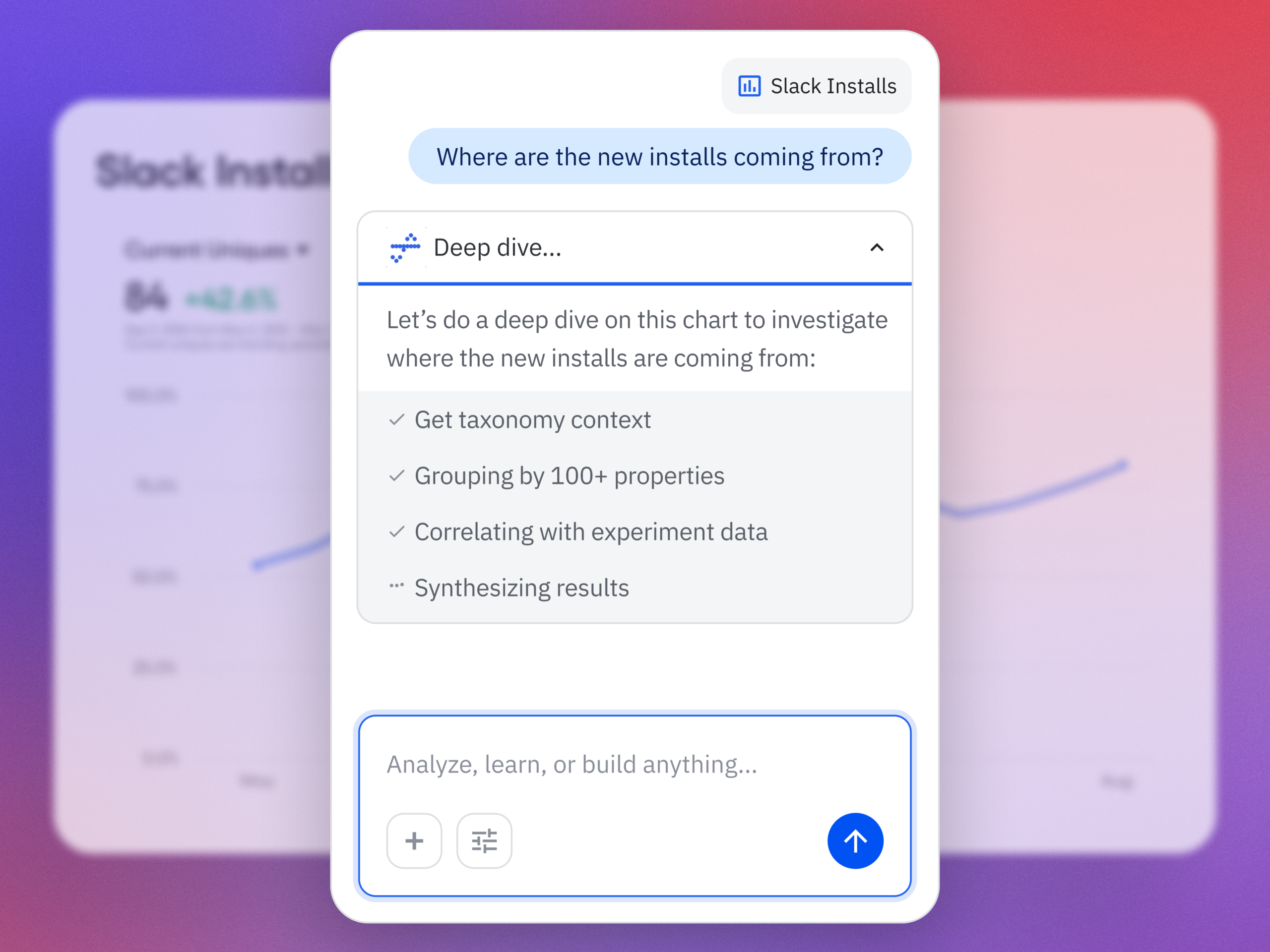
For years, I’ve watched product, growth, and data teams burn cycles stitching together manual dashboards and reports, then slogging through replay review just to validate a hunch. That overhead slows discovery and delays decisions. The promise here is different: "Discover how Amplitude AI Agents help product, growth, and data teams turn questions into action without manual dashboards, reports, or replay review." As someone obsessed with decision velocity and evidence-based product strategy, that shift is exactly what I’ve been waiting for.
In practice, I think about "Amplitude AI Agents" as always-on data analysts embedded in our workflow. Instead of queuing requests or context-switching into tooling, I can ask targeted questions, get synthesized insights, and move directly to action. This is a powerful example of agentic AI meeting behavioral analytics in a unified analytics platform—removing friction between inquiry and impact while keeping teams focused on outcomes, not artifacts.
What changes for my day-to-day? I can interrogate customer behavior in real time, pressure-test hypotheses from discovery interviews, and quickly understand whether activation, retention, or monetization is the current constraint. If I’m probing a driver tree for activation or a retention analysis for a specific cohort, I can get to a decision faster—without waiting on someone to build a bespoke dashboard. That means more cycles spent shaping product strategy and fewer sunk into report wrangling.
This matters beyond speed. When product, growth, and data leaders anchor discussions in the same source of truth, we shorten the distance from signal to decision. That alignment is the backbone of product-led growth and continuous discovery: shared context, faster feedback loops, and clearer trade-offs. It also reduces the long tail of analytics debt—those one-off reports and stale views that quietly accumulate across teams.
Of course, adopting any AI workflow in analytics demands governance. I hold these systems to the same bar I set for my teams: clarity of assumptions, consistent metric definitions, and auditable reasoning. Pairing "Amplitude analytics" with strong data governance, CI/CD for analytics definitions, and lightweight evals helps ensure the recommendations we act on are reliable, reproducible, and explainable. AI should accelerate our judgment, not replace it.
The strategic shift is simple and profound: move from building dashboards to making decisions. With always-on analysis, we can spend less time instrumenting analytics theater and more time delivering customer value. That is how we translate insights into impact—and why I’m excited to operationalize this capability across our product trios and go-to-market partners.
Inspired by this post on Amplitude – Best Practices.