
Every day, I challenge my teams to make one small, meaningful improvement—something so lightweight it’s impossible to ignore and easy to repeat. That tiny daily motion compounds, and over time it reshapes customer experience, operational quality, and team culture.
That’s the essence of Kaizen, the Japanese philosophy of continuous improvement. Developed in post-war Japan and popularized by companies like Toyota, Kaizen proves that small, steady changes lead to significant long-term results. In product management and customer support, this approach transforms big ambitions into daily behaviors that actually stick.
Crucially, Kaizen isn’t passive or unstructured. It thrives on three principles I reinforce across my org. First, small changes reduce resistance—when you lower the activation energy, teams move faster. Second, improvement is continuous, not occasional; instead of waiting for quarterly reviews or major releases, you ask: “What can we improve right now?” Third, everyone participates—the people closest to the work are best positioned to improve it. That’s how momentum spreads.
In practice, the cycle is simple: identify a small problem, test the change, measure the result, refine, and repeat. The point isn’t radical transformation in a single swing; it’s steady progress guided by data and observation—a rhythm that aligns beautifully with eval-driven development and continuous discovery.
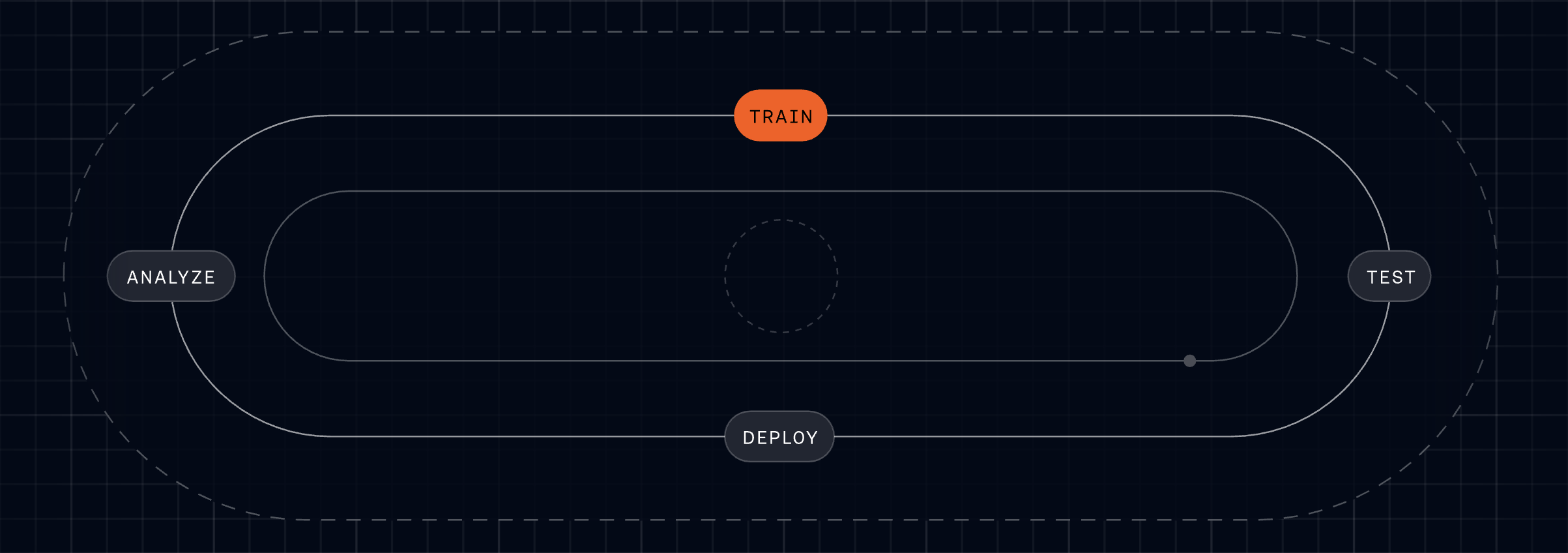
At Intercom, we apply this same philosophy to how we manage our Agent Fin through a process we call the “Fin Flywheel”. Here’s how this works.
Train: Teach Fin how to handle and resolve the most complex customer queries.
Test: Run fully simulated customer conversations from start to finish to see exactly how Fin will behave before going live.
Deploy: Launch Fin across all channels so customers get consistent support wherever they reach out.
Analyze: Use AI-powered insights to review and improve Fin’s performance so it can deliver better customer experiences.
This isn’t a one-time setup; it’s a continuous loop where every interaction feeds ongoing improvement. Rather than deploying AI and assuming it will perform as expected, improvement is built into the system itself. The more Fin is used, the better it gets. That’s the hallmark of agentic AI done right—tight feedback loops, purposeful conversation design, and clear Agent Analytics that illuminate what to tune next.
But continuous improvement doesn’t stop with AI. Within our Human Support operations, I emphasize the same mindset that drives great LLMs for product managers: you instrument the experience, learn from real usage, and close gaps fast. We operate with a simple mindset: the first time that you solve a customer issue should be the last time it happens.
When a conversation reaches a human, we pause to diagnose and prevent recurrence. Why did this reach me? Why couldn’t Fin resolve it? How can we prevent this from happening again? Those questions anchor a culture of root-cause thinking and accelerate product-led growth by removing friction at the source.
To make this effortless, we’ve built a lightweight, AI-powered way to log suggestions in the moment—no long explanations or heavy admin required. Ideas are reviewed quickly and implemented by subject matter experts or by the team themselves. This keeps the flywheel spinning: insights flow in, fixes go out, and measurable outcomes improve.
The result is a frontline that evolves from reactive problem-solvers into a proactive improvement engine. The people closest to customers spot friction, suggest fixes, and see their insights shaped into meaningful change. It’s continuous discovery embedded in everyday work, not a side project.
Kaizen demonstrates that lasting progress doesn’t come from occasional transformation; it comes from intentional, everyday refinement. The “Fin Flywheel” applies that philosophy to AI. Our Human Support continuous improvement process applies it to human insights. Together, they create a shared system where both people and AI learn continuously from customer interactions.
When improvement is built into the mechanics of how you work, it stops being a one-off project and becomes an ingrained capability. Over time, those small daily improvements don’t just add up—they compound into a sustainable, data-driven advantage that elevates customer experience and differentiates your customer support ai strategy.
Inspired by this post on The Intercom Blog.





Leave a Reply