

Over the last few years, I’ve learned that the fastest path to better product outcomes isn’t “more prompts,” it’s better context. When I combine thoughtful product judgment with disciplined context window management, LLMs become true partners—accelerating discovery, sharpening strategy, and improving execution.
Learn a new way in which product professionals can collaborate with AI to get even better results on their projects.
When I say “AI context pulling,” I’m talking about the intentional process of assembling, structuring, and compressing the right product evidence—customer insights, metrics, constraints, and goals—so an LLM can reason effectively. For LLMs for product managers, the win is simple: by feeding the right inputs and framing the right outcomes, we turn generic AI into a strategic co-pilot for Product Management and AI Strategy.
I start by clarifying intent through outcomes vs output OKRs. Before I ask an LLM to ideate, critique, or plan, I anchor it in the product problem, the measurable outcomes we seek, and the guardrails we cannot cross (risk, privacy, brand). This keeps the collaboration focused and aligned with stakeholder management expectations.
Next, I build a tight “context packet.” I pull customer quotes from discovery notes, usage trends from our unified analytics platform and Amplitude analytics, funnel friction from Intercom transcripts, and commercial constraints from HubSpot data. Then I summarize, deduplicate, and highlight contradictions—so the model gets the signal, not the noise.
From there, I run an agentic AI workflow. In my AI product toolbox, I use CustomGPT workflows with specialized roles: a Summarizer (compress evidence), a Strategist (propose options), and a Skeptic (stress-test assumptions). This agentic AI pattern reduces blind spots and produces artifacts I can share with empowered product teams and executives.
I then bring the insights into a product trios forum (PM, Design, Engineering). We iterate on problem framing, explore solution narratives, and translate options into product roadmapping and sprint planning. The LLM helps us rapidly compare trade-offs, highlight dependencies, and craft crisp decision memos.
Execution still demands rigor. We validate with A/B testing when appropriate, size our minimum detectable effect (MDE), and monitor activation and retention signals. The model helps generate experiment variants and risk checklists, but we own judgment, ethics, and the call to ship.
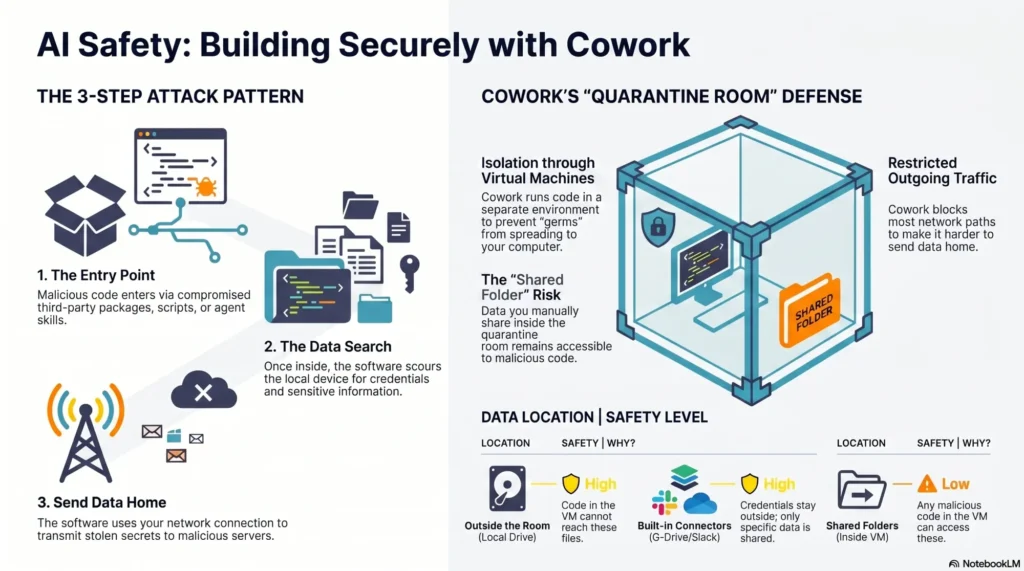
Governance matters. I treat data governance and privacy-by-design as first-class constraints in every prompt, context packet, and workflow. Clear boundaries make collaboration safer—and paradoxically, more creative—because the LLM spends its cycles inside a well-defined sandbox.
Here’s a simple example: when we explored a new onboarding flow, I fed the model a compressed brief (user segments, friction points, support tickets, and conversion deltas). It returned three viable patterns, each with hypotheses and measurement plans. Our trio refined them, launched a controlled test, and used LLM-powered analysis to summarize learnings for leadership. The result: faster clarity, better decisions, and a tighter feedback loop.
The promise of AI context pulling isn’t that AI replaces product judgment—it’s that it elevates it. With the right structure, LLMs help us think more clearly, decide faster, and build what truly matters. If you’re ready to try this, start small: define an outcome, curate a context packet, and run a single agentic loop with your team. The compounding returns will surprise you.
Inspired by this post on Pendo – Perspectives.





Leave a Reply