Prototypes vs Products: How I De-risk Ideas Fast and Ship Reliable Value at Scale
Note: This is part of the product creator series of articles, based on the overview article, The Era of the Product Creator. This series is for anyone who wants to create a successful product—whether or not you’ve had formal training or experience in product management, product design, or engineering.
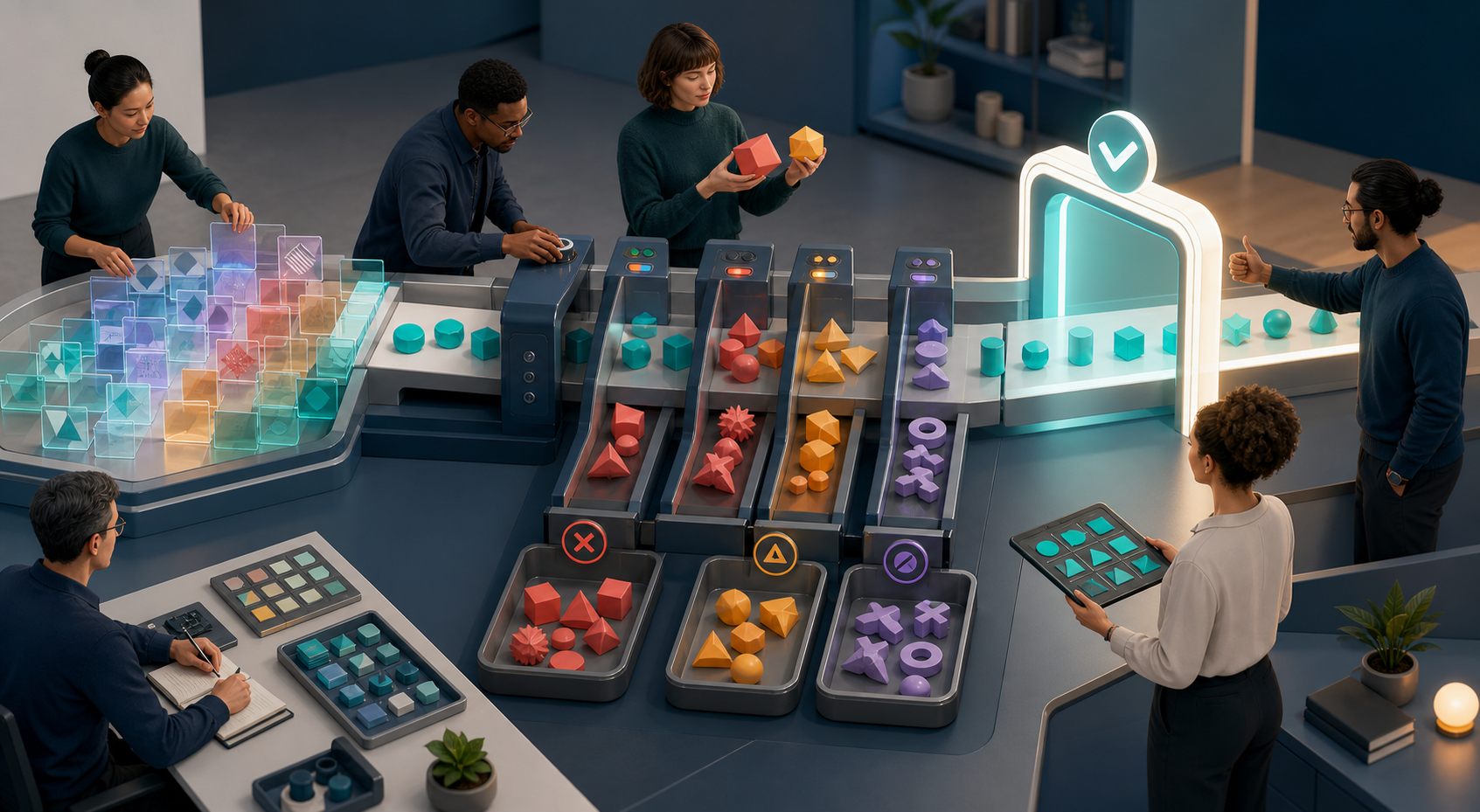
Over the years, I’ve watched smart teams stumble because they treated a prototype like a product. The distinction is simple but vital: prototypes exist to learn; products exist to earn trust by delivering value reliably at scale. When we blur that line, we ship avoidable risk to customers and slow ourselves down later with rework.
When I build a prototype, I’m testing assumptions as quickly and cheaply as possible. It might be a clickable Figma mock, a Wizard‑of‑Oz demo, or a quick script stitching together a ChatGPT connector with a CustomGPT workflow. It’s intentionally disposable. I expect missing edge cases, fake data, hand‑waving on latency, and limited attention to security or privacy. The only goal is to answer the riskiest questions fast.
A product is a promise. It’s hardened for reliability, performance, security, and privacy‑by‑design. It’s observable with real analytics, supports CI/CD and rollback, meets accessibility guidelines, and can be maintained by empowered product teams. It has clear SLAs, incident management runbooks, and instrumentation that lets me track outcomes vs output OKRs and DORA metrics.
Keeping prototypes and products separate makes us faster and safer. Prototypes accelerate discovery; products operationalize value. If I catch myself “polishing” a prototype, I pause and either discard it or define the path to production with the right engineering rigor, data governance, and stakeholder management.
Here’s how I decide. In prototype mode, I timebox learning to days, not weeks, and focus on a single risky assumption—value, usability, or feasibility. I validate through qualitative research and usability tests, not vanity metrics. To graduate to product work, I require a crisp problem statement, evidence of problem‑solution fit, a technical plan for scale and observability, a privacy and threat modeling review, and a measurement plan (including minimum detectable effect) for upcoming A/B testing.
AI adds new wrinkles. For gen AI and agentic AI, I evaluate model behavior offline before exposing anything to customers. That includes prompt design, context window management, guardrails to minimize hallucinations, and clear fallback strategies. I define red‑team scenarios, logging for auditability, and policies for data retention and encryption as part of AI risk management.
A recent example: we prototyped an agent workflow in a day that felt magical in demos. We resisted the urge to ship. Instead, we added authentication, rate limiting, PII redaction, human‑in‑the‑loop review, observability, and in‑app guides and product tours for onboarding. Only then did we move to a limited release with a well‑defined go‑to‑market strategy and support readiness.
One more trap to avoid: calling a prototype an MVP. An MVP is still a product—minimal in scope but complete enough to deliver value, gather trustworthy data, and support customers. If you wouldn’t put your name on it or support it in production, it’s a prototype, not an MVP.
If you’re a product creator, align your product trios around this discipline. Use prototypes to learn quickly in discovery, and use products to deliver outcomes in delivery. That mindset protects customer trust, speeds iteration, and moves you toward product‑market fit with far less waste.