

I’ve learned that the fastest way to lose customers with AI is to ship something powerful but unpredictable. The fastest way to earn their loyalty is to ship something powerful and trustworthy. That’s the job.
AI ethics in product management isn’t about theory anymore. It’s the line between trusted products and unpredictable ones. Here’s what PMs need to know.
When I frame AI ethics for my team, I translate principles into practices that protect customers and accelerate velocity. We bake trust into product strategy, delivery, and operations—so ethics is not a separate checklist, but a core capability that compounds over time.
First, I anchor the roadmap on explicit outcomes and guardrails. We set success metrics alongside ethical constraints, tying them to outcomes vs output OKRs, so teams know not only what to achieve but what to avoid. If a feature can’t meet our trust thresholds, it doesn’t ship—no matter how impressive the demo.
Data is where trust starts. We enforce data governance from day one: clear data lineage, collection minimization, role-based access, and privacy-by-design defaults. We document lawful bases for processing, consent flows, and retention policies, then automate checks so they run with every change—not just at launch.
On the model side, we use eval-driven development to turn subjective “looks good” into measurable quality. We design evaluations for safety, bias, robustness, and performance; we red-team prompts; and we test failure modes in realistic conditions. For LLMs, we lean on a retrieval-first pipeline to ground responses in authoritative data, and we apply context window management and prompt engineering patterns to reduce hallucinations.
In the product experience, we make ethical choices visible. That means clear disclosures when AI is in the loop, user controls to review and correct outputs, and transparent UX writing that avoids overclaiming. In-app guides and thoughtful tooltip design help users understand capabilities and limits without friction.
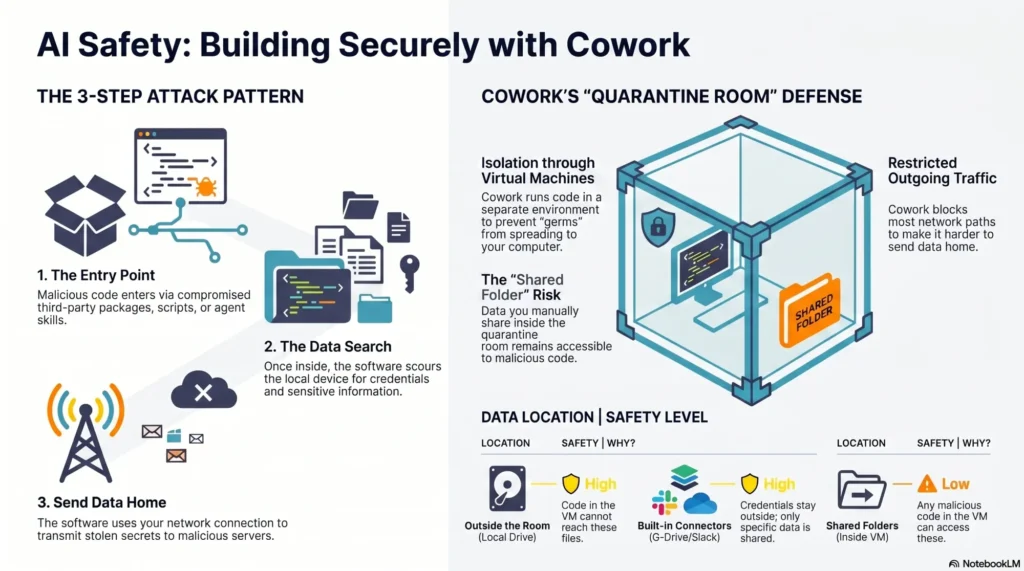
Shipping safely requires operational discipline. We build kill switches, human-in-the-loop overrides for high-risk actions, and incident playbooks that pair incident management with threat detection and response. SRE partnerships ensure observability covers both model behavior and customer impact, with rollback paths ready when drift or regressions appear.
Governance is a team sport. I maintain an AI risk register, review it with security, legal, and product trios, and brief leadership on residual risks and mitigations. Regulatory compliance isn’t a final hurdle; it’s a design input that shapes technical choices long before code reaches production.
Build vs buy decisions carry ethical implications too. Vendor due diligence covers model provenance, data handling, eval results, and incident history—not just feature checklists. Contracts codify SLAs, audit rights, and deletion commitments so our obligations to customers flow down the stack.
Finally, we earn trust in public. We publish model facts, change logs, and limitations in a customer-facing trust center, and we invite feedback loops that turn real-world usage into better safeguards. Stakeholder management matters here: being candid about trade-offs often increases confidence more than chasing perfection.
This is how I keep teams fast without being reckless: ethics as a product capability, not a poster. Build with intention, measure what matters, and make it easy for customers to understand, control, and benefit from your AI. That’s how we ship innovation that stays trusted—at scale.
Inspired by this post on Product School.






Leave a Reply