
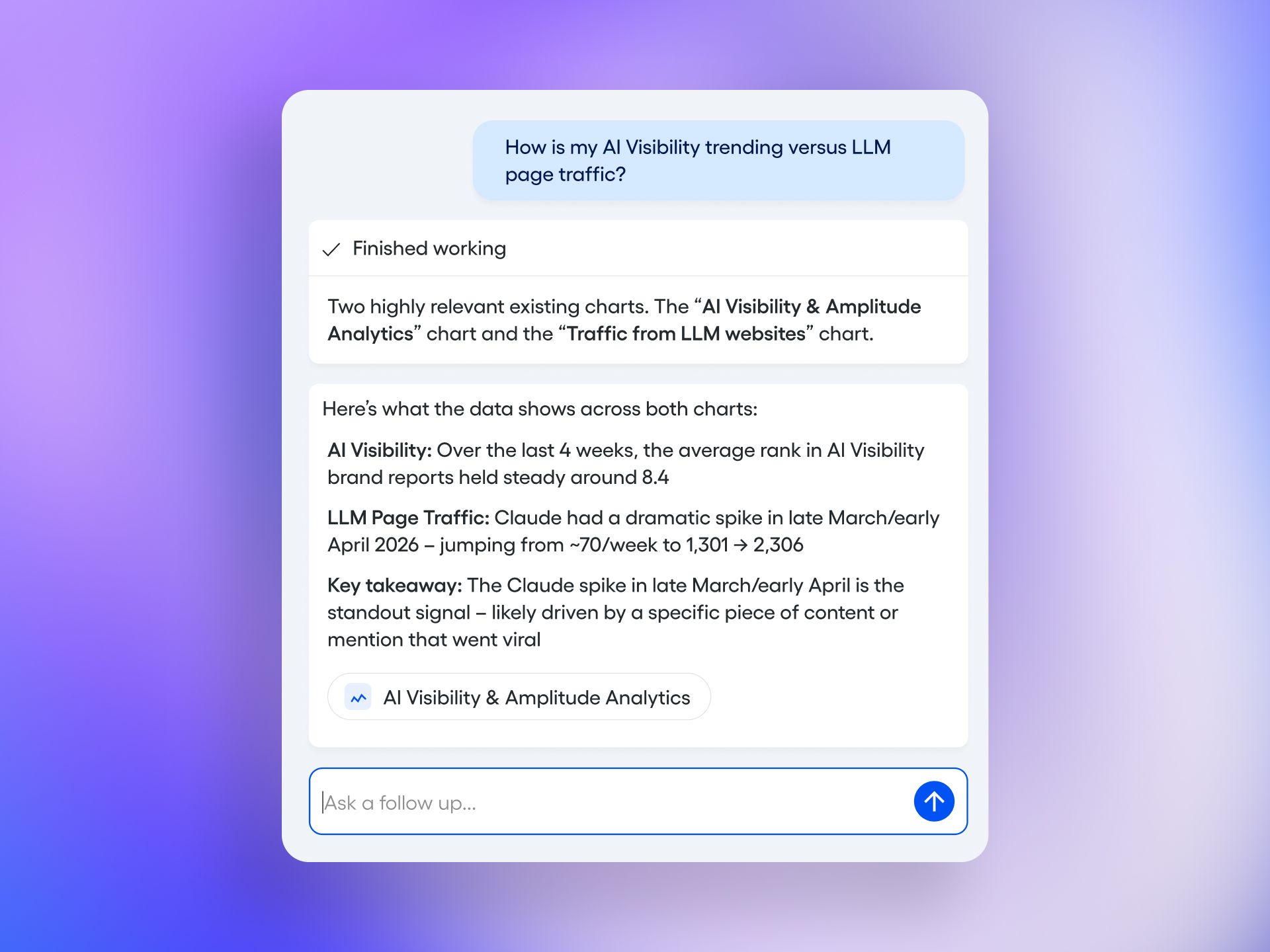
In my role leading product strategy at HighLevel, I’ve learned that AI search is one of the most overlooked growth levers in a modern product stack. When we treat every query as a moment to understand intent, reduce friction, and guide users to value, AI search stops being a utility and starts becoming a compounding engine for product-led growth.
"Turn AI search into a growth channel with AI visibility, sentiment analysis, revenue impact, and content recommendations in one place."
That single line has become a practical blueprint for how I operationalize AI Strategy: make what users ask visible, interpret how they feel, quantify what converts, and continually recommend better content. AI visibility tells me which intents we serve well (and where we fail). Sentiment analysis connects experience to emotion. Revenue impact closes the loop with attribution. Content recommendations ensure we don’t just diagnose gaps—we close them.
Under the hood, I anchor this on a retrieval-first pipeline that marries behavioral analytics with a unified analytics platform. This lets me trace the path from query to outcome: how users phrase needs, which results earn clicks, where drop-offs happen, and which experiences correlate with activation, retention, and expansion. With that signal, I can prioritize high-leverage content updates, tune relevance, and decide when agentic AI should step in with guided workflows rather than static results.
Measurement has to be rigorous. I rely on eval-driven development to benchmark intent coverage and answer quality, then confirm impact with A/B testing designed around a clear minimum detectable effect. We test ranking tweaks, prompt variants for LLMs for product managers, and new answer types (short snippets vs. deep dives) to isolate what actually moves activation and Net Recurring Revenue. If it doesn’t change behavior or dollars, it’s noise.
The operating model matters as much as the model weights. Cross-functional product trios pair continuous discovery and journey mapping with a lightweight content audit cadence. The CRO role partners with data science to align search KPIs to revenue goals, and solutions engineering ensures CRM integration and downstream systems reflect what users discover. This keeps the system honest: every improvement is traceable from insight to impact.
Finally, governance and scale are non‑negotiable. Privacy-by-design, clear data governance, and observability protect trust while feature flags and CI/CD let us iterate safely. When the fundamentals are strong, we can confidently expand into richer experiences—like proactive recommendations, in-app guides, and voice AI agent handoffs—without sacrificing reliability or compliance.
If your AI search still feels like a black box, it’s time to turn it into a transparent, revenue-linked growth channel. Make the work visible, measure what matters, and let sentiment and behavior guide the roadmap. The payoff is real: better answers, faster activation, and a content system that learns—and sells—every day.
Inspired by this post on Amplitude – Best Practices.





Leave a Reply