

The best signal often comes from the least scalable work.
I’ve learned this the hard way—and the rewarding way. When I’m closest to customers, rolling up my sleeves with the team, I uncover nuanced, high-signal insights that no dashboard or aggregate report can reveal. Those insights, when treated with rigor and discipline, become the backbone of a durable product strategy and true product management leadership.
At Intercom, that is at the heart of how we operate on “swarms.” Swarms are cross-functional teams of Fin experts focused on ensuring customers succeed when trialing Fin. Each team consists of engineers, data scientists, and a product manager, all focused on optimizing Fin for our customers.
Working in these teams gives us deep insights into the needs of individual customers, but they can also form the foundation of new Fin features. Let me explain.
I frame the journey from insight to impact in three levels: “Level 1: Swarms – where the signal comes from,” “Level 2: Cockpit – where the signal starts to scale,” and “Level 3: Product – where the signal reaches maximum leverage.” This model blends continuous discovery with pragmatic solutions engineering and creates a clear path from hands-on learning to product-led growth.
Level 1: Swarms – where the signal comes from. The goal is simple: help Fin resolve more conversations and help customers understand and use the product. Swarms partner with customers to define their goals and how Fin fits into their workflows. We map out an automation roadmap by analyzing their conversations, determining the APIs and Procedures they need, and the level of automation they can achieve. We then support them in implementing it and reaching that outcome. This involves ongoing analysis to identify optimizations to their configuration and the next best actions for increasing automation levels, such as improving knowledge base content or deploying new APIs.
During a swarm, the feedback loop is fast. We test something, ship something, and quickly see whether the metric moves. That speed and depth is what makes swarms so valuable. It’s also what makes them hard to scale. I’ve felt the thrill of watching a key metric bend within hours—and the constraint of knowing that kind of attention doesn’t scale to every account.
For example, we developed an automation taxonomy to predict the level of automation a customer can achieve. Initially, this analysis was manual and took more than half a day to run, with time required to prep and visualize the data. But the effort was worthwhile. For one customer, we predicted an automation rate of 70% and they achieved exactly that.
By working closely with customers, we learn what drives success, but this work is inherently hands-on and doesn’t scale on its own. So the real challenge is figuring out how to turn what we learn in those high-touch engagements into systems, tools, and product changes that benefit far more customers. That’s the inflection point where AI workflows and product strategy meet.
Level 2: Cockpit – where the signal starts to scale. Not every customer should need swarm-level attention. The way we bridge that gap is by making the swarm analyses repeatable and shareable. Once we can run the same analysis across customers, we can start turning bespoke swarm learnings into reusable signals. This is where Cockpit comes in.
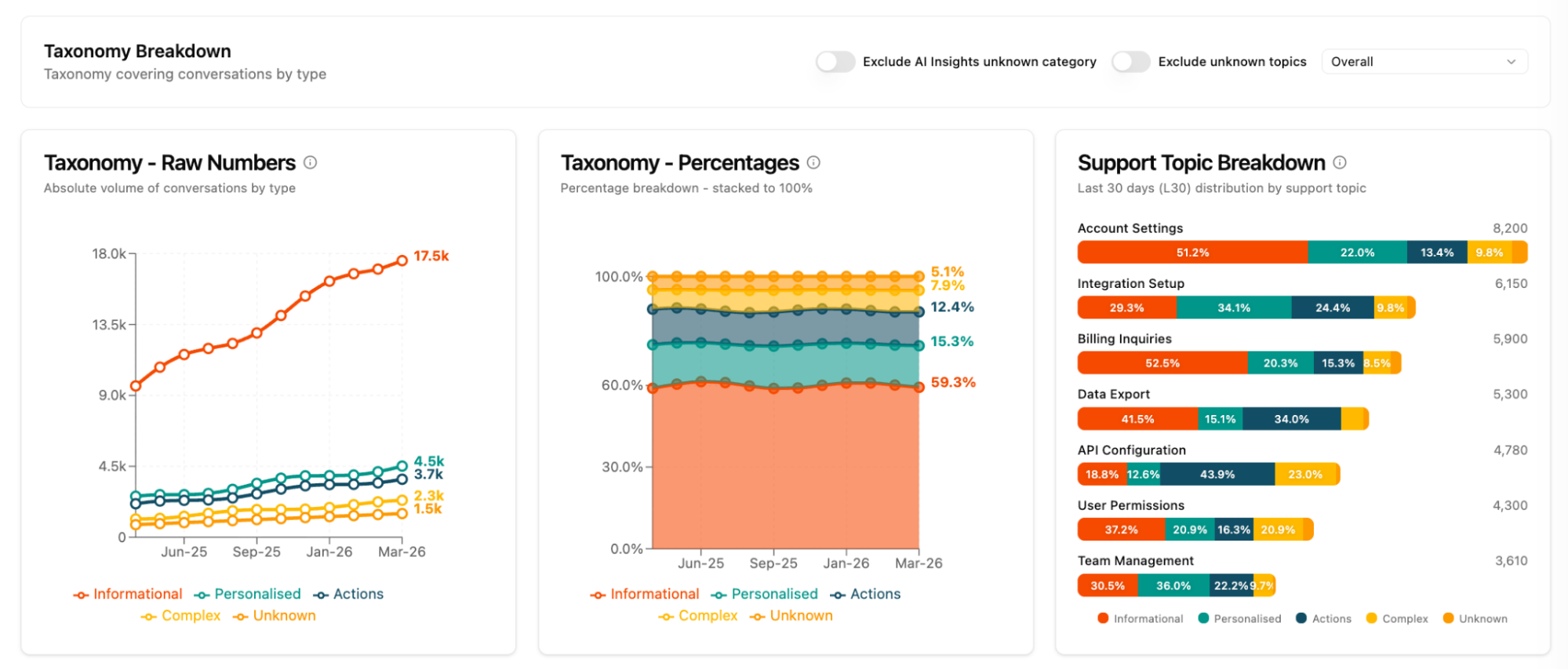
We take patterns learned in swarms and encode them into internal tooling inside our insights web app, Cockpit. Instead of analysis being a bespoke project, it becomes a workflow. For example, we scaled the automation taxonomy and this has enabled us to quickly understand automation potential for all customers.
Now, a customer success manager (CSM) can pick a customer, see their automation potential and current performance, understand the biggest issues, and propose next actions. This is how we scale the impact of swarm learnings through CSMs and Sales. It allows far more customers to benefit from the same patterns we see in high-touch work, without requiring direct data science involvement every time.
Cockpit also functions as a valuable proving ground. It gives us a way to test ideas across a much broader set of customers and see what generalizes before we consider taking anything further. In other words, we transform sharp, local signal into broadly useful guidance—an essential step in any AI Strategy that aims to balance precision with scale.
Level 3: Product – where the signal reaches maximum leverage. The real payoff comes when the patterns we have validated internally become part of the product itself. Instead of helping one customer directly, or helping many customers through internal teams, we deliver a feature directly to customers so they can improve Fin’s performance on their own. Today, the automation taxonomy is a part of Insights and accessible to customers who have this feature.
Another example is CX Score. It started with close work alongside Intercom’s Customer Support team to understand performance with Fin, initially through predicted CSAT and resolution. Over time, this work evolved into CX Score: a scalable way to measure conversation quality across all customers.
The product stage is fundamentally different from Cockpit because of the constraints. Cockpit provides a platform for our customer analyses/tools but it doesn’t need to scale as far as product. What moves into product has to work for every customer, without configuration, at scale, so it has to generalize. That bar is what protects long-term quality while unlocking product-led growth.
That’s why the move from Cockpit to product isn’t automatic. We’re not just asking whether something is useful, but whether it’s broadly useful, robust, and scalable enough to run across the entire customer base. As a product leader, I push for this discipline because it’s where customer success, engineering excellence, and business outcomes converge.
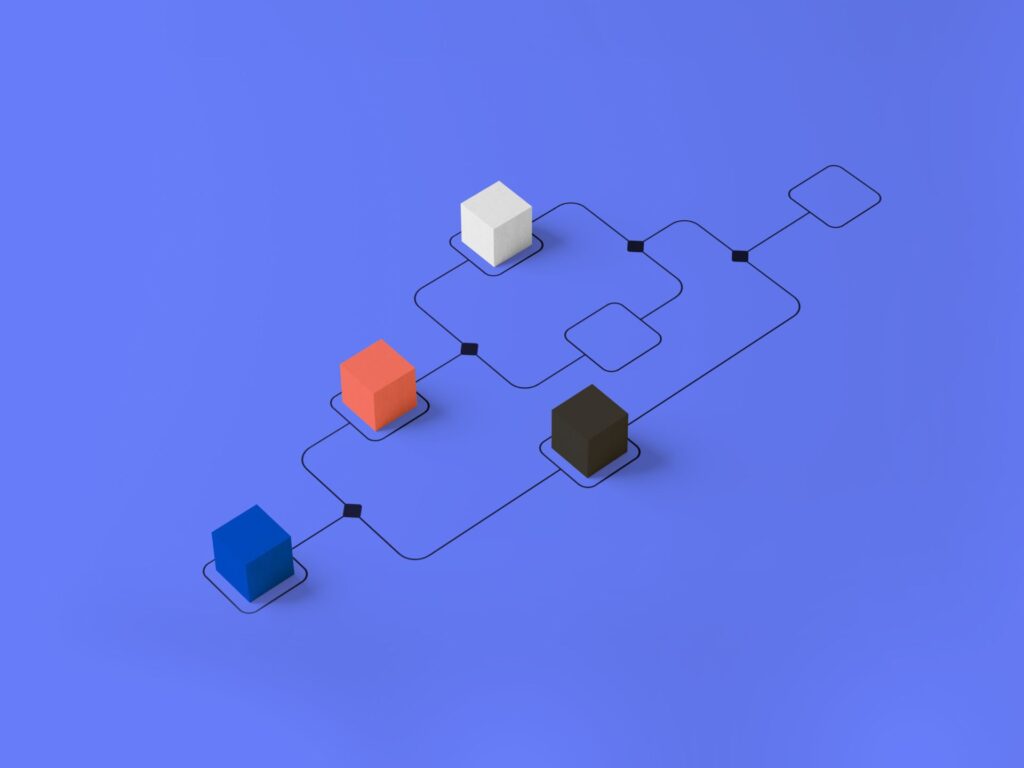
The loop. The model is simple. Swarms generate the best signal, grounded in real customer problems. Cockpit operationalizes that signal so CSMs and Sales can use it across many customers. Product takes the patterns that truly generalize and turn them into scalable features that enhance every customer’s experience.
This loop allows a small swarm data science function to have impact beyond a small set of high-touch accounts, resulting in a stream of continuous improvements across all three levels and an ever-increasing level of automation for our customers. Practically, it’s a repeatable playbook for product management leadership: start with high-signal discovery, prove repeatability, and only then scale through product. Done well, it compounds learning, accelerates time-to-value, and aligns the entire organization around measurable outcomes.
Inspired by this post on The Intercom Blog.



Leave a Reply