Unlocking Impact: What Amplitude’s MCP server and experimentation platform teach product leaders

Amplitude logo and wordmark on vivid blue background, showing a white circle with a stylized wave A icon and the text Amplitude; brand banner used for the Amplitude Blog.

In my role leading product management at HighLevel, I study the architectures and operating models behind high-velocity learning. I often reference "Amplitude's MCP server and its experimentation platform" as a benchmark for how to operationalize scale, reliability, and speed of insight across complex product ecosystems. That lens informs how I design processes, data flows, and decision loops that turn ambiguity into measurable outcomes.

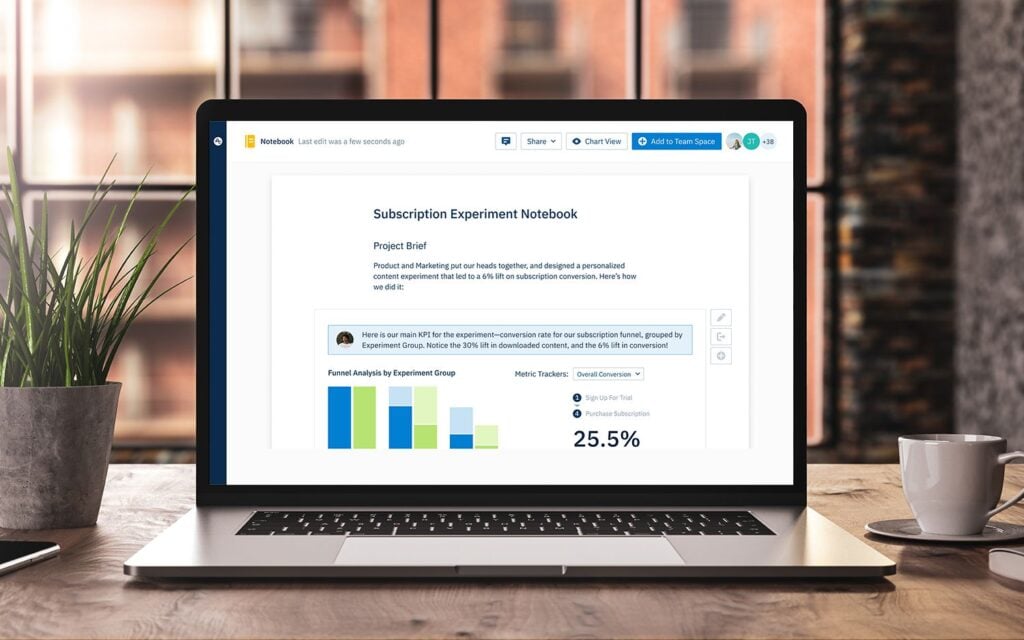
Experimentation is the heartbeat of eval-driven development. In practice, that means running disciplined A/B testing, deploying targeted feature flags to de-risk rollouts, and sizing experiments with a clear minimum detectable effect (MDE) so we avoid vanity wins. When teams internalize these habits, we shift from opinion-led debates to evidence-led decisions—and that’s where product-led growth compounds.

I'm an AI enthusiast, so I think a lot about how experimentation accelerates AI roadmaps. The same rigor that validates UI changes should govern prompts, retrieval strategies, and policy settings for LLM-backed features. By treating AI behaviors as first-class experiment surfaces—and tying them to user activation, retention analysis, and value proposition metrics—we move faster without compromising safety, privacy-by-design, or customer trust.

Making this work in production demands clean instrumentation and a unified analytics platform. I look for stacks that combine Amplitude analytics with robust observability and CI/CD to ensure we can ship, measure, and iterate continuously. When platform scalability and data governance are baked in from the start, product trios can focus on product discovery rather than firefighting pipelines or reconciling metrics.

My playbook is straightforward: define decision-worthy questions, map them to crisp success metrics, run right-sized experiments with feature flags, and use consistent analytics to close the loop. Do this well, and you create a durable advantage—faster learning cycles, sharper product positioning, and a culture that lives by outcomes over output. That’s the real lesson I take from platforms that execute experimentation at scale: process and technology are table stakes; what wins is the discipline to learn relentlessly.


Inspired by this post on Amplitude – Perspectives.


Book a consult png image

What benchmark does the author cite Amplitude’s MCP server and its experimentation platform as?

The author cites Amplitude’s MCP server and its experimentation platform as a benchmark for operationalizing scale, reliability, and speed of insight across complex product ecosystems.

What practices define disciplined experimentation?

Disciplined experimentation includes running A/B testing, deploying targeted feature flags to de-risk rollouts, and sizing experiments with a clear minimum detectable effect (MDE). When teams internalize these habits, decisions become evidence-led rather than opinion-led.

How does experimentation relate to AI roadmaps?

Experimentation accelerates AI roadmaps. The same rigor that validates UI changes should govern prompts, retrieval strategies, and policy settings for LLM-backed features. By treating AI behaviors as first-class experiment surfaces—and tying them to activation, retention, and value proposition metrics—we move faster without compromising safety or customer trust.

What does making this work in production demand?

Clean instrumentation and a unified analytics platform are required to ship, measure, and iterate. This is supported by a stack that combines Amplitude analytics with robust observability and CI/CD. When platform scalability and data governance are baked in from the start, product trios can focus on product discovery rather than firefighting pipelines or reconciling metrics.

What is the author's playbook?

The playbook is define decision-worthy questions, map them to crisp success metrics, run right-sized experiments with feature flags, and use consistent analytics to close the loop. Doing this well creates a durable advantage—faster learning cycles, sharper product positioning, and a culture that learns relentlessly.

What is the real takeaway from platforms that execute experimentation at scale?

Process and technology are table stakes. The real win is the discipline to learn relentlessly. That discipline drives a durable advantage.

Comments

Leave a Reply

Your email address will not be published. Required fields are marked *

Signup for Weekly Digest Emails

Categories

Archieve