
AI Native is more than a feature set—it’s an operating system for the entire business. In my role leading product, I’ve seen that companies win when they treat AI as a first-class citizen across strategy, architecture, workflows, and go-to-market. In this narrative, I unpack what “AI Native: What It Means and How to Get There” looks like in practice, sharing the frameworks I use to align vision, technology, and teams around measurable customer outcomes.
When I say AI Native, I mean a company where core value creation, customer experience, and internal operations are powered by AI end-to-end. It’s not just bolting on a chatbot. It’s rethinking product strategy, data foundations, and execution so we can deliver differentiated experiences faster, at lower cost, and with higher reliability. This shift demands clarity on where AI truly creates leverage—and the courage to say no where it doesn’t.
The starting point is strategy. I ground teams in outcomes vs output OKRs and a crisp value proposition: Which customer jobs-to-be-done benefit most from generative AI? Where can we unlock 10x improvements in speed, accuracy, or personalization? We prioritize a small number of high-signal use cases, size impact, and design Minimum Viable Experiments (MVEs) to de-risk assumptions before scaling. This is where build vs buy decisions matter—use foundation models and platforms for commodity needs, and invest your scarce engineering time where differentiation lives.
Next comes architecture and data. AI Native products thrive on a retrieval-first pipeline, strong context window management, and model-agnostic abstraction so we can swap providers as needs evolve. I emphasize privacy-by-design, robust data governance, and observability across prompts, embeddings, latency, and cost. These guardrails let us move quickly without compromising trust, especially in regulated or enterprise settings.
Execution shifts as well. I organize empowered product teams and product trios around the highest-value workflows, not components. Continuous discovery pairs with CI/CD, feature flags, and telemetry so we can test safely in production. Eval-driven development is non-negotiable: we design offline and online evaluations that mirror real user success criteria—accuracy, helpfulness, safety, and business outcomes—then wire those evals into the build pipeline to prevent regressions.
On the intelligence layer, we increasingly rely on AI workflows and agentic AI to orchestrate multi-step tasks—retrieval, reasoning, tool use, and verification—with human-in-the-loop where appropriate. Clear system prompts, tool definitions, and fallbacks keep behavior predictable. This is where product craft meets prompt engineering and LLMs for product managers: the best teams codify patterns, share prompts in a living library, and standardize on a lightweight AI product toolbox.
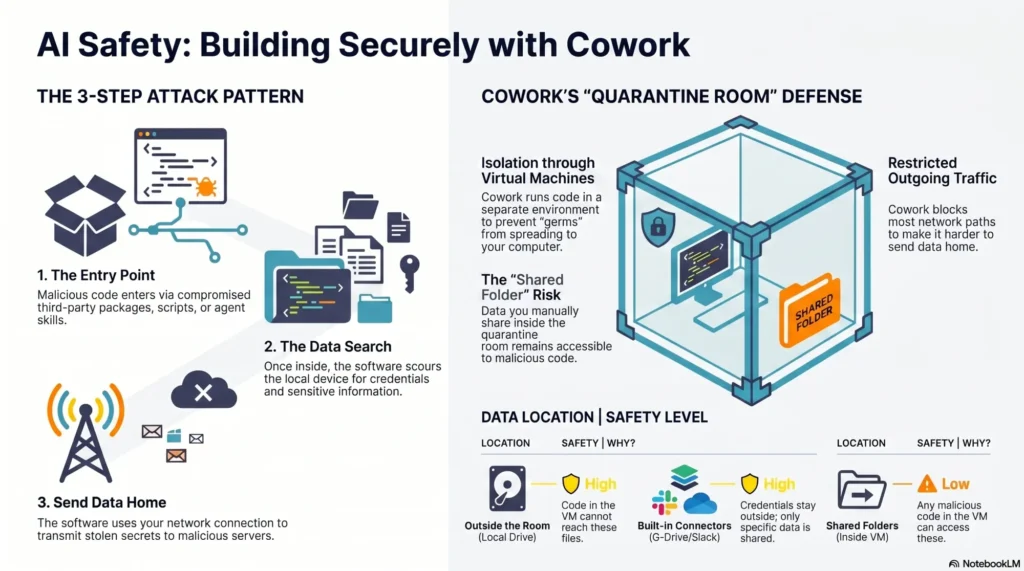
Risk and reliability are part of the product, not an afterthought. I run AI risk management as a continuous program spanning red teaming, content filters, PII handling, audit trails, and incident response. We tie policies to concrete controls and create simple dashboards leaders can trust. The goal is to ship boldly with safety, maintainability, and scale in mind.
Becoming AI Native also changes how we grow. We lean into product-led growth with clear in-app guides, product tours, and activation paths that teach users where AI shines. CRM integration ensures sales and success teams have context to coach customers. Pricing experiments—often usage- or value-based—align revenue with the impact customers feel, while retention analysis helps us double down on the use cases that drive compounding value.
To make this real, I use a 90-day plan. Days 0–30: align on strategy, top use cases, and risk posture; stand up data pipelines and a basic retrieval-first stack; define evaluation metrics. Days 31–60: ship MVEs behind feature flags, run head-to-head evals, and instrument observability; start a cross-functional community of practice. Days 61–90: scale the winning use cases, formalize governance, and publish a roadmap tied to outcomes—not just features—with clear SLAs and success metrics.
The destination is a durable advantage: faster iteration cycles, smarter experiences, and a product strategy that compounds with every interaction. If you’re ready to make the leap, start small, measure obsessively, and build the muscle to ship, learn, and adapt. That’s the heart of becoming AI Native—and it’s well within reach.
Inspired by this post on Product School.





Leave a Reply