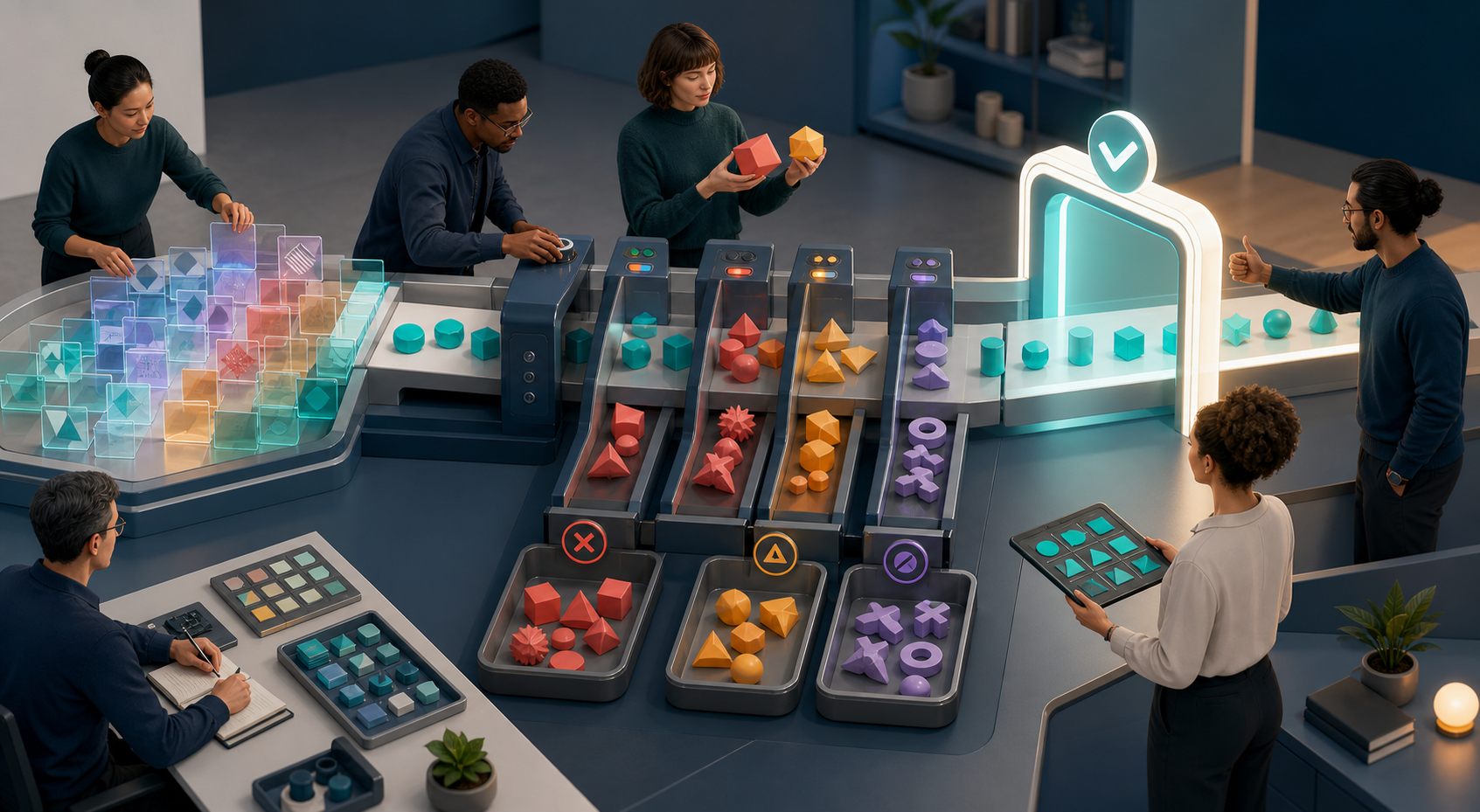
When I push our organization to adopt the product operating model, I’m emphasizing a foundational shift—from “shipping roadmaps of features (output)” to solving real customer and business problems, measured by “business results (outcomes)”. That’s the difference between activity and impact, and it’s the only way to build durable value at scale.
This change inevitably reaches beyond the product organization. It reshapes how company stakeholders in Sales, Marketing, Customer Success, Finance, Legal, Security, and Operations engage with product teams, and it reframes what they expect from us. Instead of asking, “When will feature X ship?” they learn to ask, “How will we move the outcome that matters?”
In practice, the product operating model is a contract: product teams commit to outcomes, and stakeholders commit to partnership. That partnership means we co-own the problem, align on evidence, and share accountability for results. The reward is clarity—everyone sees how their work ladders to strategy and why the sequence of work makes sense.
Here’s how I align stakeholders around this model. First, I ground everything in outcomes vs output OKRs. We replace feature roadmaps with a clear strategy, prioritized problems, and measurable objectives. Our product roadmapping and sprint planning then serve the objectives—not the other way around—so capacity is allocated to the highest-leverage bets.
Second, I build empowered product teams around product trios (product, design, engineering). We practice continuous discovery with stakeholders: we share opportunity trees, test riskiest assumptions early, and bring partners into research when it informs go-to-market strategy, pricing, or enablement. This keeps us honest and avoids late-stage surprises.
Third, I establish operating rhythms that make outcomes visible. Monthly stakeholder reviews focus on progress toward objectives and what we’re learning—not status theater. Quarterly, we connect OKRs to business performance so leaders can see the throughline from discovery and delivery to pipeline, retention, or margin. If priorities shift, we renegotiate objectives explicitly.
Fourth, I define metrics that stakeholders trust. We use a balanced set of leading indicators (activation, engagement, cycle time) and lagging indicators (revenue, retention, unit economics). We socialize definitions early so no one debates the scoreboard mid-game. The result: faster decisions and less “data whiplash.”
Fifth, I invest in change management. Moving from outputs to outcomes can feel threatening if your success has historically been measured by launch volume or roadmap commitments. I address this head-on with training, transparent comms, and clear decision rights. The message is simple: outcomes create more autonomy for empowered product teams and more predictability for stakeholders.
At HighLevel, this approach has been especially powerful when cross-functional dependencies are high. For example, when we set an objective to improve user activation for a new CRM integration, we didn’t promise a bundle of features. We committed to a measurable lift in activation and a shorter time-to-value, co-owned with Customer Success and Marketing. That alignment unlocked smarter experiments, tighter enablement, and a more credible launch narrative.
The anti-patterns are predictable: treating OKRs as a renaming of the roadmap, equating discovery with indecision, or isolating product decisions from go-to-market strategy. The cure is equally consistent: bring stakeholders into discovery, attach every bet to an objective, and show progress with evidence—not just demos.
Ultimately, the product operating model is a leadership choice. It asks us to trade certainty theater for learning velocity, and feature checklists for business impact. When stakeholders see that shift pay off—in faster cycles, clearer priorities, and results that matter—support for the model moves from compliance to conviction.
Inspired by this post on SVPG.