

Shipping features isn’t enough; users adopt what they understand and trust at the moment of need. Over the last several years leading product at HighLevel, I’ve seen in-app guides become one of the highest-leverage tools for engagement, smoother onboarding, and long-term retention when they’re built and measured with rigor.
Discover actionable strategies to boost engagement, reduce friction, and improve retention with Amplitude’s in-app guides
Why do in-app guides matter so much? They operationalize product-led growth by meeting customers in context—inside the workflow—so users reach time-to-value faster and revisit features more confidently. When paired with Amplitude analytics, guides become a closed-loop system: we target cohorts precisely, experiment safely, and connect each nudge to measurable outcomes rather than vanity metrics.
I start by mapping the end-to-end journey and identifying moments that cause friction: first-run onboarding, the “aha” moment, advanced feature discovery, and support deflection. From there, I prioritize one high-impact objective—activation rate, time-to-value, or retention—and choose a single surface to improve before expanding. This focus avoids guide sprawl and keeps the team aligned on outcomes, not output.
Effective guide design is contextual, concise, and progressive. Tooltips, checklists, hotspots, and coachmarks should appear only when the user’s intent and state warrant it. Keep copy crisp, show one step at a time, and provide an obvious escape hatch. Respect accessibility with clear contrast, keyboard navigation, and screen-reader-friendly text. Above all, guides should reduce cognitive load—not add it.
Targeting is where Amplitude shines. I build behavioral cohorts (e.g., signed in 3 times, viewed feature X but never completed action Y) and trigger guides based on event conditions such as page, role, device, or prior completion. I set frequency caps, recency windows, and cool-down rules to prevent fatigue. Each guide is tied to a single KPI, with guardrails to avoid overlapping experiences.
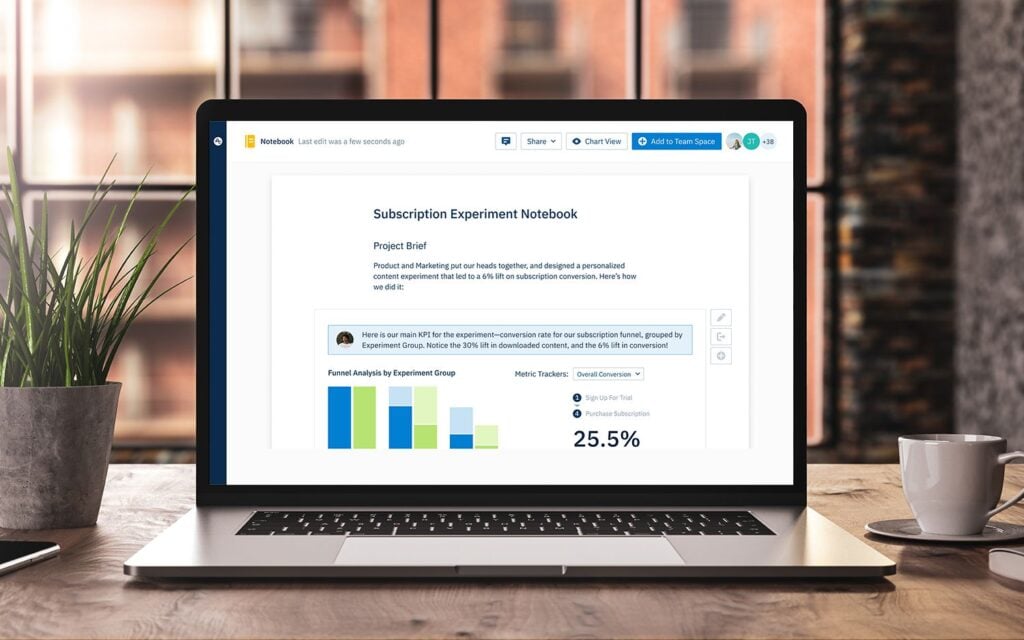
Every guide is an experiment. I A/B test variants of copy, ordering, and UI pattern, measuring uplift on activation, task completion, time-to-value, and downstream retention. I instrument success and drop-off events end to end, confirm sample size and duration, and review results in Amplitude funnels and cohorts so we can attribute behavior change to the guide—not to adjacent releases.
Operationalizing this work requires product trios to move in lockstep. We maintain a guide library with reusable templates, a naming and versioning scheme, and a simple governance workflow so marketing and support can contribute without creating noise. Localization, role-based targeting, and changelog notes ensure new experiences land smoothly across segments.
Common pitfalls to avoid: launching blocking modals that interrupt flow, over-instructing users who already know the path, and shipping guides without a removal plan once the metric improves. Another mistake is treating guides as support bandaids for poor UX. When a guide highlights friction, we turn that insight into a backlog item and fix the underlying design.
In practice, I’ve seen meaningful lifts in activation and retention by sequencing a welcome checklist, a contextual tooltip on the first critical action, and a just-in-time coachmark that offers help only after an error or hesitation. The pattern is simple: teach less, learn more, and let the data decide what stays.
If you’re getting started, try this five-step sprint: map the journey and choose one KPI; define a precise cohort in Amplitude; design the smallest contextual guide that unblocks the next step; A/B test with clear success events; and retire or iterate based on cohort impact. Repeat this loop across the journey to scale adoption without overwhelming users.
In-app guides work best when they are invisible helpers. With Amplitude, we can target with precision, measure what matters, and continuously refine experiences that earn engagement, reduce friction, and sustain retention.
Inspired by this post on Amplitude – Best Practices.









Leave a Reply