

I’ve spent my career building products that move the needle, and as a Principal Product Manager and product leader at HighLevel, I focus on the work that compounds: clear strategy, rigorous discovery, and measurable outcomes. My role is to turn ambition into traction by aligning vision with execution, then proving impact with data, not anecdotes.
Great product strategy starts with customer value and ends with business results. I frame the narrative around a defensible value proposition, clarify points of parity and points of differentiation, and translate that into driver trees tied to outcomes vs output OKRs. This creates line-of-sight from our roadmap to metrics that matter—Net Recurring Revenue (NRR), activation, retention, and expansion—so teams know exactly why their work matters.
Discovery is continuous, not a phase. I partner in product trios to run continuous discovery through customer interviews, journey mapping, and an opportunity solution tree that separates signal from noise. By keeping a weekly cadence of learning, we reduce risk early, refine problem statements, and ensure we’re solving the highest-leverage jobs to be done for our customers.
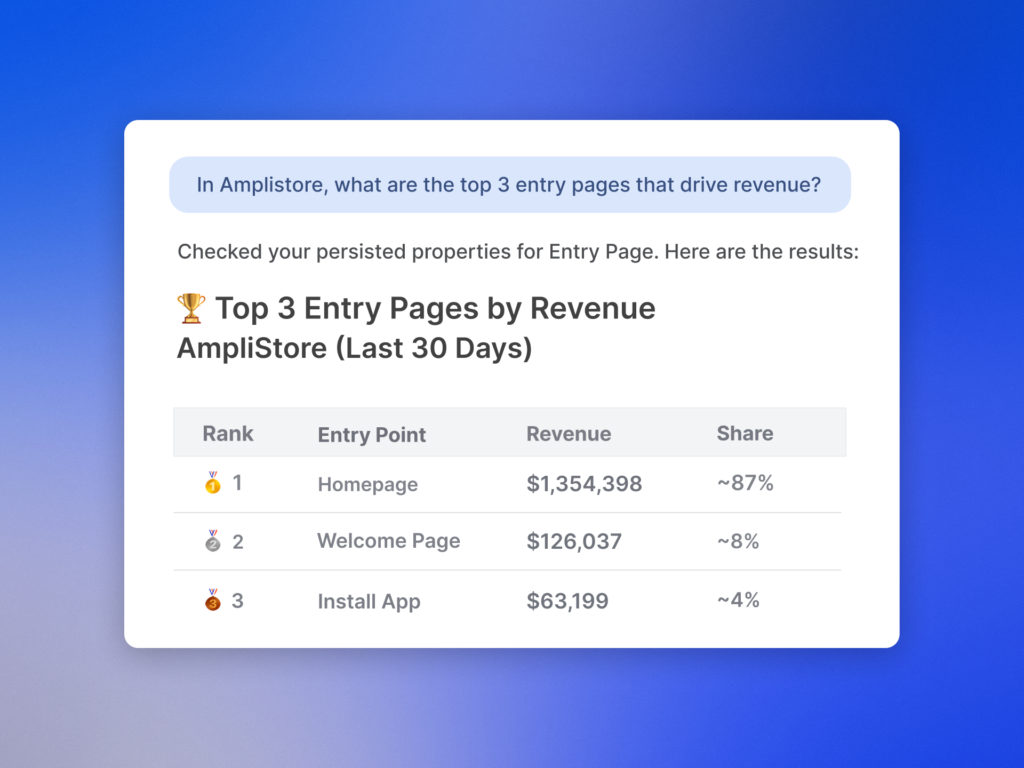
Evidence beats opinion, so I obsess over instrumentation and experimentation. I rely on Amplitude analytics for behavioral analytics, cohorting, funnel health, and retention analysis, and I validate hypotheses with A/B testing designed around a minimum detectable effect (MDE). With feature flags, we decouple deployment from release, ramp value safely, and learn fast without exposing the entire base to risk.
Execution only works when planning is pragmatic and transparent. I run product roadmapping and sprint planning as living systems informed by discovery insights and real usage data. That means tighter stakeholder management, clearer trade-offs, and fewer surprises for go-to-market partners—so we ship confidently and tell a crisp story from beta through scale.
I also apply modern AI practices where they create real leverage. For exploration and prototyping, I use gen ai for product prototyping and practical workflows from LLMs for product managers to accelerate research synthesis, scenario mapping, and content generation—always with human-in-the-loop judgment, data governance, and privacy-by-design as non-negotiables.
The result is a disciplined, human-centered, and data-powered approach. I build empowered product teams that learn faster than the market, align on few-but-mighty bets, and compound outcomes over outputs. That’s how a Principal Product Manager consistently turns strategy into durable, product-led growth.
Inspired by this post on Amplitude – Perspectives.



Leave a Reply