
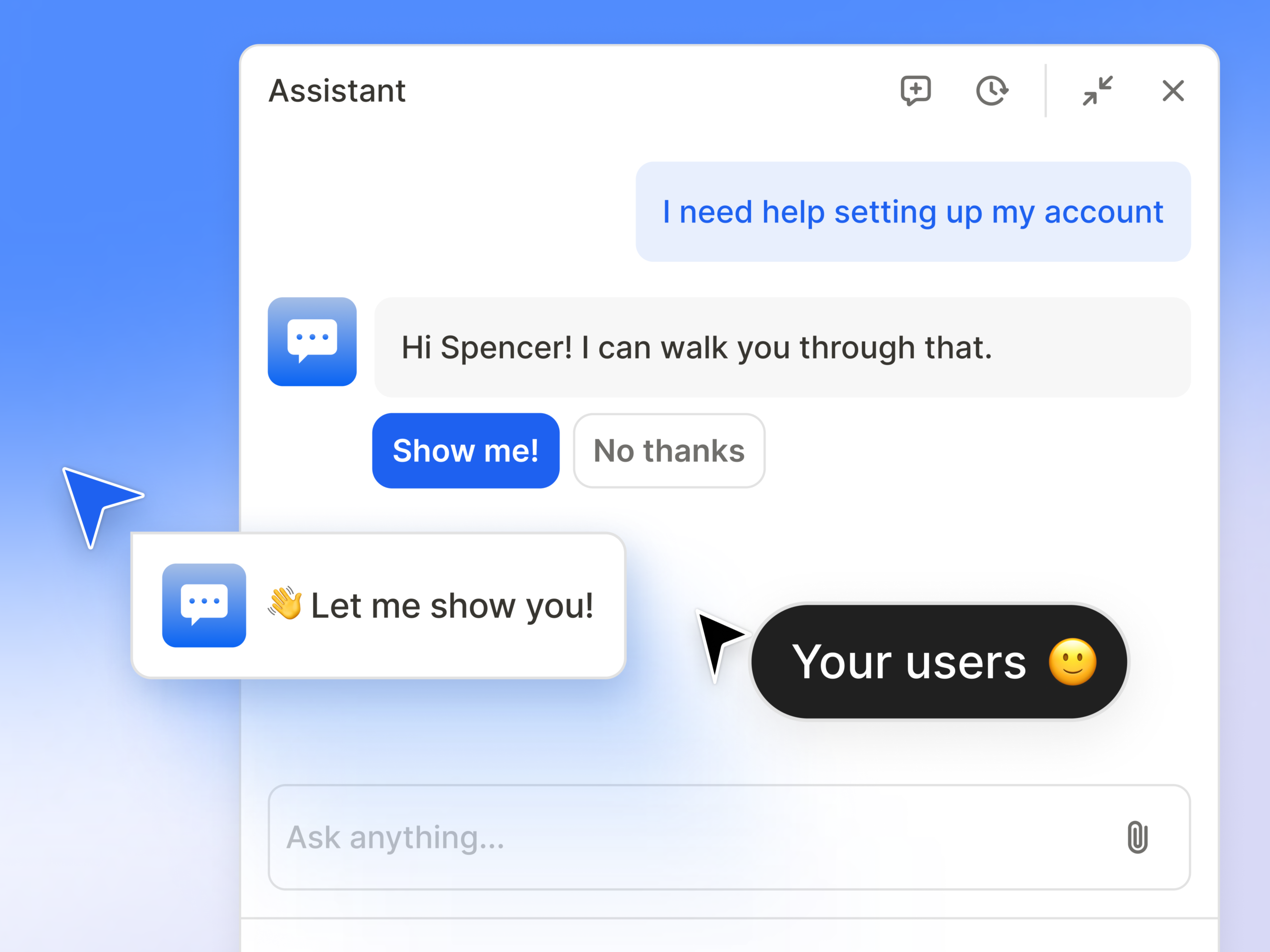
Your product deserves a support experience that does more than point users to a help article. In my work leading product teams, I’ve seen how an intelligent, in-product assistant can reduce friction, accelerate user activation, and create the kind of product-led growth that traditional support channels struggle to deliver. The bar is higher now: customers expect immediate, context-aware help that feels proactive, measurable, and trustworthy.
When I evaluate support solutions, I look for three capabilities: an assistant that truly knows the user’s context, can act on their behalf to resolve issues end-to-end, and can prove the impact with rigorous measurement. Anything less is just another interface to your knowledge base. The shift to agentic AI makes this possible—if it’s grounded in behavioral analytics and integrated with your unified analytics platform.
Learn more about Amplitude AI Assistant. Our in-product support agent knows your users, acts on their behalf, and measures whether it actually helped.
That promise resonates with how I design AI Strategy: start with data fidelity, not dialog. When an assistant is wired into Amplitude analytics and behavioral analytics, it can understand where a user is in the journey, the features they have (or haven’t) adopted, and which nudges or in-app guides historically drive success. This is the foundation for precise, contextual help—surfacing the right product tours at the right moments and removing guesswork.
Knowing users isn’t enough; the assistant must act. With agentic AI, the assistant can execute safe, auditable steps on a user’s behalf—updating settings, triggering a workflow, or guiding a multi-step configuration—rather than handing off a to-do back to the customer. Done well, this reduces time-to-value and support tickets while aligning with a thoughtful customer support ai strategy that respects permissions, privacy-by-design, and clear guardrails.
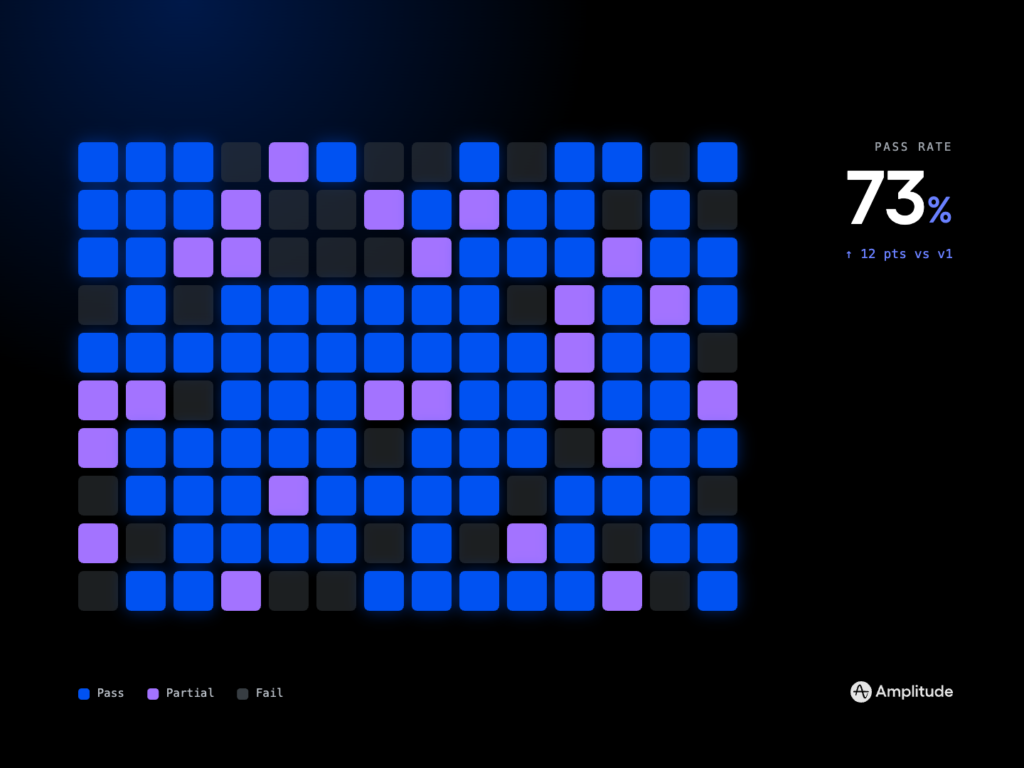
Equally important is measurement. I expect every AI touchpoint to demonstrate lift: faster time-to-resolution, higher feature adoption, improved retention, and lower churn. This is where robust A/B testing, Agent Analytics, and retention analysis come in—so we can quantify the assistant’s contribution against meaningful product outcomes, not vanity metrics. If we can’t measure it, we can’t manage it.
Operationally, I advise teams to pilot with narrowly scoped, high-impact journeys and iterate with tight feedback loops. Instrument the assistant’s actions and outcomes, set minimum detectable effect thresholds for experiments, and continually refine prompts and playbooks. Tie insights back to your unified analytics platform so learnings inform roadmap choices and reinforce a durable product-led growth motion.
In short, the next generation of in-product support will be built on data-rich context, agentic execution, and rigorous proof of value. That’s the standard I hold my teams to—and the experience users deserve when they ask for help.
Inspired by this post on Amplitude – Best Practices.




Leave a Reply