
Too many teams still celebrate what they ship rather than what they change. I’ve learned—sometimes the hard way—that the most expensive mistake in product management is confusing outputs with outcomes. Understand the key differences between output vs. outcome in product management — and how to keep your team focused on what really drives results.
Here’s how I draw the line: outputs are the features, tickets, and releases we produce; outcomes are the measurable changes in user behavior and business performance we create—activation rates, retention, expansion, and time-to-value. If an initiative doesn’t move a metric that matters, it’s output without impact. That’s how feature factories are born.
The confusion is costly because it distorts incentives. Teams optimize for velocity, story points, or deployment frequency and mistake motion for progress. Engineering excellence and DORA metrics matter, but they’re not substitutes for product outcomes. When OKRs drift into task lists, we ship more and learn less. I’ve seen ambitious roadmaps hit every delivery date and still miss the market because we didn’t change customer behavior.
To break that cycle, I anchor planning and reviews to outcome-based OKRs. A good objective might be: increase new-account user activation from 28% to 45% this quarter. The anti-pattern is: ship onboarding redesign v2. The former sets a clear behavioral target; the latter constrains creativity and locks us into a solution before discovery. This is the practical heart of outcomes vs output OKRs.
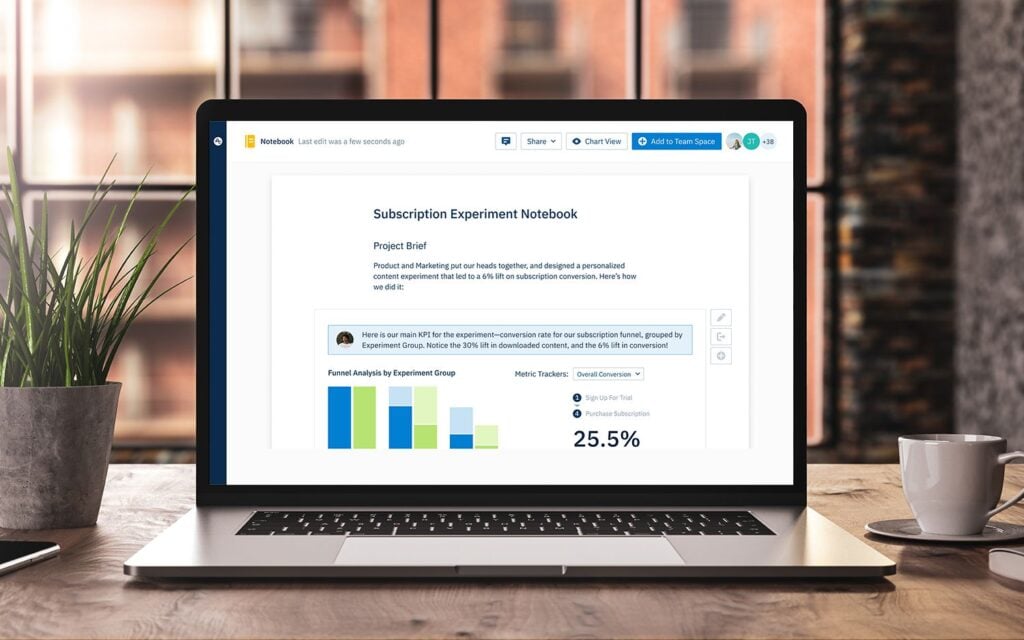
From there, I define leading indicators that predict the desired outcome—time-to-first-value, completion of core actions, day-7 retention—and instrument them early. Tools like Amplitude analytics help us see whether an experiment is unlocking behavior change or just producing activity. I also set guardrail metrics (support volume, performance, and NPS) so we don’t “succeed” by creating a new failure mode.
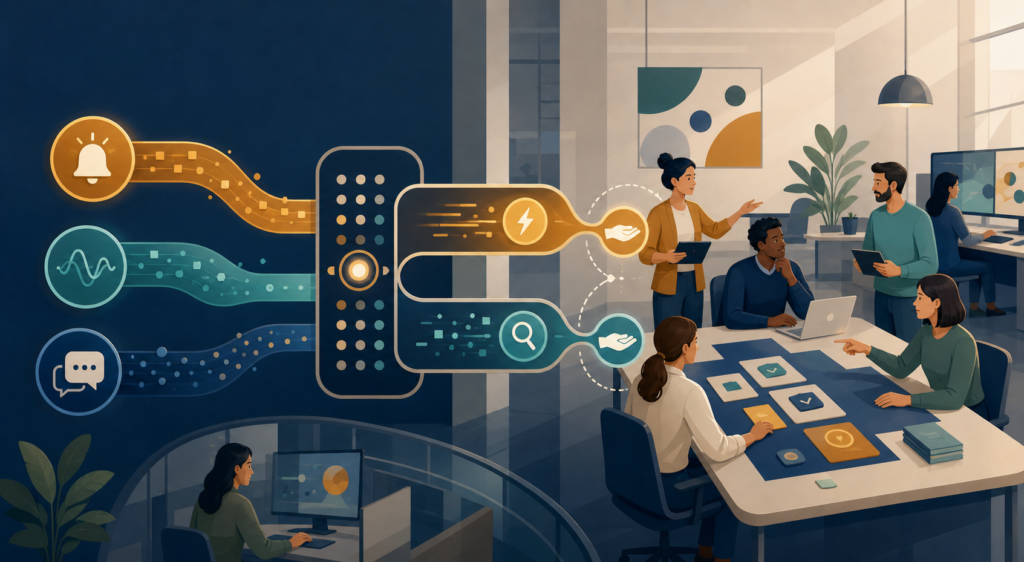
The delivery model matters, too. Empowered product teams—built as product trios of product, design, and engineering—own the problem and the outcome. We invest in product discovery to validate assumptions, size opportunities, and find the minimum viable change that moves the metric. A/B testing with a clear minimum detectable effect (MDE) makes our experiments faster, cheaper, and more conclusive.
Roadmaps then become strategic bets rather than feature lists. Each bet articulates the opportunity, the hypothesized solution, the expected outcome, and the evidence that would change our mind. In sprint planning, we slice increments to learn sooner, not just to deliver sooner. CI/CD accelerates shipping; outcome instrumentation accelerates learning.
Stakeholder conversations shift as well. Instead of debating which features to build, we align on the customer problem, the value proposition, and the measures of success. QBRs showcase what changed—activation, adoption, retention—not just what shipped. This is how we move from feature requests to outcome commitments and sustain product-led growth.
I’ve found that outcomes-first execution energizes teams. Clarity of purpose invites creativity, and the autonomy to experiment fuels ownership. When we celebrate behavior change over backlog burn-down, we stop playing to the roadmap and start playing to win the market.
If your team is stuck in output mode, start small: rewrite one key objective as an outcome, instrument a leading indicator, and run a scoped experiment. When the metric moves, let that win reset the culture. Momentum follows outcomes.
Inspired by this post on Product School.







Leave a Reply