

For much of my career, I reflexively favored building experimentation tooling in-house. Over the last few years, I’ve changed my mind. The ecosystem has matured, the bar for statistical rigor has risen, and the opportunity cost of reinventing the wheel has become too high to ignore. Read why the industry has changed to more broadly embrace vendor solutions—and why that's a good thing for innovation.
The short version: buying core experimentation capabilities increasingly lets us learn faster, reduce risk, and focus scarce engineering cycles on true differentiation. I still believe in building when it creates competitive advantage, but I’ve seen too many teams burn time on “table stakes” infrastructure instead of delivering outcomes that matter.
When I evaluate build vs. buy, I start with two questions: Is this capability a point of parity or a source of competitive differentiation? And what is the real total cost of ownership over three years, including staffing, maintenance, on-call, compliance, roadmap drag, and delayed time-to-learning? Most experimentation platforms are now points of parity; the differentiation is how quickly and responsibly we learn, not whose statistics package we forked.
Modern experimentation isn’t just a split URL test. It demands identity resolution across devices, reliable bucketing, exposure logging at scale, edge delivery for flags, guardrail metrics, and rigorous methods like minimum detectable effect (MDE), CUPED, and sequential testing. Add privacy requirements, data governance, and auditability, and the platform burden grows beyond a “quick internal tool.” This is exactly where vendors have pulled ahead, baking in best practices we’d otherwise relearn the hard way.
There are still good reasons to build. If you operate under unique latency constraints (e.g., sub-20ms decisions at the edge), have non-negotiable regulatory boundaries, or your experimentation model is deeply coupled to proprietary ML systems, bespoke tooling can be justified. I’ve supported builds in those cases—but only with a clear plan for long-term ownership, documentation, and explicit trade-offs.
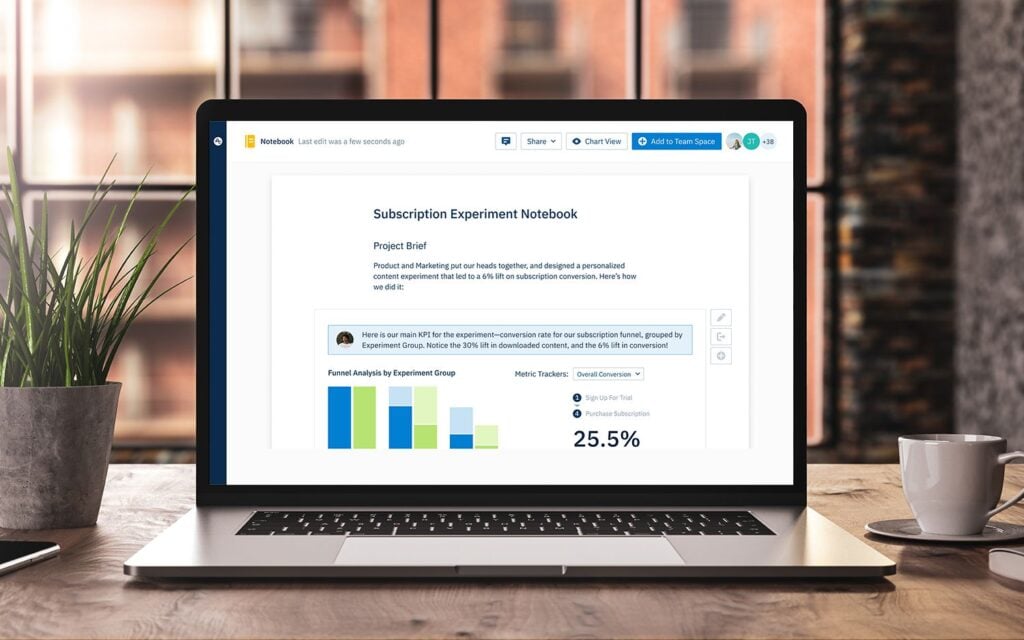
More often, buying is the sane default. Vendor solutions give us hardened SDKs, consistent flagging, proven stats engines, and integrations with analytics—freeing teams to spend their energy on high-quality hypotheses and better product discovery. Connecting experiment outcomes to a unified analytics platform (and tools like Amplitude analytics) helps us align on source-of-truth metrics, tighten feedback loops, and empower product trios to make confident, outcome-driven decisions.
A hybrid approach frequently wins: buy the platform core, then extend it. Build custom decisioning services where needed, enrich telemetry, and add domain-specific metrics on top. I’ve had success pairing vendor platforms with forward deployed engineers and thoughtful developer evangelism to create the best of both worlds—speed from the vendor, nuance from our domain.
If you’re considering a shift, here’s the adoption playbook I use: – Define success upfront: decision latency targets, MDE guidance, guardrail metrics, governance needs, and privacy constraints. – Run a time-boxed pilot with an A/A test and a handful of A/B testing use cases. Validate exposure logging, bucketing stability, and metric parity against your analytics stack. – Align on outcomes vs output OKRs, so “more experiments” is never the goal; better decisions are. – Establish data governance and metric definitions before full rollout. Treat metrics as a product, not a spreadsheet. – Invest in enablement: in-app guides, product tours, and training for PMs, engineers, and analysts. Proactive stakeholder management is what separates a successful rollout from shelfware.
AI is accelerating this shift. Gen AI for product prototyping and agentic AI assistants can help generate hypotheses, auto-suggest experiment designs, and flag risky rollouts in real time. Pairing AI with a robust experimentation backbone improves both velocity and quality—without asking teams to become statisticians overnight.
My bottom line: the industry’s embrace of vendor experimentation platforms is not a retreat from craftsmanship—it’s a strategic allocation of talent. By buying where the market is excellent and building where our differentiation truly lives, we learn faster, reduce risk, and compound innovation. If you haven’t revisited your build vs. buy calculus recently, now is the time. Your customers don’t reward you for owning a stats engine; they reward you for shipping better outcomes, sooner.
Inspired by this post on Amplitude – Perspectives.









Leave a Reply