
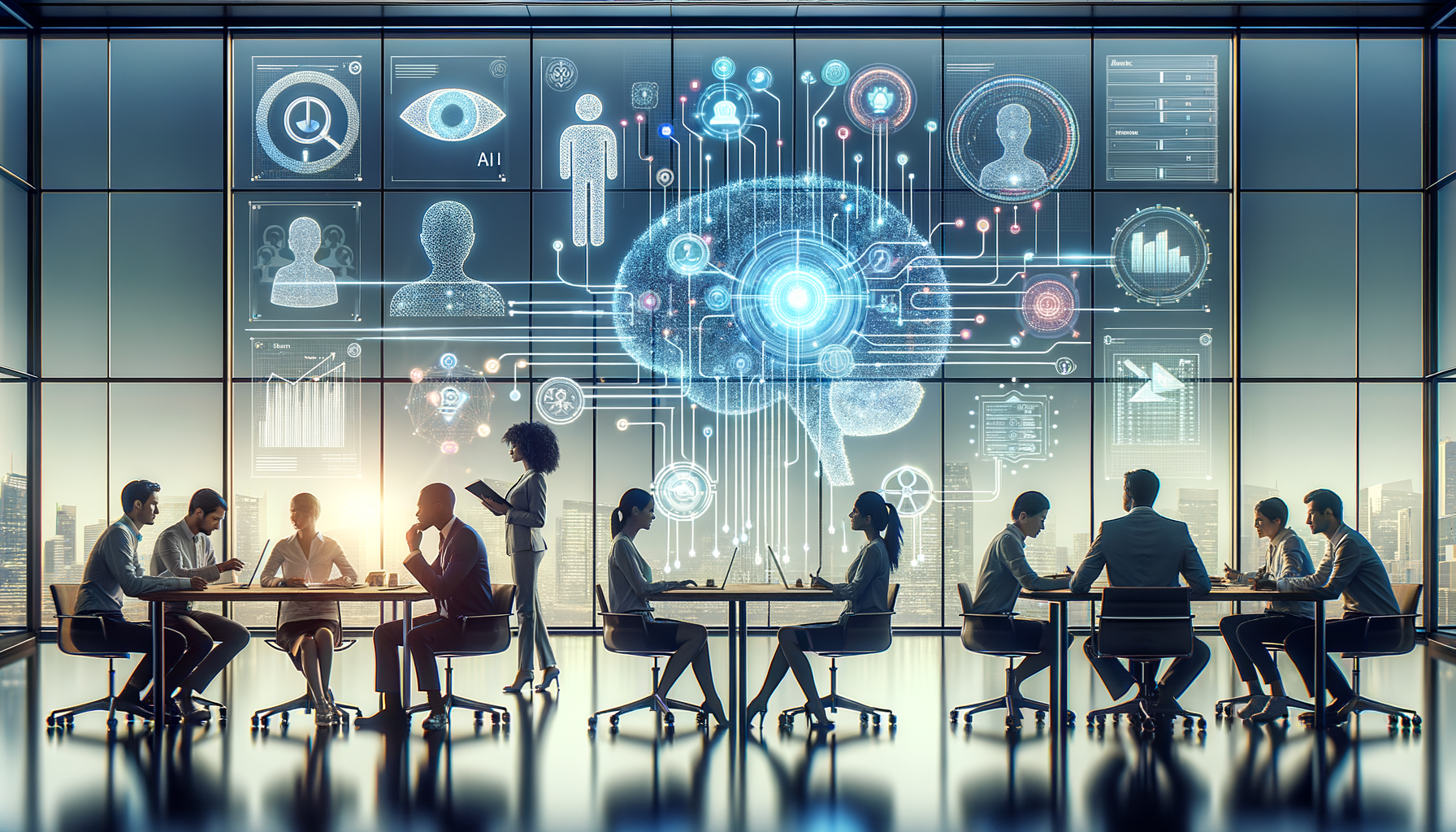
In this article, I want to talk about where I believe generative AI is going to take the roles on a product team, and the team topologies of product organizations. I’m motivated to write this both because I think a vision of where we should try to go is important, and also because I see…
That conviction has only grown as I’ve led cross-functional teams through real deployments. The traditional boundaries between product management, design, engineering, and customer success are blurring as generative AI moves from novelty to dependable copilot. What follows is the vision I’m using to guide our roadmap, hiring, and rituals—practical, near-term, and focused on outcomes.
First, on roles: product managers will spend less time drafting artifacts and more time validating assumptions and sequencing bets. AI will draft PRDs, summarize interviews, propose opportunity trees, and even flag risks. But we will anchor decisions on outcomes vs output OKRs, using AI to widen the option set, not to outsource accountability.
Design will accelerate dramatically. With gen ai for product prototyping, designers can turn rough concepts into interactive flows in hours, stress-test copy for clarity, and explore accessibility states before code is written. The craft shifts toward problem framing, system thinking, and quality thresholds—where human judgment remains the differentiator.
Engineering becomes even more product-facing. Forward deployed engineers will pair with PMs and designers at customer sites (or virtually) to co-create solutions, integrate LLMs, and harden edge cases. Model-aware engineering, evaluation harnesses, and data pipeline stewardship become core competencies, while “prompt engineering” becomes a skill embedded across functions rather than a standalone role.
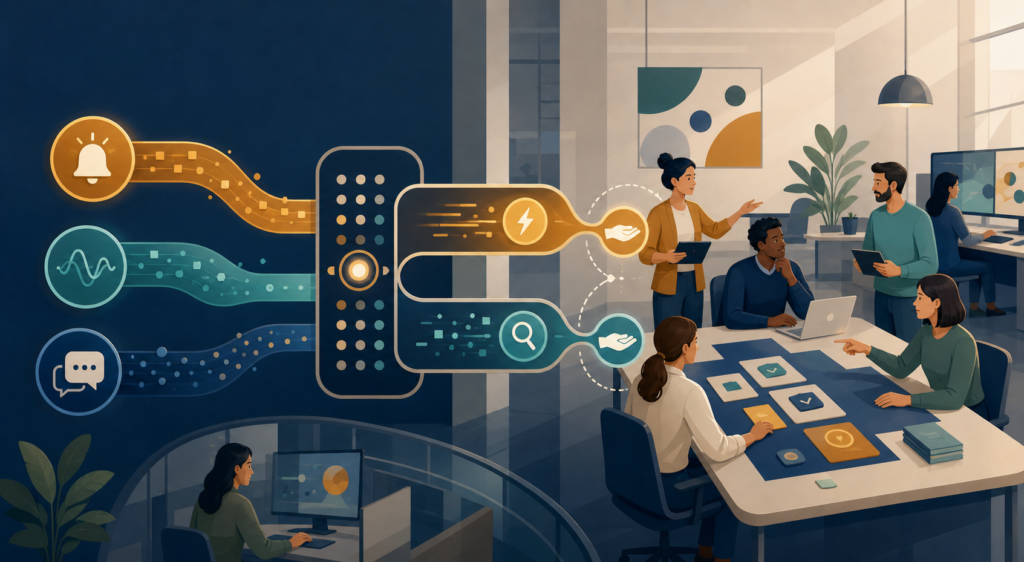
On team topology: our default unit stays the autonomous, outcome-owning squad, but we add an enablement layer. An AI platform team supplies shared services—feature stores, evaluation datasets, observability, and safety guardrails—so product teams can move fast without reinventing infrastructure. Guilds or communities of practice steward reusable prompts, patterns, and model cards across squads.
Discovery evolves too. We’ll pair classic product discovery with AI-accelerated research: large-scale synthesis of qualitative feedback, scenario exploration with synthetic data, and rapid hypothesis testing through simulated cohorts. Human-in-the-loop remains non-negotiable; generative AI helps us see more options, but customers still tell us what’s true.
Customer support becomes a flywheel. A thoughtful customer support ai strategy turns conversations into structured insights, feeds prioritization, and powers in-product guidance. The same signals that resolve tickets should inform discovery, experimentation, and roadmap trade-offs.
Governance and safety must be proactive. We’ll define golden datasets, create red-team playbooks, and adopt model-level SLAs alongside product SLAs. Evaluation goes beyond accuracy to include fairness, latency, explainability, and cost, with clear escalation paths when models drift or fail.
Measuring impact changes as well. Beyond feature delivery, we’ll track time-to-learning, reduction in cycle time, precision of targeting, and the quality of decisions AI actually improves. The goal is durable product-market fit lessons, not vanity metrics or demo-driven development.
Here’s a pragmatic 90-day starter plan: identify two high-signal use cases where latency, cost, and safety are manageable; form a cross-functional pod with a PM, designer, forward deployed engineers, and a data partner; instrument robust evaluation gates; align on outcomes vs output OKRs; ship, learn, and codify the playbook. In parallel, stand up the minimal AI platform services your squads will reuse.
This is a leadership challenge as much as a technical one. Product management leadership must set the bar for ethical use, invest in upskilling, and reorganize incentives around outcomes. The teams that win will treat generative AI as a force multiplier for curiosity, learning, and craftsmanship—not a shortcut around them.
If we do this well, our product teams will be faster, more customer-obsessed, and more resilient. The tools are ready. The real question is whether we are ready to evolve how we work, measure progress, and lead.
Inspired by this post on SVPG.





Leave a Reply