

Outcomes are hard. I’ve felt that tension in every product organization I’ve worked with, especially when the pressure to ship is loud and the signal from customers is faint. Moving a team from measuring success by output to measuring success by outcomes requires clarity, patience, and a willingness to rethink how we plan, prioritize, and learn.
Here’s how I frame the distinction. Output is what we build and launch. Outcome is the meaningful change for customers and the business—adoption, retention, reduced time-to-value, improved conversion, lower cost-to-serve. When we focus on outcomes, we stop celebrating activity and start optimizing for impact.
Why is this shift so difficult? Outcomes depend on human behavior, not just code. They emerge from messy, interconnected systems: customer jobs-to-be-done, go-to-market motions, pricing, onboarding, and even customer support. That complexity makes outcomes slower to observe, harder to attribute, and easy to dismiss when a deadline looms. It takes leadership, consistent product discovery, and strong instrumentation to stay the course.
OKRs are the most practical tool I use to make outcomes concrete. The Objective expresses a meaningful change we seek. The Key Results quantify that change in customer and business terms. Great KRs describe effects, not activities: increase weekly active usage of the new workflow by X%, reduce onboarding time to first value to Y minutes, lift self-serve conversion by Z%, cut support tickets per account for feature A by N%.
The common pitfalls are predictable. If your KRs read like a roadmap (“ship X,” “integrate Y”), you’re back to output. If they’re vanity metrics (“page views” with no linkage to value), you won’t learn. If they’re sandbagged, you’ll get a false sense of progress. And if time horizons are mismatched—quarterly KRs for outcomes that need a semester—you’ll churn without insight.
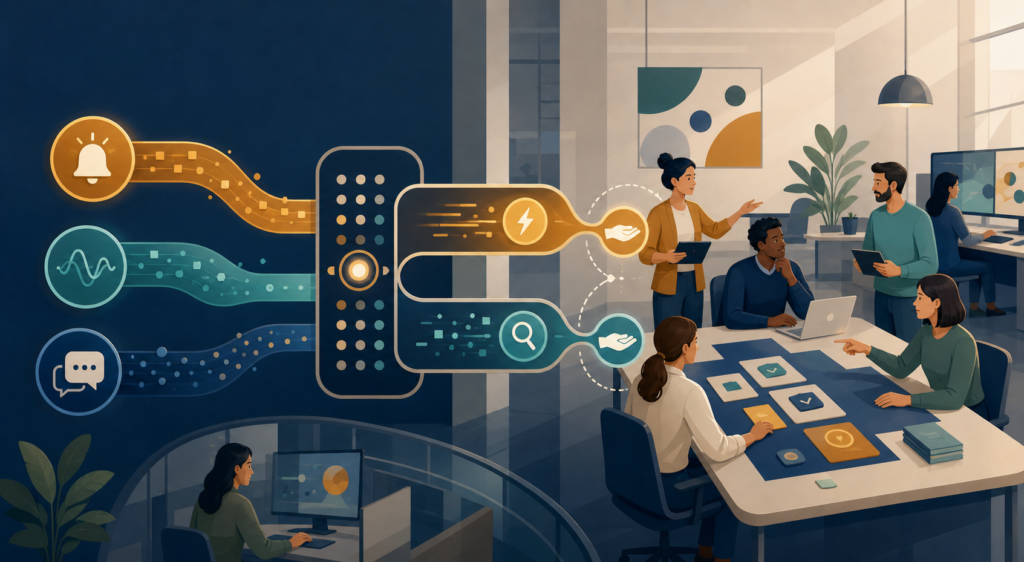
This is where product discovery earns its keep. I connect outcomes to discovery by starting with the problem, not the feature. I map assumptions, prioritize the riskiest ones, and test with the lightest-weight experiments—prototypes, concierge tests, or data slices. The goal is to find the smallest bet that can move the needle on the Key Results, then iterate. When discovery is continuous, the roadmap becomes a living hypothesis tied to outcomes rather than a fixed list of outputs.
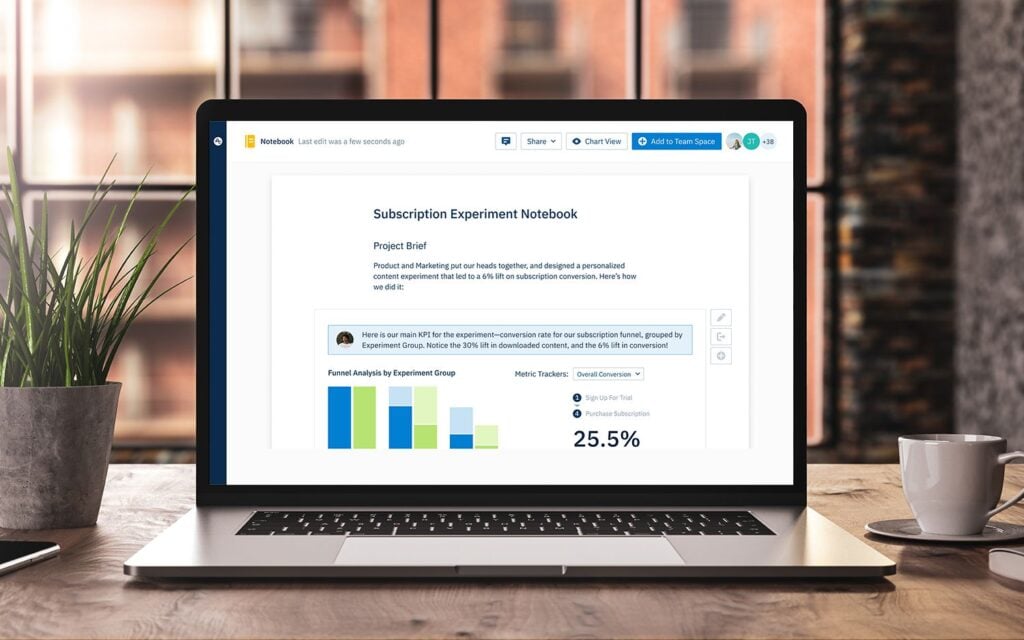
Instrumentation is non-negotiable. If we can’t measure customer behavior reliably, we can’t manage outcomes. I invest early in event schemas, product analytics, and clear operational definitions for metrics. I also bring forward deployed engineers and designers into customer conversations to compress feedback loops. Being close to the user is a force multiplier for outcome thinking.
Cadence matters. I prefer weekly reviews on leading indicators and monthly deep dives on lagging metrics, with quarterly OKR retrospectives to distill lessons. We celebrate learning—insights that invalidate a bet are just as valuable as wins—because that culture keeps the team curious, honest, and resilient.
As product management leaders, our job is to create the conditions where outcome focus can thrive. That means setting a crisp product operating model, aligning stakeholders on a North Star metric, empowering teams to choose solutions, and protecting time for discovery. It also means having hard conversations about stopping work that doesn’t move the numbers, even if it’s already in flight.
How do you know you’re making progress? You’ll see fewer features, clearer narratives, faster cycles, and better results: improved activation, deeper engagement, and stronger product-market fit signals. Your roadmap will read like a portfolio of bets tied to Key Results, not a calendar of releases.
If outcomes feel hard, that’s normal—and it’s a sign you’re working on what matters. Start small: pick one team, define one consequential outcome, and run one disciplined discovery cycle. Measure honestly, learn in public, and repeat. Over time, you’ll build the muscle memory to move beyond output and deliver durable customer and business impact.
Inspired by this post on SVPG.






Leave a Reply