AI has fundamentally changed how I lead design and testing, not by replacing craft, but by compounding it. When my teams pair generative models with time‑tested product management practices, we move faster, learn sooner, and ship with more confidence—without compromising privacy-by-design or quality. The result is a tighter loop from product discovery to product-market fit lessons.
Learn how Pendo’s product design team is using genAI and traditional tools to speed up design and development.
That single line captures my own operating model: blend genAI with established toolchains to accelerate, not shortcut. In practice, I treat AI as a force multiplier for product trios—PM, design, and engineering—so empowered product teams can explore broader solution spaces while staying anchored to outcomes vs output OKRs.
In discovery, genAI helps me synthesize qualitative inputs at scale—interviews, support threads, and in-app behaviors—into testable opportunity statements. I triangulate those insights with a unified analytics platform and Amplitude analytics to spot friction, then use in-app guides and product tours to target learning, recruit the right cohorts, and validate problems before we overbuild.
For prototyping, gen ai for product prototyping is a game-changer. I generate multiple UX writing variants, microcopy, and flows in minutes, then narrow the set using heuristics and stakeholder feedback. Before any A/B testing, we precompute the minimum detectable effect (MDE) and sample size, making sure our experiments are powered to detect meaningful differences, not noise.
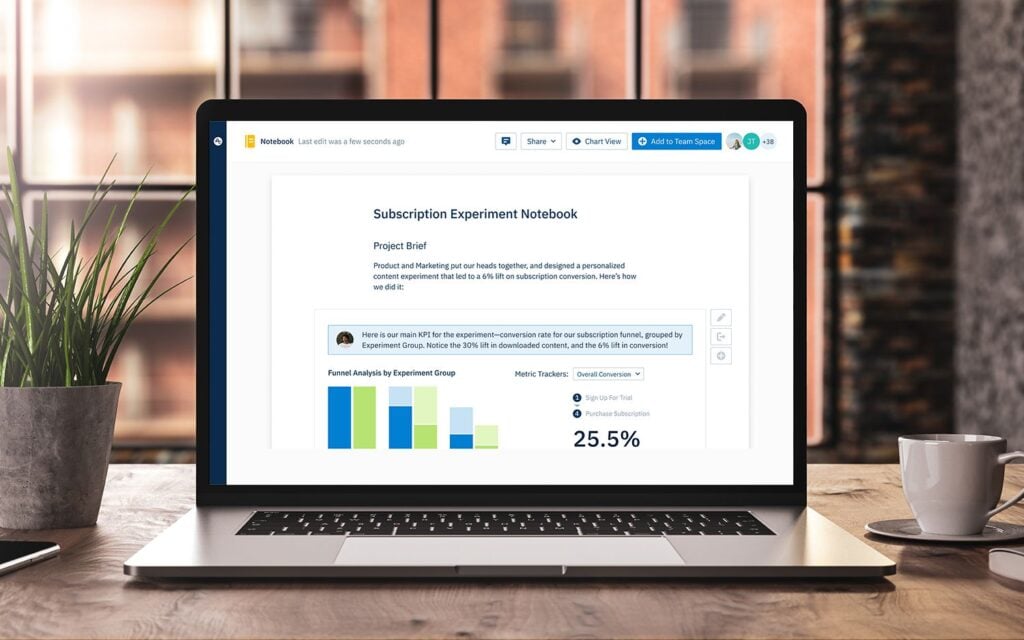
In testing, I combine classic A/B testing with AI-assisted analysis to surface patterns faster. GenAI drafts experiment summaries, flags anomalous segments, and proposes follow-up tests, while my team makes the final calls. We deploy targeted in-app guides to onboard users into trials, monitor adoption via event telemetry, and iterate quickly until the value proposition is unmistakable.
Execution depends on rigor and guardrails. We codify AI risk management and data governance policies, keep humans-in-the-loop for critical judgments, and log model prompts and outputs for auditability. This lets us move with speed and integrity, aligning stakeholder management, product roadmapping and sprint planning, and go-to-market strategy around measurable outcomes.
The payoff is material: shorter cycle times, clearer value narratives, and stronger product-led growth curves. By fusing genAI with traditional practices, we preserve the craft of design while scaling our capacity to learn. That’s how we differentiate—through faster insight generation, smarter testing, and experiences that feel unmistakably intuitive.












Leave a Reply