

The AI era didn’t just speed up product development—it rewired the economics of learning. Experiments that once took weeks now take hours, and the organizations that compound learning faster are the ones outpacing competitors. In my role guiding product strategy, I’ve seen this shift firsthand: velocity is table stakes; evidence is the differentiator.
Learn why market dynamics prove that experimentation is fundamental to driving growth in the age of AI.
When AI compresses build and distribution cycles, market feedback arrives in torrents. That abundance of feedback is valuable only if we can transform it into trusted insight. I anchor every initiative with a clear hypothesis, a measurable outcome, and a pre-committed decision rule—what we’ll do if the result is positive, negative, or inconclusive. This discipline converts experimentation from a set of ad hoc activities into a repeatable growth engine.
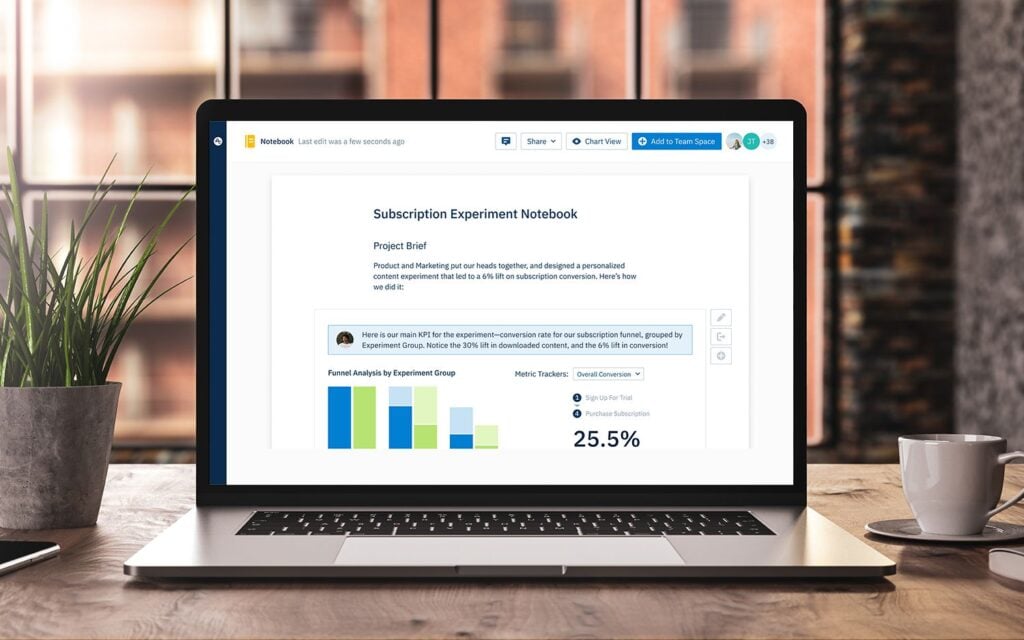
Data quality is non-negotiable. I rely on a unified analytics platform, pairing event instrumentation with Amplitude analytics to analyze activation, retention, and long-term impact. Strong data governance prevents metric drift and ensures that our “go/no-go” calls rest on sound evidence. Retention analysis, in particular, is my north star for separating novelty spikes from durable value.
Gen AI has transformed how quickly we can explore solution space. I use gen ai for product prototyping to generate multiple UX and copy variants in minutes, then deploy in-app guides and lightweight product tours to validate which concepts resonate. This dramatically lowers the cost of curiosity: we test more, earlier, with tighter feedback loops—without compromising user experience or brand voice.
Process and culture make this sustainable. Empowered product teams—tight product trios across Product, Design, and Engineering—run weekly sprints with explicit outcomes vs output OKRs. We plan small, falsifiable bets in product roadmapping and sprint planning, stack-ranked by expected impact and learning value. The result is a team that ships with confidence, measures with rigor, and iterates without ego.
Experimentation doesn’t stop at UX. I extend the same approach to go-to-market strategy and product-led growth motions: pricing page changes, onboarding flows, paywall copy, and packaging tests all roll through the same hypothesis-measure-decide loop. We bias toward reversible decisions, emphasize speed to signal, and codify what we learn into playbooks the whole organization can reuse.
Raising the bar on experimentation means raising the bar on clarity. Every test should answer a specific question, earn its way onto the roadmap, and connect to a value proposition we can defend. In a world where AI collapses time, the advantage goes to teams that compound learning with integrity and purpose. Start small, instrument well, close the loop—and let the data guide the next bold move.
Inspired by this post on Amplitude – Perspectives.









Leave a Reply