I spend a lot of my time asking a deceptively simple question: what does excellent marketing actually look like in 2026? From the vantage point of product leadership, the answer isn’t a spreadsheet or a channel plan—it’s a feeling. Beloved tech brands earn the benefit of the doubt, create gravity around their roadmap, and make customers proud to belong. That kind of momentum is not an accident; it’s a system.
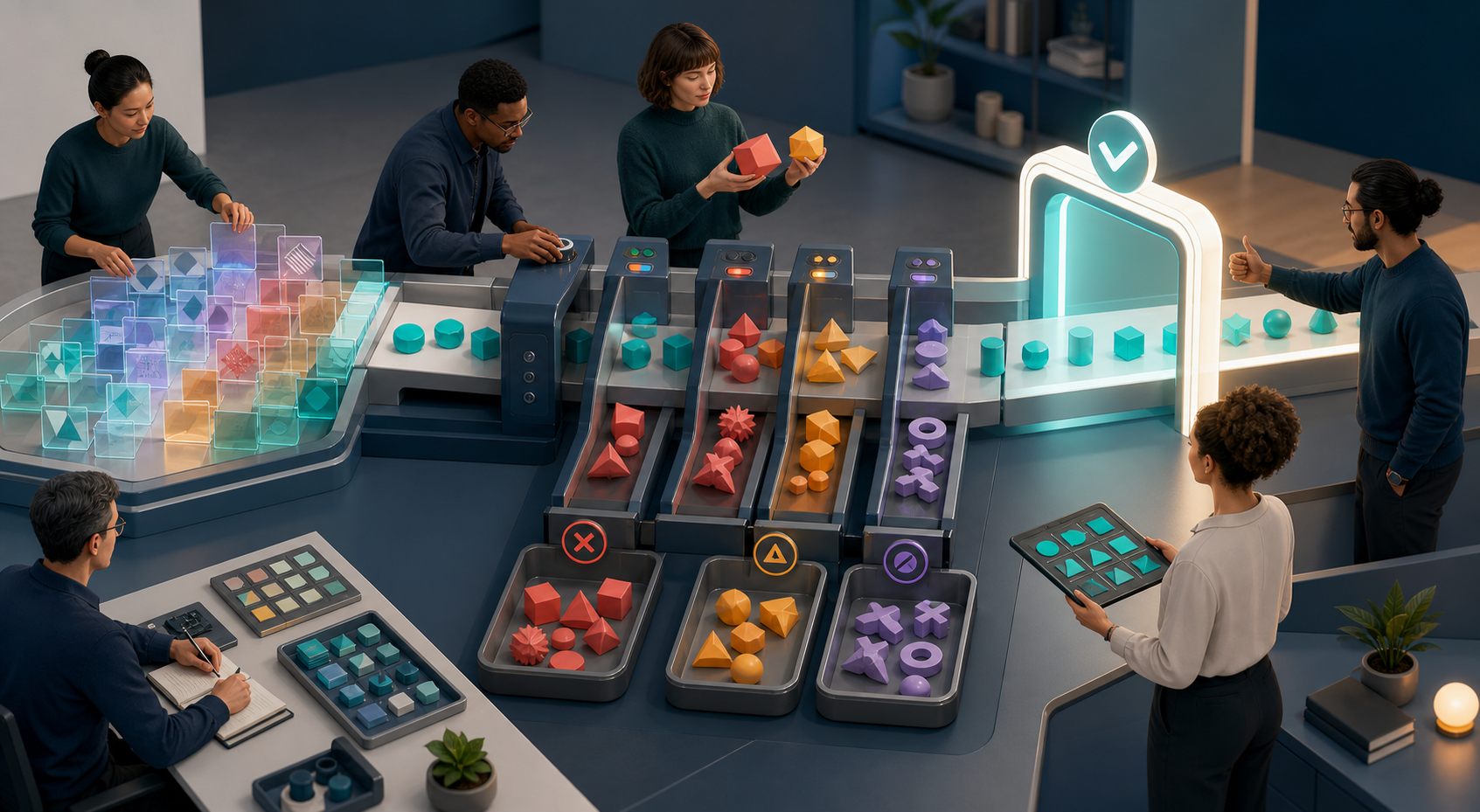
Here’s the hard truth I’ve learned building and scaling products: giving teams different goals creates dysfunction. When brand, demand gen, product marketing, and comms run on fragmented OKRs, you manufacture internal headwinds. “Marketing is one engine – not separate pieces.” One strategy, one narrative, one set of outcomes—expressed through different craft disciplines and time horizons.
That unity of purpose clarifies executive roles, too. The real difference between an SVP and a CMO is scope and narrative ownership. A great CMO architects the whole system—portfolio allocation, brand architecture, integrated go-to-market strategy, and the bar for creative taste—while refusing to get dragged into decisions they should never be making (for example, approving every headline or micromanaging channel tactics). Leaders should decide the outcomes, standards, and constraints; teams should control the craft.
On portfolio design, I run marketing like a portfolio of moonshots. You need a healthy mix: proven programs that compound, emergent bets that learn fast, and a small set of true moonshots that can change the slope of the curve. The point isn’t bravado; it’s risk-balanced exploration. If everything ships safely, you’re under-investing in differentiation. If everything is a swing for the fences, you’re not building a repeatable growth engine.
This is where taste becomes a strategic advantage. “Ubiquity is the opposite of cool.” If you want to be beloved, you cannot treat every channel, audience, and moment as equal. Early on, selective distribution, distinctive creative codes, and tight community loops create status and meaning. Later, you scale without sanding off the edges that made the product special.
Why do a few companies build a flywheel of momentum while others stall? They align story, product, and distribution. The product earns trust, the narrative creates aspiration, and the go-to-market strategy ensures the right customers experience both at the right time. Then perception cycles kick in—the Silicon Valley clock turns—and irrational optimism or skepticism can amplify signals. The antidote is compounding proof: consistent product shipping, community advocacy, and creative that makes people care.
Scaling taste across an organization is teachable. I codify brand principles, narrative guardrails, and examples of “right” versus “almost right.” I replace abstract feedback with decision rubrics—what we keep, kill, or revise and why. I run recurring creative reviews with a small cross-functional council, so judgment compounds. Taste can’t be fully automated, but it can be operationalized: shared references, a story bible, and a high bar for craft that’s explicit, not mystical.
In a post-LLM world, the fundamentals haven’t changed—but the frontier has. Generative tools supercharge iteration and research, yet the artistry never really left. You still need a point of view, a tension worth resolving, and a value proposition that’s felt, not just stated. Can taste be encoded in software? Parts of it—pattern libraries, style constraints, data-driven feedback—absolutely. But the spark that makes work unforgettable remains human: judgment, risk tolerance, and the courage to ship something that might not fit the playbook.
That’s why telling an optimistic, yet realistic story about AI matters. Over-automation drains humanity; under-automation wastes potential. The best work pairs AI Strategy with craft leadership: LLMs for rapid exploration, humans for narrative decisions and ethical judgment. Your message should show how AI expands customer agency, not just efficiency.
The brand-versus-growth debate is a false choice. The right story accelerates pipeline, and the right demand programs reinforce the brand. Look at Apple’s discipline around product truth and design codes, or Google Chrome’s “The Web Is What You Make of It (Dear Sophie)” for proof that emotion and utility can co-exist. Notion, Pinterest, Square, HubSpot, and Harley-Davidson show how community, identity, and product-led growth interlock when the company knows exactly what it stands for.
When it comes to launches, I’ve learned that announcement videos full of humans, lack humanity. Overproduced gloss often dilutes the truth customers seek: what problem does this solve, how quickly can I feel the value, and why does it matter now? Real users, real context, and a crisp arc from problem to promise will outperform most theatrics.
Practically, I architect my week to protect taste and outcomes. Early-week for strategy, portfolio reviews, and cross-functional alignment; mid-week for deep creative and product marketing work; late-week for decision clears and postmortems. I time-box “disruptive energy”—space to chase non-obvious ideas—and I guard it like any critical meeting. Without protected cycles for exploration, the urgent will always suffocate the important.
If there’s a single takeaway: playbooks are obsolete, but the fundamentals are not. The channels change; the psychology doesn’t. Run one engine. Allocate a true portfolio. Scale taste with rigor. In the AI era, make people care. That’s how beloved tech brands are built—and how they endure.