
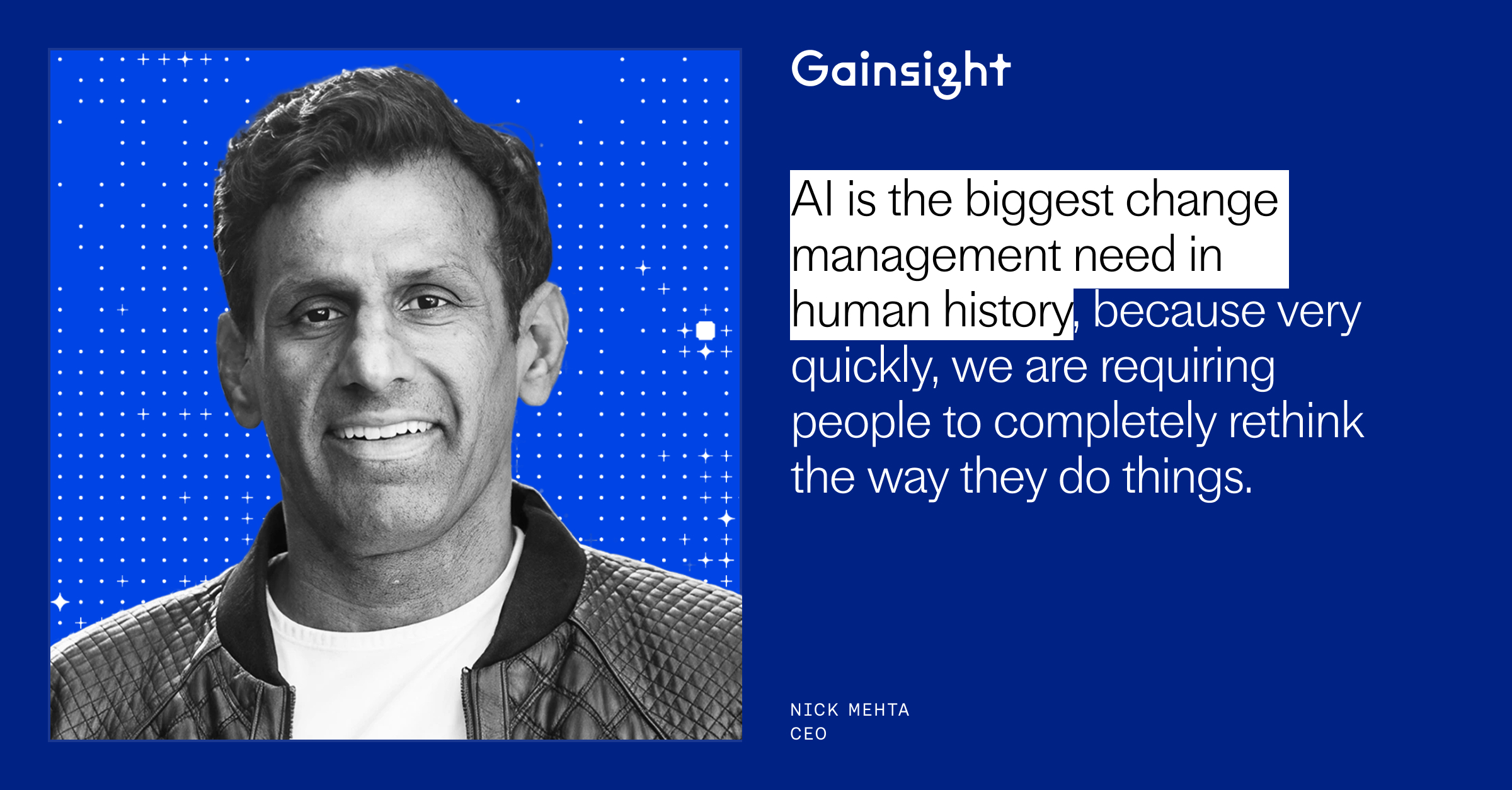
Like many support leaders right now, I’m deep in 2026 planning. The more I map scenarios and stress-test assumptions, the clearer one thing becomes: the way work gets done has fundamentally changed, and that change must reshape our customer service organization.
In 2026, you won’t get the full value of AI by keeping your org chart, systems, and operating model the same. You need to think differently about how support is structured, how performance is owned, and how your systems evolve around an AI-first model. That’s the lens I’m using across my team and our cross-functional partners.
To help you do the same, I’m launching a 2026 customer service planning series. Over the next five weeks, I’ll share how I’m approaching roles, skills, organizational design, and an operating model that makes AI the backbone of support—not a bolt-on feature.
We’ll publish each edition here and on LinkedIn. If you’d rather get them by email as soon as they go live, drop your details and I’ll send each edition straight to your inbox.
But before you can make any of those decisions, you need the right mindset and the right internal conditions for change. That’s where I’m starting this week.
Week 1: Start with a mindset shift
If you were building support from scratch today, you’d design around AI from day one. That’s the mindset to carry into 2026—and it’s the mindset I’m using to guide investment and accountability.
Too many teams still treat AI like a feature instead of infrastructure. They tack it onto existing processes, limit scope to tier-one issues, and never evolve the organization or systems around it. I’ve seen that approach stall progress and fragment the customer experience.
Those teams are thinking too small. They chase incremental efficiency, underinvest in the system change required to make AI successful, and get stuck. The result: a reactive team, a choppy customer experience, and value left on the table.
AI Agents are fully capable, end-to-end resolution engines. They fundamentally change the architecture of support.
To plan effectively and get the most value out of the technology, you need to adjust your mental model. Here are the mindset changes I’m prioritizing.
1) Move from ‘AI as a tool’ to ‘AI as infrastructure’
For the past decade, support systems have been the intermediary between customers and human support agents. AI isn’t an intermediary, it’s the first touchpoint (and often the last), the primary resolver, it manages workflows, orchestrates handoffs, and takes real actions.
Planning with the “AI is a tool” mindset leads to small optimizations that don’t move the needle. Planning with the “AI is infrastructure” mindset lets you redesign around the real sources of value creation.
Here’s what I’m designing around in 2026:
• Clear ownership of Agent performance
• A feedback loop that never shuts off
• A shared understanding of when humans step in
• Systems that evolve as AI capabilities expand
This framing sets up every decision that comes later in your planning process.
2) Look at how the work is changing
You need to plan your 2026 support organization around what the distribution of work will be—not what it is today. AI has shifted where volume goes, what humans spend time on, where judgment is needed, how performance is measured, and how the customer experience is designed.
If your planning assumes the current distribution is stable, you’ll design the wrong structure. I’m modeling for the work that’s coming, not just the work on our queue today.
3) Think like a product leader
When customers primarily interact with your AI Agent, support becomes responsible for designing the customer experience—not just managing it.
“Support is becoming a product function, and you are becoming a product leader”
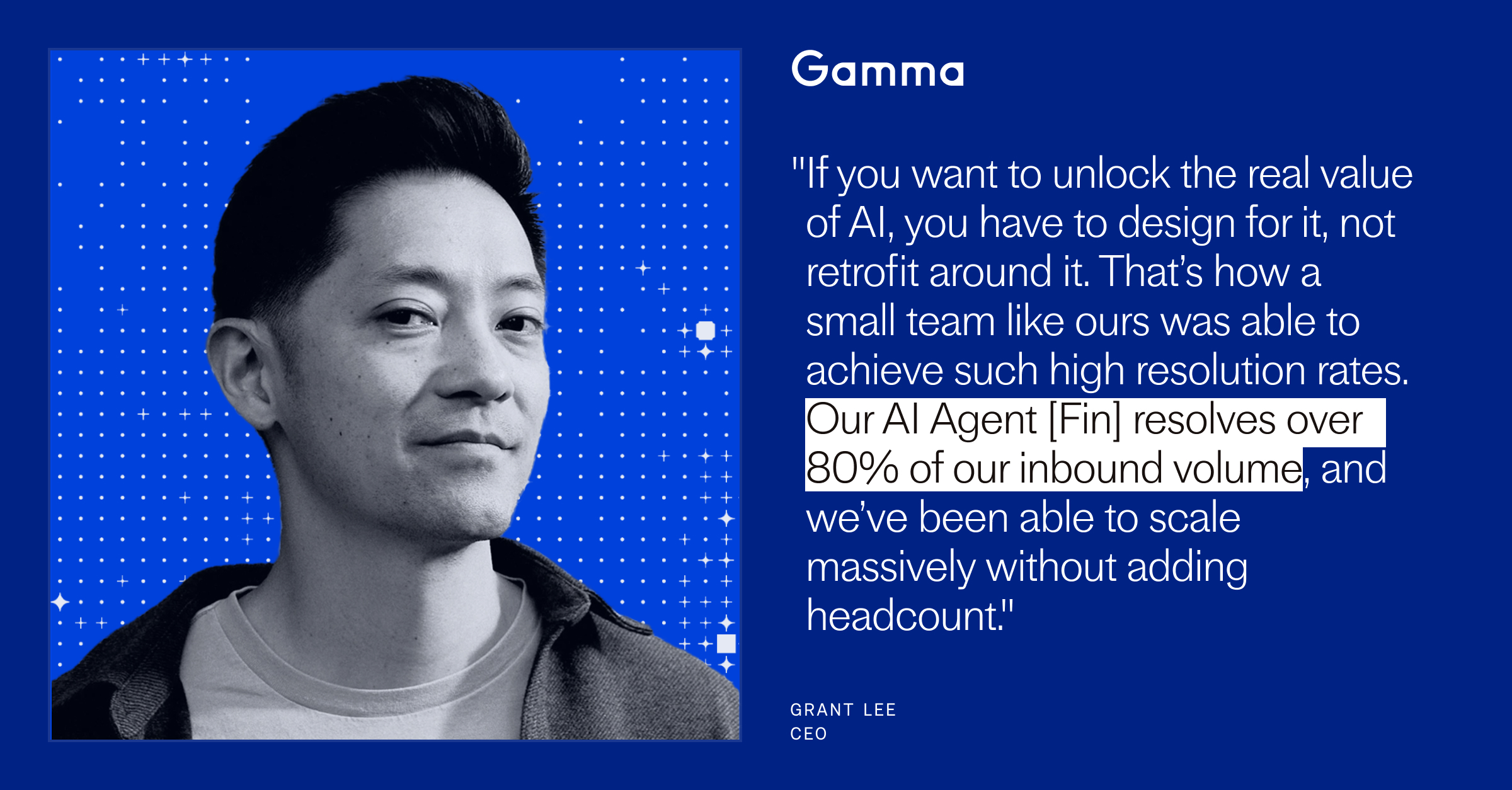
Support is now a product surface, and support teams act like AI product teams. They:
• Design the customer experience
• Create and curate the knowledge layer that drives AI quality
• Maintain continuous improvement loops and tune system behavior over time
This is a big shift. Your planning—hiring, skills, rituals, and metrics—needs to reflect that evolution.
4) Redefine performance
This is a big mental leap for support leaders. Traditional performance was measured on speed and satisfaction, but AI performance is measured on resolution, impact, and system reliability.
Planning for 2026 means assuming that:
• Humans will handle a smaller % of volume.
• Customer experience will be shaped by AI’s performance, not throughput
• “Support productivity” gets measured differently
When AI handles the bulk of your support volume, you need new metrics for how your team creates value. In practice, that means instrumenting AI and human-in-the-loop workflows with the same rigor you’d apply to a customer-facing product.
5) Understand that your value increases as AI takes on more work
You need to re-orient your team around AI’s performance to get the most value out of it. The more complex work you give it, the higher impact it will have.
Instead of routing complex, messy questions straight to your human team, shift their focus to improving the AI system so it can take on more over time.
Automating low-effort questions reduces noise, but automating complex workflows changes the economics of your entire team. It creates asymmetric returns that compound as AI absorbs the work that once demanded the most time and skill.
6) Plan for adaptability
A big difference between traditional planning and 2026 planning is simple: change will be constant.
“Change is hard, but the teams that adapt will be the ones who get the most out of this opportunity”
AI learns, evolves, and improves continuously. I’m asking, “How do we build an organization designed to adapt fast as the system evolves?” That question is informing everything from team topology to knowledge governance and experimentation cadence.
Food for thought
Heading into 2026, your org chart will look different—and that’s a good thing. Your people will play new, more meaningful roles as designers, curators, and stewards of an AI-first customer experience.
Once you accept that 2026 demands a different way of thinking, working, and planning, you can move to the next stage: designing the support organization that fits this future. I’ll share exactly what that looks like next week, including roles, skills, and ownership models that have worked well in my experience.
Want the full series delivered by email? Drop your details and I’ll send each edition to your inbox as soon as it’s published.
Inspired by this post on The Intercom Blog.



Leave a Reply