
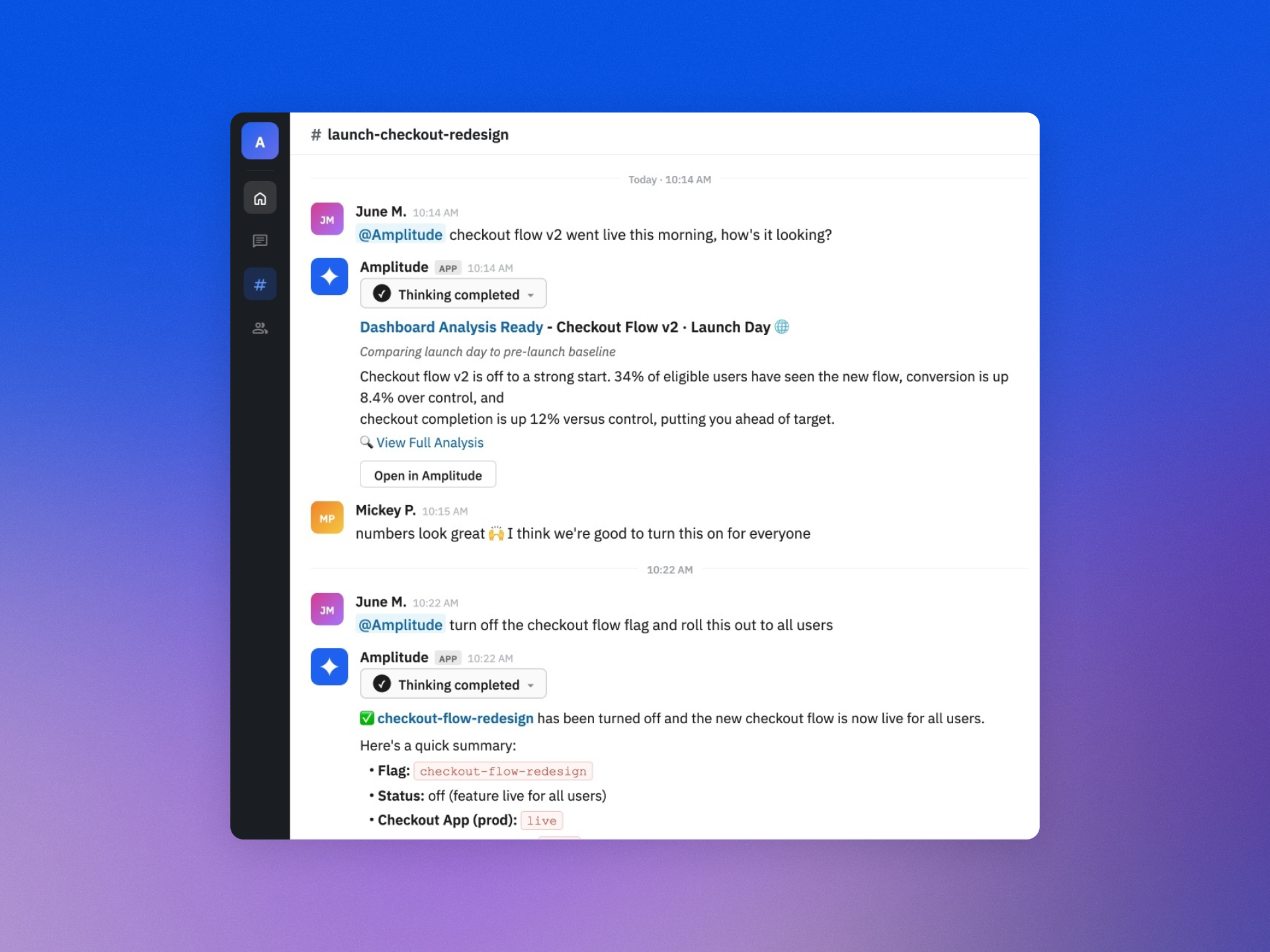
Feature launches move fast, and the Slack channel is our command center. Recently, I leveled it up with agentic AI so every data question, feature flag decision, and post-launch readout lives in one trusted place—faster, clearer, and with less operational drag on the team.
Learn how to set up your launch Slack channel so agents handle your data questions, feature flags, and post-launch readouts in one place.
Here’s the strategy I use. I treat the launch Slack channel like a real-time control room: agentic AI handles the repetitive asks, experts handle the judgment calls, and stakeholders stay aligned through crisp, automated summaries. The result is tighter stakeholder management, quicker go/no-go calls, and fewer meetings—without sacrificing data quality or governance.
First, I set clear channel rituals. I name the space #launch-[feature], declare scope and SLAs, and pin the success metrics, dashboards, and rollout plan. Product, engineering, data, support, and GTM all join. I keep threads focused: one for metrics, one for incidents, one for enablement, one for feedback. This small bit of structure makes agent responses and human follow-ups easy to find.
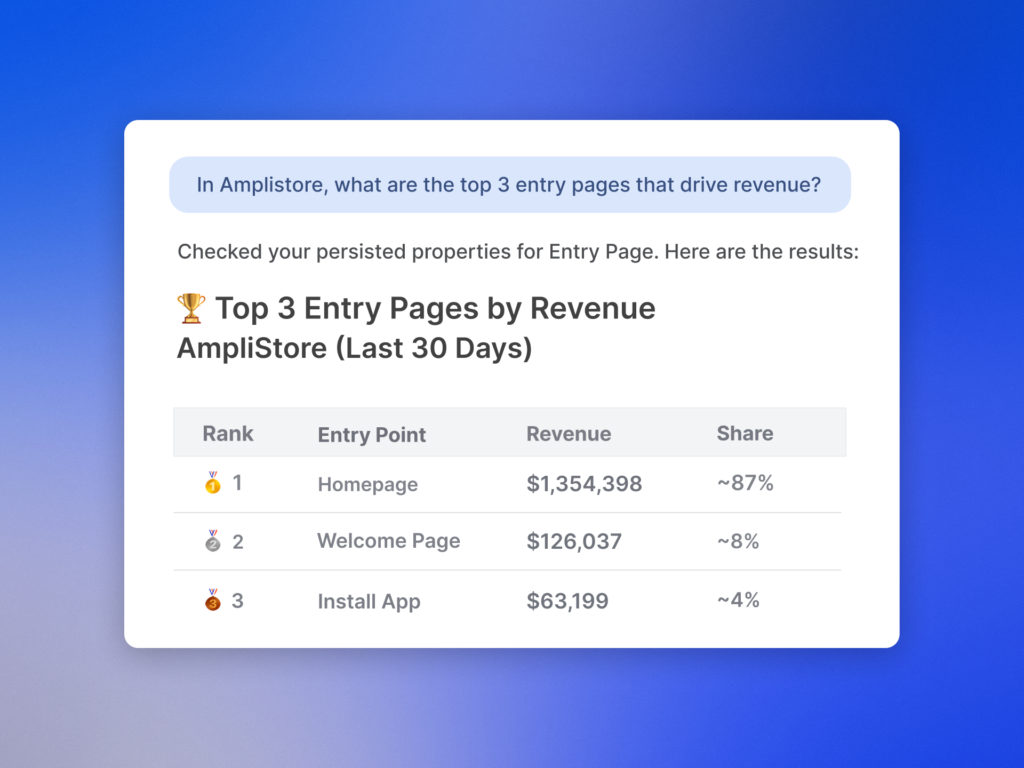
Next, I add a data questions agent. The agent connects to approved sources and answers the most common queries—activation by cohort, conversion by segment, latency by region—directly in-thread with citations and timestamps. When the question requires nuance, the agent routes to an owner and posts a handoff note, preserving context. This keeps our AI workflows safe and reliable while giving the team quick visibility.
Then I wire in a feature flags agent. It exposes read-only status by environment, shows rollout percentages, and links to change history. When a toggle is requested, the agent enforces approvals and logs who asked, who approved, and why. We can pause, ramp, or roll back in seconds—with auditability intact. Feature flags become an operational muscle instead of a bottleneck.
Finally, I schedule post-launch readouts. The readout agent publishes T+1 hour, T+24 hours, and T+7 days summaries: adoption, performance, anomalies, and key learnings. It highlights A/B testing results, flags outliers, and threads follow-up actions to owners. The team gets a single source of truth for post-launch readouts without scrambling across tools.
Governance matters. I apply role-based access, protect PII, and make the agent cite sources so we can trust what we see. I use Agent Analytics to monitor response accuracy, deflection, and time-to-answer, then refine prompts and permissions. This is practical AI risk management: clear boundaries, human-in-the-loop for consequential decisions, and transparent logs.
The impact has been real: faster decisions during go-to-market, fewer pings to data and engineering, and higher confidence in our product management rituals. Centralizing “questions, flags, and readouts” in Slack doesn’t replace expertise—it frees it to focus on the hard problems.
If you’re rolling this out, start small: define the channel, pin your metrics, launch the data agent with a handful of approved queries, add the feature flags agent with strict approvals, and automate a simple daily readout. Iterate weekly. Within one or two launches, you’ll feel the compounding benefits.
Inspired by this post on Amplitude – Best Practices.


Leave a Reply