

Building a great end-to-end customer experience with AI means going beyond support, and I’ve seen firsthand how transformative that shift can be when we treat every interaction as part of one cohesive journey.
Every customer touchpoint, from the first sales conversation through to post-sales support and success, is an opportunity to get it right. Other teams are now turning to AI to transform how they show up for customers, and support, which led the way, has already written the blueprint. In my role, I focus on making that blueprint actionable across the entire lifecycle.
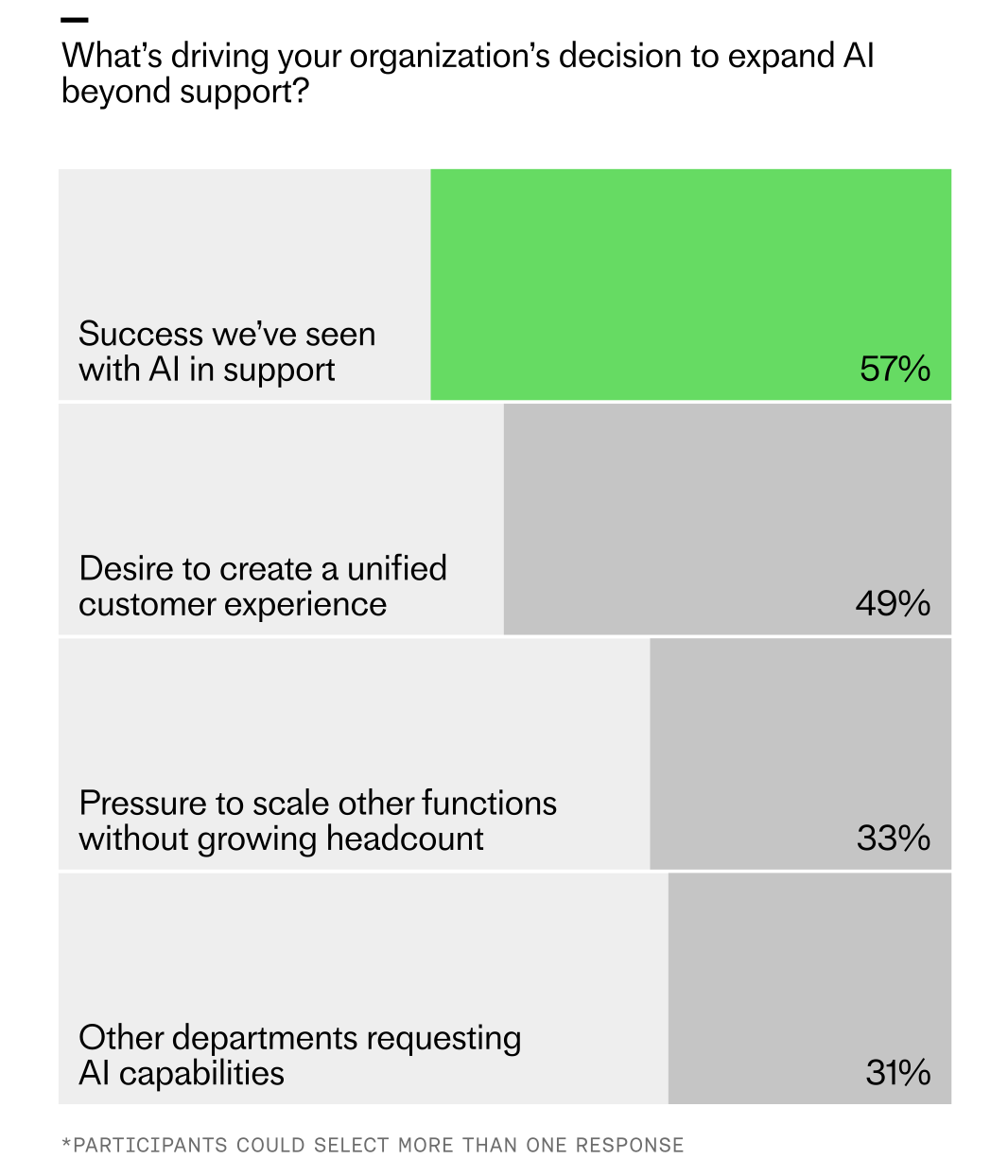
In The 2026 Customer Service Transformation Report, it’s clear most businesses are thinking about what’s next, with more than half planning to scale AI to other departments. Interestingly, they often cite their early success with AI in support as motivation for the move. This makes support teams uniquely positioned to help lead the transition, a strategic role unimaginable just two years ago.
In this piece, I share how teams are introducing AI to other parts of the business, how to think about this expansion effort, and the new opportunities it creates for support leaders who want to drive a unified customer experience.
Support was the first proving ground for AI, and our research suggests that businesses are now planning to expand its use to other areas based on the results it’s yielded so far. Fifty-two percent of respondents said that their organizations are actively planning to scale AI to other departments in 2026.
What will this look like? Leading companies are already finding out.
My favorite example is WHOOP, the fitness wearables company. They offer a premium product which makes their sales conversations more consultative than transactional. Customers want to know “Which membership is right for me?” or “How often do I need to charge my WHOOP?” According to Emily Shirley, Business Manager for Growth Product at WHOOP, if someone chatted with the inside sales team, they were twice as likely to convert, but they didn’t have enough reps to respond to incoming queries fast enough. Customers could wait more than 10 hours for a reply.
With a big product launch on the line and an anticipated spike in prospective customer conversations, their three-person team needed help. So they deployed Fin to the "Join" page, the final step before purchase.
With Fin resolving 84% of inbound questions, the sales team was able to focus on high-value leads. Together, they drove a 130% increase in attributable sales. The team is now exploring ways to expand Fin beyond FAQs, focusing on personalised conversation flows, multi-product recommendations, and richer data capture. As Emily says: “There are so many parts of the buyer journey where this applies. We’ve only scratched the surface.”
It’s clear there’s a desire to push AI to other parts of the customer lifecycle, but there is a risk hidden in this expansion. If sales, customer success, and other departments all launch their own Agent, each operating in isolation, you can end up fragmenting the very thing our research says teams want to create. The second-most cited reason for pushing AI beyond support: desire for a unified customer experience.
Without shared context, each handoff becomes a source of friction where customers could receive inconsistent answers or be asked to repeat information. I’ve watched even well-intentioned AI rollouts struggle here—great local wins, but an overall journey that feels disjointed.
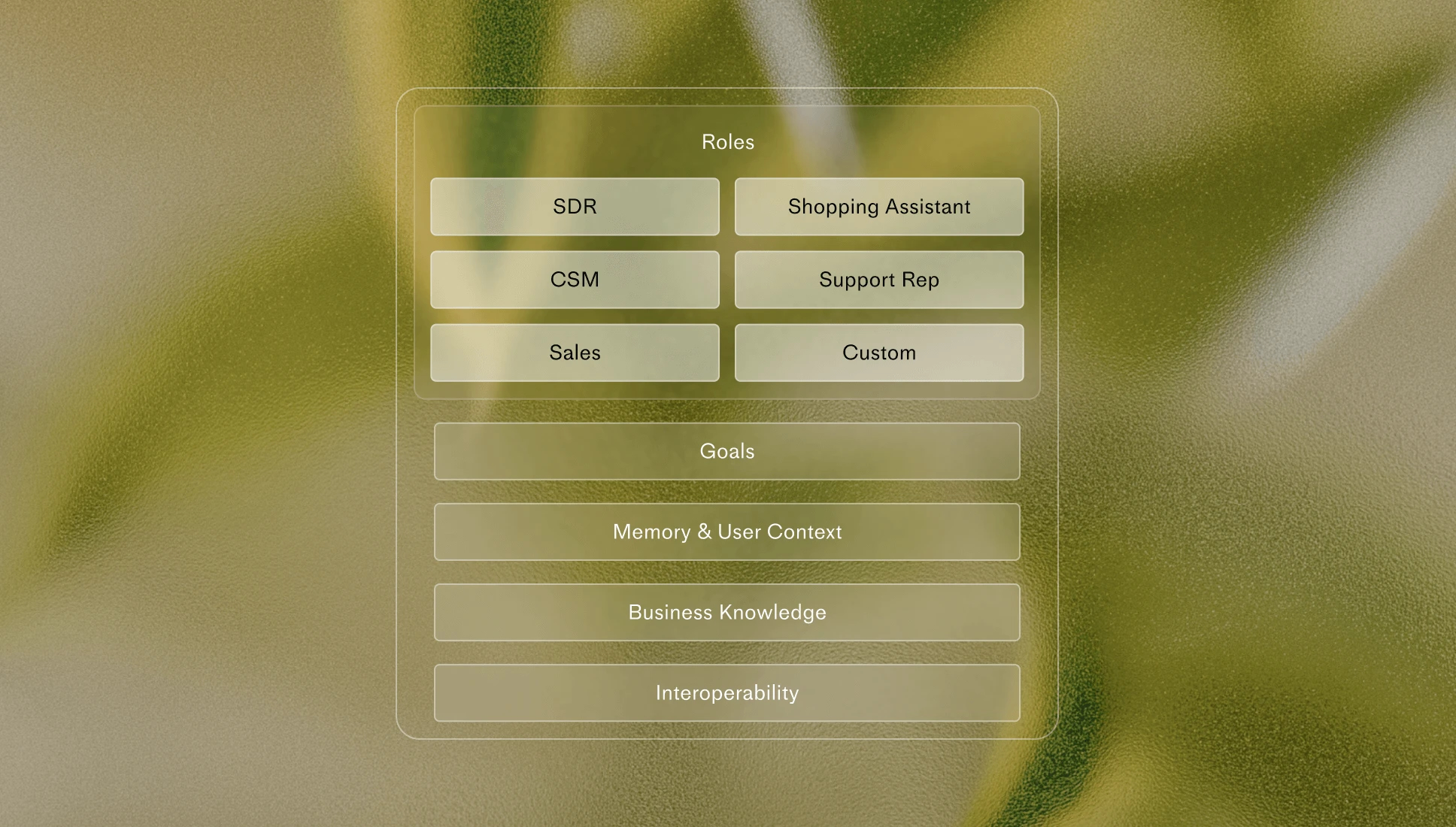
The opportunity (and the challenge) is to keep the customer at the center. Instead of department-specific Agents that operate independently, we must strive for cohesion. That means shared memory, consistent governance, and connected AI workflows that respect the customer’s history and intent across channels.
This is the future I’m building toward: solutions like Fin becoming a “Customer Agent,” capable of handling the entire customer experience. This will mean Fin can function in many roles, supported by a memory that grows with the customer over time and deep knowledge of the business, creating a seamless experience for every interaction. In practice, that’s agentic AI designed to collaborate across teams, systems, and journeys—without losing context.
Pushing AI into new parts of the business requires someone to own the process. And for many organizations, that’s the support team. Nearly a third of respondents (32%) confirmed their customer service teams are leading their business' AI transformation strategy.
This presents a real opportunity for support teams to shape the future of customer experience. Instead of each function reinventing the wheel, support can act as a center of excellence, defining shared standards, guardrails, and operating practices that drive performance.
“You already manage the most complex, high-volume customer interactions; you have rich data on customer needs and behavior; and you know how Agents perform in the real world. Those insights will be invaluable as AI scales across your business.”

In my organization, when we extended AI from support into sales, we deliberately brought our conversation design expertise, Agent Analytics, and governance models along with it. One team owns the orchestration, memory strategy, and CRM integration so a customer can start with a sales question and end up with a support one—without ever feeling a seam. That continuity is where journey mapping meets product strategy and turns into measurable outcomes.
As Agents like Fin expand their capabilities and move into new areas, I expect many customer service leaders will see their roles expand to include AI implementation across the customer journey. It’s a natural progression for product management leadership in support: owning the experience, the data, and the operating model.
Achieving perfect customer experience is AI’s biggest promise. But in order to get there, teams need to be smart about the solutions they deploy. A unified Customer Agent capable of handling the entire journey end-to-end will have a significant advantage, delivering consistent, context-aware experiences across every interaction.
The Customer Agent future is being built right now, and it’s starting with the team pioneering AI transformation from the very beginning: support. For leaders in these organizations, this is a rare opportunity to shape how customer relationships will be built and maintained in the AI era.
If you’d like to dig deeper into the data and benchmarks guiding these decisions, download The 2026 Customer Service Transformation Report.
Inspired by this post on The Intercom Blog.










Leave a Reply