"What if an AI could spot the moment two product teams start pulling in opposite directions — before it derails a quarter?" That question hooked me, because I’ve lived through the costly fallout of subtle misalignments that only surface at the end of a sprint—or worse, during quarterly business reviews.
I recently dug into an episode of Just Now Possible featuring Matthias and Charlotte Kleverud, co-founders of Momental. Their vision for "GitHub for product management" hits a nerve in the best possible way: find "merge conflicts" in strategy, not code, and do it early enough to save execution time, trust, and outcomes.
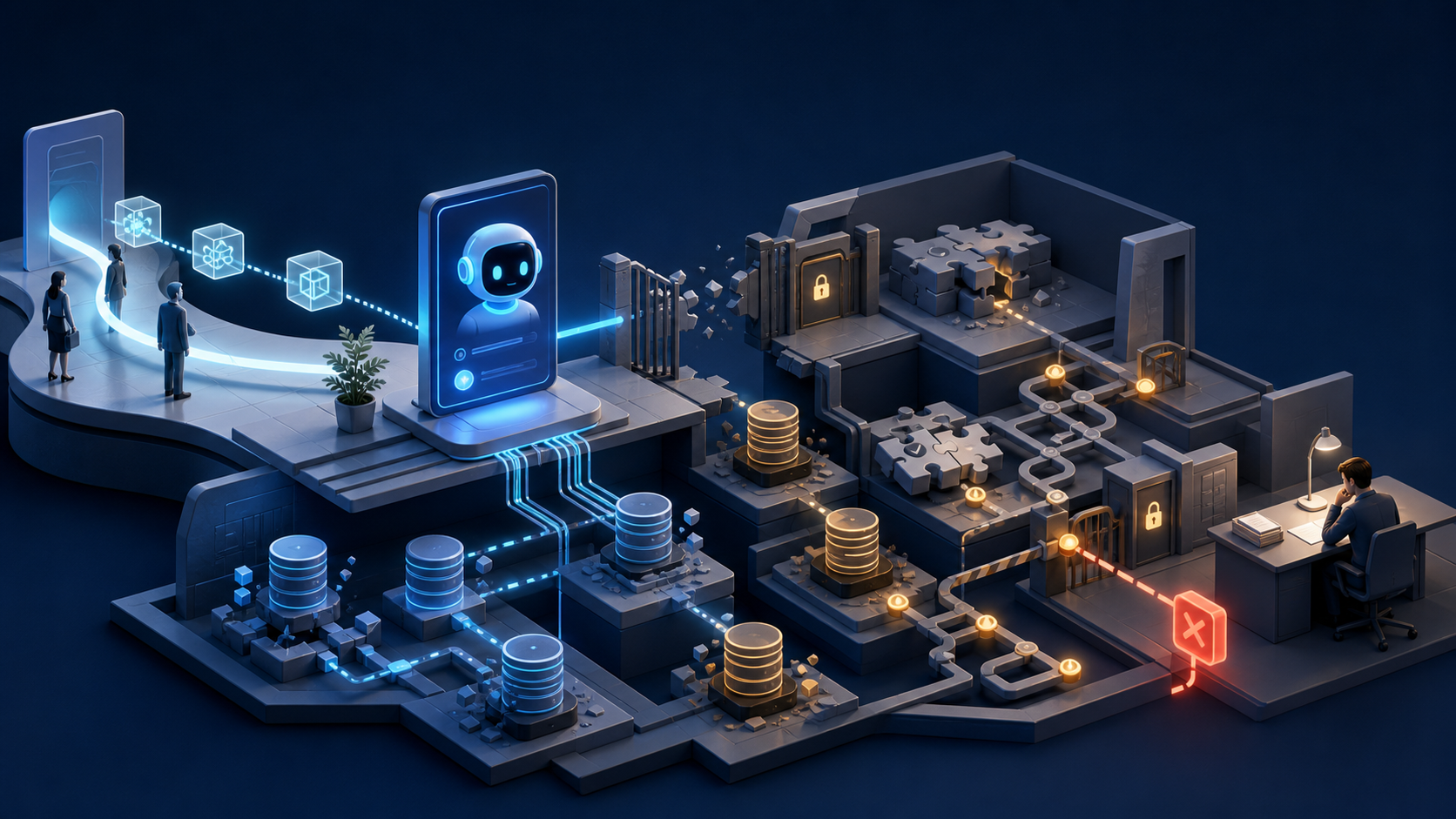
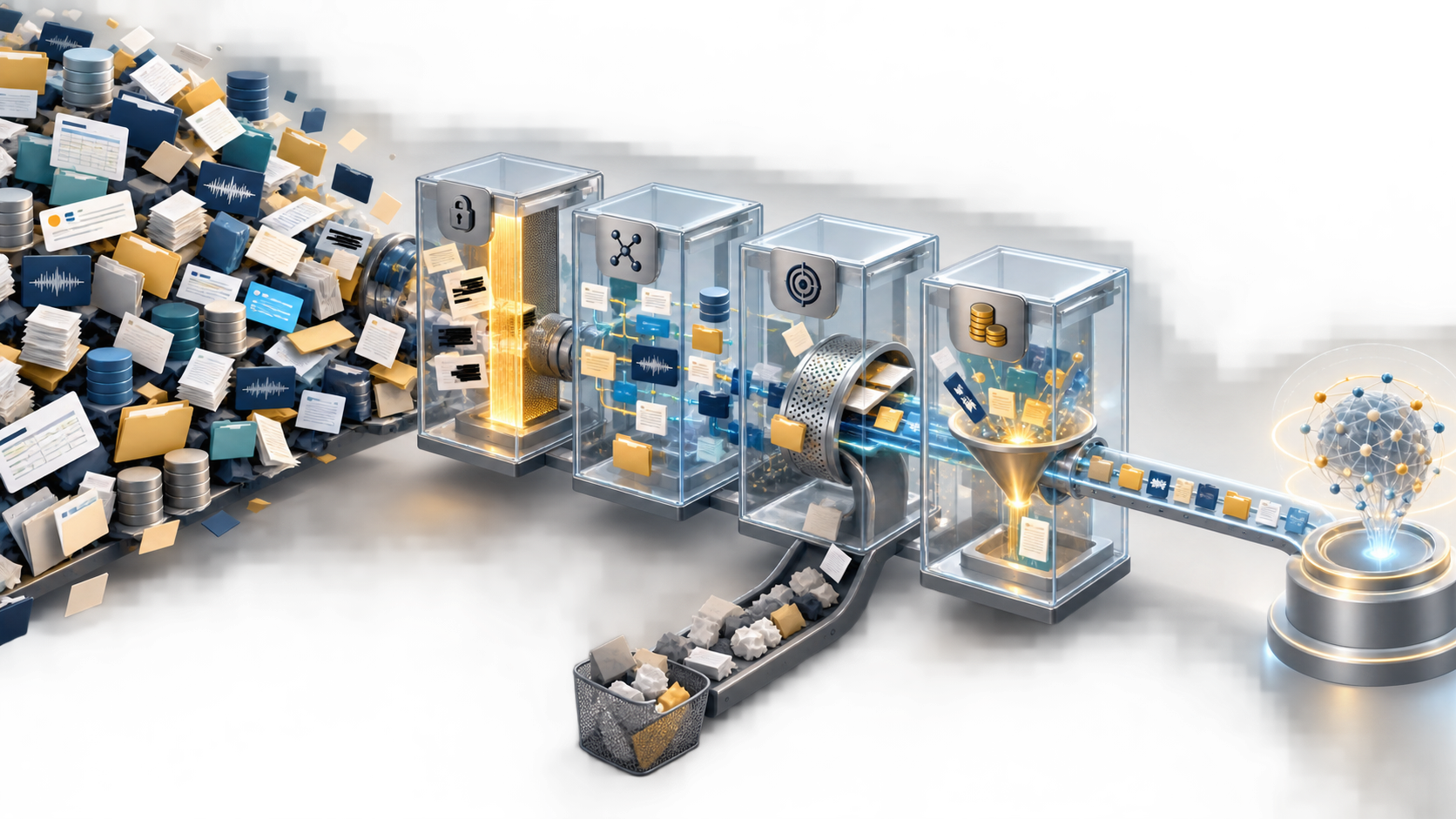
Here’s the core: Momental ingests documents, meeting transcripts, and voice recordings across an organization, then uses AI agents to map them into a structured context layer—a set of interconnected trees covering goals, decisions, learnings, and who's doing what. When it finds a conflict—say, one team betting on retention while another is prioritizing conversion—it surfaces the misalignment for humans to resolve, just like a merge conflict in code. That framing is both familiar (for anyone who’s shipped software) and powerful (for anyone who’s scaled product strategy across multiple teams).
Their journey tracks with what many of us have learned the hard way. "Starting in 2022 with DaVinci 002 and learning that the market wasn't ready for AI-assisted product thinking" pushed them toward experiments with agent teams. "The origin story: building a team of AI agents in 2024, only to discover agents hit the same alignment problems as humans" is exactly the kind of meta-lesson I’d expect when you scale autonomy without shared context. The breakthrough was an "OODA-loop-driven document processing agent" that continuously curates a living knowledge graph rather than relying on static prompts or brittle pipelines.
One model that stood out was "The product chain: signals → learnings → decisions → principles, and how AI maps it." That is the backbone of healthy product thinking. When this chain is explicit and inspectable, you can trace why a team chose Path A over Path B—and detect when new signals should invalidate old decisions. I’ve seen this accelerate continuous discovery and improve executive decision hygiene.
I also appreciated the organizational modeling: "Three trees that model an organization: the product tree (OKRs to epics), the wisdom tree (decisions and their reasoning), and the people/time tree." This maps cleanly to how we run quarterly planning at scale—tying outcomes to work, preserving rationale, and grounding ownership and timelines. With that structure, "How conflicts are detected, auto-resolved, or escalated to humans with merge options" becomes a pragmatic workflow, not a theoretical AI demo.
On the technical front, they’re blunt about limits: "Why traditional chunking and RAG breaks down at scale and what Momental does instead." Anyone who’s tried to stitch strategy from ad hoc notes knows that naive retrieval won’t cut it. You need durable context boundaries, rich metadata, and graph-aware reasoning. Which brings me to one of my non-negotiables: "Why metadata—who said it, when, and in what context—is critical to preventing hallucinations." In my world, we treat provenance like test coverage—you can’t ship without it.
Process-wise, the product philosophy resonated: "How a document processing agent uses OODA-loop thinking to extract and connect context across documents" reinforces the need for short feedback cycles, explicit hypotheses, and continuous refactoring of knowledge. Pair that with "The self-improving agent: collecting user feedback weekly and rewriting its own prompts" and you’ve got a blueprint for eval-driven development that keeps the system honest over time.
Their UI choices also mirror a pattern I’ve adopted: "Moving from chat-first to UI-first to proactive agents as an AI product design pattern." Chat can feel magical, but alignment work benefits from concrete artifacts—trees, timelines, driver trees, and opportunity solution trees—so people can reason together. Then, let proactive agents watch for drift and nudge teams before the cost of change spikes.
Two broader themes are worth calling out. First, "Specialized tools win" when the problem is deep, cross-functional context like product strategy. General-purpose chatbots struggle here; domain-specific models with strong information architecture have the edge. Second, product culture matters: "Discovery Versus Vibe Coding" is not just a catchy contrast—it’s a reminder that disciplined discovery beats intuition theater when stakes are high.
As for the roadmap, I’m encouraged by their "Design partner strategy and what's next for Momental's public launch." Early design partners are where you validate signal quality, precision of conflict detection, and the ergonomics of human-in-the-loop resolution. I’m especially curious how this intersects with LLMs for product managers, outcomes vs output OKRs, and product roadmapping and sprint planning in large portfolios.
Finally, a nod to the broader ecosystem. The conversation touched on "Claude Code" and a shift "Beyond documents and vectors" that many of us are living through—toward retrieval-first pipelines that respect context windows, stronger governance, and measurable improvements in decision quality. If you care about AI Strategy for empowered product teams, this is a space to watch—and to pilot.
Bottom line: If you’ve ever wished you could prevent strategy drift before it shows up in your dashboards, this "GitHub for product management" approach is worth your attention. Make the chain of signals, learnings, decisions, and principles explicit. Keep humans in the loop for the hard calls. And let proactive, agentic AI do what it does best: flag misalignments early, so your teams can move fast together.
Inspired by this post on Product Talk.