Every revenue story starts with a behavior: a tap, a scroll, a search, an “aha” moment. My job is to make sure we don’t just see those moments—we connect them directly to purchases so marketing, growth, and product can act with confidence.
"Learn how Amplitude’s persisted properties and session analytics help marketing and growth teams connect behavioral data to purchase outcomes without engineering support." That sentence captures the promise I look for in a modern analytics stack: attribution that endures across sessions and analysis that moves at the pace of experimentation.
Here’s how I frame it. Persisted properties let me carry forward the critical context behind a user’s journey—campaign touchpoints, audience attributes, and key in-product actions—so when a conversion happens, I can see the exact trail of behaviors that preceded it. Instead of losing signal between anonymous exploration and account creation, I keep the connective tissue intact and attribute outcomes to the interactions that truly mattered.
Session analytics completes the picture. By understanding how users navigate within each visit—where they hesitate, what they repeat, and which micro-conversions predict success—I can link behavioral analytics to revenue outcomes with far greater precision. In practice, this means better funnels, smarter cohorts, and faster iteration cycles inside Amplitude analytics. When appropriate, I’ll also pair findings with session replay for qualitative context, but the core decision loops are driven by quantifiable behavior patterns.
My operating rhythm is straightforward: I start by defining the purchase outcome clearly, then identify the minimal set of properties that must persist to tell the full attribution story. From there, I instrument events and validate that each persisted property is captured reliably across the journey. With clean inputs, I build conversion funnels, use cohorts to isolate high-intent behaviors, and apply driver analysis to separate correlation from causation. That’s how I isolate the behaviors that consistently generate qualified leads and high-value activations.
The impact is both strategic and immediate. Marketing can test offers and channels with a unified analytics platform and know which touchpoints lift conversion, not just clicks. Growth can optimize user activation flows based on the behaviors that truly predict upgrade. Product can prioritize the moments that drive retention analysis instead of chasing vanity metrics. Most importantly, teams move from opinion to evidence without waiting in an engineering queue.
In my experience, the real unlock comes when we use persisted properties to bridge pre-signup exploration with post-signup intent. That’s where product-led growth takes off: we can trace the first meaningful action to a downstream expansion event, tie it to a specific campaign or in-app guide, and then double down confidently. The result isn’t just better dashboards—it’s a tighter feedback loop between hypothesis, experiment, and measurable revenue impact.
If you’re aiming to connect behavior to outcomes with clarity and speed, lean into persisted properties and session analytics. You’ll empower teams to discover the “moments that matter,” attribute them accurately to conversions, and iterate toward a repeatable growth engine—without slowing down your roadmap or depending on engineering for every new question.
Inspired by this post on Amplitude – Best Practices.
Churn is a lagging indicator—and by the time I see it in a dashboard, the moment to change a customer’s mind has usually passed. At HighLevel, I’ve learned that durable retention starts long before a cancellation ticket, with product-led growth habits, customer success partnerships, and a clear view of user behavior that flags risk early and often.
Stop chasing SaaS churn after it happens. Learn how proactive product and service experiences, powered by behavioral analytics, help reduce churn before users leave.
My operating model is simple: treat retention as a design problem, not a rescue mission. I anchor our strategy in behavioral analytics and retention analysis, translating leading indicators—activation milestones, time-to-first-value, depth of feature adoption, and expansion intent—into outcomes like Net Recurring Revenue (NRR) and cohort-based retention. When these inputs move in the right direction, churn becomes the exception, not the trend.
To get there, I start with rigorous journey mapping and continuous discovery. We define the exact “aha” moments that signal value realization, instrument events across the funnel, and segment cohorts by persona, plan, and use case. Tools in a unified analytics platform (e.g., Amplitude analytics or Pendo) help us pinpoint where engagement decays, which features predict stickiness, and which friction points block activation. This evidence replaces hunches and lets us prioritize the highest-leverage work.
From those signals, I build a transparent risk score that anyone can use. It blends usage momentum (DAU/WAU), core feature frequency, anomaly detection on key behaviors, billing and payment health, and support sentiment. When the score crosses a threshold, we trigger plays—inside the product and through customer success—so we’re helping users before they drift, not pleading after they’ve left.
On the product side, I favor lightweight, contextual interventions: in-app guides tailored to stalled tasks, checklists that shorten time-to-value, adaptive product tours, and tooltip design that clarifies the next best action. We A/B test these experiences with a clear minimum detectable effect (MDE), watching both local metrics (feature completion, error rate) and global metrics (activation, retention). The goal is precision—right nudge, right user, right moment—without adding cognitive load.
On the service side, we run consultative support and customer success plays keyed to the same behavioral triggers. A sudden drop in core usage may prompt a quick diagnostic call; repeated failed integrations can route to solutions engineering; stalled accounts get value reviews or QBRs focused on outcomes, not feature checklists. Because product and service draw from the same data, customers experience a single, coherent journey.
Proactive retention also depends on smart packaging and pricing. When value metrics mirror how customers win, plan boundaries reinforce the right behaviors and reduce “silent churn” caused by misaligned tiers. Outcome-based pricing and clear upgrade paths can turn potential risk into expansion rather than attrition.
Operationally, I keep a weekly retention review with product trios and customer success leaders. We walk driver trees from inputs (activation, engagement depth, support friction) to outputs (NRR, churn), review session replay where confusion spikes, and commit to small, measurable experiments. This cadence compounds learning and keeps us honest about what’s moving the needle.
If you’re starting fresh, begin with four moves: define an activation milestone tied to value; instrument the few events that prove users are on track; build a basic risk score from those events; and craft three plays—one in-product, one lifecycle message, one success outreach—triggered by that score. You’ll create a flywheel where insights power interventions, and interventions feed better insights.
Churn will always exist, but it doesn’t have to be a cliff. With behavioral analytics guiding both product and service experiences, we can make retention the natural outcome of how we build, communicate, and support—long before a customer ever thinks about leaving.
Inspired by this post on Amplitude – Perspectives.
I focus every day on turning raw customer signals into meaningful product experiences that create measurable outcomes. Human37 is a Brussels-based customer data strategy agency helping organizations turn data into real customer experiences. That statement sets a useful standard for the kind of partner I look for: one that helps us move beyond reports and into shipped value customers can feel.
What matters most to me is the bridge between discovery and delivery—how insights inform product strategy and roadmaps without slowing execution. The strongest partners operationalize behavioral analytics within a unified analytics platform, connect qualitative learning with quantitative evidence, and make journey mapping a living artifact rather than a slide. Tools like Amplitude analytics can accelerate this work, but the real differentiator is the operating model that converts data into decisions and decisions into outcomes.
When I evaluate a customer data strategy partner, I look for five things: rigorous data governance and privacy-by-design; clean event taxonomy and robust identity resolution; clear experimentation workflows that tie to activation and retention analysis; practical enablement for product teams (not just analysts); and a bias for product-led growth rooted in real user behavior. If a partner can’t articulate how insights ladder to user activation and long-term value, they’re not ready to guide the roadmap.
Here’s how I sequence the work to turn signals into experiences: first, define the outcomes that matter and the driver trees behind them; second, instrument events and unify identities to power trustworthy behavioral analytics; third, map critical paths with journey mapping to expose friction and moments of delight; fourth, run focused experiments linked to product strategy, not vanity metrics; finally, scale what works with in-product experiences and lifecycle messaging that compounds retention.
The payoff is speed and clarity: faster time-to-insight, more confident bets, and fewer handoffs between data teams and product builders. If you’re exploring European partners, a Brussels-based agency with a sharp customer data strategy capability can help you move from analysis to action. The litmus test is simple—can they help your team ship experiences that customers notice and your metrics confirm?
Inspired by this post on Amplitude – Perspectives.
Customer experience is now a core product strategy lever, not a downstream support function. In my work leading product teams, I’ve seen that the fastest path to durable growth is aligning CX strategy with product, data, and go-to-market—especially when we’re building AI-powered solutions that must scale responsibly.
Amanda Sime is the Customer Experience Strategy Lead at Amplitude. She shapes CX strategy and partners across orgs to design and scale AI-powered solutions.
That mandate captures what high-performing organizations are doing well: connecting behavioral analytics, product discovery, and customer success into a unified operating system. When CX leaders partner tightly with product and data teams, we turn insights into action—using Amplitude analytics to identify friction, journey mapping to prioritize moments that matter, and a unified analytics platform to close the loop from hypothesis to measurable outcomes.
Practically, the playbook looks like this in my teams: start with rigorous journey mapping and retention analysis to pinpoint where value realization lags; run targeted A/B testing to validate interventions; and deploy in-app guides and product tours to accelerate user activation. Layer in session replay and behavioral analytics to understand intent, then operationalize learnings into repeatable workflows that improve time-to-value and customer success. This is how we make product-led growth concrete rather than aspirational.
AI Strategy adds both leverage and responsibility. We design AI-powered experiences with privacy-by-design, clear value propositions, and eval-driven development so we can measure lift, not just ship features. Cross-functional partners—from support to solutions engineering—become critical here, ensuring we scale responsibly while improving the signal-to-noise ratio of feedback flowing back to product roadmapping.
The outcome I aim for is simple: faster cycles from insight to impact. With tight cross-org alignment, a shared metrics framework, and disciplined experimentation, we can transform CX from reactive problem-solving into a proactive growth engine. If your team is ready to operationalize this approach, start with one high-friction journey, build a sharp driver tree, and let data, not opinions, guide the next iteration.
Inspired by this post on Amplitude – Best Practices.
Data has always been my compass for building products that customers love and businesses depend on. Few sentences distill that imperative as crisply as the one below—and it continues to inform how I prioritize, experiment, and scale outcomes across the roadmap.
Krista is a digital analytics leader, product strategist, and industry evangelist. She helps businesses use data to drive growth, retention, and monetization.
That mandate mirrors how I run product: leverage behavioral analytics to uncover patterns, translate those insights into hypotheses, and validate them through rigorous A/B testing. I start by instrumenting the user journey end to end, then use cohort analysis, funnel diagnostics, and retention analysis to pinpoint where activation, engagement, or monetization is stalling. From there, I map driver trees to connect inputs (feature adoption, time-to-value, onboarding friction) to outputs (retention, conversion, revenue), so every experiment has a clear line of sight to business impact.
On experimentation, I hold the bar high: define the minimum detectable effect (MDE) up front, ensure clean experiment design, and size samples to reduce noise. I combine Amplitude analytics with qualitative signals from continuous discovery to prioritize tests that move the needle, not just the vanity metrics. When a variant wins, I don’t stop at the lift—I track downstream effects on user activation, long-term retention, and monetization, ensuring we’re compounding gains rather than optimizing in silos.
For product-led growth, I focus on the moments that matter most: first-value, aha, and habit formation. Journey mapping helps me identify the shortest, clearest path to value, while targeted in-app experiences and contextual nudges accelerate activation without adding friction. Every iteration feeds a learning loop—measure, learn, and ship—so we can pursue step-change outcomes, not incremental tweaks.
Ultimately, the craft is in translating analytics into action. When teams can trace a feature idea to a specific behavioral pattern, test it with a well-powered A/B experiment, and observe durable improvements in retention and revenue, momentum takes care of itself. That’s how I operationalize data to deliver growth, retention, and monetization at scale.
Inspired by this post on Amplitude – Best Practices.
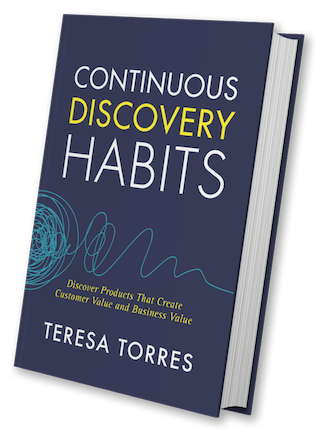
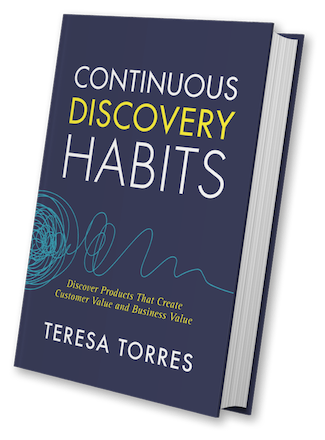
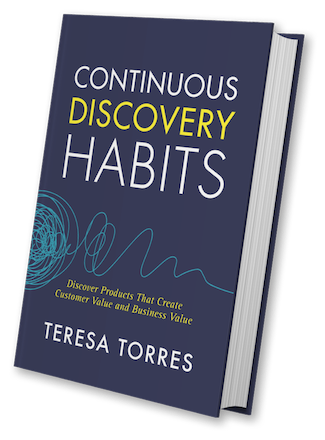
Five years in, Continuous Discovery Habits continues to be one of the most practical frameworks I use to align empowered product teams, sharpen product strategy, and convert customer interviews into outcomes. To celebrate its impact, I’m hosting a community read-along and inviting you to dig in with me this May.
Each month, I’m releasing an in-depth reading guide to make learning stick. You’ll find the chapters we’ll be reading, a preview of the essential concepts, short videos to help you spread the ideas across your organization, individual and team discussion prompts, team exercises to put the concepts into practice, and additional reading if you want to go deeper. My goal is simple: help you turn product discovery into a steady habit, not a once-a-quarter activity.
We’ll discuss each month’s reading in the comments, and we’ll gather quarterly on a live call to compare notes and share what’s working. Joining late is absolutely fine—I monitor the conversation throughout the year. Start with the current month or rewind to January; you can ask for help, share wins and roadblocks, and connect with other readers anytime.
If you want to participate, grab a copy of the book (or dust off your old one), share the "Spread the Love" videos with your team, block focused time for the exercises, and register for the community sessions. Let’s do this together.
This Month’s Reading
Chapter: Chapter 6: Mapping the Opportunity Space
Estimated reading time: ~23 minutes
This month’s chapter will introduce you to why opportunity mapping is critical for structuring the ill-structured problem of reaching your desired outcome; how to move from overwhelming opportunity backlogs to well-structured opportunity spaces; the power of tree structures for depicting parent-child and sibling relationships between opportunities; how to identify distinct branches in your opportunity space using key moments in time; common anti-patterns to avoid when building your first opportunity solution tree; and why structure "gets done, undone, and redone" as you continue to learn.
Need a copy? Grab the book.
Share the Love with Friends and Colleagues
We learn best in community. Use these short videos to spread the core concepts from this chapter—then invite your team to join the book club with you.
The need for opportunity mapping – You will never fully satisfy your customers' desires
Understanding the structure of an opportunity solution tree – Depicting two types of relationships
Turn big intractable problems into smaller, more solvable problems – The power of decomposition
How to map an opportunity space – Getting started with opportunity solution trees
A well-structured opportunity space has distinct branches – Identify key moments in time
Reflect & Discuss What You Read
Reflection turns reading into capability. This chapter asks us to shift from reacting to every request to deliberately structuring the opportunity space. If you’ve ever felt overwhelmed by a never-ending backlog or pressure to ship output over outcomes, this is where the fog starts to lift. As you read, focus on how your team currently organizes (or doesn’t organize) what you hear from customers.
Individual Reflection
1) Think about your current product backlog or opportunity list. Is it a flat list, or do you have some structure to it? If you were to group similar opportunities together, what patterns would emerge?
2) When was the last time you heard a customer need and immediately jumped to a solution without exploring whether there were related opportunities? What would change if you took the time to map how that opportunity connects to others?
3) Review the anti-patterns from the chapter (opportunities framed from your company's perspective, vertical opportunities, opportunities with multiple parents, etc.). Which of these do you recognize in how your team currently talks about opportunities?
Team Discussion
1) As a team, pick a top-level opportunity you're currently working on. Try breaking it down into sub-opportunities together. Where do you struggle? Where do you disagree about how to frame or group opportunities? What does that tell you about gaps in your shared understanding?
2) Look at your experience map (from Chapter 4) and identify 3-5 distinct moments in time during your customer's experience. Could these become the top-level branches of your opportunity solution tree? Where do you see overlap, and where are there clear distinctions?
3) Discuss the quote from Barbara Tversky: "Structure gets done, undone, and redone." How does your team currently respond when you discover new information that changes how you understand the opportunity space? Do you treat your opportunity map as fixed or as something that evolves?
Put It Into Practice
Reading is step one; building your first opportunity solution tree is where the real learning happens. The exercises below are exactly how I coach product trios to transform ambiguous problems into aligned action.
Exercise: Build Your First Opportunity Solution Tree
Time: 60 minutes. Do this: With your product trio.
Start by reviewing your interview snapshots from the past few weeks. For each opportunity you captured, ask the three questions from the chapter:
Is this opportunity framed as a customer need, pain point, or desire (not a solution)?
Is this opportunity unique to one customer, or have we seen it in more than one interview?
If we address this opportunity, will it drive our desired outcome?
Then, using your experience map, identify 3-5 distinct moments in time to serve as your top-level opportunities. Group the opportunities from your interviews under these top-level branches.
Look for opportunities to add structure to each branch. Group similar opportunities together and identify a parent opportunity. Look for vertical stacks (one parent, one child) and fill in missing siblings. Reframe opportunities that are too broad or that could live in multiple branches.
Don’t aim for perfection. Get something on paper (or a digital canvas) and iterate the tree with every new interview.
Exercise: Practice Framing Opportunities from Your Customer’s Perspective
Time: 30-45 minutes. Do this: With your product trio.
Take 10-15 opportunities from your current backlog or list. For each one, ask: "Can I imagine a customer saying this?" If the answer is no, reframe it from your customer’s perspective. For example:
"Increase subscription conversions" becomes "I want to know if this product is worth paying for"
"Reduce support tickets" becomes "I can't figure out how to do X"
"Improve onboarding completion" becomes "I'm not sure what to do next"
This exercise helps you spot business-centric opportunities disguised as customer opportunities. It also trains your team to listen for opportunities in interviews that are framed from the customer’s point of view.
Go Deeper: Additional Reading
If you prefer an audio summary of this month’s reading, including the book chapters and the following resources, I’ve included an audio version for paid subscribers at the bottom of this post.
Related In-Depth Guides
Opportunity Solution Trees: Visualize Your Discovery to Stay Aligned and Drive Outcomes
Customer Interviews: Uncover Hidden Insights from Every Conversation
Supplementary Reading
Prioritize Opportunities, Not Solutions
Product in Practice: Opportunity Mapping at Grailed
Product in Practice: Opportunity Mapping at trivago
7 Key Benefits of Using Opportunity Solution Trees
Getting Started with Opportunity Solution Trees at SuperAwesome
Bringing Order to Chaos: Using Opportunity Solution Trees in Everyday Life
Other Voices
Why Groups Struggle to Solve Problems Together by Al Pittampalli
More PM Problem Areas by Marty Cagan
Five Superpowers of Diagrams by Abby Covert
Critical Thinking is Product Management by This Is Product Management
Our Live Discussion Schedule
Our live discussion sessions are for paid subscribers. Sessions are not recorded. Invitations will go out to Supporting Members and CDH Members two weeks before the scheduled event. But reserve the time on your calendar now.
Tuesday, June 16, 2026: 9am-10am PDT
Thursday, September 17, 2026: 9am-10am PDT
Wednesday, December 16, 2026: 9am-10am PST
Audio Summary
This summary was produced by NotebookLM. The sources supplied were the book chapters as well as all of the additional reading.
Net Recurring Revenue (NRR) is the clearest signal of whether our product, pricing, and customer success motions are compounding value or quietly leaking it. When I review our dashboard, NRR tells me—in one number—how well we retain, expand, and engage customers. It’s the difference between linear progress and durable, compounding growth.
At its core, NRR answers a simple question: did revenue from our existing customers grow or shrink this period? The standard way I frame it is: NRR = (Starting MRR + Expansion – Contraction – Churn) / Starting MRR. Expansion reflects upsells, cross-sells, and increased usage; contraction and churn capture downgrades and departures. Great teams don’t just watch this number—they engineer it.
The teams that consistently outperform treat NRR as an outcome of intentional design across the entire customer journey. They align product-led growth with customer success, weaving onboarding, user activation, in-app guides, and lifecycle messaging into one coherent system. They make adoption the star of the show, not an afterthought tucked beneath quarterly targets.
To scale that system efficiently, I lean on platforms that streamline in-app guidance and rich behavioral analytics. The promise is crisp and concrete: “Increase revenue, cut costs, and reduce risk with Pendo’s Software Experience Management platform. Optimize the entire software experience to drive adoption and improve engagement.” When the experience is instrumented end to end, expansion opportunities show up as patterns, not surprises.
Retention analysis is where the signal gets sharp. I segment cohorts by plan, size, and use case; map their journey; and run driver trees that connect leading indicators (activation depth, feature breadth, time-to-value) to the lagging outcome (NRR). This turns hunches into hypotheses and gives customer success managers a prioritized playbook, not a long wish list.
Onboarding is the first and most powerful NRR lever. The faster a customer experiences their first win, the more likely they are to adopt core features, invite teammates, and expand. I use in-app guides, product tours, and contextual tooltips to pave the path to value—always grounded in clear jobs-to-be-done, not generic walkthroughs. The goal is simple: remove friction, celebrate progress, and make the next best action obvious.
Operating cadence matters as much as tooling. I separate the rhythms: QBRs for strategic alignment and expansion planning; OKRs for cross-functional execution and accountability. QBRs anchor the conversation in outcomes and value realized; OKRs ensure product, marketing, and CS move in lockstep to close the gaps those QBRs reveal.
Pricing and packaging complete the loop. When the value proposition is clear and plans are aligned to outcomes customers care about, expansion feels natural—more capability for more value. Usage insights guide which features to gate, which to bundle, and where to price to maximize retention while unlocking healthy upsell paths.
None of this works without tight product–CS collaboration. My teams practice continuous discovery—customer interviews, win/loss insights, and in-product feedback—so we improve the experience where it truly matters. Journey mapping turns those insights into experiments, and experiments turn into polished features once the data speaks.
I build an NRR driver tree into our weekly reviews. Each branch (activation, adoption, multi-seat expansion, downgrade prevention, reactivation) has a clear owner, a measurable hypothesis, and a time-bound experiment. A/B testing guides what we ship broadly, and we define success upfront to avoid moving goalposts after the fact.
I’ve seen NRR climb meaningfully in a single quarter when we pair rigorous retention analysis with targeted onboarding improvements and value-based packaging. The lift rarely comes from one big bet; it’s the compounding effect of many small, well-instrumented decisions.
Here’s the 90-day play I return to: first, baseline NRR by segment and identify the top three drivers of expansion and the top three causes of contraction. Next, streamline onboarding with in-app guides and product tours that accelerate time-to-value and drive user activation. Then, craft expansion plays aligned to real outcomes (additional seats, advanced workflows, new use cases), and operationalize them via QBRs. Finally, preempt downgrades with early-warning alerts, targeted education, and a clear path from “stuck” to “successful.”
NRR is a team sport. When product, customer success, and go-to-market align around adoption and outcomes, growth compounds, risk declines, and every customer interaction becomes a chance to create more value—today and in every renewal to come.
“Continuous Discovery Habits” turns five this year, and I’m celebrating by reading it with our community—together, in practice, not just in theory. Each month, I’m publishing an in-depth reading guide with the chapters we’ll cover, a preview of the most important concepts, short videos you can share with your teams, individual and team discussion questions, practical exercises to apply what you read, and additional resources to go deeper.
We’ll keep the conversation active in the comments each month and meet live once a quarter to compare notes, share what’s working, and troubleshoot what’s not. If you’re joining late, no problem—start with the current month or go back to January. You can also find all of the book club articles here.
If you want to participate, grab a copy of the book (or dust off your old one), share the “Spread the Love” videos with colleagues, block time for the team exercises, and register for the community sessions. Let’s dive in together.
This chapter grounds us in why interviewing on a regular cadence is critical to the success of any product trio; how cognitive biases affect what we learn from direct questions; the difference between research questions and interview questions; how to use story-based interviewing to uncover actual customer behavior (not ideal behavior); the interview snapshot, a one-page tool for synthesizing what you learned from a single interview; how to automate the recruiting process so interviewing becomes easier than not interviewing; and why product trios should interview customers together.
Need a copy? Grab the book.
Share the Love with Friends and Colleagues
We learn best in community. To help your team rally around these practices, share these concise primers and invite them to join the book club discussion with you.
What are customer interviews? – Build a competitive advantage that compounds over time.
What should we ask in customer interviews? – Mitigating cognitive biases.
Research questions vs. interview questions – And why the difference matters.
Getting reliable feedback from customer interviews – Ask the right questions.
Who should conduct customer interviews? – My answer might surprise you.
How do you find customers to interview? – Automate the recruiting process.
The Interview Snapshot – How to synthesize a single customer interview.
Reflect and Discuss What You Read
Reflection cements learning. This month, I’m challenging you—as I challenge my own teams—to build a weekly habit of interviewing customers and to shift from direct questions (which trigger bias) to collecting specific stories about past behavior. For many teams, this is a big mindset change: from infrequent “big research projects” to lightweight, continuous conversations that fuel daily decision-making.
Individual Reflection: Think about your last customer interview or conversation. Did you rely on direct questions, or did you excavate a specific story about what happened? How might the answers have changed if you had used the other approach?
Consider your own behavior—buying jeans, going to the gym, choosing what to watch on Netflix. Where do your ideal intentions differ from what you actually do? How might that same gap show up in your customers’ answers to direct questions?
Scan your calendar from the past month. How many customer interviews did you conduct? If it’s fewer than four, what got in the way? What needs to change to make weekly interviewing sustainable?
Team Discussion: As a team, discuss your current interview cadence. If you’re not interviewing at least weekly, name the biggest obstacle—recruiting, time, or synthesis—and commit to reducing one barrier this month.
Try this together: Ask a teammate, “How does a product idea go from concept to launch at our company?” Have them write it down. Then ask for the last specific feature or improvement that launched and capture the story. Compare the two. What’s different? What does this reveal about the gap between ideal process and actual process?
If you already interview regularly, ask: Who participates? Is it just one person (like the designer or product manager), or does the whole trio join? What value might you be missing by not having all three perspectives in the room?
Put It Into Practice
Understanding the “why” is easy; building the habit is the work. The following exercises are how my teams operationalize continuous interviewing week over week.
Exercise: Conduct a Story-Based Interview (Time: 20–30 minutes. Do this with your product trio.) Schedule a conversation with a current customer. Instead of drafting a long script, identify a handful of research questions (what you need to learn) and translate them into one story-based interview question (what you’ll ask).
For example, research questions might include: What challenges do customers face when onboarding? Where do they get stuck? What are we asking them to do that they don’t understand? How can we make it easier for them to get to the activation moment? The corresponding interview question could be: Tell me about the first time you used our product.
During the interview, excavate the story with temporal prompts like “What happened first?”, “What happened next?”, and “What happened before that?” If the participant drifts into generalities (“I usually…” or “In general…”), gently bring them back to the specific instance.
After the interview, debrief as a trio. What did each of you hear? Which opportunities surfaced? What surprised you? If you want personalized, detailed feedback on your technique, consider the Interview Coach available through the Story-Based Customer Interviews course.
Exercise: Create Your First Interview Snapshot (Time: 30 minutes. Do this with your product trio immediately after the interview.) Using the interview snapshot template, capture a photo of the participant (or a visual that represents their story), quick facts about their context, a memorable quote you’ll still recall months from now, the opportunities (needs, pain points, desires) you heard, notable insights that aren’t yet opportunities, and an experience map that illustrates the story. Over time, aim to complete each snapshot in 15–20 minutes.
Go Deeper: Additional Reading
If you prefer audio, I’ve included an audio summary for paid subscribers that covers this month’s chapter plus the resources below.
Related In-Depth Guides: Customer Interviews: How to Recruit, What to Ask, and How to Synthesize What You Learn.
The Value of Continuous Interviewing: Why Product Trios Should Interview Customers Together – How interviewing together ensures research is timely, actionable, and believable.
How to Find Customers to Talk To: Customer Recruiting: Get Easy Access to Customers Week Over Week – Practical strategies for automating your recruiting process. Ask Teresa: How Do You Select Customers for Customer Interviews? – Who to interview and how to recruit them. Tools of the Trade: Finding People to Interview Before You Have Customers – Recruiting strategies for early-stage products.
What to Ask in Your Interviews: Why You Are Asking the Wrong Customer Interview Questions – Understanding the gap between ideal behavior and actual behavior. Story-Based Customer Interviews Uncover Much-Needed Context – Why collecting specific stories is more reliable than asking direct questions. Ask Teresa: What Are the Best Customer Interview Questions? – Common questions and how to improve them. Ask About the Past Rather than the Future – Why memories about recent instances are more reliable than speculation.
How to Take Notes and Synthesize What You Are Learning: How to Take Notes During Customer Research Interviews – Practical tips for capturing what you hear. The Interview Snapshot: How to Synthesize and Share What You Learned from a Single Customer Interview – A comprehensive guide to creating and using interview snapshots. Customer Interview Analysis: How AI Helps and Hurts – Learn how to use AI effectively.
Videos: All Things Product Podcast: Customer Interview Analysis – Petra and I discuss using AI to analyze customer interviews, the risks and benefits, and why your interviewing skills matter more than any AI tool.
Other Resources from Around the Web: The Top 5 Mistakes Product Teams Make With Customer Interviews by Pragmatic Live. Continuous interviewing with Kristian Collin Berge (CEO & Co-founder at UX Signals) by Afonso Franco. How to Make Time for Customer Interviews & Validation by Rich Mironov. Brave UX: An interview with Teresa Torres by Brendan Jarvis.
Related Courses: Customer Recruiting for Continuous Discovery – Get easy access to customers week over week. Story-Based Customer Interviews – Collect reliable feedback from every customer conversation.
Our Live Discussion Schedule
Our live discussion sessions are for paid subscribers. Sessions are not recorded. Invitations will go out to members two weeks before each event—add these to your calendar now: Tuesday, June 16, 2026: 9am–10am PDT. Thursday, September 17, 2026: 9am–10am PDT. Wednesday, December 16, 2026: 9am–10am PST.
Audio Summary
This summary was produced by NotebookLM. The sources supplied were the book chapters as well as all of the additional reading.
This article is part of the CDH Book Club celebrating the five-year anniversary of Continuous Discovery Habits.
Customer experience is where strategy, data, and execution converge—and where AI can deliver compounding value when thoughtfully designed. In my work, I’ve seen how the right CX vision becomes a growth engine when it’s operationalized through clear measures, robust analytics, and disciplined product practices.
"Amanda Sime is the Customer Experience Strategy Lead at Amplitude. She shapes CX strategy and partners across orgs to design and scale AI-powered solutions." That concise description captures a model I deeply respect: start with a strong CX strategy, then partner across the organization to make AI real in the day-to-day. It’s not just about new technology; it’s about aligning teams, systems, and incentives to deliver consistent customer value.
Translating that approach into practice requires a rigorous AI Strategy, anchored in measurable outcomes and informed by behavioral analytics. I prioritize journey mapping to expose friction, then connect those insights to AI workflows that enhance customer success and in-product guidance. When cross-functional partners—from solutions engineering to support—operate from a shared driver tree, the roadmap balances speed with sustainability.
Data is the backbone. A unified analytics platform—often centered on Amplitude analytics—helps teams move beyond vanity metrics to track user activation, feature adoption, and retention analysis with precision. With that foundation, we can test responsibly, iterate quickly, and validate impact with product-led growth motions that scale across segments without sacrificing quality.
Operational excellence matters just as much as vision. I’ve learned to treat CX programs like enduring products: build reliable feedback loops, connect customer support AI strategy to clear service-level outcomes, and empower product management leadership to make evidence-based tradeoffs. When teams have clarity on the problem space and access to trustworthy insights, they deliver solutions that feel both intelligent and human.
The real win is cultural: empowering product trios and partner teams to co-own outcomes, not just outputs. That’s how AI moves from a promising experiment to a durable capability—by aligning strategy, analytics, and execution so customers experience value at every touchpoint.
Inspired by this post on Amplitude – Perspectives.
I build products with a simple mantra: launch, learn, repeat. Shipping fast is necessary, but shipping smart is what compounds. To do that, I keep analytics close to the work—inside the builder—so every decision is tied to real user behavior, not assumptions.
Connect Amplitude MCP to Lovable to understand user behavior, spot frictions, and ship better updates without leaving your builder.
In practice, this integration lets me bring Amplitude analytics and behavioral analytics directly into the creative flow. I can explore funnels, cohorts, and drop‑offs the moment I’m crafting an experience, then translate those insights into concrete changes without context switching. The result is tighter feedback loops and more confident iteration.
My typical loop looks like this: identify a friction point from funnel analysis, design two or three variants in the builder, and run A/B testing to validate the improvement. I focus on user activation and retention analysis as leading signals, because sustained engagement is the clearest indicator that we’ve solved a real problem. When the data confirms it, we promote the winning experience and move to the next opportunity.
Keeping the work inside the builder also supports continuous discovery. I can pair quantitative insights with qualitative observations, refine journey mapping, and document learnings while the context is fresh. That makes prioritization and product discovery more reliable, and it turns each iteration into a teachable moment for the team.
Strategically, this builder‑first approach enables product-led growth. With fewer handoffs and a unified analytics platform, we compress time from insight to impact. It helps me defend roadmap decisions with evidence, communicate trade‑offs clearly, and keep the team focused on outcomes that matter to customers and the business.
If your goal is to iterate with speed and precision, bring analytics to where you build. Keep the loop tight, measure what moves the needle, and let the data guide your next best update.
Inspired by this post on Amplitude – Best Practices.
Mobile engagement is most effective when it’s timely, contextual, and grounded in real user behavior. In my experience leading product teams, the fastest path to activation and retention comes from meeting users in the moment with relevant in-app guides and lightweight surveys that reduce friction and illuminate intent.
Deploy behavioral-driven mobile engagement with Amplitude Guides and Surveys for iOS, Android, and React Native platforms.
What excites me about this approach is how naturally it supports product-led growth. In-app guides and product tours streamline onboarding, while targeted micro-surveys surface the “why” behind user actions. The result: clearer journey mapping, fewer blind spots in the funnel, and a smoother path to user activation—all without adding engineering heavy-lift for each iteration.
To optimize continuously, I pair behavioral analytics with A/B testing and retention analysis. This lets my team validate hypotheses quickly, localize friction by segment or stage, and tune messaging for different cohorts. With Amplitude analytics at the core, we can connect engagement nudges to downstream outcomes, not just clicks—so we’re improving time-to-value, not just surface metrics.
My recommended starting point is simple: define a single activation moment, instrument the critical behaviors around it, and launch a focused guide plus one survey to test the narrative. Use journey mapping to identify the key decision points, then iterate weekly based on observed behavior, not opinions. This cadence keeps learning velocity high and ensures every change moves us closer to clear outcomes.
From a leadership perspective, I coach product trios to own an activation or retention KPI, run small controlled experiments, and document learning with crisp before/after evidence. Cross-platform support across iOS, Android, and React Native means we can scale wins quickly, standardize patterns, and create a repeatable playbook for new features and markets—all while keeping the user experience coherent and respectful.
Inspired by this post on Amplitude – Best Practices.
Net Recurring Revenue (NRR) is the cleanest truth-teller in my operating system. When I review NRR, I’m not just looking at whether we renewed accounts—I’m assessing whether our product and customer success motions are compounding revenue from our existing customers. Put simply: good CS teams protect revenue; great CS teams grow it through adoption, expansion, and durable retention.
Here’s how I frame NRR with my teams: it reflects revenue from our current customers after expansion, downgrades, and churn. If it’s at or above 100%, the installed base is self-sustaining; if it’s materially above 100%, the base is funding growth without net-new sales. That’s the holy grail for product-led growth and the benchmark I use to separate good from great.
At HighLevel, I’ve learned that you can’t “wish” your way to high NRR. You operationalize it. We align incentives, dashboards, and rituals so everyone—from PMs to CSMs to Solutions Engineering—owns the same outcome. Our “QBRs vs OKRs” discussions anchor on NRR drivers: activation rates, time-to-value, feature adoption depth, and expansion readiness. Those leading indicators tell me where we’ll land on lagging revenue results.
The best Customer Success teams operate like product teams. They use behavioral analytics and retention analysis to segment customers by use case and maturity, then design journey mapping to move each segment from first value to habitual value. They proactively reduce risk while creating clear expansion paths—new seats, premium features, or higher-tier plans—based on real product usage, not guesswork.
Onboarding is where great NRR trajectories begin. I focus on compressing time-to-first-value and time-to-second-value because those moments create the habit loops that underpin renewal and expansion. In practice, that means targeted in-app guides, contextual product tours, and nudges that drive user activation across the “sticky” features that correlate most with long-term retention.
To make this scalable, we blend human and product-led touchpoints. CSMs run outcome-based playbooks, while the product experience handles education and reinforcement at scale. When usage signals an expansion opportunity—say, a team consistently bumps into plan limits—we generate a product-qualified expansion lead and equip the CSM with the exact value storyline and proof points to close it.
Increase revenue, cut costs, and reduce risk with Pendo’s Software Experience Management platform. Optimize the entire software experience to drive adoption and improve engagement.
I’ve seen this playbook move the needle. After instrumenting our key workflows and deploying targeted in-app guidance, we watched adoption of our highest-retaining features climb, risk flags surface earlier, and expansion conversations become far more data-driven. We didn’t chase shiny objects; we built a reliable pipeline of retained and expanded revenue directly from product usage.
If you’re aiming to level up NRR, start with a crisp blueprint: define the critical events that predict renewal and expansion; set activation milestones per segment; deploy in-app guides and product tours to remove friction; give CSMs a single-pane view of risk and readiness; and review NRR weekly with the same seriousness you apply to new ARR. Consistency beats intensity here.
Finally, keep the narrative simple. Your leadership story isn’t “we shipped features,” it’s “we created customer outcomes.” Tie every CS and product initiative back to NRR drivers—and make the wins visible. When teams see the direct line from great onboarding and adoption to measurable expansion, they naturally operate like a unified, product-led growth engine.
NRR rewards rigor. Treat it as the top-line health metric for your installed base, make the software do more of the teaching, and empower CS to coach to outcomes. Do that well, and you won’t just separate the good from the great—you’ll build a compounding machine.