
Digital transformation set the foundation, but it’s no longer sufficient. In my work leading product teams, I’ve learned that real competitive advantage now comes from building systems that perceive, learn, and adapt—end to end, across the product lifecycle and the business operating model.
AI transformation goes beyond automation to create adaptive, intelligent organizations. Discover why it’s the next imperative and how to measure success.
Why is this the next imperative? Customers expect intelligent experiences, not just digitized workflows. Markets are shifting faster than roadmaps, and teams need systems that learn in production. For me, AI Strategy starts with a clear value thesis: where can intelligence amplify customer outcomes and compound business impact—whether in onboarding, customer support, or core product differentiation.
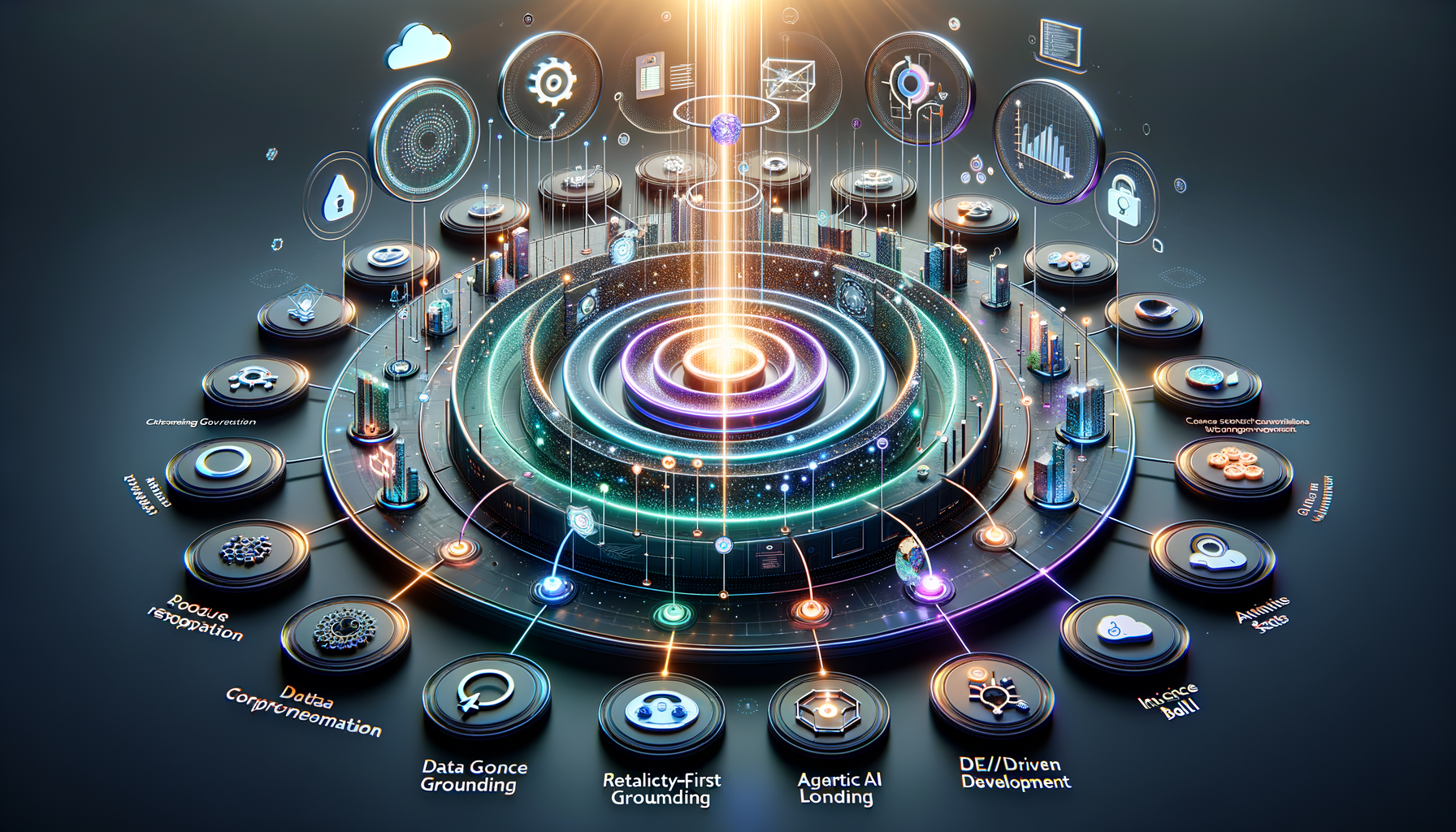
Practically, I frame AI transformation as a capability stack: data governance and privacy-by-design at the foundation; a retrieval-first pipeline to ground models in trusted context; agentic AI and AI workflows to orchestrate actions; and eval-driven development to continuously measure quality, safety, and relevance. Layered on top are operating rhythms—outcomes vs output OKRs, rapid experimentation, and incident management—that keep shipping disciplined and responsible.
I start with product discovery. Together with product trios, we target moments where intelligence removes friction or unlocks new value. We translate those opportunities into crisp outcomes (activation, time-to-first-value, resolution rate) and instrument them from day one. In customer support, for example, a customer support ai strategy might blend LLMs for product managers with retrieval-first grounding to deliver accurate, brand-safe answers and escalate seamlessly when needed.
On architecture, I prioritize context window management and robust integrations. CRM integration and event streams from tools like Intercom, HubSpot, Pendo, and a unified analytics platform provide the signals AI needs to adapt in real time. Prompt engineering patterns, guardrails, and privacy-by-design controls ensure responses remain trustworthy and compliant. When applicable, I explore agentic AI to orchestrate multi-step tasks with clear constraints and auditability.
Delivery is where transformation becomes measurable. I combine CI/CD practices with DORA metrics (deployment frequency, lead time, change failure rate, MTTR) to keep iteration fast and safe. On the product side, A/B testing with a minimum detectable effect (MDE) protects rigor, while eval-driven development tracks model accuracy, hallucination rates, and policy adherence before and after release. I tie these to business metrics like user activation, retention analysis, and support resolution time to ensure we’re shipping outcomes, not just output.
Governance is non-negotiable. AI risk management, regulatory compliance, and data governance anchor every phase—from dataset curation to prompt libraries and model routing. Threat detection and response and incident management processes are integrated so we can respond quickly when behavior drifts or new risks emerge.
Transformation also means evolving how teams work. I invest in empowered product teams, continuous discovery, and developer evangelism to spread best practices across domains. We share playbooks, reusable CustomGPT workflows, and an AI product toolbox to scale patterns like retrieval-first pipelines and safe prompt engineering across the portfolio.
The outcome is not just smarter features; it’s a more adaptive business. With clear OKRs, reliable telemetry, and responsible guardrails, AI becomes a force multiplier for product strategy and execution. If you’re moving beyond digital toward intelligence, start small, measure relentlessly, and let outcomes guide the journey.
Inspired by this post on Pendo – Perspectives.






Leave a Reply