
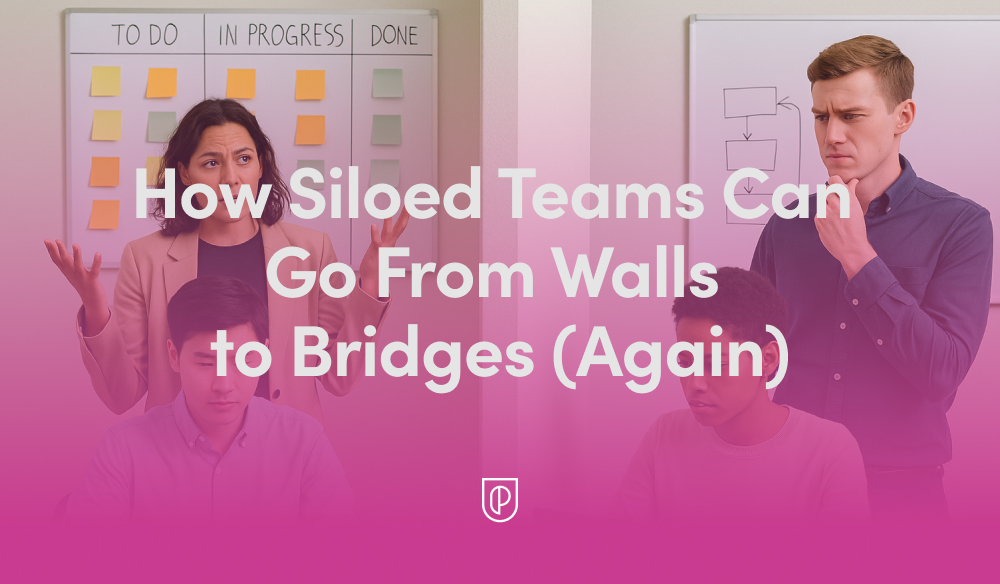
I’ve seen what happens when talented teams drift into silos: priorities splinter, timelines slip, and what looks like progress turns out to be motion without momentum. My job is to turn those walls into bridges—aligning product, engineering, design, and go-to-market around outcomes that matter to customers and the business.
For siloed teams, walls go up, and unnecessary work gets done. Learn the signs, the damage, and the way to break free from the illusion of work.
The signs show up early if you know where to look: duplicated efforts across squads, decision-making that bounces between functions, roadmap debates grounded in opinions rather than data, and “busy” sprints that ship outputs without measurable outcomes. These are classic stakeholder management breakdowns, often masked by perfect decks and full calendars.
The damage is real. Customers feel friction and inconsistency, product-market fit signals get missed, and we over-invest in features that don’t drive user activation or retention. Morale takes a hit as teams lose the thread of purpose. That’s the “illusion of work” in action—activity that crowds out impact.
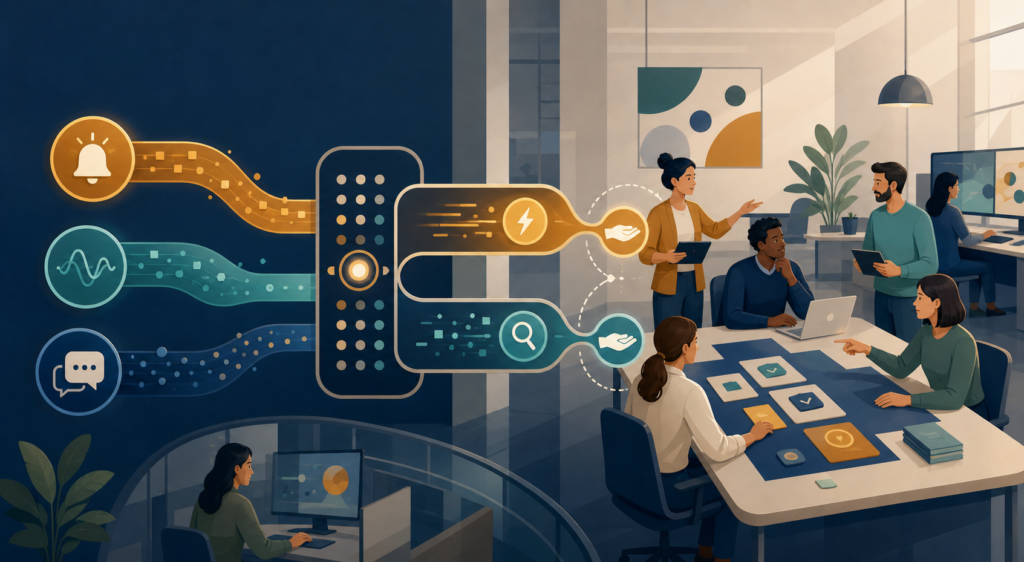
Here’s how I build bridges. First, I organize around empowered product teams and product trios (product, design, engineering) who own customer outcomes, not just velocity. We practice first principles decision making, write decisions down, and align early with adjacent functions so there are no surprises when we move from product discovery to delivery.
Second, I anchor planning in outcomes vs output OKRs. We commit to a small set of measurable outcomes, then use QBRs vs OKRs cadences to inspect progress, cut scope that doesn’t move the needle, and recalibrate with clarity. This shifts the conversation from “What did we ship?” to “What changed for customers and the business?”
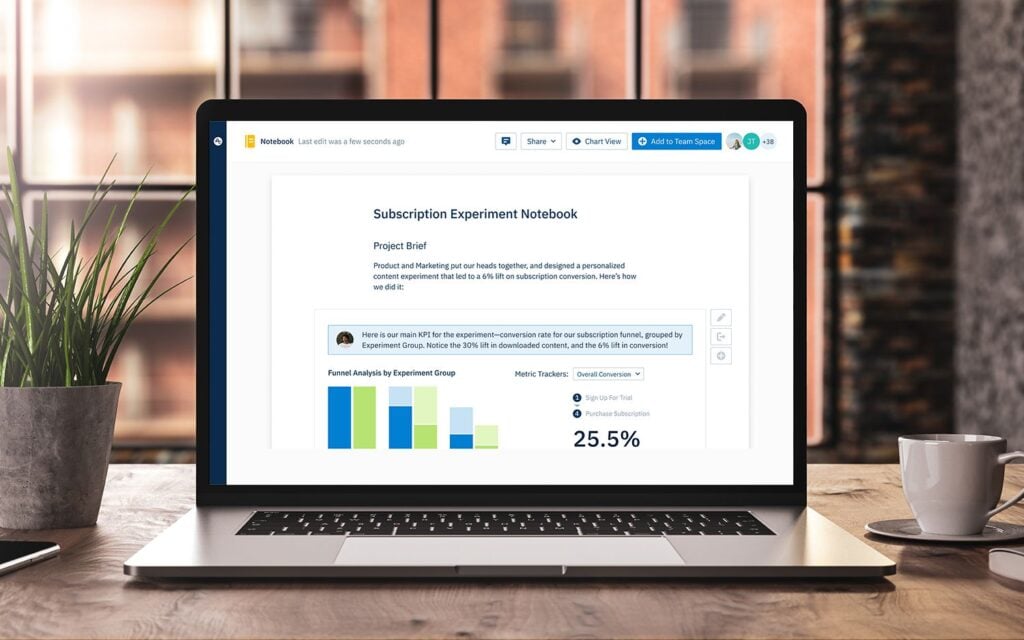
Third, I make impact measurable and visible. We instrument the funnel end to end, define a minimum detectable effect (MDE) for experiments, and use A/B testing to de-risk bets before we scale them. A unified analytics platform—with Amplitude analytics, Pendo, Intercom, and HubSpot tied back to our CRM integration—keeps everyone looking at the same truth so we can diagnose what’s working and what’s noise.
Fourth, I bring collaboration into the core rituals: transparent product roadmapping and sprint planning, weekly cross-functional reviews, and fast, lightweight artifacts that clarify hypotheses, success metrics, and trade-offs. By the time we launch, stakeholders already understand the why, the how, and the expected impact.
If parts of your organization feel stuck, start small: pick one shared outcome, form a cross-functional trio, define your leading indicators, and run one experiment with clear MDE and a two-week readout. The momentum you create will turn walls into bridges—and busywork into business results.
Inspired by this post on Product School.







Leave a Reply