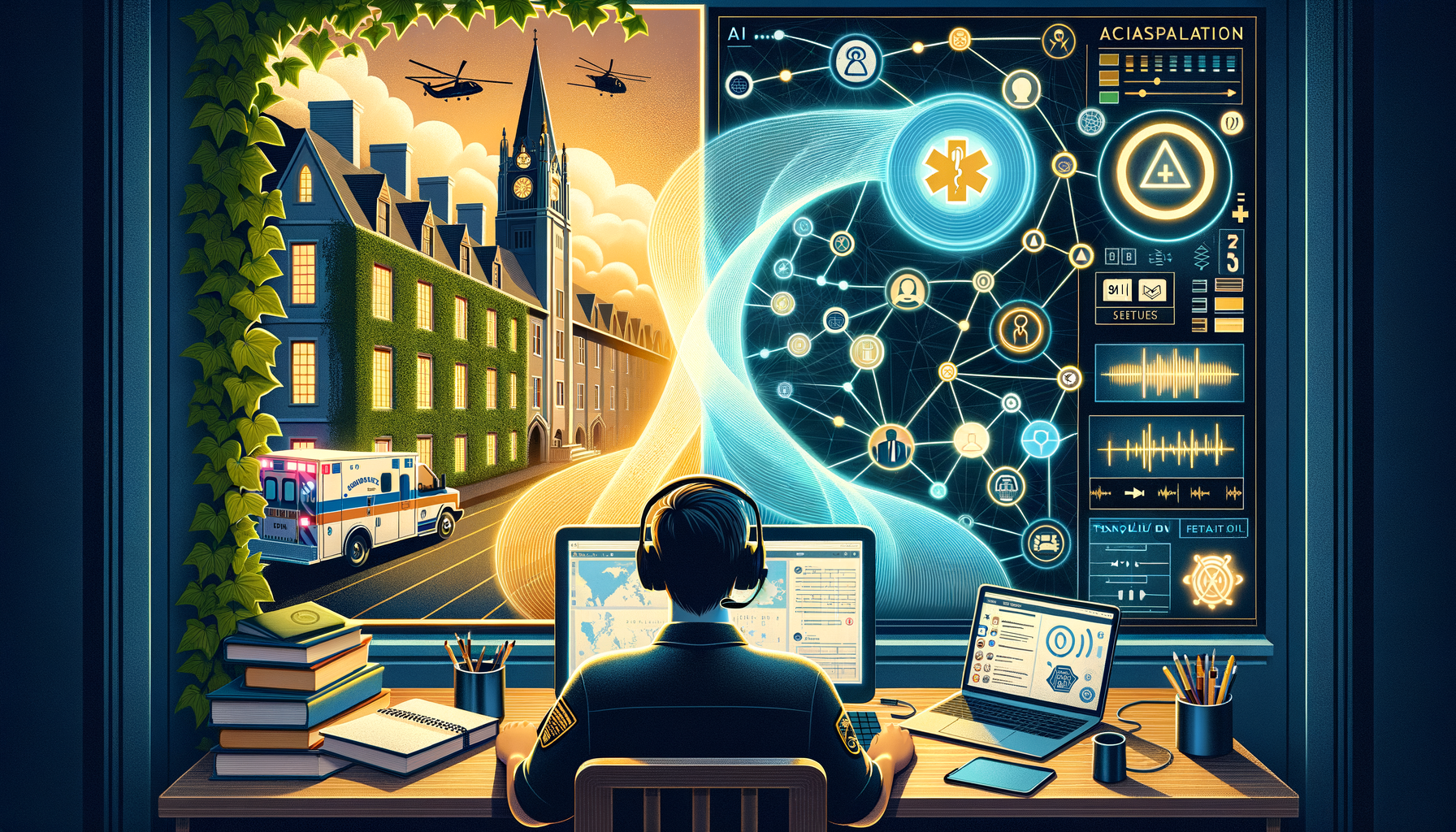
I’m fascinated by products that earn their right to exist in the toughest markets, and Prepared is one of those rare cases. Michael is the co-founder and CEO of Prepared, the AI assistant for 911 calls that helps dispatchers capture information faster, translate emergency calls in real time, and deliver lifesaving context to first responders. Founded out of Yale in 2019, Prepared grew from a school safety app into a critical platform for emergency communications, disrupting a notoriously tough market. This mission-driven journey just reached a major milestone: Prepared was acquired by Axon, the global public safety technology company.
From a product leadership lens, several choices stand out. The catalyst—tragically, school shootings—anchored the team’s conviction and sharpened their definition of value: every second saved and every bit of context delivered could change an outcome. That clarity enabled an unusual go-to-market motion for govtech: give away the first product for years to earn trust, validate workflows, and build a wedge that later expanded into an AI-driven suite. Counterintuitive? Yes. But in a market defined by risk, compliance, and procurement inertia, it was precisely the kind of strategy that compounds.
I’ve spent years navigating complex buyers, and Prepared’s approach to government and public safety agencies is a case study in disciplined product discovery. When systems are “so outdated,” pushing a modern layer requires empathy for the incumbent stack, forward deployed engineers who embed with users, and a readiness to translate mission need into procurement-friendly outcomes. It’s also a reminder that in govtech, distribution is a feature: partnerships, integrations, and interoperability often unlock more value than any single UX improvement.
One lesson I keep returning to is mission as competitive moat. Mission creates resilience during headwinds—endless rejections, long sales cycles, and the grind of security reviews—and it focuses prioritization when tailwinds arrive. Along the way, the team balanced conviction with customer feedback, asking not just “What did we hear?” but “Which signals matter?” That’s the only way to move from a wedge product to a robust platform without drifting into feature sprawl.
A few moments from the story hit me personally. Staying mission-oriented under pressure is more than a slogan; it’s the muscle memory of teams doing the work when no one’s watching. Negotiating an acquisition from a hospital bed underscores how founder endurance and timing often collide in ways you can’t plan for. And the self-aware quip—“I want to be terrible at sales”—captures a product ideal: build something so indispensable that champions sell it for you. It’s not anti-sales; it’s pro-traction.
On the AI front, Prepared’s evolution mirrors what I see across high-stakes operations: start with a narrow, high-value job-to-be-done and expand as trust accrues. Real-time translation and structured data capture are obvious force multipliers for dispatchers. Expanding the product surface area with AI requires rigorous guardrails, model performance transparency, and tight human-in-the-loop workflows—especially in public safety. That’s where gen ai earns its keep: augmenting judgment, not replacing it.
For founders and product leaders, here are the takeaways I’m carrying forward. Use a wedge that maps to urgent, measurable outcomes; then earn the right to broaden. Consider free or subsidized entry when trust and standardization are prerequisites to adoption. Treat procurement like a product: reduce friction, de-risk the choice, and make integration paths obvious. Balance conviction with a learner’s mindset to keep the signal-to-noise ratio high. And build investor relationships early and often so capital is an accelerant, not a lifeline.
If you’re exploring product-market fit in an enterprise or govtech context, ask the hard questions: How much should you listen to customers? Are you building in headwinds or tailwinds—and why? What partnerships both de-risk and differentiate? And when the mission is non-negotiable, how do you sustain it across phases—from first user to acquisition—without losing the soul of the product?
Where to find Michael:
LinkedIn: https://www.linkedin.com/in/michaelchime/
References:
Axon: https://www.axon.com/
Dylan Gleicher: https://www.linkedin.com/in/dylan-gleicher/
March for Our Lives: https://marchforourlives.org/
Neal Soni: https://www.linkedin.com/in/neal-soni/
OpenAI: https://openai.com/
Peter Thiel Fellowship: https://thielfellowship.org/
Prepared: https://www.prepared911.com/
Sam Altman: https://x.com/sama
Slack: https://slack.com/
Uber Eats: https://www.ubereats.com/
Yale University: https://www.yale.edu/








Leave a Reply