
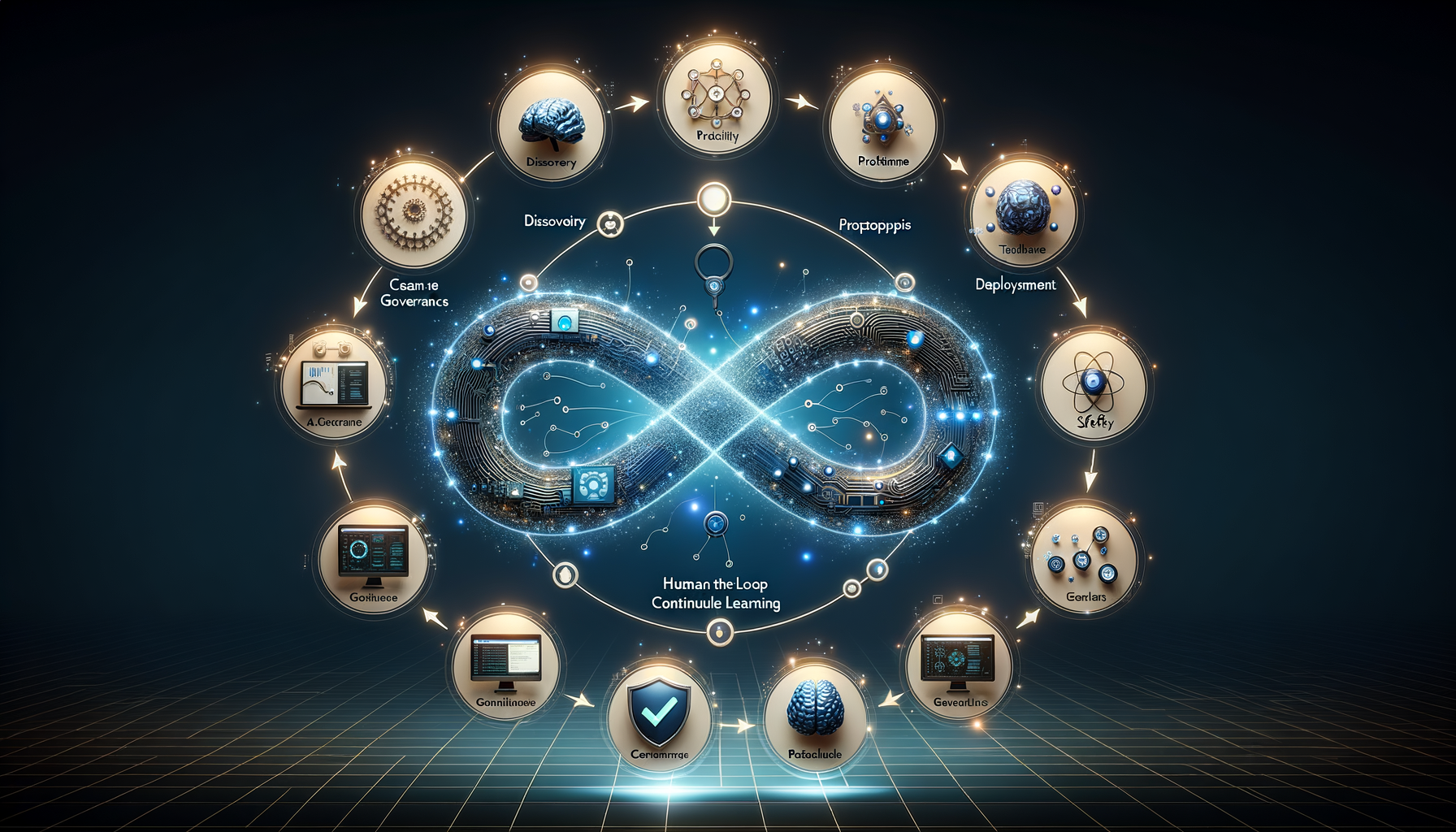
I’m focused on the future of the products we’ll build—and how we’ll build them. To see where we’re headed, I find it essential to reflect on the past four decades of product development, from on-prem software to cloud-native platforms, from waterfall delivery to agile and DevOps, and now to Generative AI reshaping how we imagine, design, and ship value.
Those cycles taught us a consistent lesson: when technology shifts, our product practices must evolve with it. We learned to ship smaller, measure better, and iterate faster. Today, we’re at another inflection point where the very process of product discovery, prototyping, and delivery is being augmented by intelligence.
Consider this quote: “Applying AI to the software development process is a major research topic. There is tremendous…”
That unfinished thought captures exactly where we are right now—on the cusp of tremendous potential. I see AI accelerating the full lifecycle: transforming ambiguous problems into testable hypotheses, turning research signals into prototypes within hours, and translating product intent into working code and test suites. Gen AI is becoming a collaborator in product discovery, a catalyst for engineering velocity, and a force multiplier for product management leadership.
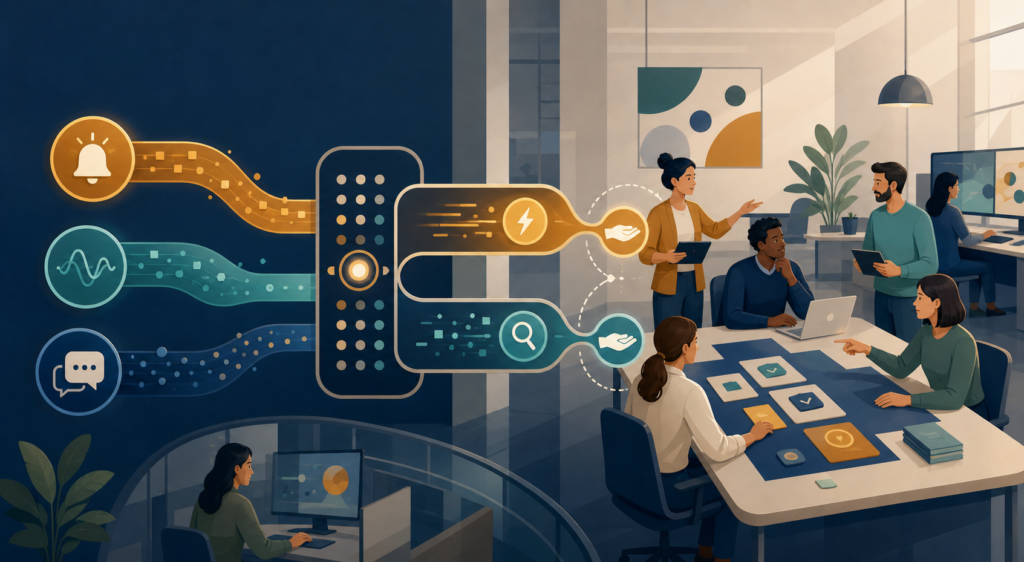
When I talk about creating intelligent products, I don’t mean bolting on a chatbot. I mean systems that learn from real usage, adapt to context, and continuously improve outcomes. Intelligent products are instrumented end-to-end: they observe, predict, and personalize—while giving users clear control and transparency. They reduce cognitive load, anticipate needs, and create compounding value over time.
How we create these products must change too. In discovery, I pair structured customer interviews with gen AI summaries to surface patterns quickly. I use gen AI for product prototyping to explore solution spaces before we commit code. Forward deployed engineers work alongside PMs and designers to ship high-signal experiments into real environments, shortening the feedback loop from weeks to days.
Operationally, the playbook includes four foundations. First, a robust data strategy: clean pipelines, privacy by design, and event models that map to user value. Second, a model lifecycle: from prompt engineering and fine-tuning to continuous evaluation and rollback plans. Third, a product discovery cadence that treats experiments as first-class artifacts. Fourth, a design system that includes AI interaction patterns—confidence indicators, explainability, and safe defaults—so experiences feel trustworthy and consistent.
Intelligent products demand responsible guardrails. I define clear acceptance criteria for safety, bias, privacy, and reliability, and I use evaluation harnesses with real-world scenarios to test them. Human-in-the-loop checkpoints remain essential for sensitive decisions. Governance is not a blocker; it’s a quality system that protects users and the business while allowing teams to move fast with confidence.
If you’re getting started, focus your next 90 days on three moves. Identify one high-friction workflow where intelligence can remove toil or accelerate time-to-value. Stand up a lightweight experimentation pipeline that logs outcomes and quality signals by default. And empower a small cross-functional squad—PM, designer, forward deployed engineer—to ship a measurable improvement, not a demo.
The destination is clear: product creators who master intelligent capabilities will deliver outsized impact. The path is practical: blend rigorous product discovery with gen AI acceleration, build trust through transparency and safety, and keep users at the center of every decision. That’s how we’ll create intelligent products that compound value—and why I’m optimistic about what we’ll build next.
Inspired by this post on SVPG.







Leave a Reply