Proven Playbook: From Pilot Teams to Full Transformation with the Product Operating Model

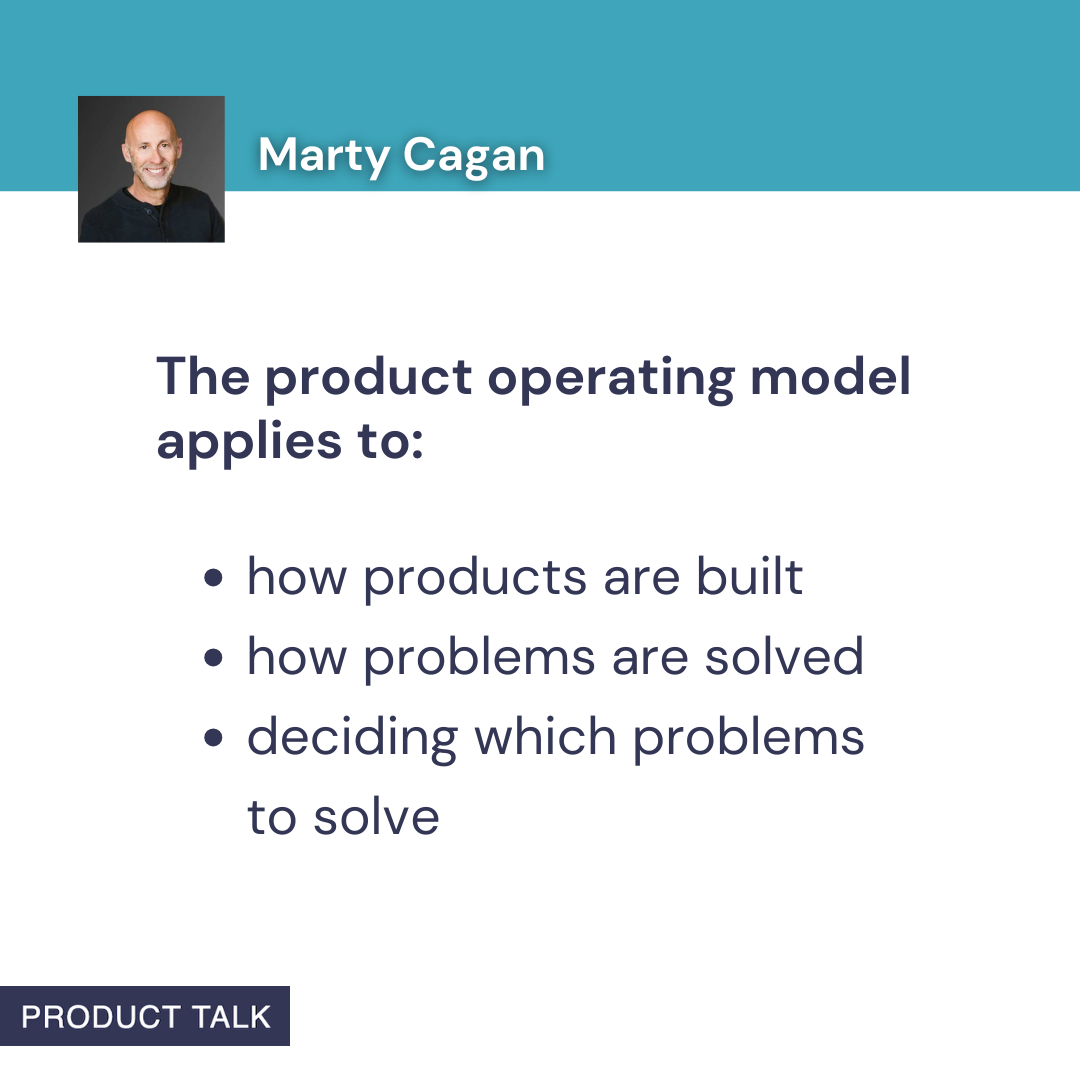
Slide-style graphic on the product operating model with a headshot in a teal header and bullet points: how products are built, how problems are solved, and deciding which problems to solve.

The product operating model is getting a lot of airtime for good reason. In my experience leading product and driving change across complex organizations, it offers a pragmatic way to build technology-powered solutions that customers love while delivering measurable business results.

What is the product operating model? I anchor teams on first principles: it’s not a process checklist—it’s a way of operating. As one leading thinker puts it, “The product operating model, also referred to as the product model, is a conceptual model based on a set of first principles that leading product companies believe to be true about creating products.” It’s “about consistently creating technology-powered solutions that deliver value to customers and that also drive results for the business. It’s about achieving outcomes versus merely producing output.” That framing matches exactly what I’ve seen separate high performers from the rest.
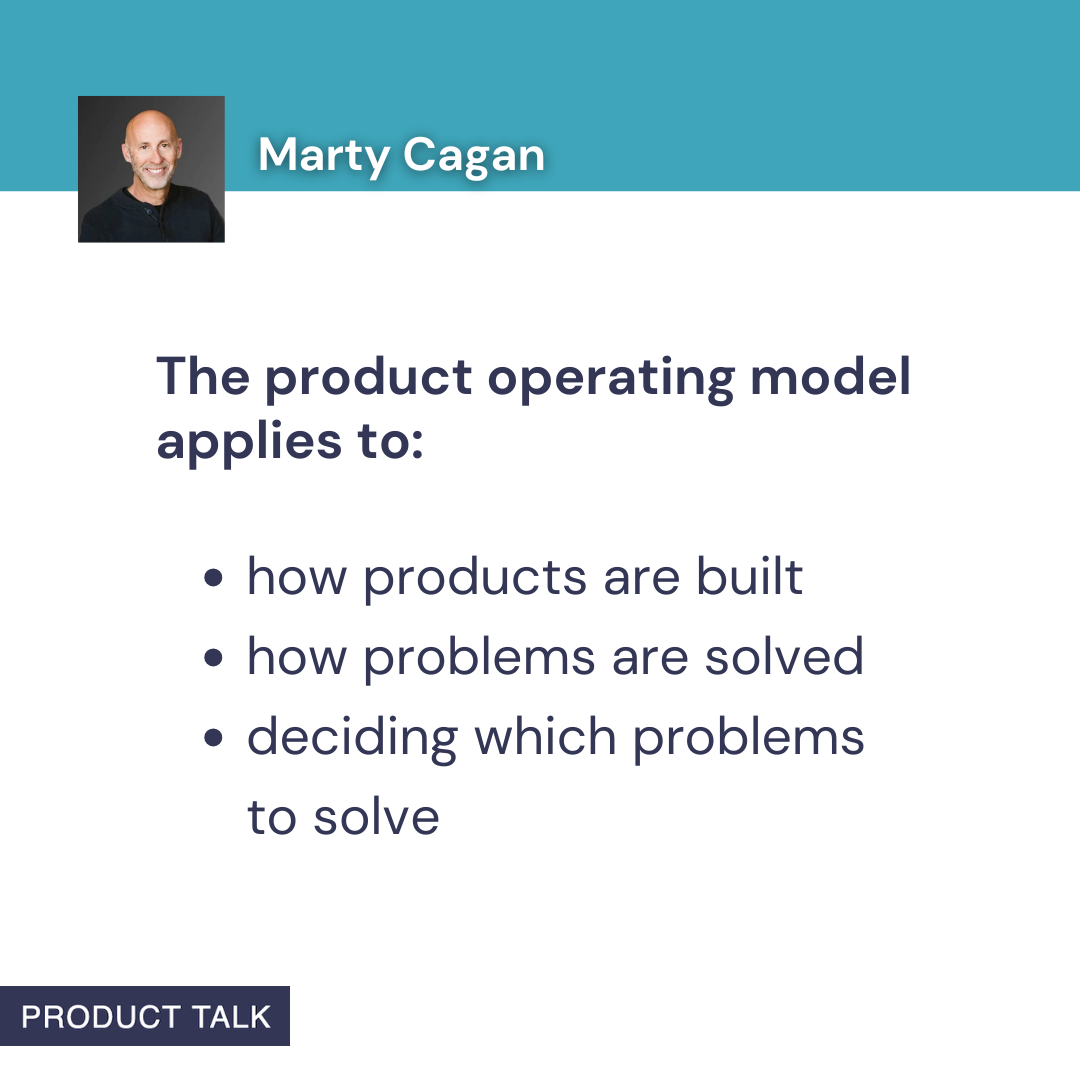
Minimalist slide summarizing the product operating model: bullets list how products are built, how problems are solved, and how to choose problems; teal header on white, aligned to organizational change topics.
A clean visual distills the product operating model—covering how products are built, how problems are solved, and how to choose which problems to tackle—ideal for teams moving from pilots to enterprise-wide transformation.

Why adopt it? Because too many organizations swing between two extremes—beloved products that can’t sustain the business, or hard-charging business tactics that burn customer trust. The product model forces a both/and mindset: customer value and business outcomes. The biggest triggers I see for making the shift are heightened competition, visible frustration with the status quo (lots of spend, little impact), and a clear view of the upside when you manage by outcomes instead of deliverables.
Minimalist quote graphic about the product operating model, with teal header bar and navy sans-serif text that it keeps customers happy while driving business results; PRODUCT TALK tag in corner.
Clean, modern visual underscores a core promise of the product operating model: delight customers and deliver measurable business outcomes. A timely teaser for organizational change content on scaling from pilot teams to full transformation.

How is it different from the project model? Projects start and stop; products evolve. When you manage by projects, you optimize for scope, budget, and dates—often at the expense of learning. When you operate as a product organization, cross-functional leaders (product, design, engineering) own the problem space and decide which customer problems to prioritize, in continuous conversation with stakeholders about business context and constraints. The litmus test: are teams funded and measured by outcomes, or by a backlog of features and deadlines?
Minimalist graphic with teal header; navy text states: 'Projects have a clear beginning and end. Products are never done.' Small 'Product Talk' tag in corner.
A crisp reminder that projects end while products evolve—the mindset shift at the core of a product operating model. Great for posts on moving from pilot teams to enterprise adoption and delivering continuous customer value.

Can a hybrid approach work? Early on, yes—and it’s often the smart path. I strongly recommend piloting with a small number of teams while the rest of the organization continues working in the project model. Use pilots to learn, de-risk, and build internal proof points. That said, some work will remain project-based (e.g., regulatory, compliance, or one-off migrations). The goal isn’t purity; it’s pragmatism.
Minimalist quote graphic with teal header; text reads: It’s not a good idea to transform every team at once, emphasizing phased product operating model rollout and gradual organizational change.
Change works best in waves, not a tidal surge. This visual champions pilot teams and staged rollout, showing how a product operating model scales successfully when leaders avoid all-at-once transformation.

How does continuous discovery fit? Continuous discovery is the operating system for deciding which problems to solve and how to solve them. Practically, that means weekly customer touchpoints by the team building the product, lightweight research to learn fast, mapping opportunities, and testing assumptions to reduce risk—all in pursuit of a clearly defined outcome. If you don’t learn continuously, you default to guessing continuously.
Quote graphic on white with teal header. Text: 'Continuous discovery is how teams decide which problems to solve and how to solve those problems.' Small 'Product Talk' label.
Continuous discovery helps teams choose the right problems and solutions. Explore how the Product Operating Model moves from pilot teams to enterprise-wide adoption—and why discovery is the engine of transformation.

How long does transformation take? Longer than most leaders think. Changing funding models, planning rituals, decision rights, and team habits is measured in years, not months. Pace yourself, stage the rollout, and expect to iterate on org design, coaching, and governance.
Minimalist graphic with teal header and navy text: 'Organizational transformations often take years.' Branded 'Product Talk,' linked to product operating model and change management.
Big change isn’t overnight. This visual from our Product Operating Model series highlights the reality: scaling from pilot teams to full transformation takes time, steady learning loops, and aligned leadership.

Is your organization ready? I look for two CEO-level signals: a genuine belief that how you operate today won’t win tomorrow, and felt pain with the current results (missed targets, margin pressure, slipping share). Transformation is hard; without executive conviction, resistance will stall progress.
Quote-style graphic with a teal header and bold navy text stating: 'Regulated industries introduce additional constraints, but they too can benefit from the product operating model.'
Even in heavily regulated sectors, a product operating model can thrive. Learn how to adapt governance and compliance without losing speed—from pilot teams to enterprise-wide scale.

What are signs it’s working? During planning, you fund teams and outcomes—not projects. Day to day, outcomes trump outputs. Product teams are empowered to solve customer problems (not merely deliver requests). Stakeholders contribute context and constraints, not solutions. Most importantly, your outcome metrics improve over time.
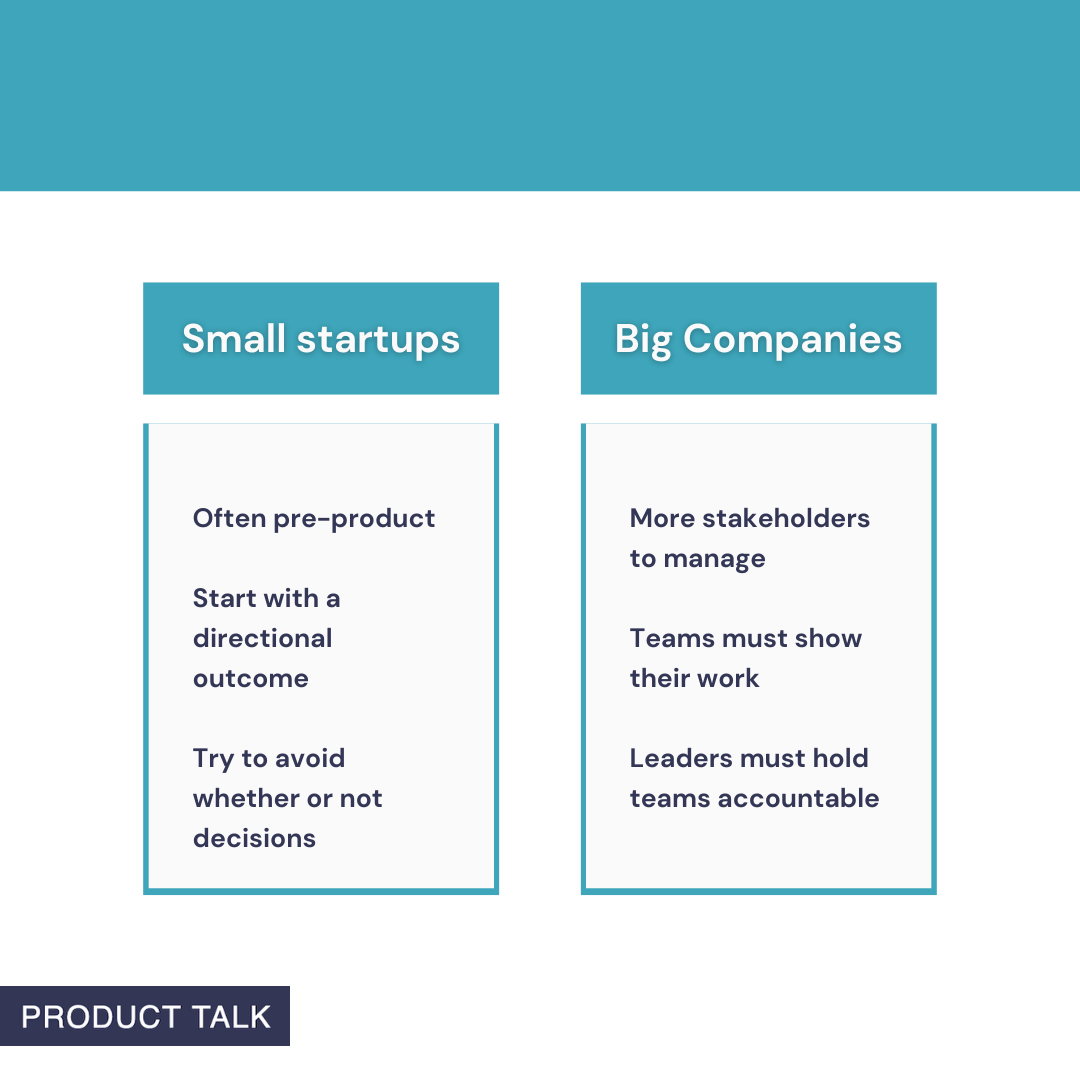
Infographic comparing small startups and big companies in a product operating model: startups are pre-product, outcome-driven, avoid yes/no decisions; enterprises juggle stakeholders, require transparency, and accountability.
A side-by-side snapshot of how product work changes from early startups to large enterprises—shifting from directional outcomes to transparent processes, stakeholder management, and accountable leadership.

Will it work in regulated industries? Yes. Constraints shape the solution space, but the underlying truth remains: products are never done. In highly regulated environments, continuous discovery, tight risk management, and fast feedback loops are even more critical.
Minimalist graphic with teal header and the quote 'Don’t train all of your teams at once,' highlighting phased adoption of a product operating model and organizational change for enterprise transformation.
Shift from big-bang training to smart scaling. Start with pilot teams, learn fast, and extend practices that work. This post explores how a phased product operating model reduces risk and builds lasting capability.

Startups vs. enterprises: Early-stage teams can start with a directional outcome (who you serve and what you aim to change) and evolve to measurable outcomes as signal strengthens. The anti-pattern is “idea-first” debates that devolve into whether-or-not arguments. Even with an idea in hand, interview customers, map the opportunity space, story-map solutions, and surface assumptions to test. In large enterprises, the challenge shifts to scale: more stakeholders and gatekeepers, a greater need to show your work concisely, and stronger accountability rituals so leaders can manage by outcomes without dictating outputs.
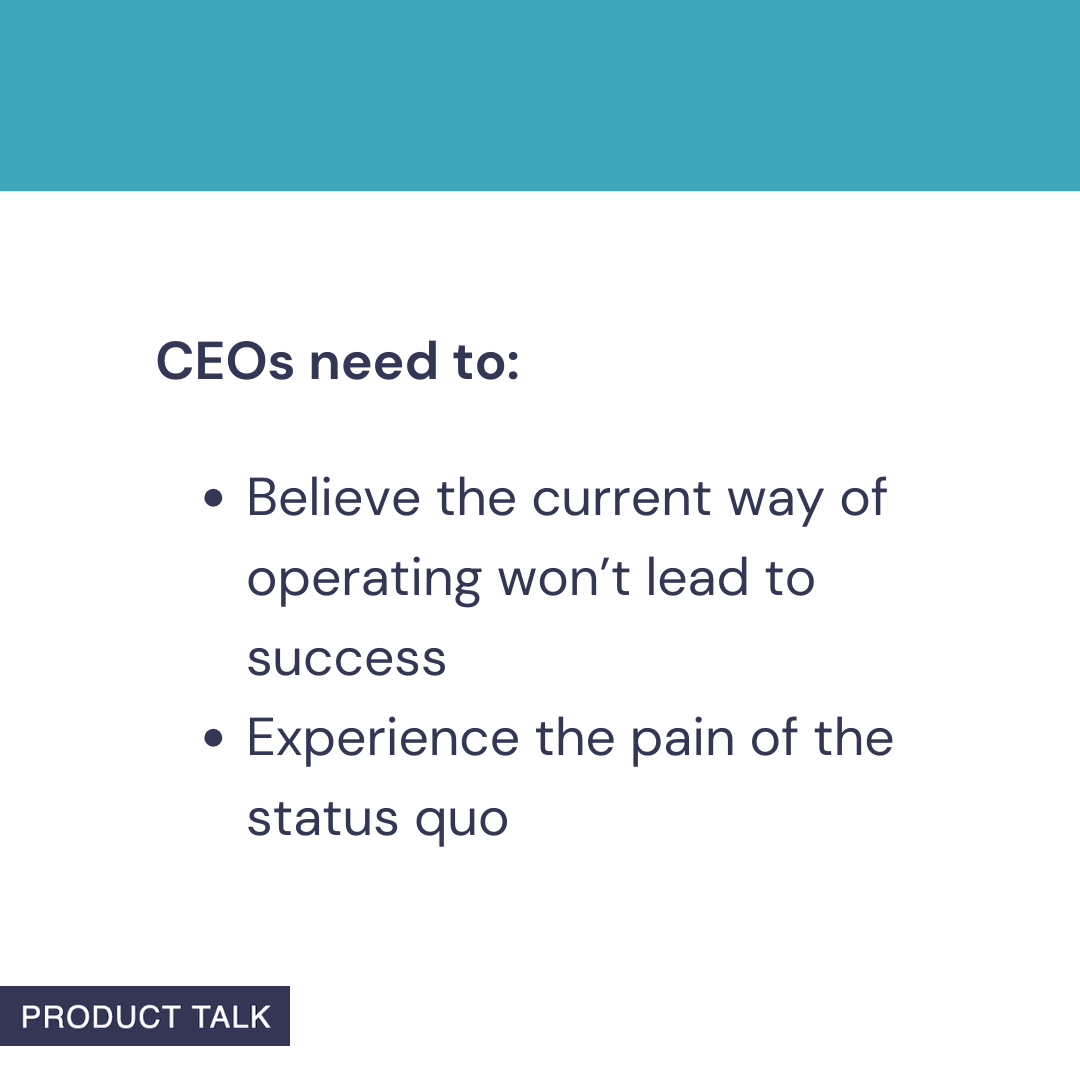
Slide from 'The Product Operating Model Explained' with a teal header and bullets noting CEOs must believe current operations won't lead to success and feel the pain of the status quo.
To scale a product operating model, leaders must be all-in. This graphic spotlights two CEO mindset shifts: accepting that the old operating mode fails and recognizing the real cost of the status quo.

What does failure look like? A narrow transformation that trains product managers but leaves funding, planning, decision rights, and stakeholder behaviors unchanged. If you spot this pattern, pause and reset: recommit at the executive level to outcomes-based funding, change the operating cadence, and invest in coaching for leaders and teams.
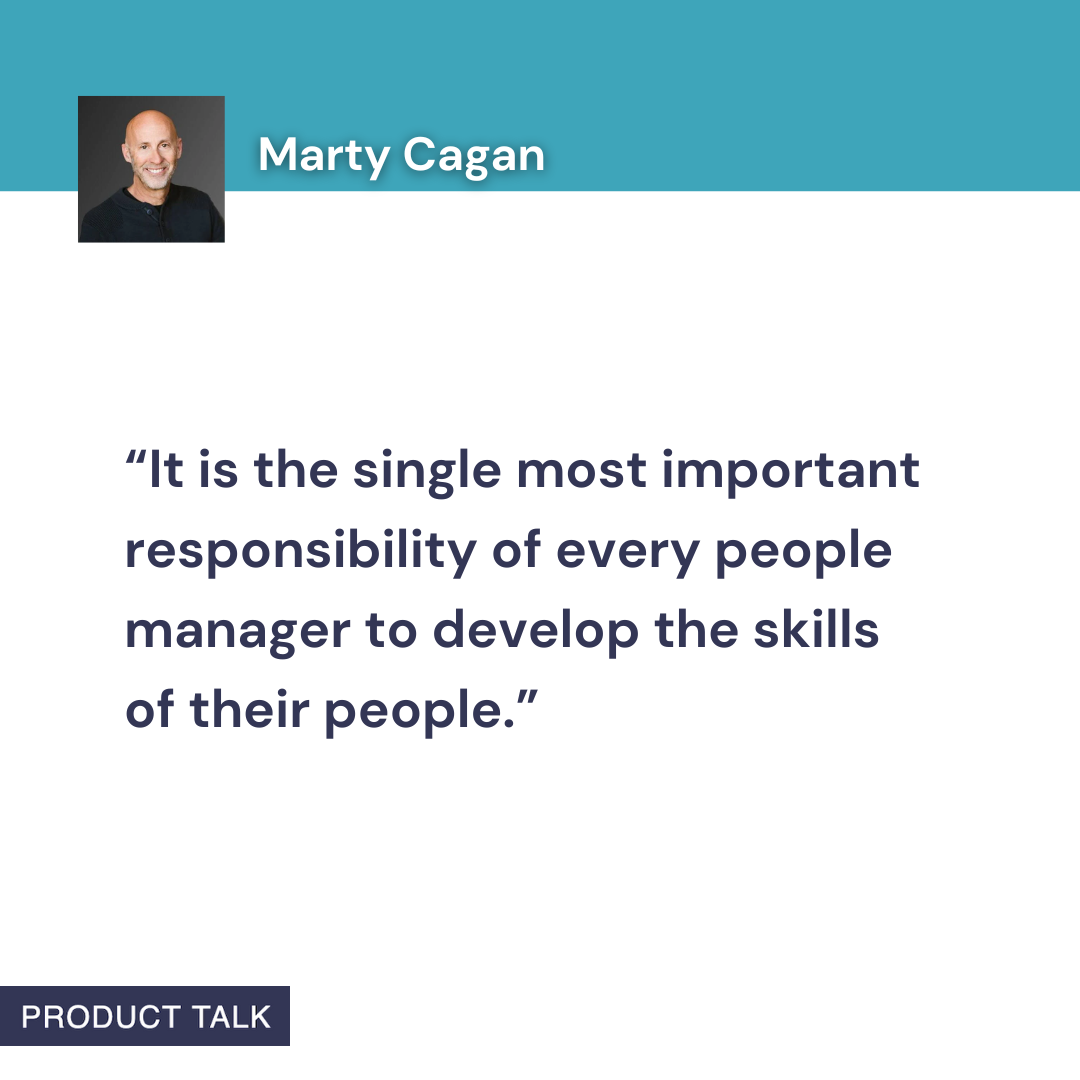
Quote graphic with teal header, small headshot, and text: "It is the single most important responsibility of every people manager to develop the skills of their people." Includes a bottom-left "PRODUCT TALK" tag.
In a product operating model, managers are coaches first. This quote underscores that real transformation starts by developing people's skills, building capable teams before scaling from pilot initiatives to enterprise-wide change.

The biggest mistake I see is trying to roll out to everyone at once. Broad, simultaneous training creates confusion, fuels resistance, and overwhelms your enablement capacity. Start small, prove value, fix systemic blockers, and then scale.
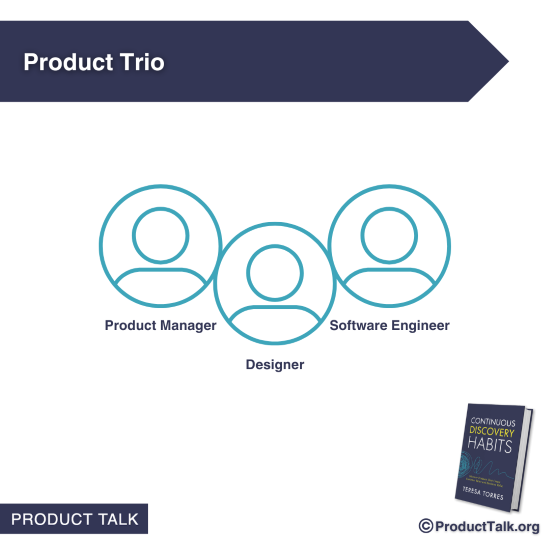
Illustration of the Product Trio with three outlined avatars labeled Product Manager, Designer, and Software Engineer, explaining core roles in a modern product operating model.
Meet the Product Trio—product manager, designer, and software engineer—the nucleus for moving from pilot teams to full transformation, aligning collaboration across discovery and delivery.

How does remote or distributed work affect the model? It raises the bar on clarity and connection. Define core collaboration hours, codify working norms, and be explicit about when to switch from async to live. Build lightweight rituals—discovery reviews, outcome check-ins, assumption-test demos—that create trust and fast feedback across time zones.
Minimalist graphic with a teal top bar and white background showing a navy message: “The goal of pilot teams is to show that the product operating model can work in your organization.” A small tag reads “Product Talk.”
Pilot teams prove the product operating model can work. This clean visual highlights the first step of transformation—start small, validate results, and build momentum toward organization-wide change.

Roles and responsibilities change in meaningful ways. The CEO must champion outcomes-based funding and empower teams to own the problem space. Product leadership’s primary job is coaching—developing skills, modeling outcome management, and making strategic context accessible. Teams operate as small, cross-functional units (often a product manager, designer, and engineer, plus data or product marketing when needed). Keep the group as small as possible while still making informed decisions; bigger groups slow decisions and dilute ownership.
Minimalist quote graphic for organizational change: 'Pilots teams surface resistance and obstacles that must be overcome' on a white background with a teal top bar and a small 'PRODUCT TALK' label.
Pilot teams expose the friction and blockers you’ll face on the path to a full product operating model. This clean visual underscores the message: surface resistance early so transformation can progress.

Empowerment doesn’t mean teams do whatever they want. It means they own figuring out the best way to achieve an outcome within clear business constraints. Leaders provide the why and the guardrails; teams own the how.
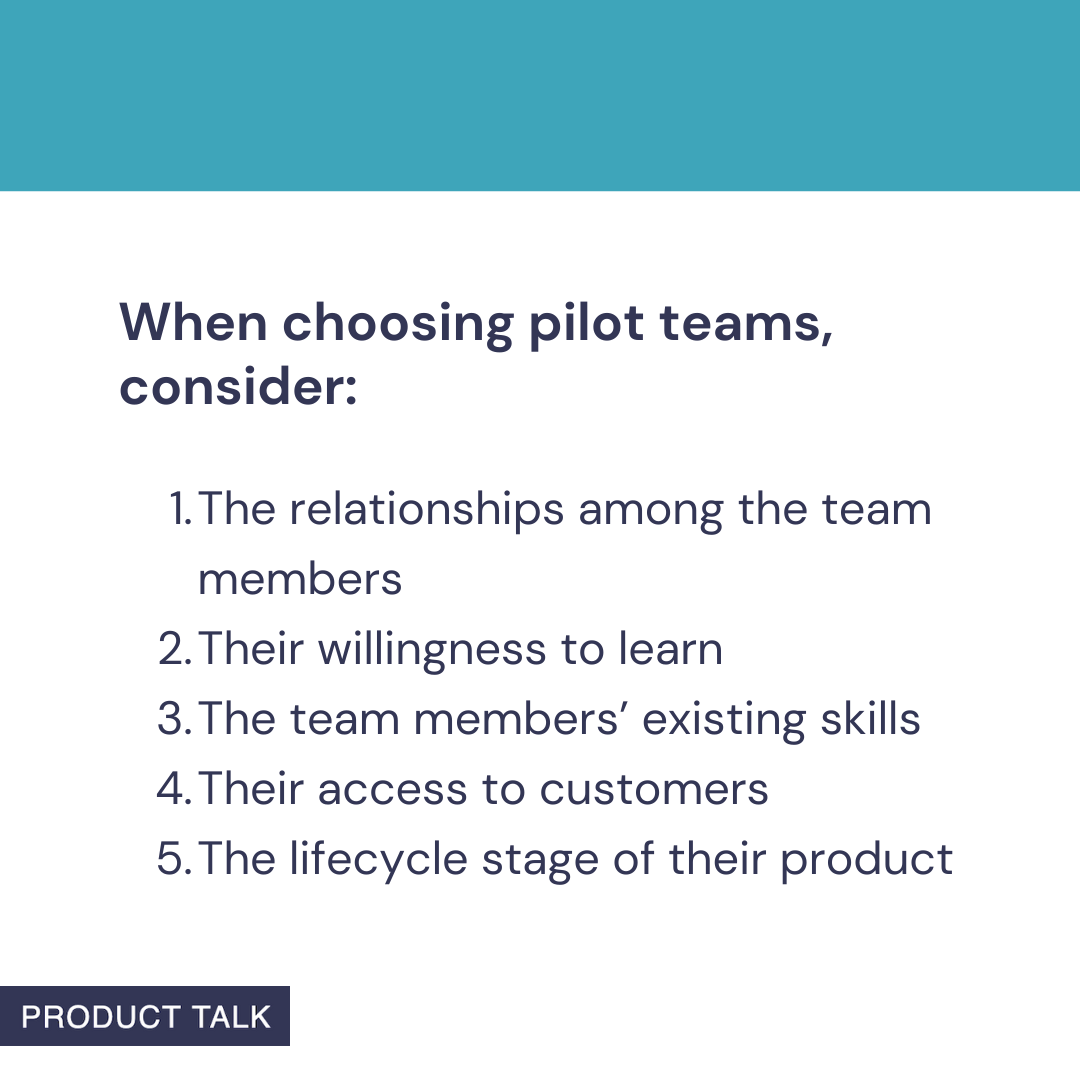
Slide on choosing pilot teams, listing five criteria for product operating model pilots: team relationships, learning mindset, existing skills, customer access, and product lifecycle.
Launching a product operating model starts with the right pilots. This graphic spotlights five factors to weigh—relationships, learning mindset, existing skills, access to customers, and the product's lifecycle stage.

Pilot teams are your change engine. I select a handful of teams most likely to become bright spots—familiar with each other, hungry to learn, fully cross-functional, with reliable customer access, and working on products in an “explore” or “invest” lifecycle stage. Small organizations might start with one pilot; mid-size with two to four; large with up to five. The point is to learn, not to boil the ocean.
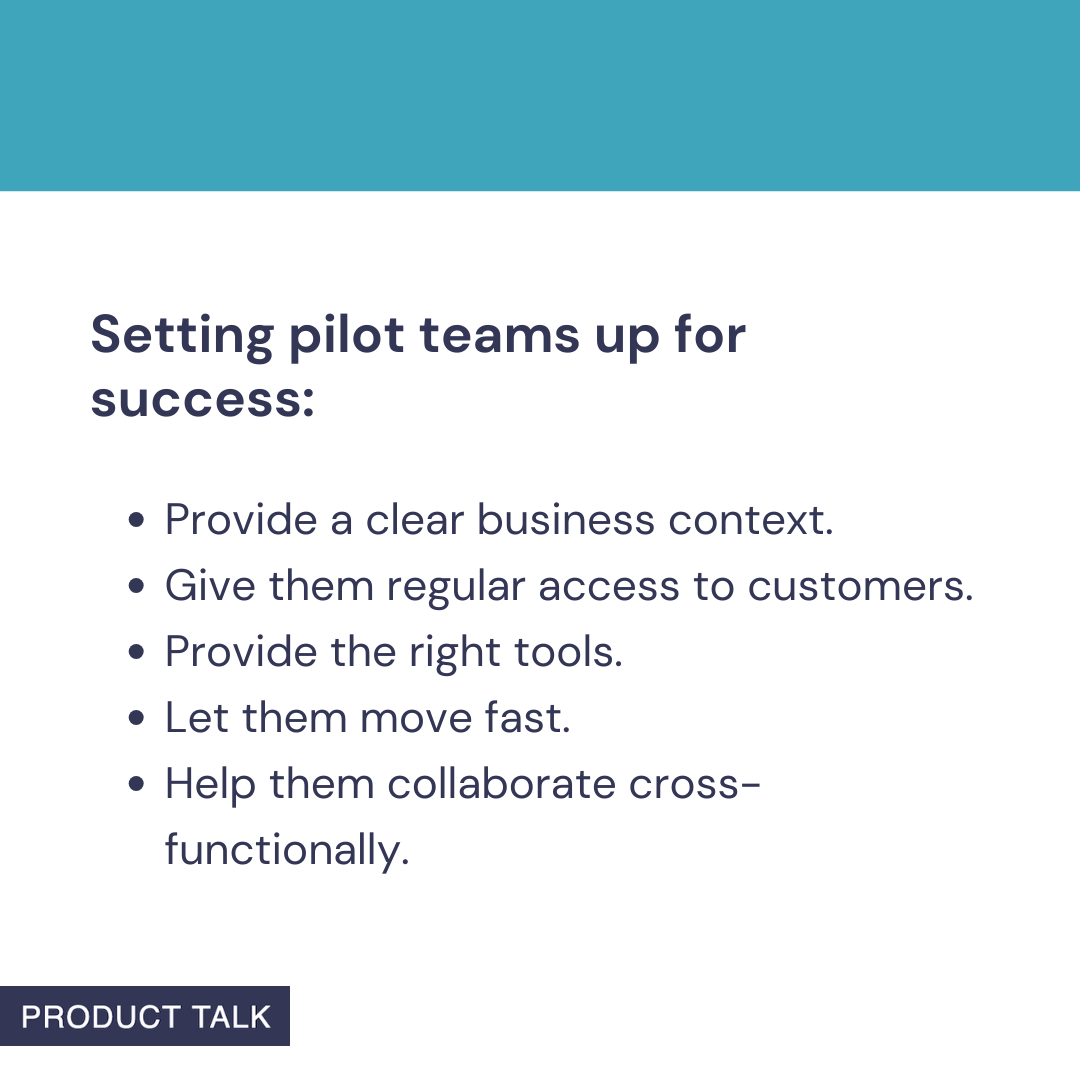
Slide titled 'Setting pilot teams up for success' with bullets: clear business context, regular customer access, right tools, ability to move fast, and cross-functional collaboration; teal banner.
Kickstart your product operating model with pilot teams set up to win: align on business context, ensure customer access, equip the right tools, remove friction so they move fast, and foster cross-functional collaboration.

How do I set pilots up for success? First, give them a clear outcome and rich business context. Second, insist on regular customer conversations to uncover unmet needs and prioritize opportunities. Third, build the muscle for evaluating whether they built the right thing through quick, targeted assumption tests. Fourth, shorten delivery cycles by right-sizing work to accelerate learning. Fifth, teach collaboration skills—show your work, externalize your thinking, and respect each discipline’s expertise—so the team can storm and reform productively.
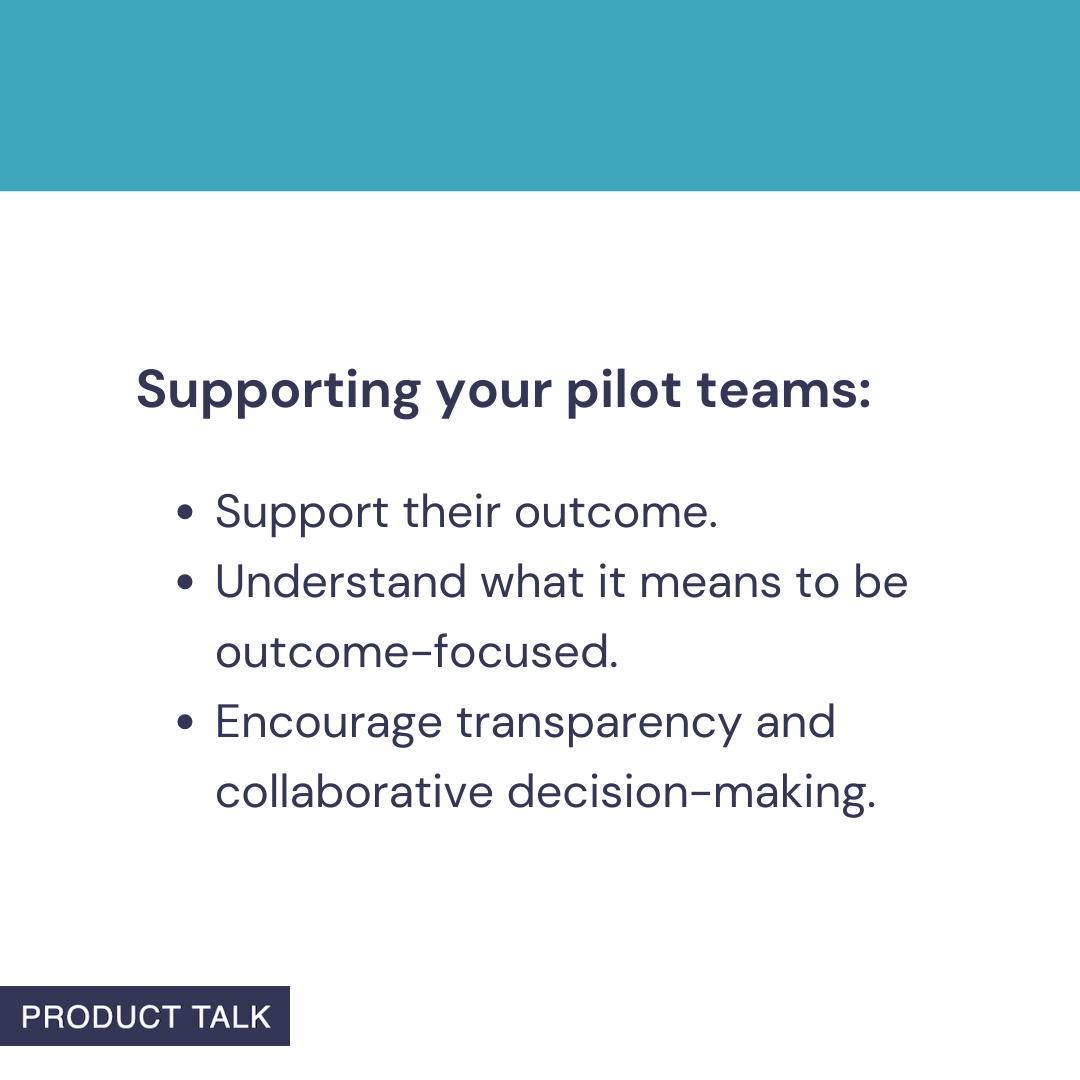
Minimal slide titled ‘Supporting your pilot teams’ showing bullets: support their outcome; understand what it means to be outcome‑focused; encourage transparency and collaborative decision‑making.
Kickstart your product operating model with pilot teams. This visual spotlights three musts: back their outcomes, understand outcome‑focused work, and foster transparency and collaborative decision‑making.

What should leaders do differently during pilots? Align on the team’s outcome and invite relevant stakeholders into outcome definition and context-sharing. Learn to manage by outcomes, not outputs, and clarify when feedback is a suggestion versus a decision. Create predictable rituals where teams share what they’re learning, what they’ll learn next, and what’s blocking them. Transparency builds trust; trust enables speed.
Square graphic with a teal header and navy text reading “Create opportunities for your teams to share what they are learning,” with a small “PRODUCT TALK” label at the lower left on a white background.
Scale your product operating model by making learning public. Encourage forums, demos, and showcases where teams share insights, turning pilot wins into organization-wide momentum.

Which rituals help pilots share progress? I like “discovery-delivery demos” where teams show the latest insights, the opportunity space they’re focusing on, the assumptions they’re testing, early signals from tests, and the decision implications. Keep it concise and outcome-linked so leaders and peers can coach effectively.
Minimalist slide with a teal header and white background showing the message: "Address recurring problem areas before rolling out to everyone else," from a Product Talk on the product operating model and organizational change.
Before taking a product operating model beyond pilot teams, fix the patterns you've found. Resolve recurring issues early to reduce risk, build confidence, and enable a smoother, organization-wide transformation.

How do you scale beyond pilots? Start by fixing systemic issues that surfaced across pilots: upgrade planning and funding to outcomes, standardize access to customers, invest in capability building, and clarify decision rights. Then expand in waves, pairing newer teams with experienced coaches and reusing the same operating cadence that worked in pilots.
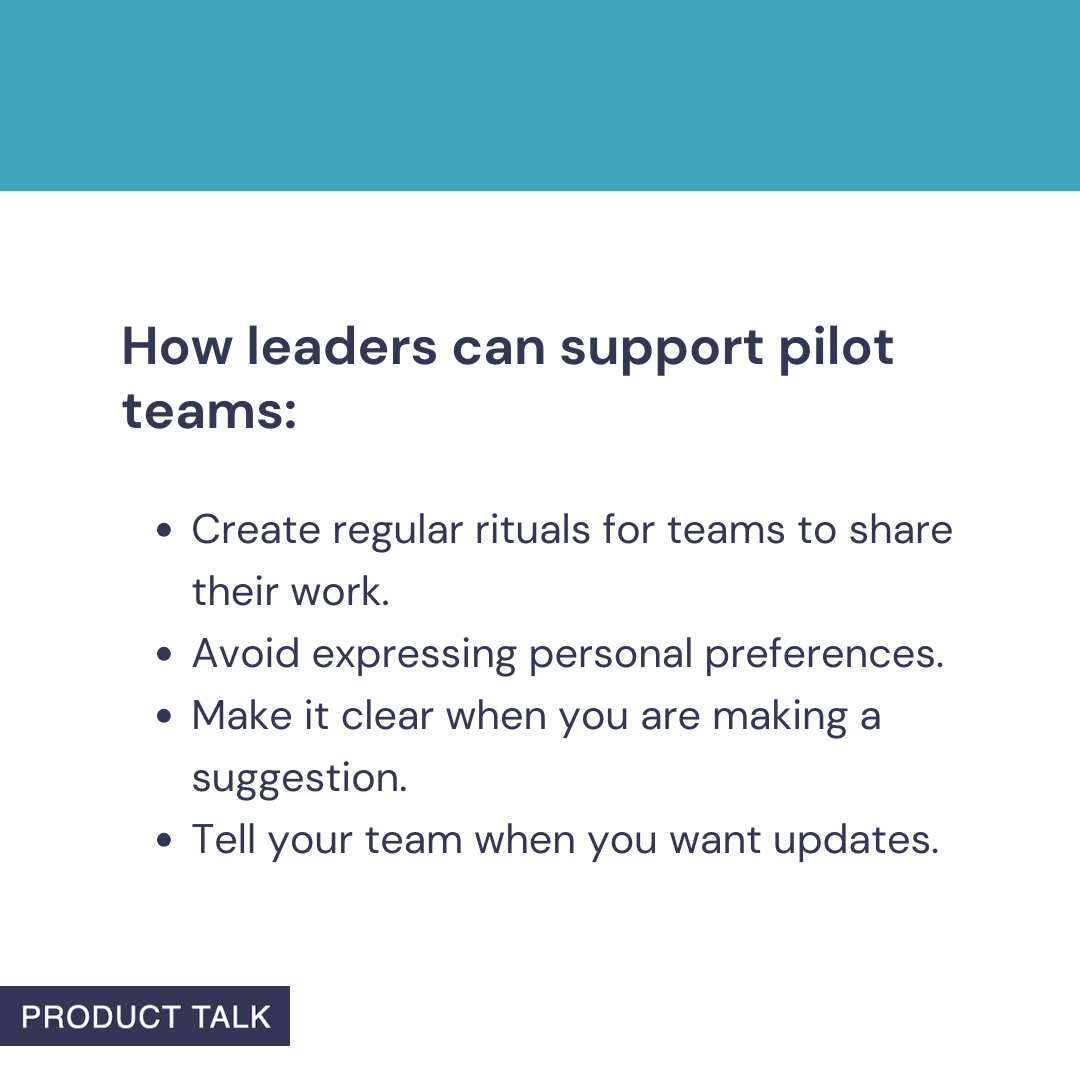
Slide graphic titled 'How leaders can support pilot teams' with four bullets: create rituals; avoid personal preferences; clarify suggestions; say when you want updates; teal header, Product Talk tag.
Leaders can boost pilot teams by setting rituals, reducing bias, and making communication explicit. This quick checklist shares four habits that keep work visible and aligned during a product operating model transformation.

Expect and manage resistance. From pilot teams, you’ll hear, “We don’t have time,” “I don’t want to be a beginner again,” or “That will never work here.” Treat these like objections to understand. Unpack delivery pressures, normalize the discomfort of learning, and make the case for change by contrasting current pain with desired outcomes. From leaders and stakeholders, expect attachment to favored solutions, discomfort with reduced control, and update bottlenecks. Address this by sharpening outcome definitions, making strategic context accessible, and committing to clear check-in points.
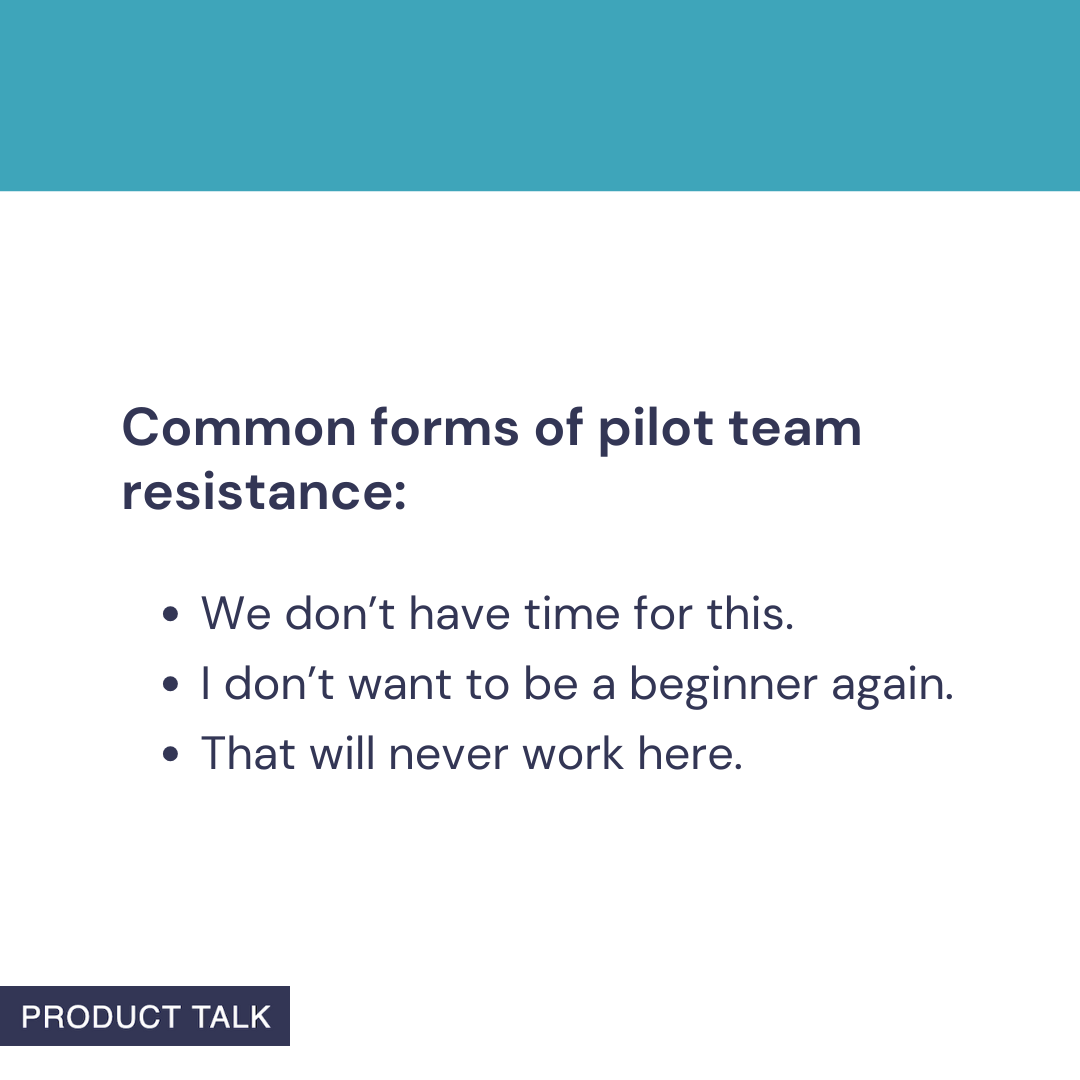
Slide graphic listing common forms of pilot team resistance: 'We don't have time for this,' 'I don't want to be a beginner again,' and 'That will never work here,' with Product Talk branding.
Pilot teams often push back with time, comfort, and context concerns. Naming these patterns sparks constructive dialogue and clears the path from experimental pilots to a durable, organization-wide product operating model.

The mindset shift that unlocks everything is outcomes over outputs. Success isn’t shipping; success is impact. Without a clear, meaningful outcome, teams stay busy but struggle to move the needle—and they can’t tell what’s working. Tie work to outcomes, instrument the experience, and let evidence guide decisions.
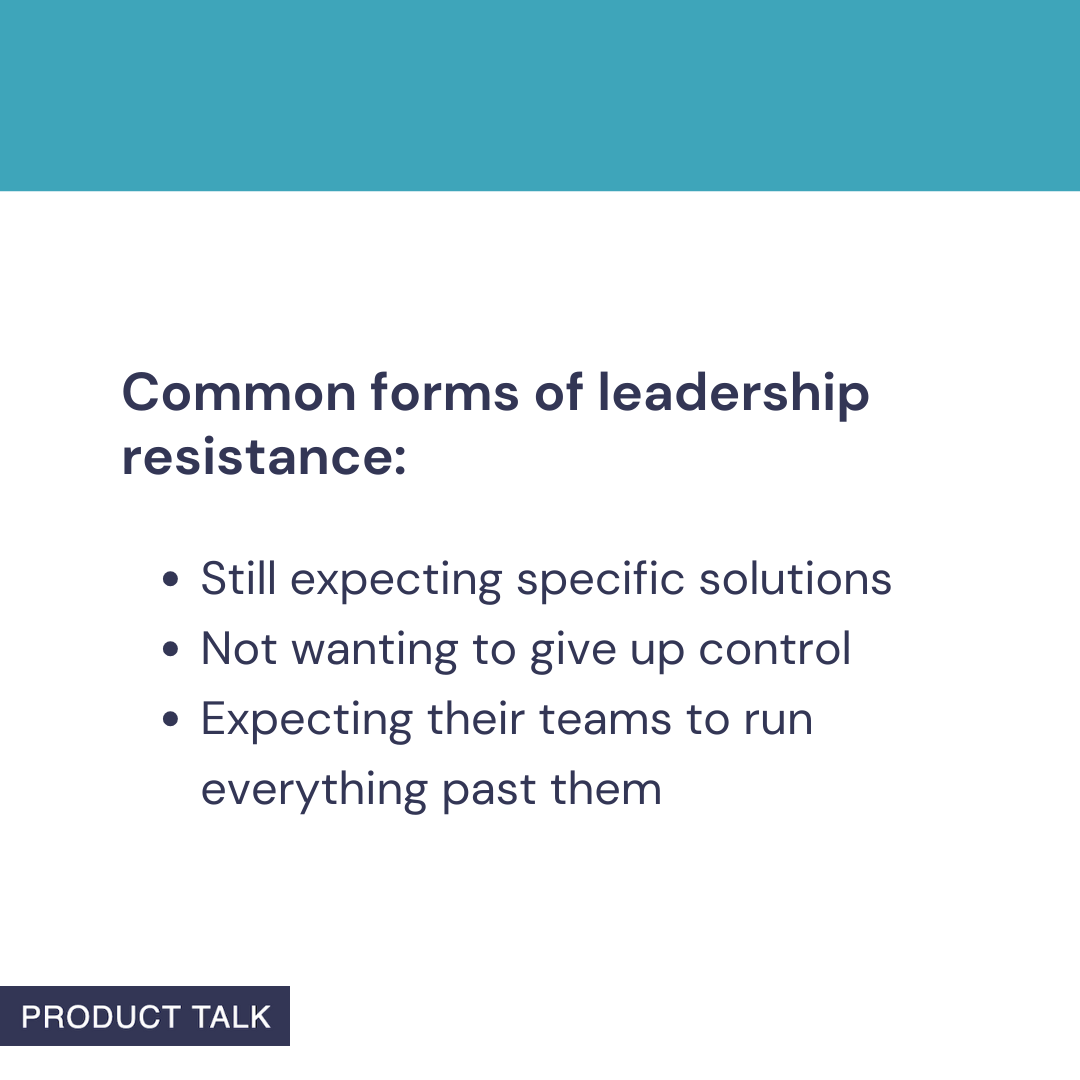
Slide from The Product Operating Model Explained listing common leadership resistance: expecting specific solutions, reluctance to give up control, and requiring teams to run everything past them.
Leaders can stall a product operating model by clinging to old habits—prescribing solutions, holding tight to control, and demanding every decision cross their desk. Use this prompt to spark dialogue and reset expectations.

Collaboration is the other non-negotiable. When product, design, and engineering collaborate from the start, you reduce rework, make smarter trade-offs, and ship solutions that are valuable, usable, and feasible within your constraints. Silos optimize individuals; collaboration optimizes outcomes.
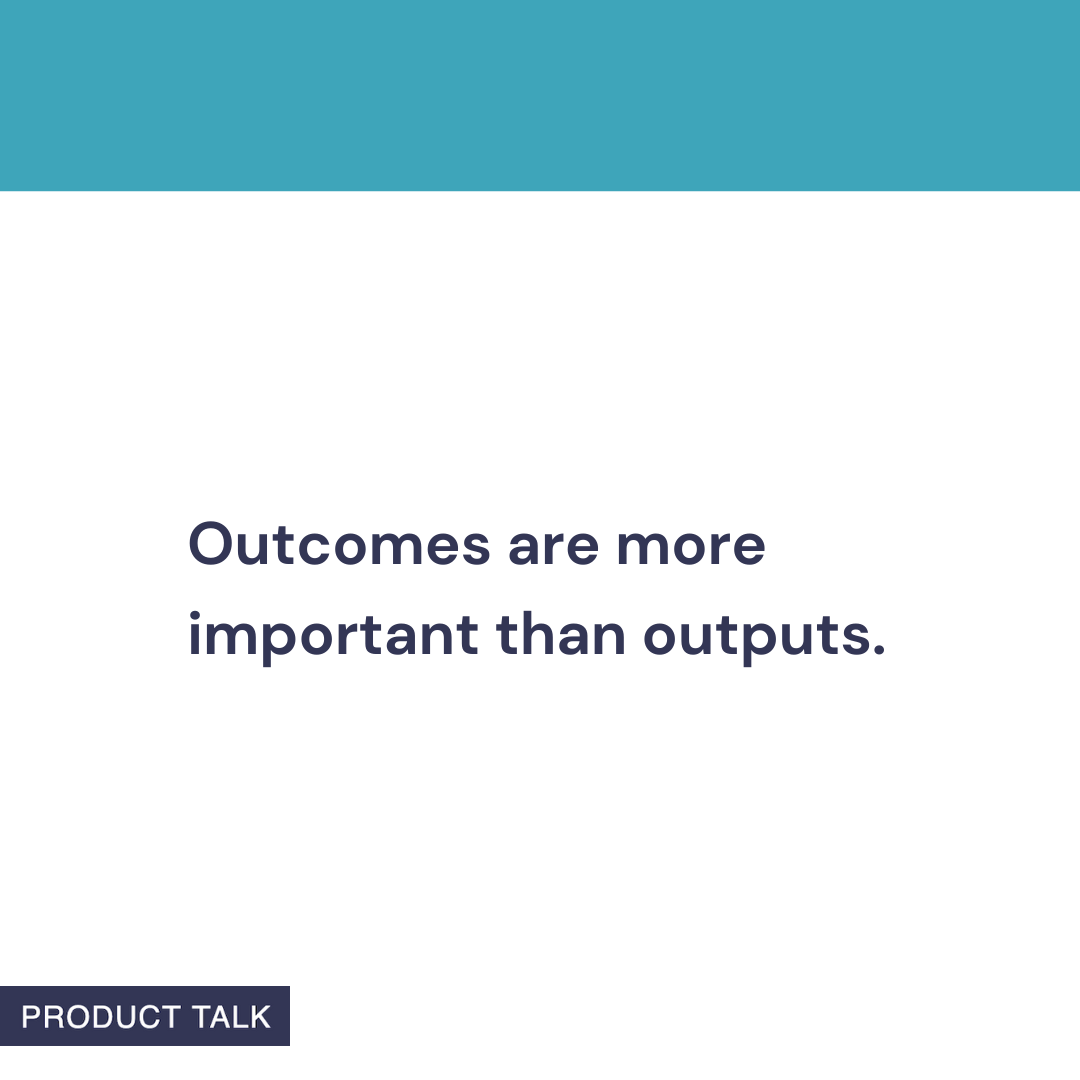
Minimalist graphic with a teal top bar and centered quote reading ‘Outcomes are more important than outputs.’ on a white background, plus a small ‘PRODUCT TALK’ tag—highlighting an outcomes-first product operating model message.
Move from shipping more to achieving more. This visual underscores the product truth: prioritize measurable outcomes over busywork outputs to steer teams from early pilots to scalable, organization-wide transformation.

If you’re embarking on this journey, start small, learn loudly, coach relentlessly, and scale what works. That’s how you move from pilot teams to full transformation without losing momentum—or your people.


Inspired by this post on Product Talk.


Book a consult png image

What is the product operating model?

The product operating model is a way of operating anchored in first principles, not a process checklist. It focuses on outcomes and customer value, with cross-functional leaders funded and measured by outcomes rather than a backlog of features.

Why adopt a product operating model?

It balances customer value with business outcomes, avoiding extremes of delivering features or pursuing tactics. Triggers include heightened competition, visible frustration with the status quo, and the upside when you manage by outcomes instead of deliverables.

How is it different from the project model?

Projects have a defined start and end, while products evolve. In a product model, cross-functional leaders own the problem space and decide which customer problems to prioritize in ongoing conversation with stakeholders, with funding and success measured by outcomes rather than a backlog of features and deadlines.

Can a hybrid approach work?

Yes. Start with a small number of pilot teams while the rest of the organization continues with the project model to learn, de-risk, and build internal proof points. Some work will remain project-based (e.g., regulatory or one-off migrations); the goal is pragmatism, not purity.

What is continuous discovery and why is it important?

Continuous discovery is the operating system for deciding which problems to solve and how to solve them. It means weekly customer touchpoints, lightweight research to learn fast, mapping opportunities, and testing assumptions to reduce risk toward a clearly defined outcome.

Comments

Leave a Reply

Your email address will not be published. Required fields are marked *

Signup for Weekly Digest Emails

Categories

Archieve