AI is moving faster than any product wave I’ve seen in my career, and that urgency demands rigor. At HighLevel, I anchor our AI Strategy around measurable outcomes, responsible delivery, and pragmatic execution—principles that a recent PendomoniumX NYC customer discussion reinforced for me.
“Three product leaders sat down with Pendo to discuss how they’re balancing AI investments, building their AI roadmap, and measuring success.”
When I decide what to fund, I start with outcomes vs output OKRs. If an initiative cannot tie to a defensible customer outcome—time-to-value reduction, revenue expansion, retention lift, or cost-to-serve efficiency—it doesn’t make the cut. From there, I pressure-test feasibility and risk through data governance and AI risk management lenses: model choice, training data readiness, privacy-by-design, security posture, and responsible use guardrails.
Building the roadmap is where discipline meets speed. I use empowered product teams—product trios across PM, design, and engineering—to run tight discovery sprints. We validate desirability and viability with gen ai for product prototyping, then graduate concepts into delivery using product roadmapping and sprint planning habits that prioritize smallest shippable value. I’ve found the try do consider framework helpful to stage bets from low-risk utilities to higher-impact, agentic AI workflows.
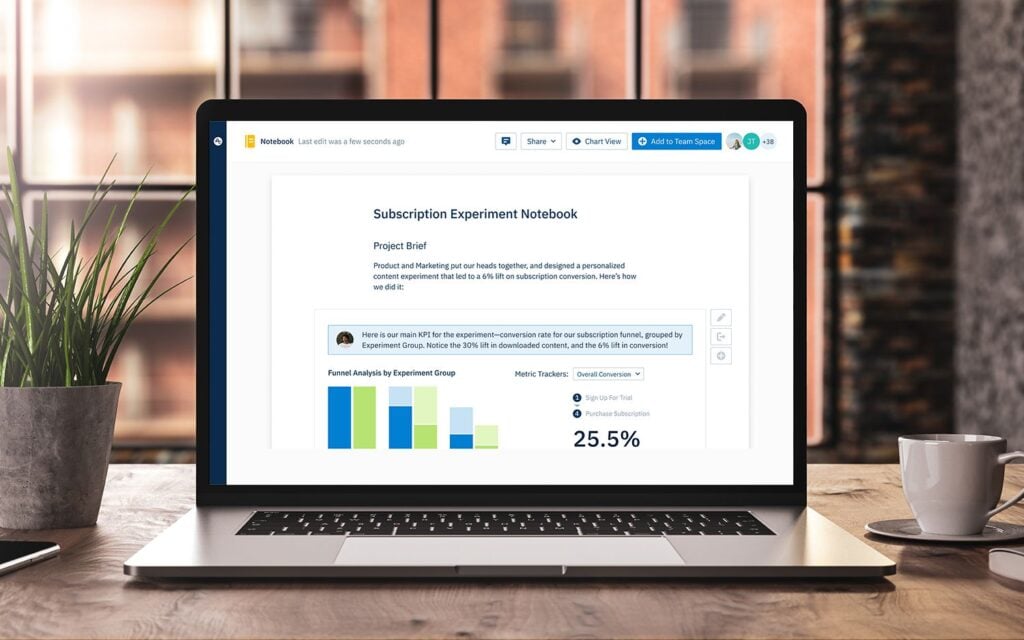
Measuring impact is nonnegotiable. I define success up front with a minimum detectable effect (MDE), then instrument adoption and behavioral change via Pendo and Amplitude analytics. A/B testing gives me causal confidence, while retention analysis tells me if AI features are durable value, not novelty. If we can’t attribute improvement to a metric that matters, we iterate or retire.
Governance is a product requirement, not an afterthought. We maintain data governance standards, threat detection and response controls, and clear model evaluation criteria before anything reaches customers. That operating model helps us move quickly without compromising trust—a cornerstone in any product-led growth motion.
For go-to-market and adoption, I rely on in-app guides, product tours, and contextual tooltips to shorten the learning curve. We measure feature discovery, task completion, and ongoing engagement to ensure the experience is intuitive. The goal is to make AI feel like a natural extension of the workflow, not a science project bolted onto the product.
My simple playbook: prioritize by customer outcomes and risk posture, build with validated learning and smallest shippable value, and measure with rigorous analytics and OKRs. Repeat that loop, and AI stops being a buzzword—it becomes a compounding advantage.











Leave a Reply