

I keep coming back to one simple truth in product management: Retention Is the Ultimate Product Strategy. When customers stay and expand, it signals that we are repeatedly solving real problems with a value proposition strong enough to withstand time, alternatives, and change.
Retention reveals if your product delivers lasting value. Learn how top product leaders use it to guide strategy, shape roadmaps, and drive growth.
At HighLevel, I treat retention as the clearest signal of product-market fit quality and the most reliable compass for product-led growth. I review retention weekly, cohort it by segment and plan, and tie it directly to value moments in onboarding and activation. If we can’t see where users succeed (or stall), we can’t shape a roadmap that consistently compounds value.
Here is how I put retention at the center of product strategy. When cohorts are strong, I double down on the experiences and workflows that create habit loops and advocacy. When cohorts drop, I stop chasing surface-level outputs and run focused product discovery to clarify the value proposition, reduce time-to-first-value, and reset outcomes vs output OKRs so teams are solving for the right problems.
I then translate retention insights into product roadmapping and sprint planning. Every roadmap theme must map to a retention driver: faster activation, deeper engagement, or expanded breadth of use. I use A/B testing to validate critical UX decisions, and I guard against false positives by aligning experiments to business outcomes tied to retention, not just clicks or vanity metrics.
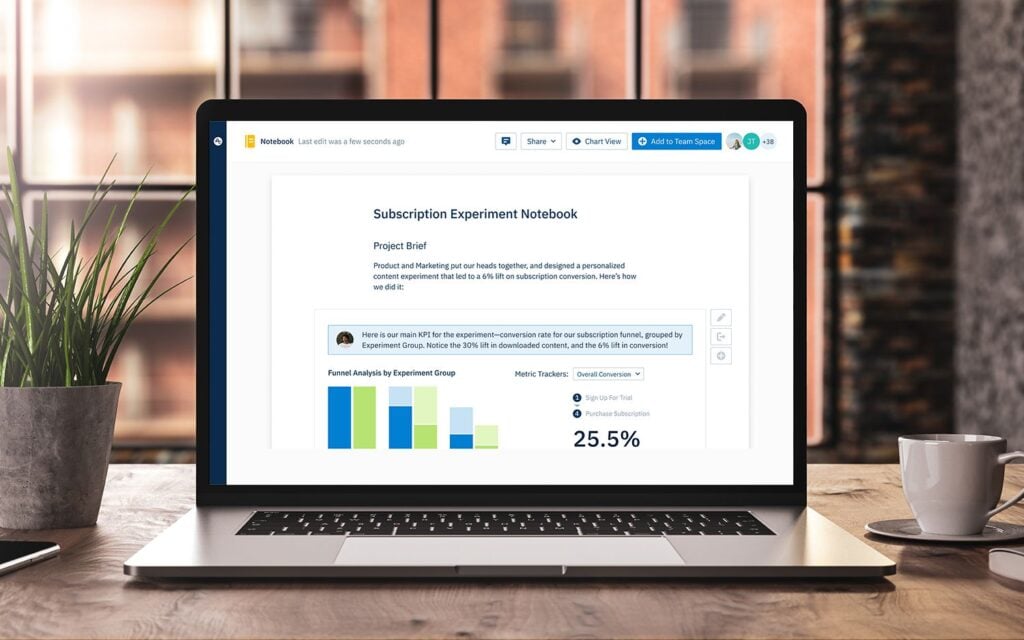
Instrumentation matters. I rely on Amplitude analytics to trace the path from first touch to recurring value, measuring drop-offs, leading indicators of habit formation, and usage cliffs by persona. With clean event data, I can connect improvements in onboarding to cohort lift and quantify what features actually move long-term retention, not just short-term engagement.
Most retention gains come from the “boring but pivotal” basics: a frictionless onboarding flow, clear in-product guidance, and a crisp path to the first “aha” moment. I continually refine these with targeted improvements, then reinforce them with contextual education and lifecycle touchpoints that help customers unlock the next milestone of value.
I also segment retention to find hidden opportunities. Different plans, industries, and team sizes have distinct activation thresholds and success criteria. By tailoring experiences and success metrics per segment, we avoid one-size-fits-all decisions and build for real-world diversity while still maintaining a coherent roadmap.
Culturally, retention is how I keep product management leadership grounded. It forces ruthless prioritization, sharpens stakeholder conversations, and aligns teams on outcomes. When teams see their work reflected in month-over-month cohort lift, motivation rises—and so does our confidence in the strategy.
If you’re looking to operationalize this approach, start with a baseline retention analysis, define your key value moments, align a handful of outcomes vs output OKRs to activation and engagement, instrument the journey in Amplitude analytics, and prioritize one or two onboarding improvements that shorten time-to-first-value. Ship, measure, and iterate. Over time, this creates a roadmap that writes itself from the evidence of durable customer value.
Inspired by this post on Amplitude – Best Practices.









Leave a Reply