Tag: onboarding

  • Stop Support Tickets Before They Start: How AI Unsticks Users and Lifts Conversions

    Stop Support Tickets Before They Start: How AI Unsticks Users and Lifts Conversions

    Every moment of friction in a product carries a hidden cost: attention drifts, motivation wanes, and the next click becomes a support ticket—or worse, silent churn. Over the years, I’ve learned to treat “stuck” as an urgent product signal, not just an operational nuisance. When we unstick users in the flow, we protect revenue, brand trust, and the momentum that powers product-led growth.

    Learn how Amplitude’s Global Support team uses AI Assistant to reduce support tickets, prevent user churn, and increase conversions.

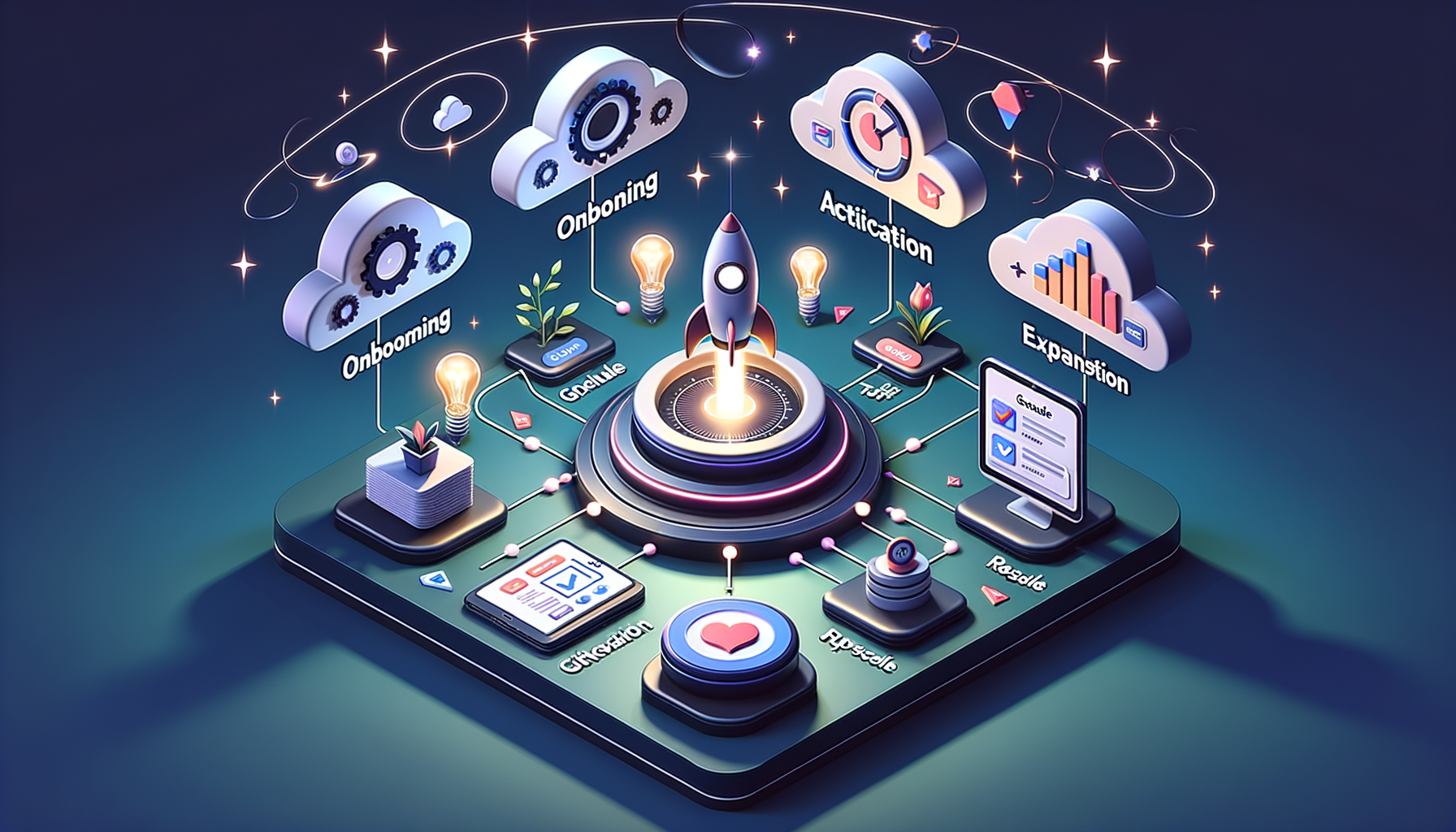
    I reference that line often because it captures a proven pattern: meet users where confusion peaks and resolve it instantly. In my practice, the formula is straightforward—pair behavioral analytics and session replay with a just-in-time AI Assistant, routed by clear driver trees. This transforms support from reactive firefighting into a proactive, in-product experience that accelerates onboarding and boosts user activation.

    Here’s how I operationalize it. First, I use Amplitude analytics and behavioral analytics to surface high-friction steps—pages with elevated drop-off, loops, or rage clicks. Session replay clarifies the “why” behind the numbers, while cohort and retention analysis reveal who’s most at risk. Then I deploy targeted in-app guides and tooltip design to preempt known pitfalls, while an AI Assistant handles real-time questions with context from our knowledge base and product docs.

    The AI Assistant is more than a chatbot. With well-structured AI workflows, it detects intent, pulls precise snippets from docs-as-code, and handles routine issues instantly. When complexity spikes, it executes a graceful handoff to consultative support via Intercom or a Zendesk integration—preserving conversation history and sentiment cues—so humans spend time where judgment matters. This hybrid model keeps response times low without sacrificing quality.

    To de-risk changes, I lean on A/B testing and feature flags. I measure time-to-value, activation rate, and funnel conversion as leading indicators, while tracking ticket deflection, CSAT, and NRR as trailing indicators. The goal isn’t just fewer tickets; it’s faster learning loops and a compounding improvement in user outcomes. When we see activation curves steepen and onboarding friction flatten, we know the system is working.

    Practically, I start with the top three friction points in onboarding, implement narrow in-app guides, and deploy the AI Assistant with strict guardrails and clear escalation paths. Weekly reviews align product, customer success, and solutions engineering around shared telemetry—so we tune prompts, content, and UI patterns together. Over time, I’ve seen ticket volume decline meaningfully, while conversion and retention rise as users experience fewer dead ends.

    If you’re evaluating where to begin, identify the moments where confusion compounds—pricing configuration, integrations, and data mapping are common culprits. Then introduce targeted, context-aware help right where users hesitate. You’ll not only prevent “every stuck user” from turning into a ticket—you’ll convert friction into confidence, and confidence into growth.


    Inspired by this post on Amplitude – Best Practices.


    Book a consult png image
  • The Ultimate Knowledge Management Playbook to Supercharge Your AI Service Agent and Scale Support

    The Ultimate Knowledge Management Playbook to Supercharge Your AI Service Agent and Scale Support

    AI in customer service is no longer experimental—it’s the standard. In my work leading product and customer experience teams, I’ve seen the shift firsthand, and the stakes have never been higher for getting the foundations right.

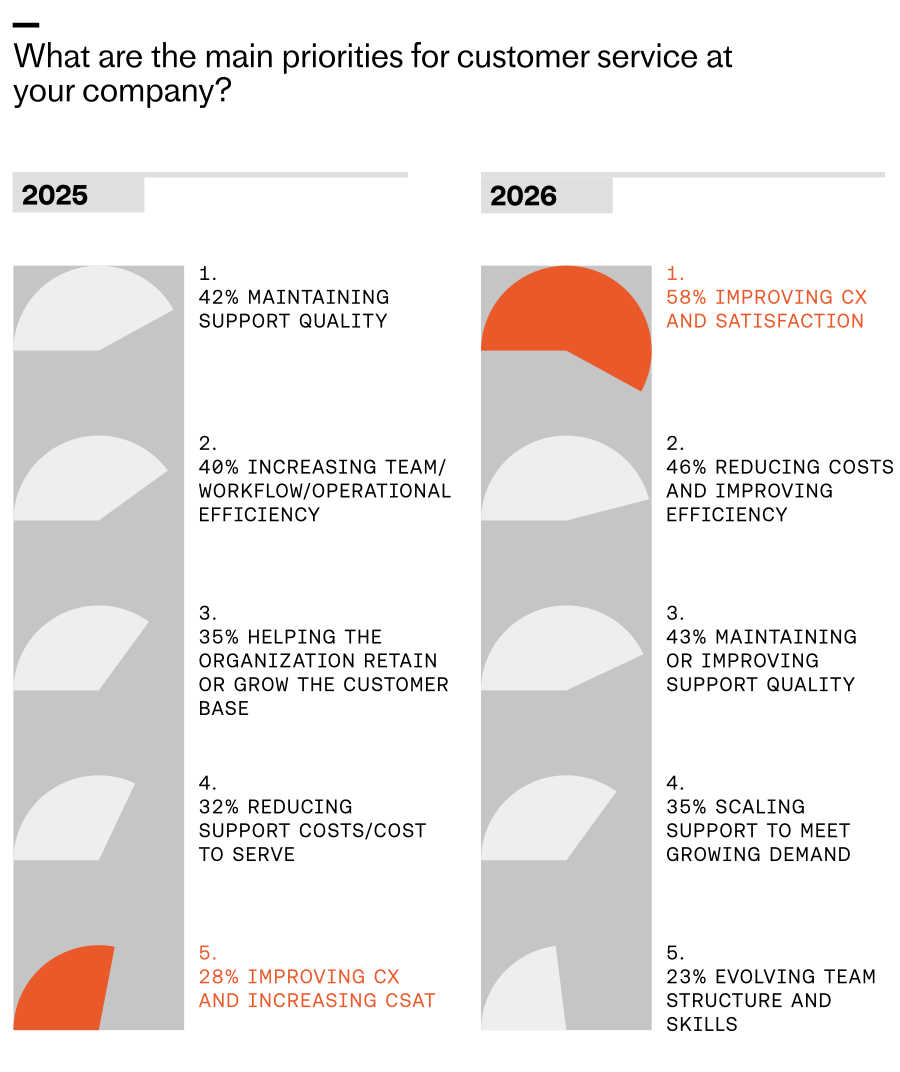
    Fin’s 2026 Customer Service Transformation Report found that 82% of senior leaders say their teams invested in AI for customer service over the last 12 months, with 87% planning to invest in 2026. Those investments pay off with 24/7 availability, multilingual support, major time savings, and faster resolutions. But there’s an unsung hero behind every AI-first support experience: knowledge management.

    A Service Agent is only as good as what we give it to work with. If we’re using an Agent, like Fin, to resolve customer queries end to end, it needs an extensive pool of knowledge to draw from. We have to feed it accurate answers on our product, features, policies, and troubleshooting. Without these, the Agent can’t do its job—and our team ends up handling repetitive queries that should be automated.

    Monochrome headshot beside a prominent Fin quote about customer support, urging time investment in knowledge and processes to create compounding impact and fewer future cases for service teams.
    A Fin-branded quote pairs with a friendly black-and-white portrait to champion smarter support. It reminds readers that time spent building knowledge and processes today compounds into fewer tickets and smoother operations.

    In this guide, I’ll walk you through two phases of the journey. Phase 1 is about building a high-quality knowledge base from scratch or overhauling what you have. Phase 2 is about maintaining, optimizing, and scaling that knowledge so your AI performance keeps compounding over time.

    Definition: Knowledge management is the process of creating, organizing, sharing, and maintaining knowledge in your business.

    Fin-branded quote graphic showing a smiling person in a collared shirt beside large text about feeding an AI knowledge base, supporting a guide on knowledge management for service agents.
    Fin’s quote card blends a friendly headshot with a message to think outside the box and tap new information sources to power an AI knowledge base—ideal inspiration for service teams leveling up knowledge management.

    Your help center is the obvious example, but it’s only the tip of the iceberg. Effective knowledge management also means creating resources like FAQs, troubleshooting guides, onboarding and best-practice docs, internal support guidance, and learning materials that cover everything from everyday how‑tos to complex billing and account questions.

    It means identifying content gaps—missing troubleshooting steps, unclear policy explanations, outdated feature details, or unanswered edge cases—before your customers find them. It means implementing systems so both your Agent and your support reps can access the right information at the right time. And it means developing processes so your content stays in lockstep with product updates, policy changes, and bug fixes.

    Monochrome quote graphic for Fin with a professional headshot on the left and guidance on testing first deployments to mirror the customer experience; for knowledge management and service agents.
    From Fin's guide to knowledge management, this monochrome quote card urges teams to test their first deployment themselves so agents feel the same journey customers do, turning insights into faster, higher-quality support.

    Your knowledge base now fuels your entire support experience, not just self-serve. It’s the key to accurately answering complex questions, reducing handle time, and delighting customers across channels.

    Here’s the blunt truth I share with every team: your Agent is only as strong as what you feed it. A lack of information, messy structure, or stale documentation will tank accuracy and trust. No large language model (LLM) knows your business like you do. It doesn’t understand your customers’ needs, pain points, and use cases. That knowledge is unique to you and your organization, meaning you need to be the one to map it all out and make it available to your Agent.

    Screenshot of a customer service knowledge base page titled 'Procedure: Damaged food order', showing step-by-step guidance with verification steps, an IF rule block, tags, and Test, Save, and Set live controls in a minimalist desktop UI.
    Equip service agents with a clear playbook for damaged delivery reports. This procedure page outlines when to use the guide, how to verify evidence, and the next action to reorder—ready to test, save, and set live.

    Every investment in knowledge also has compounding results. Think of it as a flywheel: when you improve your knowledge base, your Agent solves more cases and generates better data. That data shows you what to add, update, or refine next. The sooner you plant the seeds, the sooner you’ll harvest the returns.

    Consider a simple calculation. If it takes 30 minutes to write a troubleshooting article for a common issue, that half hour often saves hours for your support reps, who no longer need to handle that query. You can estimate impact by multiplying the average time to compose a response by the frequency of the query. For customers, multiply the number of customers who ask this question by their average time to resolution to quantify time saved. Then monitor Agent involvement rate, resolution rate, and automation rate to see the compounding effect.

    Illustration of a sales agent using an AI-powered knowledge management dashboard on a laptop, with chat bubbles, documents, and analytics icons for faster answers and improved customer messaging.
    Give every seller instant, trusted answers with an AI-powered knowledge base that unifies docs, FAQs, and playbooks into a single source of truth—accelerating ramp, boosting call confidence, and improving every customer conversation.

    Phase 1: Building your knowledge base is about getting your content durable and AI-ready. I start by prioritizing what to include, where to source it, and how to audit and triage before go‑live.

    Data-driven tools can surface the right starting points. For example, platforms like Fin can surface knowledge gaps from real customer conversations where help content is missing, unclear, duplicated, or contradictory. A centralized knowledge hub then becomes your single source of truth for both customer-facing and internal content, with audience controls to ensure your Agent only uses the right materials for the right users.

    Black-and-white headshot on the left with a Fin-branded quote on the right about AI learning and improving customer support; clean, minimal graphic for knowledge management content.
    AI elevates service when teams treat deployment as a learning loop. This Fin-branded quote visual introduces our ultimate guide to knowledge management for service agents—iterate from day one to improve customer outcomes and teammate efficiency.

    Here’s how I prioritize content for the first wave. Support FAQs come first—billing changes, account updates, feature usage, troubleshooting, and policy questions. I mine the inbox and historical conversations to find the highest-frequency issues and turn them into crisp help articles the Agent can quote.

    Next, I build onboarding and setup guides so new customers reach value fast. I collaborate with customer success and product to document the fastest path to “first win,” and I ensure the Agent can reference those steps in chat and in‑product guidance.

    Black-and-white portrait of a business professional next to a Fin-branded quote urging regular audits and updates to knowledge so AI and service agents provide accurate, valuable support.
    Keep your help content fresh. A Fin quote urges support leaders to audit and update their knowledge base so AI assistants and service agents surface accurate answers that genuinely add value.

    Then I add troubleshooting and advanced guides for deeper issues and power-user workflows. I pull in product managers, engineering, and success managers to capture deeper diagnostics, known limitations, and recommended workarounds—exactly the details that prevent escalations.

    Finally, I create content for specific use cases and customer segments. Different goals and configurations require contextual guidance, so I reflect language customers actually use and tailor examples to their jobs-to-be-done.

    Monochrome headshot of a person on the left with a bold text panel titled Fin on the right, describing how training AI agents and strong knowledge bases improve customer service performance.
    Smarter support starts with better knowledge. A testimonial highlights how Fin learns from website and help center content, showing that robust knowledge bases train AI agents, raise accuracy, and yield compounding gains.

    When sourcing knowledge, I cast a wide net and consolidate it so the Agent and my team can use it reliably. That includes public help articles and troubleshooting guides; internal runbooks, escalation steps, and policy clarifications; curated snippets for short replies and exceptions; past conversations that expose gaps; relevant website pages; and documents like PDFs and DOCX with selectable text.

    Before anything goes live, I run a structured content audit. The goal is twofold: prevent the Agent from learning from outdated information, and expose gaps that will cause escalations. I divide content by product area, assign clear ownership, and set a time‑boxed review window to update, consolidate, or retire content. Shared ownership turns a daunting clean‑up into a manageable sprint.

    Monochrome headshot on the left with Fin branding and a large quote on the right stressing that strong content underpins accurate Service Agent answers and up-to-date support in knowledge management.
    Why can’t knowledge content be an afterthought? This Fin visual pairs a grayscale portrait with a bold message: great Service Agents rely on a strong, current knowledge base to deliver accurate, evolving support. Explore the guide.

    I also walk the customer journey myself—exactly as a new user would—so I can experience the Agent’s responses firsthand and spot missing topics or keywords. Where my platform supports it, I use preview and batch testing to validate coverage across common questions, then simulate more complex workflows to ensure handoffs and steps are properly defined before launch.

    After 30 days of Agent activity, I dive into the data. I look for topics driving handoffs to humans, articles correlated with low resolution rates or CSAT, and content that customers view but still escalate. Those signals tell me exactly what to write or refine next—and where to tighten conversation design or retrieval.

    Black-and-white headshot of a professional beside a large pull-quote about centralizing conversations, customer data, and knowledge on one platform to improve support, presented with Fin branding.
    Centralize your conversations, customer data, and knowledge in one place to sharpen context and speed resolutions. This Fin graphic pairs a monochrome portrait with a bold pull-quote highlighting unified platforms for better support.

    Prioritization is where impact accelerates. I focus first on the content my team shares most: top help articles, troubleshooting steps, onboarding flows, and policies. I study conversation analytics to identify the most common questions, the longest handle times, and the lowest CX scores, then close those gaps with targeted content. I also review high‑view articles that haven’t been updated recently and refresh anything affected by changes to product, policies, or plans.

    Resourcing matters. Building a high-performing Service Agent shouldn’t be a side gig. I explicitly allocate weekly time for frontline reps, support specialists, and product partners to work on content requests and knowledge improvements. A 5–10 hour per‑person cadence is a practical baseline, and it doubles as a powerful way to upskill the team for emerging AI roles.

    Hero banner with the headline 'Get started with the #1 Agent today' over a dark, colorful gradient with soft light flares, plus a centered button labeled 'Start a free trial' for a service agent platform.
    Jumpstart smarter support with the #1 Agent—organize knowledge, speed answers, and automate routine work. Click Start a free trial to see how AI elevates your service team and delivers faster resolutions.

    Writing for AI is writing for customers. I train the Agent to mirror the terms our customers use by analyzing search queries and real conversation language. I avoid internal jargon, expand acronyms, and clarify key concepts to eliminate ambiguity. When a topic invites yes/no answers, I restate the question and add the necessary context so the Agent doesn’t misinterpret shorthand. I always pair images or videos with clear explanatory text so the guidance is accessible and machine‑readable. And I structure content for scanning with crisp headings and short sections, avoiding hidden information that requires clicks to reveal.

    When I have bite‑size answers—common edge cases, policy clarifications, repetitive high‑volume queries—I collect them into focused internal snippets or compact FAQs so the Agent can retrieve and deliver precise answers quickly.

    Phase 2: Knowledge management is where the compounding value kicks in. Once live, I track the metrics that matter: resolution rate (conversations fully resolved by the Agent when it was involved), automation rate (total conversations handled by the Agent across overall volume), time saved (hours of manual work offloaded), Customer Experience (CX) Score comparisons across AI and human conversations, and CSAT parity.

    Then I put those learnings to work. Inevitably, some problems won’t be solvable on day one. That’s a gift—it shows me where to refine workflows, add clarifying steps, and strengthen knowledge depth. The richest insights often come from where the Agent struggles or escalates; those friction points become my highest‑ROI content tickets.

    Knowledge management is never one‑and‑done. As products, customers, and business goals evolve, so must the knowledge. I formalize an ongoing maintenance cadence with clear ownership, review intervals, and time blocks on the calendar. Wherever possible, I use AI‑assisted drafting to propose updates, summarize gaps, and accelerate review without sacrificing quality.

    To sustain momentum, I create a simple intake for content requests—often a lightweight ticket workflow inside our support tools—so anyone in support, success, sales, marketing, engineering, or product can flag gaps and propose improvements. The teams closest to customers usually spot the patterns first; a good intake system ensures we don’t lose those insights.

    I also bake knowledge work into every launch plan. New features, product updates, plans, and policies require Agent‑ready content at launch, not after. I partner with product, support, and product marketing to produce best practices and anticipated FAQs in advance, then I review early conversations post‑launch to spot recurring confusion and fast‑follow content needs.

    Brand consistency builds trust across every touchpoint. I standardize terminology for products, features, plans, and policies so the Agent, the help center, and human reps all speak the same language. I proof for tone, spelling, and grammar, and I use templates so content feels cohesive. I also include clear contact options for customers who need them—what channel to use, when to use it, and what to expect—so we maintain confidence even when escalation is required.

    Clarity about audience matters, too. If certain content applies only to specific roles, plans, or regions, I label it explicitly and, where my platform supports it, target content so the Agent uses the right guidance for the right segment.

    Finally, I connect the dots. When conversations, customer data, and knowledge live in one place, every interaction becomes an insight loop. A connected Agent turns support into a retrieval-first pipeline, making it far easier to diagnose issues, improve accuracy, and continuously raise the bar on customer experience.

    Behind every high-performing Agent is a rigorous, AI-friendly knowledge management practice. Treating knowledge as a core service function—not a project—creates systems that improve with every conversation. That’s how we transform support from a cost center into a compounding engine for customer satisfaction, operational efficiency, and growth.


    Inspired by this post on The Intercom Blog.


    Book a consult png image
  • How I Orchestrate Growth & AI at Amplitude to Ignite Viral Product Engagement

    How I Orchestrate Growth & AI at Amplitude to Ignite Viral Product Engagement

    I lead Growth & AI at Amplitude, where I focus on viral and core growth strategies, user acquisition, and product engagement. My north star is to architect durable growth loops that compound over time while elevating the customer experience—from the first onboarding moment to deep, habitual use.

    Day to day, I combine Amplitude analytics and behavioral analytics to power product-led growth. By instrumenting the right events, mapping activation journeys, and running disciplined A/B testing, I drive user activation and accelerate time-to-value. That work extends into onboarding, in-app guides, and retention analysis, ensuring we optimize not just for acquisition but also for sustainable engagement and expansion.

    On the AI front, I define and execute the AI Strategy that responsibly applies gen ai and LLMs for product managers to increase experimentation velocity and personalize experiences at scale. This includes deploying intelligent nudges, next-best actions, and adaptive UX while honoring privacy-by-design and strong data governance practices. The outcome is a feedback-rich system that learns from user behavior and continuously improves product-market fit signals.

    My playbook is simple but rigorous: align on a clear North Star, translate it into activation and retention metrics, size lift using minimum detectable effect (MDE), and iterate fast with product trios. I use an opportunity solution tree to prioritize bets, validate with continuous discovery, and then harden winning patterns into repeatable growth loops. This approach keeps teams focused on outcomes, not output, and creates a shared language across product, design, data, and engineering.

    If you’re exploring how to scale product-led growth with AI, this is the path I follow: turn rich product analytics into actionable insights, test with scientific precision, and ship experiences that feel personal, timely, and trustworthy. The result is a growth engine that compounds—driving efficient acquisition, stronger activation, and enduring product engagement.


    Inspired by this post on Amplitude – Best Practices.


    Book a consult png image
  • Jumpstart Your Analytics Mastery: The Amplitude Quickstart Series for Faster, Smarter Insights

    Jumpstart Your Analytics Mastery: The Amplitude Quickstart Series for Faster, Smarter Insights

    I’m excited to share a resource I recommend to every product and growth team I mentor: the Amplitude Quickstart Series. It’s a concise, approachable way to build confidence in “Amplitude analytics” and turn behavioral data into decisions that actually move the needle.

    Discover user-friendly videos that walk you through Amplitude’s most essential products and features.

    In my role leading product teams, I’ve seen how a clear, opinionated path through a “unified analytics platform” reduces time-to-insight from weeks to days. The Quickstart format makes it easy for product managers, analysts, and marketers to align on a common language for “behavioral analytics,” so we spend less time debating definitions and more time shipping value.

    What I appreciate most is how quickly these lessons translate into outcomes: crisper instrumentation practices, cleaner dashboards, and sharper questions that drive “product-led growth.” That foundation accelerates “user activation,” improves “retention analysis,” and ultimately leads to better prioritization and stronger roadmap bets.

    My recommended workflow: watch the entire series once to map the mental model, then revisit each segment as you operationalize it. Pair the guidance with a lightweight tracking plan, establish clear event naming conventions, and document your first key use cases (e.g., activation funnel, onboarding drop-off, core feature adoption). This cadence helps teams institutionalize good habits without over-engineering.

    For cross-functional leaders, the series is also a powerful alignment tool. Ask product, data, design, and customer success to watch the same modules, then run a joint working session to define success metrics and accountability. When everyone sees the same “north-star” dashboards, decision-making speeds up and the quality of trade-offs improves.

    As your practice matures, amplify the impact by pairing insights with action: connect findings to experiments, “feature flags,” and iterative product tours; complement quantitative patterns with “session replay” for richer context. This closed-loop approach helps you move from reporting to repeatable, insight-to-execution cycles.

    If you’re new to Amplitude or scaling a growing practice, this Quickstart Series is the shortest path I know from curiosity to competence. Watch it, implement one improvement per week, and share progress broadly—momentum compounds.


    Inspired by this post on Amplitude – Best Practices.


    Book a consult png image
  • Unlock Instant Product Analytics with Amplitude Wizard CLI—One Command, Zero Friction

    Unlock Instant Product Analytics with Amplitude Wizard CLI—One Command, Zero Friction

    I’ve long believed that the fastest path to high-quality product decisions is eliminating friction between code and insight. That’s why the Amplitude Wizard CLI immediately grabbed my attention: it streamlines setup right where work happens—inside the codebase—so teams can start learning from real user behavior sooner.

    Read about the new easiest way to set up Amplitude, the Wizard CLI: a one-command path to a fully instrumented Amplitude project, without leaving your terminal.

    In practice, setting up analytics from the codebase means instrumentation travels with your source control, peer reviews, and CI/CD checks. This “docs-as-code” approach improves accuracy, preserves intent through pull requests, and keeps event definitions auditable over time. The result is cleaner behavioral analytics and fewer production surprises.

    Developers benefit from staying in the terminal—no context switching, no brittle copy-paste steps. The workflow plugs into CI/CD, scales across environments, and supports observability from day one. For onboarding new engineers, a single command lowers cognitive load and standardizes how events are captured and named, which reduces drift as teams grow.

    For product leaders, the payoff is speed and confidence. With Amplitude analytics instrumented in minutes, we can analyze behavioral analytics sooner, validate activation and retention hypotheses, and accelerate product-led growth. Because the setup aligns to a unified analytics platform, insights flow consistently across teams, and decisions reach parity with how quickly we ship.

    My recommended rollout is simple: start in a feature branch, run the Wizard CLI, review the generated changes in a PR, and align naming with your event taxonomy. Gate merges with lightweight review from analytics owners, then promote via CI/CD. This keeps quality high without slowing delivery—and it makes the analytics layer as versionable and testable as the application itself.

    If you’re aiming to cut time-to-first-insight, reduce setup risk, and empower engineers to own analytics instrumentation, the Wizard CLI is a pragmatic upgrade. One command, clear governance, and measurable impact on how quickly your team learns—exactly what effective product management demands.


    Inspired by this post on Amplitude – Best Practices.


    Book a consult png image
  • Making (Great) Data Flow Effortless in Amplitude to Unlock Faster Activation and Product-Led Growth

    Making (Great) Data Flow Effortless in Amplitude to Unlock Faster Activation and Product-Led Growth

    On the Amplitude growth team, the mission is clear: make it easier than ever to get (great) data flowing in Amplitude. That focus resonates deeply with me because, in my experience leading product organizations, nothing accelerates value creation faster than clean, trustworthy behavioral data reaching the right people at the right moment.

    When Amplitude analytics is fueled by high-quality event streams, product teams can move from guesswork to precision. With consistent, enriched signals, behavioral analytics becomes a daily superpower—shortening time-to-first-insight, sharpening user activation strategies, and aligning everyone on outcomes. This is the foundation of a unified analytics platform that actually drives product-led growth.

    “Great” data isn’t accidental; it’s designed. It starts with a clear tracking plan, human-readable event names, and strict schema validation. It continues with robust data governance, CI/CD-friendly instrumentation, and docs-as-code so analytics definitions don’t drift. When teams instrument once and trust forever, they reduce thrash, avoid rework, and build a durable decision-making muscle across product, engineering, and customer success.

    The payoff shows up where it matters: onboarding becomes clearer, user activation improves, and experiments become more conclusive. With in-app guides and thoughtful product tours reinforced by reliable event data, I can see where users hesitate, why they drop, and which nudges actually help them succeed. That makes it easier to prioritize the highest-leverage changes and to communicate impact credibly to stakeholders.

    I’ve repeatedly seen teams cut weeks of analysis down to days once they standardize event taxonomies, automate QA for instrumentation, and establish lightweight governance. The result is a smoother path to retention analysis, faster iteration on activation milestones, and a culture that treats data as a first-class product—not an afterthought.

    Ultimately, making it effortless to get (great) data flowing in Amplitude is about dignity for the end user and leverage for the business. It’s how we turn curiosity into clarity, align teams around measurable outcomes, and scale product-led growth with confidence.


    Inspired by this post on Amplitude – Best Practices.


    Book a consult png image
  • Inside AITropos: Lightning-Fast AI Employees for Hospitality That Take Orders on WhatsApp

    Inside AITropos: Lightning-Fast AI Employees for Hospitality That Take Orders on WhatsApp

    I’ve been closely tracking how agentic AI reshapes frontline operations, and few case studies are as instructive as AITropos. Their north star is deceptively simple: take a food order over WhatsApp — correctly, every time, fast enough that customers can’t tell it’s not a person. That’s the challenge Santi Marchiori and Juan Haedo embraced, and it’s a masterclass in product strategy, conversation design, and systems engineering.

    What they’ve built is an AI order-taking agent that handles the full flow — menu recommendations, modifiers, delivery zones, payment links, and status updates — entirely inside WhatsApp. Choosing the customer’s preferred channel wasn’t just a UX decision; it set the bar for speed, reliability, and trust. In hospitality, seconds matter. Latency becomes brand.

    Their path to this solution reflects disciplined continuous discovery. They spent two years exploring hundreds of startup ideas before finding the niche of AI-powered order taking in hospitality, then iterated through three product forms — hardware for waiters, a waiter app, and finally a customer-facing WhatsApp agent — before landing on the right form factor. In my experience, this is what real product-market fit lessons look like: follow the problem, not the artifact.

    Under the hood, the hardest problem is translating "non-deterministic human conversation" into structured "POS-compatible order data." To hit real-time response speed requirements, they chose a "tools-based architecture" over "MCP" or pipelines. That decision minimizes orchestration overhead and keeps the agent focused on the shortest path from intent to action — a pragmatic approach I recommend when SLAs are tight and context changes fast.

    They also engineered for throughput and precision. A parallelized pipeline searches for multiple products simultaneously and pre-fetches product context before the agent even calls a tool. Complementing that, smaller, fast sub-agents assemble an "immediate system prompt" that injects relevant data into each turn without extra tool calls. Think of it as a retrieval-first pipeline designed to slash latency while preserving accuracy — a pattern every team building AI workflows should study.

    Focus is evident in their KPIs. They identified order item identification accuracy as their single most important KPI. Picking one metric that truly governs customer trust is a hallmark of strong product management; it clarifies trade-offs in model selection, prompt engineering, and fallback behavior.

    Quality assurance is equally rigorous. Before going live in any new venue, they test with thousands of agent-simulated customer conversations overnight. This approach de-risks deployment, surfaces edge cases early, and provides the data backbone for Agent Analytics and iteration. It’s a practical blueprint for teams operationalizing LLMs for product managers who need both scale and safety.

    Operationally, the payoff shows up in onboarding. They reduced new customer onboarding from three months to a few weeks — and continue to shrink it as they build domain templates. Standardizing schemas, prompts, and flows for repeatable segments is exactly how you turn bespoke wins into a scalable go-to-market engine.

    Stepping back, a few lessons stand out for product leaders building agentic AI in high-velocity environments: meet customers where they already are (WhatsApp), pick an architecture that serves your latency constraints (tools over complex workflows), pre-inject context to reduce tool calls, simulate at scale before launch, and anchor teams around one trust-defining KPI. Do these consistently, and you transform AI from a novelty into an always-on employee your customers actually prefer to use.


    Inspired by this post on Product Talk.


    Book a consult png image
  • Net Recurring Revenue Mastery: How Elite CS Teams Drive Expansion, Retention, and Growth

    Net Recurring Revenue Mastery: How Elite CS Teams Drive Expansion, Retention, and Growth

    Net Recurring Revenue (NRR) is the clearest signal of whether our product, pricing, and customer success motions are compounding value or quietly leaking it. When I review our dashboard, NRR tells me—in one number—how well we retain, expand, and engage customers. It’s the difference between linear progress and durable, compounding growth.

    At its core, NRR answers a simple question: did revenue from our existing customers grow or shrink this period? The standard way I frame it is: NRR = (Starting MRR + Expansion – Contraction – Churn) / Starting MRR. Expansion reflects upsells, cross-sells, and increased usage; contraction and churn capture downgrades and departures. Great teams don’t just watch this number—they engineer it.

    The teams that consistently outperform treat NRR as an outcome of intentional design across the entire customer journey. They align product-led growth with customer success, weaving onboarding, user activation, in-app guides, and lifecycle messaging into one coherent system. They make adoption the star of the show, not an afterthought tucked beneath quarterly targets.

    To scale that system efficiently, I lean on platforms that streamline in-app guidance and rich behavioral analytics. The promise is crisp and concrete: “Increase revenue, cut costs, and reduce risk with Pendo’s Software Experience Management platform. Optimize the entire software experience to drive adoption and improve engagement.” When the experience is instrumented end to end, expansion opportunities show up as patterns, not surprises.

    Retention analysis is where the signal gets sharp. I segment cohorts by plan, size, and use case; map their journey; and run driver trees that connect leading indicators (activation depth, feature breadth, time-to-value) to the lagging outcome (NRR). This turns hunches into hypotheses and gives customer success managers a prioritized playbook, not a long wish list.

    Onboarding is the first and most powerful NRR lever. The faster a customer experiences their first win, the more likely they are to adopt core features, invite teammates, and expand. I use in-app guides, product tours, and contextual tooltips to pave the path to value—always grounded in clear jobs-to-be-done, not generic walkthroughs. The goal is simple: remove friction, celebrate progress, and make the next best action obvious.

    Operating cadence matters as much as tooling. I separate the rhythms: QBRs for strategic alignment and expansion planning; OKRs for cross-functional execution and accountability. QBRs anchor the conversation in outcomes and value realized; OKRs ensure product, marketing, and CS move in lockstep to close the gaps those QBRs reveal.

    Pricing and packaging complete the loop. When the value proposition is clear and plans are aligned to outcomes customers care about, expansion feels natural—more capability for more value. Usage insights guide which features to gate, which to bundle, and where to price to maximize retention while unlocking healthy upsell paths.

    None of this works without tight product–CS collaboration. My teams practice continuous discovery—customer interviews, win/loss insights, and in-product feedback—so we improve the experience where it truly matters. Journey mapping turns those insights into experiments, and experiments turn into polished features once the data speaks.

    I build an NRR driver tree into our weekly reviews. Each branch (activation, adoption, multi-seat expansion, downgrade prevention, reactivation) has a clear owner, a measurable hypothesis, and a time-bound experiment. A/B testing guides what we ship broadly, and we define success upfront to avoid moving goalposts after the fact.

    I’ve seen NRR climb meaningfully in a single quarter when we pair rigorous retention analysis with targeted onboarding improvements and value-based packaging. The lift rarely comes from one big bet; it’s the compounding effect of many small, well-instrumented decisions.

    Here’s the 90-day play I return to: first, baseline NRR by segment and identify the top three drivers of expansion and the top three causes of contraction. Next, streamline onboarding with in-app guides and product tours that accelerate time-to-value and drive user activation. Then, craft expansion plays aligned to real outcomes (additional seats, advanced workflows, new use cases), and operationalize them via QBRs. Finally, preempt downgrades with early-warning alerts, targeted education, and a clear path from “stuck” to “successful.”

    NRR is a team sport. When product, customer success, and go-to-market align around adoption and outcomes, growth compounds, risk declines, and every customer interaction becomes a chance to create more value—today and in every renewal to come.


    Inspired by this post on Pendo – Perspectives.


    Book a consult png image
  • Join Me in April: Build a Continuous Interviewing Habit and Unlock Real Customer Insights

    Join Me in April: Build a Continuous Interviewing Habit and Unlock Real Customer Insights

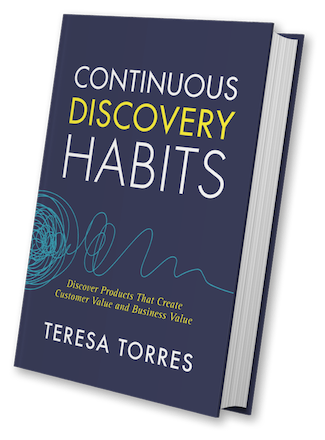
    “Continuous Discovery Habits” turns five this year, and I’m celebrating by reading it with our community—together, in practice, not just in theory. Each month, I’m publishing an in-depth reading guide with the chapters we’ll cover, a preview of the most important concepts, short videos you can share with your teams, individual and team discussion questions, practical exercises to apply what you read, and additional resources to go deeper.

    We’ll keep the conversation active in the comments each month and meet live once a quarter to compare notes, share what’s working, and troubleshoot what’s not. If you’re joining late, no problem—start with the current month or go back to January. You can also find all of the book club articles here.

    If you want to participate, grab a copy of the book (or dust off your old one), share the “Spread the Love” videos with colleagues, block time for the team exercises, and register for the community sessions. Let’s dive in together.

    This Month’s Reading

    Chapter: Chapter 5: Continuous Interviewing. Estimated reading time: ~37 minutes.

    This chapter grounds us in why interviewing on a regular cadence is critical to the success of any product trio; how cognitive biases affect what we learn from direct questions; the difference between research questions and interview questions; how to use story-based interviewing to uncover actual customer behavior (not ideal behavior); the interview snapshot, a one-page tool for synthesizing what you learned from a single interview; how to automate the recruiting process so interviewing becomes easier than not interviewing; and why product trios should interview customers together.

    Need a copy? Grab the book.

    Share the Love with Friends and Colleagues

    We learn best in community. To help your team rally around these practices, share these concise primers and invite them to join the book club discussion with you.

    What are customer interviews? – Build a competitive advantage that compounds over time.

    What should we ask in customer interviews? – Mitigating cognitive biases.

    Research questions vs. interview questions – And why the difference matters.

    Getting reliable feedback from customer interviews – Ask the right questions.

    Who should conduct customer interviews? – My answer might surprise you.

    How do you find customers to interview? – Automate the recruiting process.

    The Interview Snapshot – How to synthesize a single customer interview.

    Reflect and Discuss What You Read

    Reflection cements learning. This month, I’m challenging you—as I challenge my own teams—to build a weekly habit of interviewing customers and to shift from direct questions (which trigger bias) to collecting specific stories about past behavior. For many teams, this is a big mindset change: from infrequent “big research projects” to lightweight, continuous conversations that fuel daily decision-making.

    Individual Reflection: Think about your last customer interview or conversation. Did you rely on direct questions, or did you excavate a specific story about what happened? How might the answers have changed if you had used the other approach?

    Consider your own behavior—buying jeans, going to the gym, choosing what to watch on Netflix. Where do your ideal intentions differ from what you actually do? How might that same gap show up in your customers’ answers to direct questions?

    Scan your calendar from the past month. How many customer interviews did you conduct? If it’s fewer than four, what got in the way? What needs to change to make weekly interviewing sustainable?

    Team Discussion: As a team, discuss your current interview cadence. If you’re not interviewing at least weekly, name the biggest obstacle—recruiting, time, or synthesis—and commit to reducing one barrier this month.

    Try this together: Ask a teammate, “How does a product idea go from concept to launch at our company?” Have them write it down. Then ask for the last specific feature or improvement that launched and capture the story. Compare the two. What’s different? What does this reveal about the gap between ideal process and actual process?

    If you already interview regularly, ask: Who participates? Is it just one person (like the designer or product manager), or does the whole trio join? What value might you be missing by not having all three perspectives in the room?

    Put It Into Practice

    Understanding the “why” is easy; building the habit is the work. The following exercises are how my teams operationalize continuous interviewing week over week.

    Exercise: Conduct a Story-Based Interview (Time: 20–30 minutes. Do this with your product trio.) Schedule a conversation with a current customer. Instead of drafting a long script, identify a handful of research questions (what you need to learn) and translate them into one story-based interview question (what you’ll ask).

    For example, research questions might include: What challenges do customers face when onboarding? Where do they get stuck? What are we asking them to do that they don’t understand? How can we make it easier for them to get to the activation moment? The corresponding interview question could be: Tell me about the first time you used our product.

    During the interview, excavate the story with temporal prompts like “What happened first?”, “What happened next?”, and “What happened before that?” If the participant drifts into generalities (“I usually…” or “In general…”), gently bring them back to the specific instance.

    After the interview, debrief as a trio. What did each of you hear? Which opportunities surfaced? What surprised you? If you want personalized, detailed feedback on your technique, consider the Interview Coach available through the Story-Based Customer Interviews course.

    Exercise: Create Your First Interview Snapshot (Time: 30 minutes. Do this with your product trio immediately after the interview.) Using the interview snapshot template, capture a photo of the participant (or a visual that represents their story), quick facts about their context, a memorable quote you’ll still recall months from now, the opportunities (needs, pain points, desires) you heard, notable insights that aren’t yet opportunities, and an experience map that illustrates the story. Over time, aim to complete each snapshot in 15–20 minutes.

    Go Deeper: Additional Reading

    If you prefer audio, I’ve included an audio summary for paid subscribers that covers this month’s chapter plus the resources below.

    Related In-Depth Guides: Customer Interviews: How to Recruit, What to Ask, and How to Synthesize What You Learn.

    The Value of Continuous Interviewing: Why Product Trios Should Interview Customers Together – How interviewing together ensures research is timely, actionable, and believable.

    How to Find Customers to Talk To: Customer Recruiting: Get Easy Access to Customers Week Over Week – Practical strategies for automating your recruiting process. Ask Teresa: How Do You Select Customers for Customer Interviews? – Who to interview and how to recruit them. Tools of the Trade: Finding People to Interview Before You Have Customers – Recruiting strategies for early-stage products.

    What to Ask in Your Interviews: Why You Are Asking the Wrong Customer Interview Questions – Understanding the gap between ideal behavior and actual behavior. Story-Based Customer Interviews Uncover Much-Needed Context – Why collecting specific stories is more reliable than asking direct questions. Ask Teresa: What Are the Best Customer Interview Questions? – Common questions and how to improve them. Ask About the Past Rather than the Future – Why memories about recent instances are more reliable than speculation.

    How to Take Notes and Synthesize What You Are Learning: How to Take Notes During Customer Research Interviews – Practical tips for capturing what you hear. The Interview Snapshot: How to Synthesize and Share What You Learned from a Single Customer Interview – A comprehensive guide to creating and using interview snapshots. Customer Interview Analysis: How AI Helps and Hurts – Learn how to use AI effectively.

    Videos: All Things Product Podcast: Customer Interview Analysis – Petra and I discuss using AI to analyze customer interviews, the risks and benefits, and why your interviewing skills matter more than any AI tool.

    Other Resources from Around the Web: The Top 5 Mistakes Product Teams Make With Customer Interviews by Pragmatic Live. Continuous interviewing with Kristian Collin Berge (CEO & Co-founder at UX Signals) by Afonso Franco. How to Make Time for Customer Interviews & Validation by Rich Mironov. Brave UX: An interview with Teresa Torres by Brendan Jarvis.

    Related Courses: Customer Recruiting for Continuous Discovery – Get easy access to customers week over week. Story-Based Customer Interviews – Collect reliable feedback from every customer conversation.

    Our Live Discussion Schedule

    Our live discussion sessions are for paid subscribers. Sessions are not recorded. Invitations will go out to members two weeks before each event—add these to your calendar now: Tuesday, June 16, 2026: 9am–10am PDT. Thursday, September 17, 2026: 9am–10am PDT. Wednesday, December 16, 2026: 9am–10am PST.

    Audio Summary

    This summary was produced by NotebookLM. The sources supplied were the book chapters as well as all of the additional reading.

    This article is part of the CDH Book Club celebrating the five-year anniversary of Continuous Discovery Habits.


    Inspired by this post on Product Talk.


    Book a consult png image
  • 5 powerful ways I use Pendo MCP to bring product analytics into ChatGPT, Claude, and Cursor

    5 powerful ways I use Pendo MCP to bring product analytics into ChatGPT, Claude, and Cursor

    I’ve wanted my product analytics to follow me into every conversation, doc, and code review. Now they do—and it changes how quickly I can move from question to insight to decision.

    Pendo is now available as an MCP (Model Context Protocol) server, easily accessible in Claude, ChatGPT, and Cursor.

    Practically, this means my core product analytics, segments, and qualitative feedback can be surfaced right where I plan sprints, refine opportunity solution trees, and write specs. Fewer context switches, tighter feedback loops, and faster product decisions.

    Here are five ways I put Pendo MCP to work across my day-to-day workflows—grounded in product management leadership habits and built for speed and clarity.

    1) Daily triage and decision support: In ChatGPT or Claude, I quickly query product analytics to spot anomalies, usage spikes, or drop-offs by segment. Prompts like “Highlight top features by week-over-week growth and flag statistically notable anomalies” help me focus standups on what matters, tightening the loop between observability and action.

    2) Continuous discovery prep: Before customer interviews, I pull recent NPS verbatims, feature adoption by persona, and journey mapping signals. In seconds, I have a concise brief that blends behavioral analytics with customer interviews, so I can ask sharper questions and validate assumptions faster—without leaving my AI workspace.

    3) Evidence-based prioritization: When shaping the roadmap, I bring in retention analysis, user activation metrics, and cohort views to weigh impact vs. effort. Using Pendo MCP inside Claude or ChatGPT, I translate insights into driver trees and a clear product strategy narrative that aligns stakeholders around outcomes, not output.

    4) Product-led growth and onboarding: I review onboarding funnels, identify friction in first-run experiences, and draft in-app guides and tooltip copy that meets users at the exact drop-off points. With Pendo MCP, the context for product tours and in-app guides is right where I’m writing, so iteration cycles stay tight and data-informed.

    5) Customer success and QBR prep: For account health and QBRs vs OKRs alignment, I generate succinct summaries of feature adoption, sentiment, and value realization—ready to paste into email, decks, or a CRM integration. This keeps sales-led and product-led growth motions unified, with a single source of truth visible in ChatGPT, Claude, or when I’m coding in Cursor.

    The net effect: higher-quality decisions, faster. By bringing product analytics into my AI workflows, I reduce context switching, improve context window management, and keep my team anchored to real user behavior. Wherever I’m working—ideating in Claude, drafting in ChatGPT, or reviewing code in Cursor—my Pendo context is right there with me.

    If you’re leading empowered product teams, this is a pragmatic way to operationalize continuous discovery, speed up alignment, and turn insights into outcomes. It’s a simple shift with outsized leverage.


    Inspired by this post on Pendo – Best Practices.


    Book a consult png image
  • Docs-as-Code Leadership at Scale: How Jeff Scattini Elevates End-to-End Product Documentation

    Docs-as-Code Leadership at Scale: How Jeff Scattini Elevates End-to-End Product Documentation

    Great products aren’t just shipped; they’re understood. In my product management practice, the difference between a good release and a great one often comes down to disciplined documentation that moves at the speed of delivery. That’s why the docs-as-code approach has become a cornerstone of how I build, lead, and measure product experiences across teams.

    As I reflect on leaders who set a high bar in this craft, one description stands out: "With years of experience as Senior Documentation Manager, Jeff leads teams and oversees the end-to-end creation of documentation using docs-as-code methodology." That concise statement captures a model I deeply respect—one that treats documentation as a first-class citizen in the product lifecycle.

    In practice, docs-as-code integrates documentation into CI/CD pipelines, version control, and peer review workflows—exactly how we ship software. This elevates quality, enforces consistency, and accelerates responsiveness to change, all while enabling rigorous content audit and UX writing standards. When documentation evolves with code, it becomes discoverable, testable, and measurable—key traits for scalable product management leadership.

    The downstream impact is tangible. Users ramp faster through onboarding, in-app guides, and product tours because the narrative aligns with the product’s true state at any given commit. Support tickets drop, developers work with greater clarity, and PMs gain the feedback loops needed for continuous discovery. In a product-led growth motion, this clarity compounds—reducing time-to-value and enabling teams to ship confidently.

    Equally important is the leadership pattern behind the methodology: aligning product, engineering, and customer-facing teams around shared truths. I’ve seen empowered product teams operate at their best when documentation is embedded in planning, sprint reviews, and release gates. This creates a single source of truth that scales knowledge, preserves intent, and shortens the path from decision to delivery.

    For me, the standard expressed above isn’t just a role description—it’s a blueprint for operational excellence. When we manage documentation with the same rigor as code, we build trust at every touchpoint and create the conditions for sustained product velocity. That’s the level of clarity and execution I strive to foster across every product line.


    Inspired by this post on Amplitude – Perspectives.


    Book a consult png image
  • Unlock High-Impact Mobile Engagement: Amplitude Guides & Surveys for iOS, Android, React Native

    Unlock High-Impact Mobile Engagement: Amplitude Guides & Surveys for iOS, Android, React Native

    Mobile engagement is most effective when it’s timely, contextual, and grounded in real user behavior. In my experience leading product teams, the fastest path to activation and retention comes from meeting users in the moment with relevant in-app guides and lightweight surveys that reduce friction and illuminate intent.

    Deploy behavioral-driven mobile engagement with Amplitude Guides and Surveys for iOS, Android, and React Native platforms.

    What excites me about this approach is how naturally it supports product-led growth. In-app guides and product tours streamline onboarding, while targeted micro-surveys surface the “why” behind user actions. The result: clearer journey mapping, fewer blind spots in the funnel, and a smoother path to user activation—all without adding engineering heavy-lift for each iteration.

    To optimize continuously, I pair behavioral analytics with A/B testing and retention analysis. This lets my team validate hypotheses quickly, localize friction by segment or stage, and tune messaging for different cohorts. With Amplitude analytics at the core, we can connect engagement nudges to downstream outcomes, not just clicks—so we’re improving time-to-value, not just surface metrics.

    My recommended starting point is simple: define a single activation moment, instrument the critical behaviors around it, and launch a focused guide plus one survey to test the narrative. Use journey mapping to identify the key decision points, then iterate weekly based on observed behavior, not opinions. This cadence keeps learning velocity high and ensures every change moves us closer to clear outcomes.

    From a leadership perspective, I coach product trios to own an activation or retention KPI, run small controlled experiments, and document learning with crisp before/after evidence. Cross-platform support across iOS, Android, and React Native means we can scale wins quickly, standardize patterns, and create a repeatable playbook for new features and markets—all while keeping the user experience coherent and respectful.


    Inspired by this post on Amplitude – Best Practices.


    Book a consult png image