
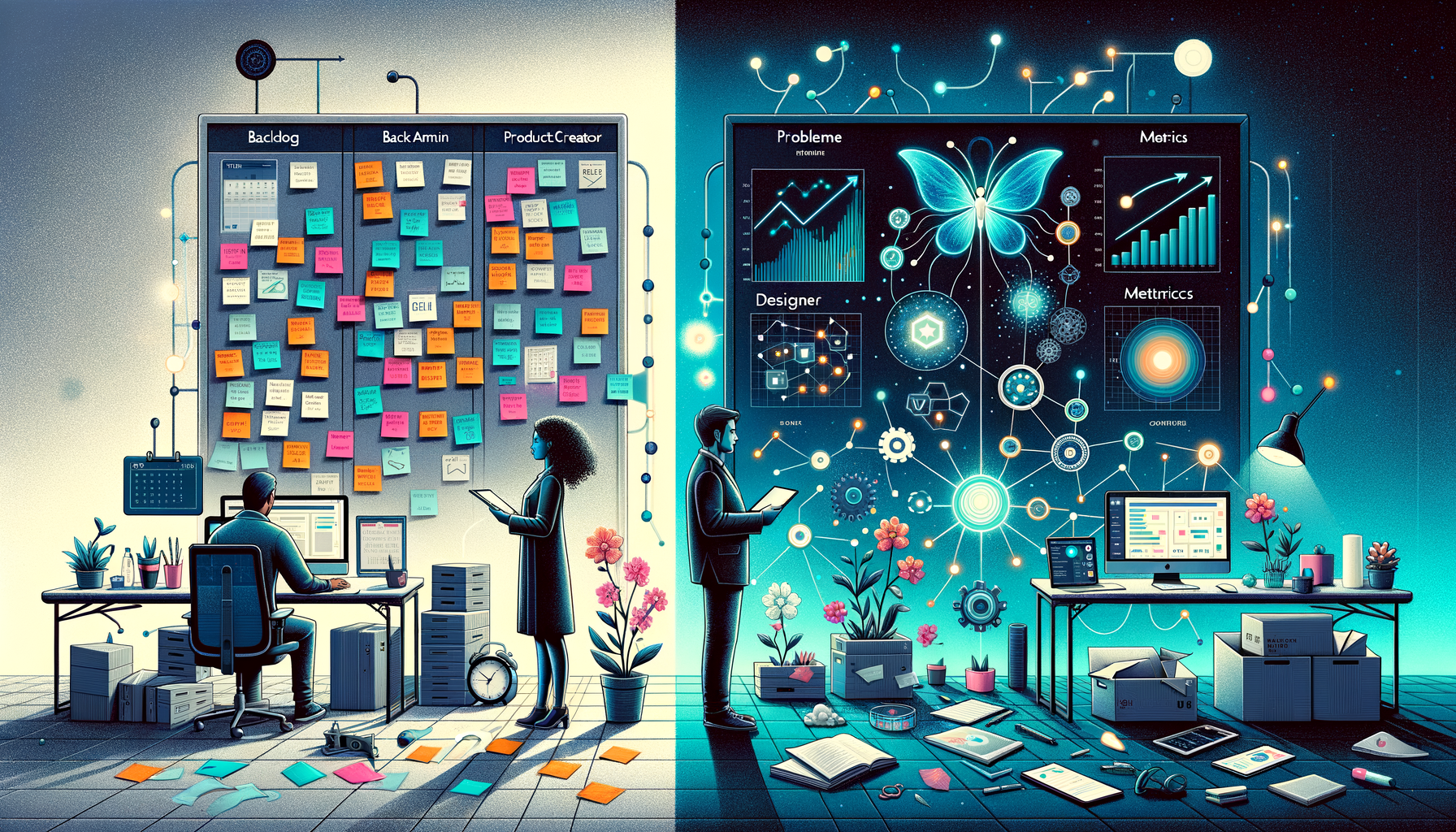
I have been emphasizing that the heart of the product manager job is product creation.
The job is not about being a facilitator or cheerleader, it’s not about being a project manager, and it’s definitely not about being a backlog administrator.
Rather, the necessary role of a product manager is a product creator, working alongside…
In practice, that means I pair closely with engineering, design, data, and go-to-market partners to explore, prototype, and validate solutions during product discovery. I set a clear problem statement, define success metrics, and align on the smallest coherent release so we can learn quickly and de-risk the path to value.
When the problem demands deep context, I embed forward deployed engineers with customers so we can observe workflows, capture constraints, and iterate on generative AI prototypes in days, not months. Those in-the-field insights shorten feedback loops and expose edge cases that never surface in a conference room or a ticketing system.
GenAI lets me reduce the cost of learning: with lightweight agents, synthetic data, and prompt-driven scaffolding, I can run multiple experiments in parallel and converge on what truly delivers value. This approach turns ambiguity into testable hypotheses and transforms discovery from a meeting cadence into a hands-on, evidence-driven practice.
This is product management leadership in action—setting outcomes, defining success metrics, and aligning a cross-functional team on the smallest coherent release—instead of shuffling tickets in a backlog. The difference is night and day: we move from output to outcomes, from activity to impact.
My weekly cadence is simple: articulate the customer problem, frame hypotheses, build the thinnest possible prototype, put it in front of real users, and measure behavior against leading indicators. That loop creates momentum, builds credibility with engineering, and keeps us honest about whether we’re creating something customers will adopt and pay for.
If you’re feeling stuck in coordination mode, reclaim your time for discovery and creation: carve out maker hours, ship prototypes, invite engineers to customer calls, and let evidence—not opinions—steer the roadmap. The more you build, the more you learn; the more you learn, the better you lead.
The fastest teams I’ve led are the ones that treat product management as a hands-on craft, embrace generative AI for product prototyping, and maintain a relentless focus on learning, not merely launching. That is how we earn trust, create enduring products, and make product creator more than a title—it becomes our daily practice.
Inspired by this post on SVPG.







Leave a Reply