
I recently sat down with Snir Kodesh, Head of Engineering at Retool, a development platform for building custom business tools. Before joining Retool, he spent six years as a Senior Director of Engineering at Lyft. Coming from my vantage point leading product at HighLevel, I was eager to compare notes on what it really takes to ship software at scale without losing clarity, customer focus, or team morale.
We dug into the biggest differences between leading engineering teams for a consumer product versus an enterprise platform — and the patterns that hold true across both. Consumer surfaces demand rapid iteration loops and relentless UX polish; enterprise platforms demand configurability, security, reliability, and stakeholder alignment across buyers and users. In my experience, the constant across both worlds is crisp product management leadership: clear problem definition, tight feedback loops, and unambiguous ownership.
We pulled back the curtain on the software development cycle, starting with setting the product roadmap while balancing a diverse set of customer needs. On roadmapping, I ensure we explicitly identify who’s in the room to represent product, engineering and design, as well as customer-facing teams like support and solutions. The most effective sessions make trade-offs visible: we quantify impact, risk, and effort; we surface dependencies; and we align on outcomes before timelines. The result is not just a list of features, but a sequenced narrative that earns the right to build.
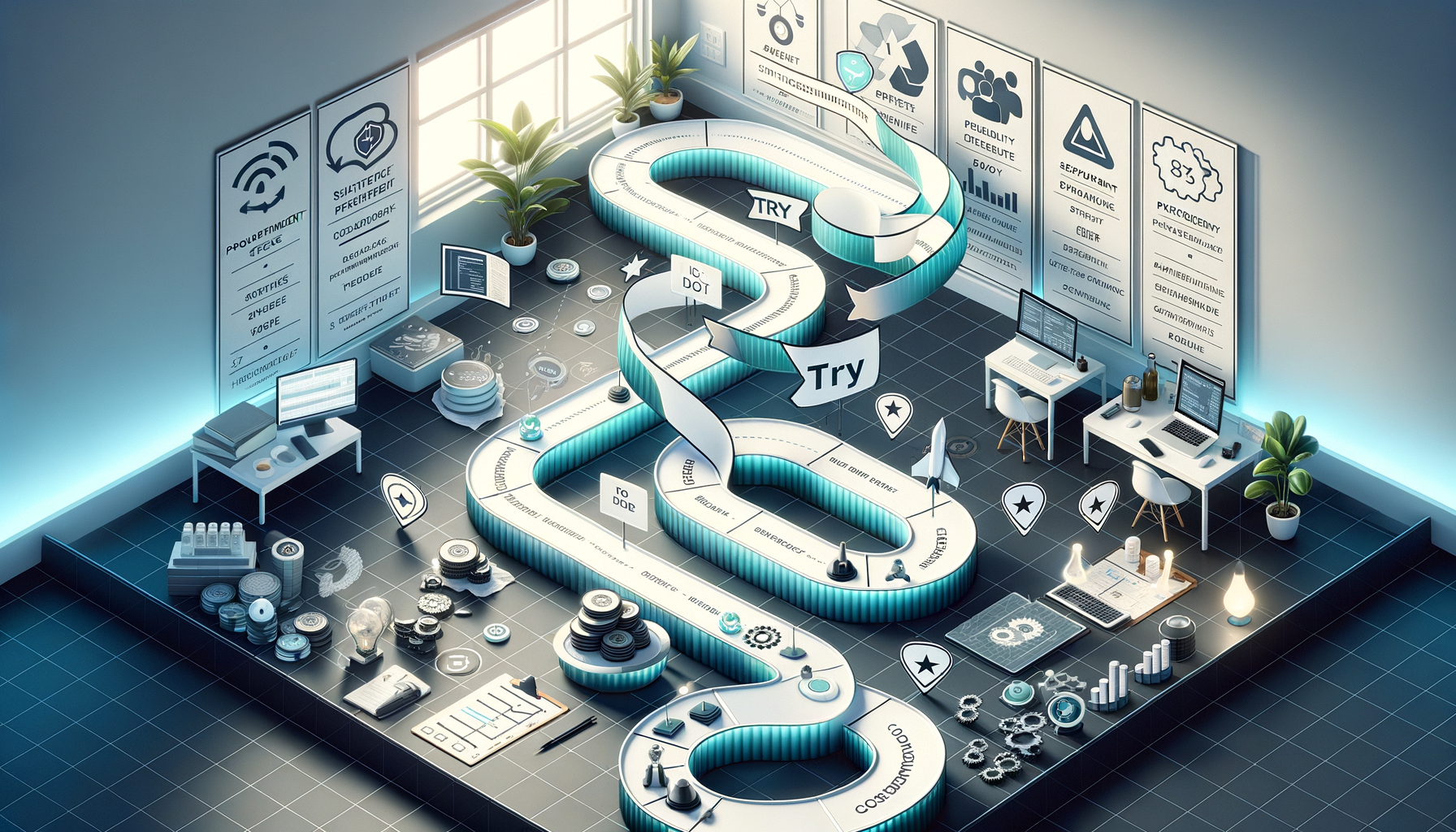
From there, we discussed how engineering takes that product roadmap and turns it into a concrete plan of action using the “try, do, consider” framework. I’ve found this framing incredibly practical: “try” creates space for low-risk experiments, “do” commits to high-confidence work, and “consider” tracks explorations that need more discovery. When sprint planning inherits this taxonomy, teams retain momentum without overcommitting — and leaders get a transparent view into where learning versus delivery is happening.
He makes the case for leaning on QBRs instead of OKRs. I agree that quarterly business reviews calibrate teams on real outcomes, not vanity metrics, and they naturally force prioritization around customer value. When we do use OKRs, we emphasize outcomes vs output OKRs so teams aren’t incentivized to ship volume over impact. In practice, QBRs keep us honest: what shipped, what moved the needle, and what needs to change next quarter.
We also tackled why scope creep gets a bad rap. In my experience, what’s labeled as “scope creep” is often legitimate learning uncovered through product discovery. The key is disciplined change management: time-box discovery, explicitly re-baseline when new information emerges, and separate must-haves from nice-to-haves. When done well, this turns surprises into strategic clarity rather than delivery risk.
On estimation, we shared practical tactics for getting better at estimating how long a feature will actually take to complete. I lean on reference-class forecasting (compare to similar past work), risk burndown charts, explicit buffers for integration and QA, and a habit of capturing deltas between estimate and actuals. Over time, this creates a trustworthy velocity signal and sharpens intuition across both product and engineering.
Translating the roadmap to sprint planning is where execution quality shows. We align on definitions of ready and done, maintain code review SLAs, budget a percentage for tech debt, and instrument everything so we can spot drift early. The “try, do, consider” framework maps cleanly to backlog hygiene, keeping discovery visible without derailing delivery. This is how we sustain speed and quality at scale.
Finally, we zoomed out to essential advice for engineering leaders — especially folks scaling quickly from leading a small team to a much bigger one. Shift from direct control to leverage: clarify decision rights, invest in Staff+ ICs, and scale communication through operating cadences, decision logs, and crisp narratives. Pair autonomy with accountability using QBRs, and keep product discovery tight to preserve customer empathy as you add layers. The goal is the same at ten people or a thousand: ship valuable software predictably, learn fast, and keep the team energized.
If you’re navigating the leap from product roadmapping to sprint planning, these patterns are battle-tested. Anchor on outcomes, use the “try, do, consider” lens to manage ambiguity, and treat scope as a living artifact informed by discovery. With the right rituals and metrics, you can ship software at scale — without chaos.








Leave a Reply