
I gravitate toward conversations that blend analytical rigor with genuine customer empathy. In my role leading product, I’m constantly looking for repeatable ways to operationalize product-led growth and transform word-of-mouth into measurable business outcomes. That’s why I was eager to study how Notion approaches growth in practice, and what I learned aligns closely with the systems we build to scale sustainable, metrics-driven growth.
Rachel Hepworth, Head of Marketing at Notion.
Rachel currently runs growth marketing at Notion, and sees her job as bringing process and control to all of Notion’s different marketing channels. Before joining Notion, Rachel launched the first growth marketing team at Slack, laying down the tracks for a well-oiled go-to-market strategy that could be measured easily.
Much like Slack, Notion has made a name for itself largely through customer love and a powerful word-of-mouth recommendation engine. As a metrics-focused marketer, Rachel opens up her playbook on how she lassos that kind of word-of-mouth growth and the analytical approach she has toward acquiring and retaining customers.
Here’s how I translate those lessons into a practical, product-led growth playbook you can put to work.
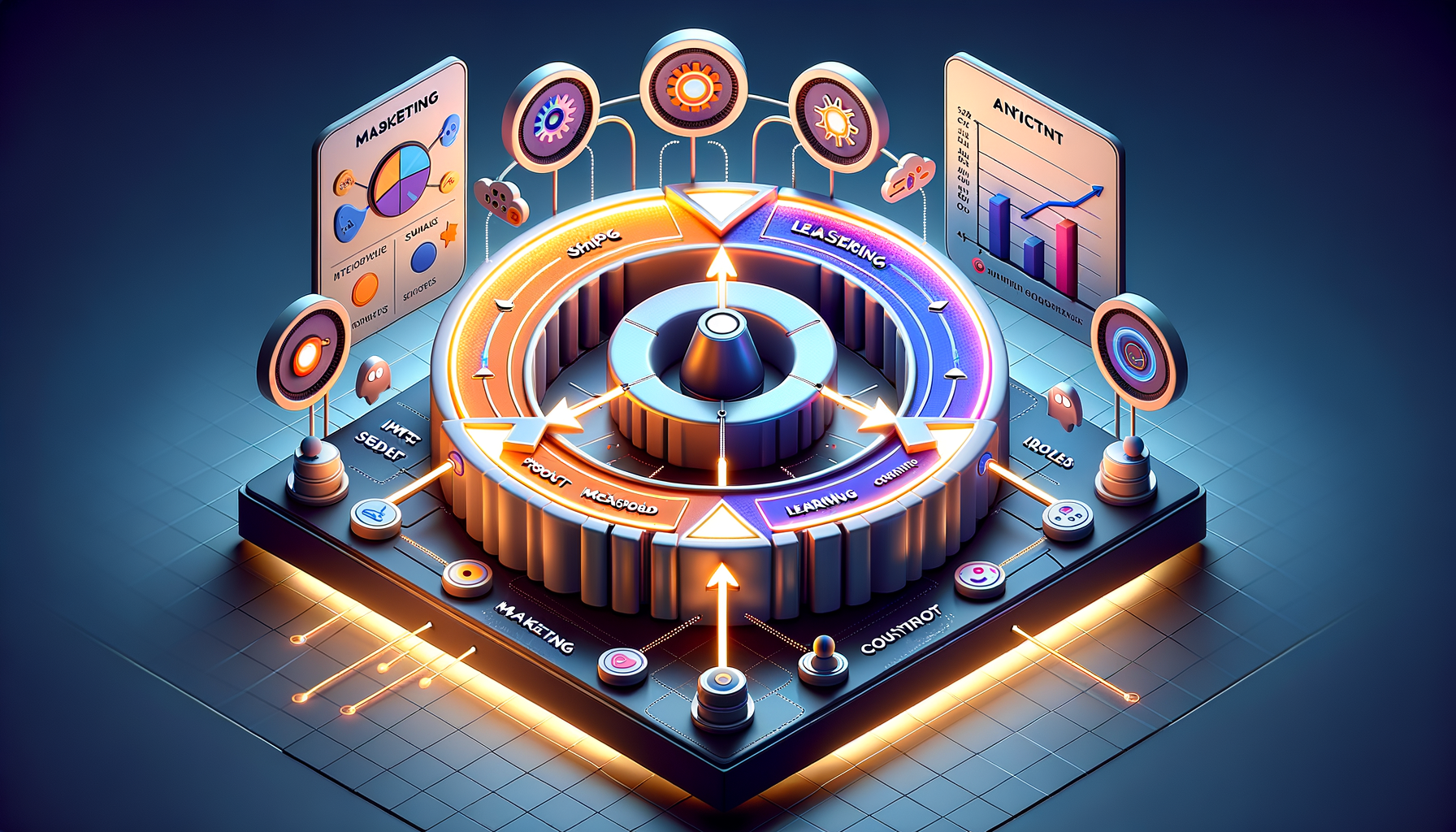
First, high-speed feedback cycles are non-negotiable. In a PLG environment, learning velocity compounds. I instrument experiments end-to-end (from top-of-funnel through activation and retention), ship in small batches, and review impact daily. Rapid iteration across acquisition creatives, onboarding flows, and in-product prompts turns anecdote into evidence and evidence into compounding gains. The flywheel is simple: ship, measure, learn, repeat—faster than your competitors.
Second, identify early indicators of which sign-ups are most likely to convert to paid customers. I score intent using a blend of source quality, setup depth, activation milestones, and collaboration signals. Think about actions like completing a core “aha” workflow, inviting teammates, or integrating with a critical tool—these leading indicators help forecast conversion far better than lagging metrics. With this in place, you can route high-intent cohorts into tailored onboarding, sales-assist, or customer education paths that lift conversion and retention.
Third, evolve your top-of-funnel metrics as the product and motion mature. Early on, breadth matters—optimize for qualified traffic and net-new sign-ups. As the engine matures, shift your focus to quality and efficiency: channel mix, activation rate, cost to acquire activated users, and downstream expansion signals. I treat metrics like a portfolio—retire vanity metrics, promote predictive ones, and ensure each KPI ladders to revenue, not just reach.
Finally, clarify how marketing, product, and sales co-own the funnel in a PLG company. Marketing leads demand generation, channel orchestration, and education that primes users for success. Product owns activation, in-product conversion, and expansion mechanics that turn usage into habit and habit into revenue. Sales (often sales-assist) engages where complexity, security, or procurement require a human touch. When each function owns a distinct stage—and the handoffs are instrumented—the go-to-market strategy becomes both scalable and measurable.
The throughline is simple: build a growth marketing engine that respects customer love and word-of-mouth while holding the bar on measurement. With fast feedback loops, predictive intent models, evolving top-of-funnel metrics, and crisp cross-functional ownership, product-led growth stops being a slogan and starts becoming your operating system.









Leave a Reply