Tag: LLMs for product managers

  • Beat AI FOMO: A Product Leader’s Playbook to Choose Tools, Stay Focused, and Learn Deeply

    Beat AI FOMO: A Product Leader’s Playbook to Choose Tools, Stay Focused, and Learn Deeply

    Lately, it feels like every morning brings a new AI launch, a dazzling demo, or a must-try tool. I love the pace of innovation, but the constant stream can trigger counterproductive FOMO if I’m not intentional. As a product leader, I’ve learned to turn that anxiety into a disciplined learning system—one that keeps me curious without letting novelty hijack my focus.

    That’s exactly why this conversation with Petra Wille and Teresa Torres resonated with me. They explore how to stay experimental in the AI era without chasing every shiny object. Their perspective aligns closely with my own operating cadence: start with real problems, go deep on a small set of tools, and create explicit boundaries between work, learning, and play.

    Listen to this episode on: Spotify | Apple Podcasts

    Here’s the mindset I apply. I don’t start with tools—I start with problems. When I encounter concrete friction in a workflow or see a credible opportunity to improve an outcome, that’s my trigger to explore a new capability. This mirrors the continuous discovery habit of prioritizing opportunities over solutions, and it’s how I avoid performing “innovation theater.”

    To keep exploration healthy, I time-box my learning. I block recurring windows specifically for experiments, reading, and hands-on trials so they don’t overrun my core product work. During these blocks, I’ll set a clear question, run a tight test, and capture what I learned. No rabbit holes, no endless tinkering.

    I also separate “interesting” from “actionable.” Plenty of inputs are worth awareness, but very few deserve immediate action. I bookmark the rest for later. This simple filter reduces cognitive load and keeps my backlog—from ideas to proofs of concept—well-governed.

    Social media can amplify technology hype cycles, so I establish boundaries. I batch consumption, mute low-signal channels, and prioritize practitioner communities over performative threads. The goal isn’t to be first; it’s to be right for my customers, my team, and our strategy.

    When choosing what to try next, I use a practical rubric. Does the tool target a real friction I’ve seen in discovery or delivery? Can it plug cleanly into our AI workflows without unsustainable glue work? Do we have a safe, compliant way to test it? Is there a plausible path from trial to compounding value? If the answer isn’t a confident yes to most of these, I wait.

    Depth beats breadth. I’d rather take one promising tool into a real use case, instrument it, and measure outcomes than skim ten trending demos. That tighter loop produces sharper intuition, clearer product bets, and better partner decisions. A quick opportunity solution tree helps me connect user pain to outcomes before I let any solution onto the field.

    In the episode, Petra Wille and Teresa Torres talk candidly about managing FOMO, deciding which tools to explore, and designing intentional learning systems. They discuss why starting with a problem is more valuable than starting with a tool, how social media amplifies technology FOMO, and why going deeper with fewer tools can lead to better learning. If you’ve ever felt like you’re falling behind because you haven’t tried the latest AI tool yet, this conversation will help you rethink how you approach learning and experimentation.

    If you’re curious about what came up, here are some of the tools and communities mentioned: Claude Code, OpenClaw (formerly Clawdbot, Moltbot), NotebookLM, Product Talk, ElevenLabs, Lenny’s Newsletter Community, and even a nod to Bridgerton for a touch of levity.

    My takeaway is simple but powerful: curiosity doesn’t require constant experimentation. The best product managers cultivate a balanced system—grounded in product discovery, energized by focused experiments, and protected by clear boundaries—so we can learn faster while staying pointed at outcomes that matter.

    Discussion Question: How do you decide which new tools or technologies are worth exploring—and which ones you can safely ignore?

    Resources & Links: Follow Teresa Torres: https://ProductTalk.org | Follow Petra Wille: https://Petra-Wille.com

    Full transcripts are only available for paid subscribers.

    Have thoughts on this episode? Leave a comment below.


    Inspired by this post on Product Talk.


    Book a consult png image
  • Never Stop Disrupting: Why the Fin API Platform Signals a New Era for Agentic AI

    Never Stop Disrupting: Why the Fin API Platform Signals a New Era for Agentic AI

    Disruption is the only sustainable strategy in product. When a platform meaningfully changes how we build and operate, I pay attention—not just as a product leader, but as someone accountable for turning AI Strategy into durable competitive differentiation. That’s why the launch of the Fin API platform stands out: it’s a concrete step toward agentic AI at enterprise scale.

    Today, I’m diving into what this launch includes, why it matters for product strategy, and how I’d navigate the build vs buy decision in this new landscape. My goal is to translate the announcement into actionable guidance for product teams, CX leaders, and forward-deployed engineers who are building the next generation of customer support and product-led experiences.

    Fin is a customer agent platform that at present resolves over 2M customer issues a week, growing at a rapid exponential pace. It’s relied on by the best brands, large and small, in every vertical you can imagine. From Atlassian and Riot Games, to smaller hot upstarts like Mercury and Polymarket. It runs on a family of models trained by its AI group. Last week, they announced Apex, which is the world’s first specialized customer service LLM. In production tests over the last 6 months, it beat every single frontier model, including those from Anthropic and OpenAI, on resolution rate, latency, hallucination rate, and cost.

    With this launch, teams can access the platform’s core capabilities and underlying models directly via API, with contracts starting at $250k per year, and usage rates that are by far the cheapest in the industry for each of the model’s subcategories. For leaders evaluating total cost of ownership, this is a meaningful data point: it shifts the economics of scaled automation from experimental to operational.

    Why now? Because builders want options. I hear from teams daily that want to design their own agents, tune prompts and policies, and integrate with bespoke CRMs, data lakes, and product surfaces. The Fin announcement meets that demand with three clear build-paths, each mapping to a different operating model and maturity stage.

    First, for the vast majority of companies, the Fin Agent Platform is the pragmatic starting point. Fin reports ~8k companies on it today. It addresses 99% of customer needs out of the box—without exhausting consulting engagements—while delivering top-tier resolution rates. If your priority is time-to-value, governance, and platform scalability, this route de-risks implementation and accelerates outcomes.

    Second, for teams that need custom surfaces or channels, the Fin Agent API lets you present Fin in unique contexts. You get the Fin platform’s orchestration and controls, but you’re free to bypass the default messenger, email, voice, or any prebuilt channel and embed the agent natively in your product. I see this as the sweet spot for product-led growth motions where conversation design and UX writing are strategic levers.

    Third, for companies building hyper-specific agents—think service plus in-product actions—the new API access to Apex and the broader collection of models is the obvious move. Unlike generalized models, these are purpose-trained for customer service scenarios and operational policies. If you have strong in-house solutions engineering, a retrieval-first pipeline, and eval-driven development in place, this path maximizes control without reinventing the model layer.

    This also opens the door for vertical specialists. Fin-like businesses focused on deep domains can emerge quickly—Fin for dentists? Why not? Fin for car dealerships? Sure. I expect startups and modern CX providers (including players like Decagon and Sierra) to carve out niches where domain data, workflows, and compliance are the real moats. That’s where differentiated AI beats generic capability.

    There’s a defensive reason to pay attention here. The software landscape is shifting fast: the moat is no longer feature parity—it’s the quality of your agents and the data flywheels powering them. Building software is simply less hard now, and I’ve watched engineering teams more than double measurable productivity as they adopt AI-assisted development. The implication is clear: the interface-and-features era is giving way to an agents-and-outcomes era.

    Serious software companies must evolve from being a features company to an agents company—and build those agents on differentiated AI. More value will accrue at the model and orchestration layers, where safety, latency, cost, and resolution quality are won. That puts a premium on prompt engineering discipline, policy routing, continuous discovery of edge cases, and rigorous offline/online evals to keep hallucination rates low while maintaining speed.

    How would I choose among the three build-paths? If you’re early or resource-constrained, start with the Fin Agent Platform to validate outcomes and align stakeholders. If you need branded experiences and tighter product integration, use the Fin Agent API to control surfaces without owning the heavy lifting. If you have strong ML ops and a mature customer support ai strategy, go model-level with Apex and companions, layering in your own guardrails, context window management, and test harnesses. In each case, balance velocity, control, and risk—your build vs buy decision should be grounded in clear metrics and an explicit product strategy.

    Where does this lead? We’ll see more companies expose specialized model families with clearer economics and stronger governance. For now, I’m excited to see what teams build with the Fin API platform—and how they turn agentic AI into measurable improvements in resolution rate, CSAT, cost-to-serve, and ultimately, customer loyalty.


    Inspired by this post on The Intercom Blog.


    Book a consult png image
  • Inside Banani: How a Canvas-First AI Designer Elevates UX and Accelerates Product Teams

    Inside Banani: How a Canvas-First AI Designer Elevates UX and Accelerates Product Teams

    I believe the future of product design isn’t about replacing designers—it’s about giving every team access to one. That’s why Banani grabbed my attention. It’s an AI product designer that doesn’t just generate code—it generates design. For solo founders, stretched design teams, and early-stage startups, that shift matters: it raises the design floor without lowering the creative ceiling.

    I spent time with Vlad Solomakha (CEO & Co-founder), Vova Kovalchuk (CTO & Co-founder), and Vlad Ostapovats (Founding Growth) to unpack how they took Banani from a Figma plugin proof-of-concept to a canvas-first AI design tool generating hundreds of thousands of designs per week. Vlad brings a decade of design experience and a precise north star: AI should produce beautiful, tasteful design rather than average, undifferentiated UI.

    The architectural choices stood out. They engineered their agent to handle parallel screen edits, manage per-screen context across canvases with hundreds of frames, and make surgical edits without regenerating entire screens. This is the kind of agentic AI work that product leaders have been waiting for: concrete advances in context window management, tool orchestration, and prompt engineering that translate into higher throughput without sacrificing quality.

    Equally important is how they addressed the "gulf of specification"—the mismatch between how designers think visually and how agents understand text. Banani’s canvas-first approach acknowledges that design is spatial, hierarchical, and iterative. Rather than forcing a chat-first UX, they center the canvas and let the agent do production work while keeping the designer firmly in control. In practice, this narrows intent ambiguity, speeds up iteration, and preserves taste.

    The team made another pivotal bet: Why Banani doesn’t compile running applications — just HTML/CSS mockups — and how that shapes everything. By decoupling the design artifact from runnable code, they optimize for velocity, taste, and exploration. In my experience, this separation is the right product strategy for early discovery and gen ai for product prototyping—move fast on aesthetics and flows, then converge on implementation once you’ve validated the direction.

    I also appreciated their pragmatic evaluation approach. Instead of traditional evals, they spin up 10 screens from one prompt to compare models. It’s hands-on, outcome-based, and aligned with eval-driven development in real product environments. They’re relentlessly discerning about when to work around model limitations versus when to wait for the models to improve—an essential discipline when building at the edge of what’s possible.

    Under the hood, context engineering and specialized agent tools do the heavy lifting. Per-screen history with shared project context enables precise, reversible changes across large canvases. The result: fewer destructive regenerations, more reliable design intent preservation, and a workflow that feels like collaborating with a strong mid-level designer who’s exceptionally fast and consistent.

    If you want a quick tour, I recommend jumping to a few highlights: 20:13 Product Tour Canvas First AI, 33:40 Gulf of Specification, 42:54 Agent Architecture Under Hood, 48:48 State History Context Tricks, and 56:04 Navigating Busy Canvases. Each segment reveals a different layer of the system design and product thinking behind Banani’s canvas-first UX.

    For product leaders, this is a compelling blueprint for raising the design floor while protecting the last mile of craft. It aligns with empowered product teams, continuous discovery, and LLMs for product managers who need leverage without losing judgment. If you’re exploring agentic AI in design, this is a thoughtful, execution-focused model worth studying and trialing on your next product tour or redesign.

    Resources worth exploring: Banani and TL Draw. To hear the full conversation, you can listen on Spotify or Apple Podcasts. Then, pressure-test the approach inside your own product development lifecycle and see how a canvas-first AI designer reshapes your team’s velocity and quality bar.


    Inspired by this post on Product Talk.


    Book a consult png image
  • 5 powerful ways I use Pendo MCP to bring product analytics into ChatGPT, Claude, and Cursor

    5 powerful ways I use Pendo MCP to bring product analytics into ChatGPT, Claude, and Cursor

    I’ve wanted my product analytics to follow me into every conversation, doc, and code review. Now they do—and it changes how quickly I can move from question to insight to decision.

    Pendo is now available as an MCP (Model Context Protocol) server, easily accessible in Claude, ChatGPT, and Cursor.

    Practically, this means my core product analytics, segments, and qualitative feedback can be surfaced right where I plan sprints, refine opportunity solution trees, and write specs. Fewer context switches, tighter feedback loops, and faster product decisions.

    Here are five ways I put Pendo MCP to work across my day-to-day workflows—grounded in product management leadership habits and built for speed and clarity.

    1) Daily triage and decision support: In ChatGPT or Claude, I quickly query product analytics to spot anomalies, usage spikes, or drop-offs by segment. Prompts like “Highlight top features by week-over-week growth and flag statistically notable anomalies” help me focus standups on what matters, tightening the loop between observability and action.

    2) Continuous discovery prep: Before customer interviews, I pull recent NPS verbatims, feature adoption by persona, and journey mapping signals. In seconds, I have a concise brief that blends behavioral analytics with customer interviews, so I can ask sharper questions and validate assumptions faster—without leaving my AI workspace.

    3) Evidence-based prioritization: When shaping the roadmap, I bring in retention analysis, user activation metrics, and cohort views to weigh impact vs. effort. Using Pendo MCP inside Claude or ChatGPT, I translate insights into driver trees and a clear product strategy narrative that aligns stakeholders around outcomes, not output.

    4) Product-led growth and onboarding: I review onboarding funnels, identify friction in first-run experiences, and draft in-app guides and tooltip copy that meets users at the exact drop-off points. With Pendo MCP, the context for product tours and in-app guides is right where I’m writing, so iteration cycles stay tight and data-informed.

    5) Customer success and QBR prep: For account health and QBRs vs OKRs alignment, I generate succinct summaries of feature adoption, sentiment, and value realization—ready to paste into email, decks, or a CRM integration. This keeps sales-led and product-led growth motions unified, with a single source of truth visible in ChatGPT, Claude, or when I’m coding in Cursor.

    The net effect: higher-quality decisions, faster. By bringing product analytics into my AI workflows, I reduce context switching, improve context window management, and keep my team anchored to real user behavior. Wherever I’m working—ideating in Claude, drafting in ChatGPT, or reviewing code in Cursor—my Pendo context is right there with me.

    If you’re leading empowered product teams, this is a pragmatic way to operationalize continuous discovery, speed up alignment, and turn insights into outcomes. It’s a simple shift with outsized leverage.


    Inspired by this post on Pendo – Best Practices.


    Book a consult png image
  • Product Management Isn’t Dead: Why ‘Product Builders’ Will Win in the AI Era—and How to Upskill Now

    Product Management Isn’t Dead: Why ‘Product Builders’ Will Win in the AI Era—and How to Upskill Now

    “Is product management dead?” I hear this question at almost every conference hallway chat. After listening to the latest Product Builders – All Things Product Podcast with Teresa Torres & Petra Wille, I’m more convinced than ever: product management isn’t dead—it’s evolving fast, and the leaders will be those who embrace the shift.

    Listen to this episode on: Spotify | Apple Podcasts

    The core take resonated deeply with my day-to-day at HighLevel: product management isn’t dying—“the traditional product trio (PM, design, engineering) is collapsing into something new.” The center of gravity is shifting from swim lanes to outcomes, from rigid handoffs to fluid collaboration, and from role definitions to capabilities that actually ship value.

    AI is raising the baseline across the board. That “80/20 shift: AI handles patterns, humans handle hard problems” is real on my teams. With LLMs like “GPT 5.2” and “Opus 4.5,” coding agents such as “Claude Code” and “Codex,” and tools like “Replit” and “Lovable,” we’re compressing cycle time on the repeatable 80%. The bottleneck is no longer typing code or drafting copy—it’s selecting the right problems, crafting sharp product strategy, and making confident trade-offs.

    This is why the future belongs to “product builders” — people with a shared foundation across disciplines and deep expertise in one area. I look for teams that can shape, prototype, validate, and iterate in tight loops, blending continuous discovery with empowered product teams. The baseline expands, the craft deepens.

    Functional expertise still matters—more than ever—because the hard parts are getting harder. We need leaders who can weigh platform scalability against time-to-value, protect privacy-by-design, apply AI risk management, and navigate data governance while sustaining product-market fit. When AI accelerates execution, judgment becomes the differentiator.

    For leaders, this creates a clear mandate: “What product leaders must do to create safe AI infrastructure.” In practice, that means building guardrails early—security reviews tailored to AI workflows, QA harnesses that include eval-driven development, model performance observability, and human-in-the-loop review systems. You can’t bolt this on later without paying a tax in velocity and trust.

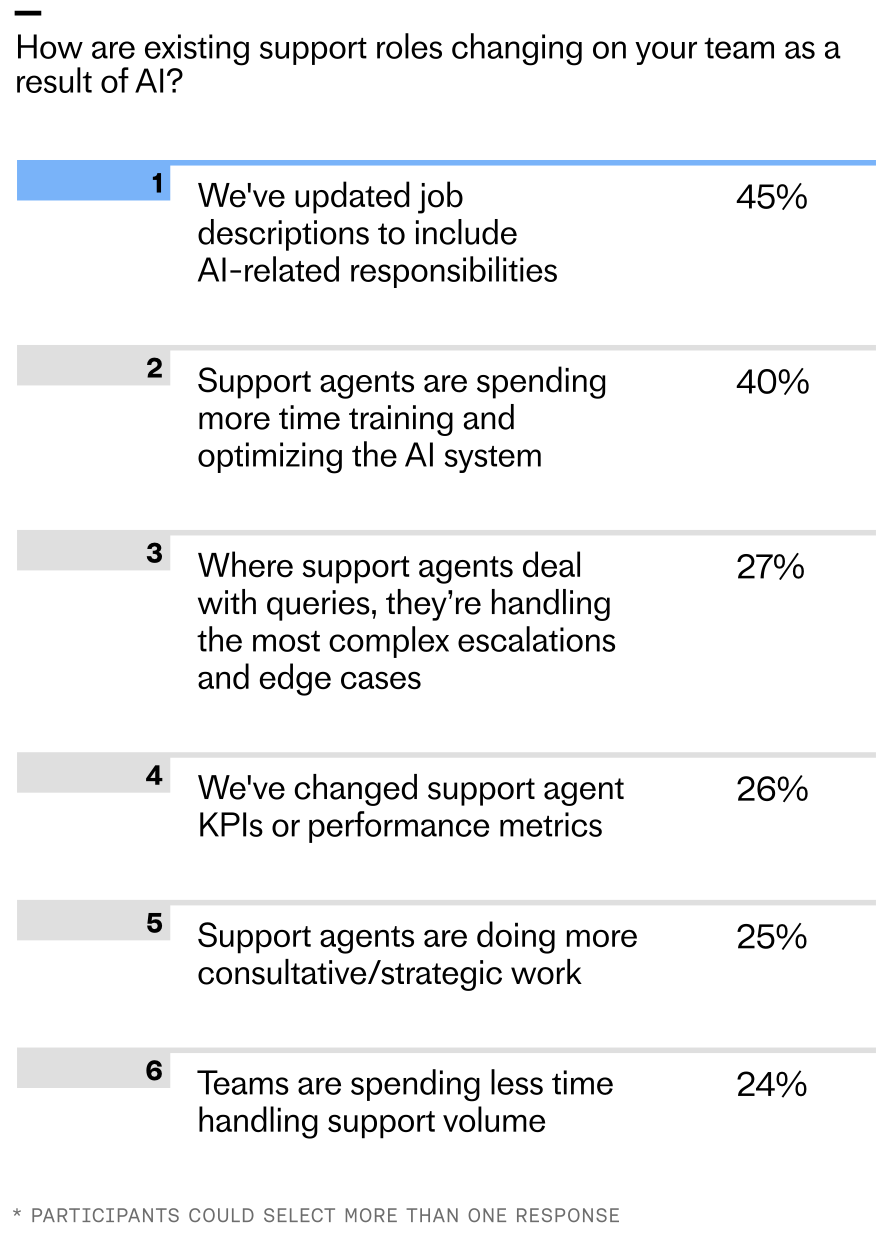
    Hiring signals are already shifting. “How job descriptions and hiring expectations are already shifting” shows up in my reqs: we emphasize cross-functional range, fluency with AI workflows, prompt engineering literacy, and the ability to frame measurable outcomes. We still want craft depth—design systems, systems thinking in engineering, rigorous discovery—but we prize people who move seamlessly from discovery to delivery.

    In the episode, I appreciated the crisp framing of why product management isn’t dying—but changing. The rise of the “product builder” foundation reframes team topology and unlocks smaller, more cross-functional squads. AI changes the baseline skill set across product teams, and ignoring it is a career risk. If you’re not learning AI tools, you’re falling behind.

    My key takeaways were straightforward and actionable. Smaller, more cross-functional teams are likely. Deep expertise still matters—especially for complex trade-offs. Leaders need guardrails: security, QA, and review systems built for an AI-driven workflow. And if you work in product, design, or engineering, this episode is your signal to start upskilling now.

    “The risk of ignoring AI in your craft” is not hypothetical. I encourage PMs to carve out weekly lab time for hands-on experiments with LLMs for product managers, build lightweight prototypes with Replit or Lovable, and pressure-test opportunity solution trees with data-informed discovery. Pair with your engineers on agentic AI use cases, and integrate model evals into your CI/CD pipelines.

    “Mentioned in the episode” were several resources worth exploring: “Product at Heart” (June, Hamburg), “Replit,” “Lovable,” “Every,” “Petra’s Coaching Packages,” and “coding agents (Claude Code, Codex) and LLMs (GPT 5.2, Opus 4.5).” These are great jumping-off points for your own product builder toolkit.

    My recommendation: queue up the episode on your commute, then pick one workflow to augment with AI before the week ends. Replace a handoff with a shared canvas. Automate a repetitive analysis. Ship a scrappy prototype. Momentum compounds.

    Have thoughts on this episode? Leave a comment below. I’d love to hear how your teams are evolving your product trios, what AI workflows are sticking, and where governance has been most challenging.


    Inspired by this post on Product Talk.


    Book a consult png image
  • Apex Arrives: Vertical AI That Beats GPT-5.4 on Customer Service Speed, Accuracy, and Cost

    Apex Arrives: Vertical AI That Beats GPT-5.4 on Customer Service Speed, Accuracy, and Cost

    I just watched one of the most significant leaps in customer service AI in years. Last week, a quiet but seismic release landed in CX: Fin introduced Apex, a vertical model purpose-built for support that raises the bar on speed, accuracy, and cost. As a product leader, this is exactly the kind of breakthrough that changes roadmaps, vendor strategies, and what customers can expect from modern service operations.

    It’s a brand new model for Fin called Apex, and it’s objectively the highest performing, fastest, and cheapest model for customer service. It beats the very best models in the industry including GPT-5.4 and Opus 4.5.

    In this analysis, I’ll unpack why the launch matters for the customer service agent category, what it signals for frontier labs and open‑weight ecosystems, and how leaders should rethink their AI Strategy, build vs buy decisions, and eval-driven development roadmaps.

    Fin was already the highest performing and most sophisticated agent in the customer service space, consistently beating impressive competitors like Decagon and Sierra at an average win rate in the 70s. It operates at tremendous scale, now resolving almost 2M customer issues per week, a number that’s growing at an exponential clip. In its short life it’s grown to nearly $100M in recurring revenue.

    As of last week, ~100% of all (English language, chat and email) customer conversations are now running on Apex. Since day 1, the Fin engine has comprised a system of models, and last year the team began replacing off‑the‑shelf models with custom ones trained on proprietary data. The core answering model had been a frontier labs offering—initially versions of GPT and more recently Sonnet 4.0. Now, that core answering model is Apex 1.0.

    This model resolves customer issues at a materially higher rate than any other model available. One of their largest customers in the gaming space saw the resolution rate improve overnight from 68% to 75% (i.e. a reduction in unresolved conversations of 22%). The team notes they had never seen a jump this large from a single improvement since they started Fin.

    Just as important, it’s dramatically faster, has fewer hallucinations, and is far cheaper than other available models—exactly the attributes operations leaders weigh most when deploying agents at scale. In practice, these are the levers that unlock higher CSAT, tighter SLAs, and better unit economics.

    Achieving all three simultaneously is extraordinarily hard. Credit goes to foundational research from a 60‑person AI group run by Fergal Reid, and, crucially, to domain‑specific proprietary evals drawn from billions of human and agent interactions produced by the Fin resolution engine—already hand‑tuned to be the most effective in the category. That creates a flywheel: an eval‑driven development loop that trains models to keep improving at the edge of the system’s abilities. In other words, Apex 1.0 looks like the tip of the iceberg.

    Zooming out, service is one of the few categories where generative AI has already delivered commercial impact at scale (alongside coding, and arguably the legal industry). With TAMs measured in the hundreds of billions, competition is intense and well capitalized. The pattern I’ve seen repeatedly is clear: winners in these spaces must become full‑stack AI companies. As features become ~free to build, durable competitive differentiation shifts under the hood—to proprietary data, post‑training, inference efficiency, and the quality of the eval loop.

    Dual bar charts showcasing Fin Apex 1.0 with -65% hallucination reduction and a 3.7s time to first token, benchmarked against Sonnet 4.6, Opus 4.5, and GPT-5.4 on a clean, light background.
    Fin Apex raises the bar for finance-ready AI, highlighting a -65% cut in hallucinations and a quicker first token at 3.7s (0.6s faster), compared with Sonnet 4.6, Opus 4.5, and GPT-5.4 in side-by-side charts.

    That’s why competitors will need to release their own models. Many appear to be just starting to hire the talent to do so, which likely gives Fin at least a year of head start. For product leaders, this is a strong signal to revisit build vs buy assumptions, and to quantify when owning your post‑training pipeline and evals becomes the rational move.

    Honestly, 2–3 years ago I expected AI application differentiation to live mostly in what we built around third‑party models. The AI game humbles all of us; today it’s obvious that vertical models paired with proprietary evals create compounding moats.

    In a podcast interview last week, Andrej Karpathy said:

    "I do think we should expect more speciation in the intelligences. The animal kingdom is extremely [diverse] in the brains that exist. And there’s lots of different niches of nature… And I think we should be able to see more speciation. And you don’t need this oracle that knows everything. You kind of speciate it. And then you put it on a specific task. And we should be seeing some of that because you should be able to have much smaller models that still have the cognitive core."

    The frontier labs still have the very best models, but open‑weight models aren’t far behind—making pre‑training look increasingly like a commodity. The frontier is moving to post‑training, which is precisely what we see with Apex (and Cursor’s Composer 2), and what we should expect to dominate going forward.

    Labs now face a dual reality. On one hand, horizontal general‑purpose models can over‑serve specific verticals (e.g., customer service doesn’t need an oracle that knows everything). On the other, open‑weight models are good enough that high‑quality, domain‑specific post‑training can produce superior models for special‑purpose jobs—and in the ways that matter for those jobs. In service, soft factors like judgement, pleasantness, and attentiveness matter alongside hard factors like resolution effectiveness, speed, and cost.

    I’m still bullish on the labs. Many organizations remain heavy customers of Anthropic—whether as part of multi‑model systems or through deep usage of Claude Code in engineering teams (see this example of Claude Code adoption). Yet classic disruption (à la the late, great Clay Christensen) is now at their door. The way out is to disrupt themselves by building cheaper specialized models too, which likely requires acquiring the evals—or the companies with the evals—needed for each task. Expect creative data partnerships, M&A consolidation, and a wave of hyper‑specific model providers that compete head‑to‑head with the labs.

    In the meantime, Fin appears to be the only vendor in its space with a custom model that’s also objectively superior to everything else out there. I’m excited to see it deployed broadly for end customers, and I’m watching closely for the next announcement that will accelerate that rollout. For product leaders, the message is clear: the age of vertical models and agentic AI is here—bring your evals, or bring your checkbook.


    Inspired by this post on The Intercom Blog.


    Book a consult png image
  • Stop Flying Blind with AI Agents: Put Users at the Center with Pendo Agent Analytics

    I’ve watched too many AI agent deployments celebrate velocity while overlooking the one thing that determines long-term success: whether real users are actually getting value. Dashboards tend to spotlight model upgrades, prompt tweaks, and launch counts, yet they rarely quantify task completion, trust, or time-to-value. That blind spot isn’t technical—it’s human.

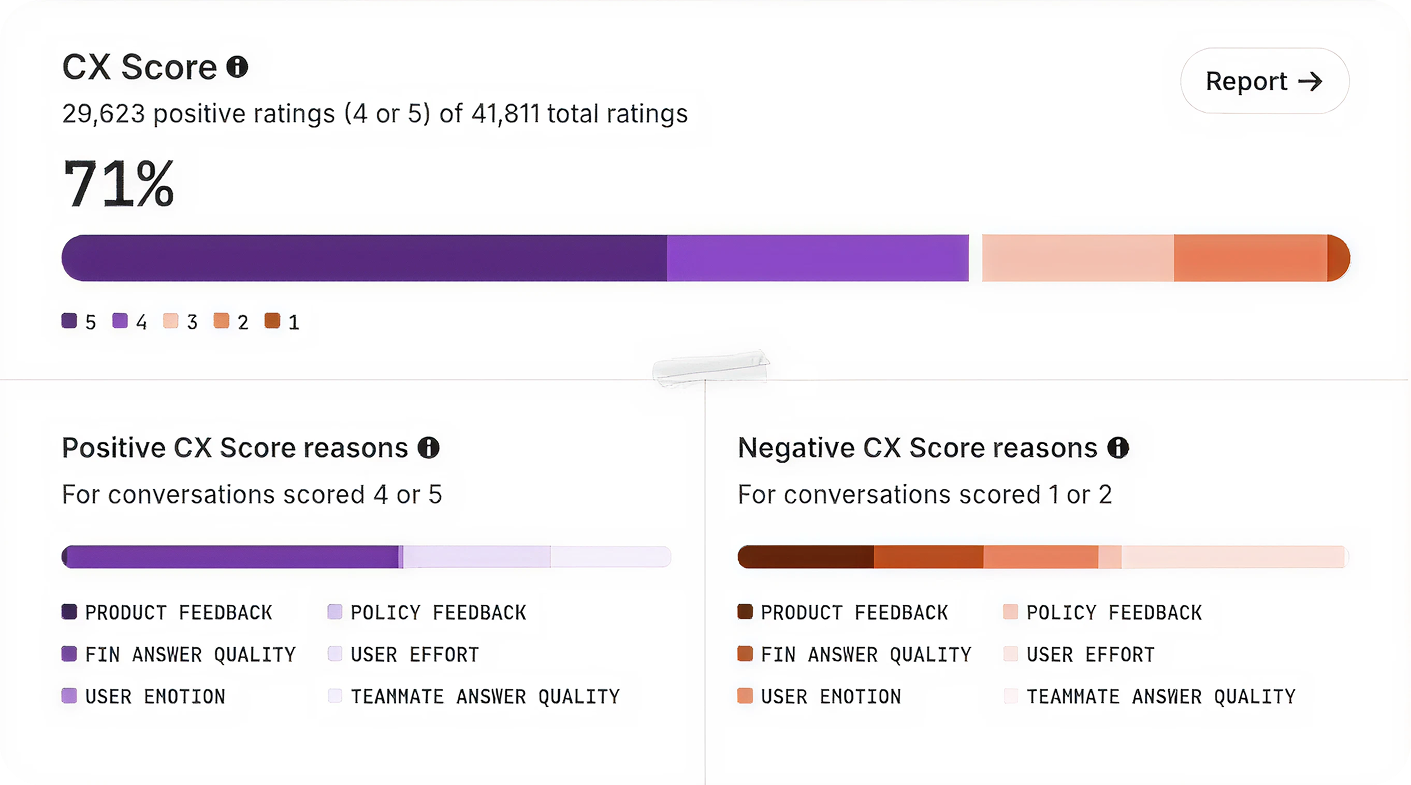
    Enterprises are spending 93% of their AI budget building agents and almost none know if those agents are actually working for users. Pendo Agent Analytics closes the gap.

    In my product reviews, I look for evidence that agentic AI is improving outcomes across the customer journey, not just the demo path. Without behavioral analytics and observability, teams optimize for throughput instead of resolution, for novelty instead of reliability. This is where eval-driven development, A/B testing, and rigorous cohort analysis become non-negotiable: they translate agent performance into user impact we can measure and improve.

    Here’s the pattern that works for me: define user-centric success metrics first, then let the AI follow. I prioritize signals like successful task completion, low-friction activation, reduced escalations, and sentiment lift—tied directly to product-led growth indicators such as retention and expansion. When these metrics move in the right direction, I know the agent is creating compounding value, not just answering faster.

    Practically, I operationalize this with an analytics spine that captures end-to-end agent interactions: intents, prompts, responses, clarifying turns, handoffs, and final outcomes. I segment by persona, journey stage, and account tier to uncover where agents delight and where they degrade trust. With this foundation, I can run controlled experiments, spot anomalies early, and connect improvements in agent behavior to improvements in business performance.

    Pendo Agent Analytics closes the loop by making these user outcomes visible and actionable. Instead of guessing whether an agent helped or hindered, I can analyze where users stall, which prompts or skills drive completion, and how interventions like in-app guides or product tours change behavior. That visibility lets me tune models and experiences in days, not quarters—and gives stakeholders confidence that our AI investments are paying off for customers.

    If you’re scaling agents today, start small but instrument deeply: map top user intents, define offline and online evals, A/B test prompts and policies, monitor regressions, and tie every improvement to activation, adoption, and retention. The result is a durable feedback loop that keeps agents aligned with user value as your surface area grows.

    AI agents are not a destination—they’re a capability. When we anchor that capability to clear user outcomes and measure it with the right analytics, we stop flying blind and start compounding advantage. That’s how we turn promising demos into dependable products.


    Inspired by this post on Pendo – Best Practices.


    Book a consult png image
  • Bad Advice from Your AI Clone? Ethics, IP, and How Product Leaders Protect Quality

    Bad Advice from Your AI Clone? Ethics, IP, and How Product Leaders Protect Quality

    What happens when an AI starts giving advice in your voice—advice you’d never actually give? I’ve been thinking a lot about that question, and this conversation hit home for me as a product leader navigating the fast-evolving reality of AI “clones.”

    Listen to this episode on: https://open.spotify.com/episode/7DNDIlIimwbbMOytArewRp?ref=producttalk.org | https://podcasts.apple.com/kh/podcast/bad-advice/id1794203808?i=1000756914818&ref=producttalk.org. Prefer video? Watch on YouTube: https://www.youtube.com/embed/RF4BwaeMMlg?feature=oembed

    The episode examines AI “clones” built from podcast transcripts and public content—where the experimentation feels exciting, where it crosses ethical lines, and what happens when mediocre AI outputs get attributed to real people. The tension is real: when a bot confidently answers in your style but misses the nuance, “it’s not me” becomes more than a disclaimer—it’s a reputational defense.

    We dig into the messy parts: IP ownership of open-sourced transcripts, the role of pirated books in LLM training sets, rising inference costs, and the uncomfortable economic question: if anyone can prompt “act like Teresa,” how do creators make a living? In my own decision-making, I look for clear consent, guardrails that prevent impersonation, and transparent UX that never confuses a synthetic perspective with a human expert.

    This isn’t anti-AI. It’s a nuanced conversation about quality, consent, and remembering there are real humans behind the ideas.

    Here’s how I translate the key takeaways into practice. Using AI for perspective is fine—equating it to the real person isn’t. Free-feeling AI outputs still rely on someone’s work. Expertise is more than past content—it’s context, judgment, and evolution. If someone’s work influences you, find a way to support them. These principles help teams benefit from gen ai without eroding trust or the creator ecosystem.

    “Technically possible” doesn’t mean “ethically okay.” My AI Strategy playbook includes privacy-by-design, clear data governance on training materials, and a bright line between inspiration and impersonation. When we ship AI features, we label synthetic outputs, avoid mimicking living experts without permission, and create paths to compensate or promote the humans whose thinking underpins the experience.

    I’ve also tested the “act like X” pattern to stress-test product quality. Even when outputs sound plausible, they rarely capture the expert’s mental models, trade-offs, or the evolution of their thinking—especially in complex product discovery work. That gap is the difference between average AI text and expert product management leadership.

    If you listen, consider a few reflection prompts: Have you ever used AI to “act like” someone you admire? Could you tell whether the output matched that person’s actual thinking? How do you decide what’s ethically okay when using public content in LLMs? And how can we support creators while still embracing new tools?

    Resources & Links you may find helpful: Follow Teresa Torres: https://ProductTalk.org; Follow Petra Wille: https://Petra-Wille.com; Delphi.ai (AI bot platform discussed): https://www.delphi.ai/?ref=producttalk.org; Lenny’s Podcast: https://www.lennysnewsletter.com/podcast?ref=producttalk.org; ChatGPT: https://chatgpt.com/?ref=producttalk.org; Petra’s Coaching Packages: https://www.petra-wille.com/coaching-packages?ref=producttalk.org; Teresa’s Product Talk: https://www.producttalk.org/; Teresa’s book Continuous Discovery Habits: https://www.producttalk.org/continuous-discovery-habits/; Lenny’s open-sourced podcast transcripts: https://www.dropbox.com/scl/fo/yxi4s2w998p1gvtpu4193/AMdNPR8AOw0lMklwtnC0TrQ?rlkey=j06x0nipoti519e0xgm23zsn9&e=1&st=ahz0fj11&dl=0&ref=producttalk.org

    Have thoughts on this episode or practices that have worked in your org? Share them below—I’m keen to learn how other teams are balancing innovation with integrity.


    Inspired by this post on Product Talk.


    Book a consult png image
  • Meet Amplitude’s Always‑On AI Analysts: Instant Answers Without Dashboards or Reports

    Meet Amplitude’s Always‑On AI Analysts: Instant Answers Without Dashboards or Reports

    For years, I’ve watched product, growth, and data teams burn cycles stitching together manual dashboards and reports, then slogging through replay review just to validate a hunch. That overhead slows discovery and delays decisions. The promise here is different: "Discover how Amplitude AI Agents help product, growth, and data teams turn questions into action without manual dashboards, reports, or replay review." As someone obsessed with decision velocity and evidence-based product strategy, that shift is exactly what I’ve been waiting for.

    In practice, I think about "Amplitude AI Agents" as always-on data analysts embedded in our workflow. Instead of queuing requests or context-switching into tooling, I can ask targeted questions, get synthesized insights, and move directly to action. This is a powerful example of agentic AI meeting behavioral analytics in a unified analytics platform—removing friction between inquiry and impact while keeping teams focused on outcomes, not artifacts.

    What changes for my day-to-day? I can interrogate customer behavior in real time, pressure-test hypotheses from discovery interviews, and quickly understand whether activation, retention, or monetization is the current constraint. If I’m probing a driver tree for activation or a retention analysis for a specific cohort, I can get to a decision faster—without waiting on someone to build a bespoke dashboard. That means more cycles spent shaping product strategy and fewer sunk into report wrangling.

    This matters beyond speed. When product, growth, and data leaders anchor discussions in the same source of truth, we shorten the distance from signal to decision. That alignment is the backbone of product-led growth and continuous discovery: shared context, faster feedback loops, and clearer trade-offs. It also reduces the long tail of analytics debt—those one-off reports and stale views that quietly accumulate across teams.

    Of course, adopting any AI workflow in analytics demands governance. I hold these systems to the same bar I set for my teams: clarity of assumptions, consistent metric definitions, and auditable reasoning. Pairing "Amplitude analytics" with strong data governance, CI/CD for analytics definitions, and lightweight evals helps ensure the recommendations we act on are reliable, reproducible, and explainable. AI should accelerate our judgment, not replace it.

    The strategic shift is simple and profound: move from building dashboards to making decisions. With always-on analysis, we can spend less time instrumenting analytics theater and more time delivering customer value. That is how we translate insights into impact—and why I’m excited to operationalize this capability across our product trios and go-to-market partners.


    Inspired by this post on Amplitude – Best Practices.


    Book a consult png image
  • Agentic Architecture Demystified: How Modern AI Systems Plan, Learn, and Execute at Scale

    Agentic Architecture Demystified: How Modern AI Systems Plan, Learn, and Execute at Scale

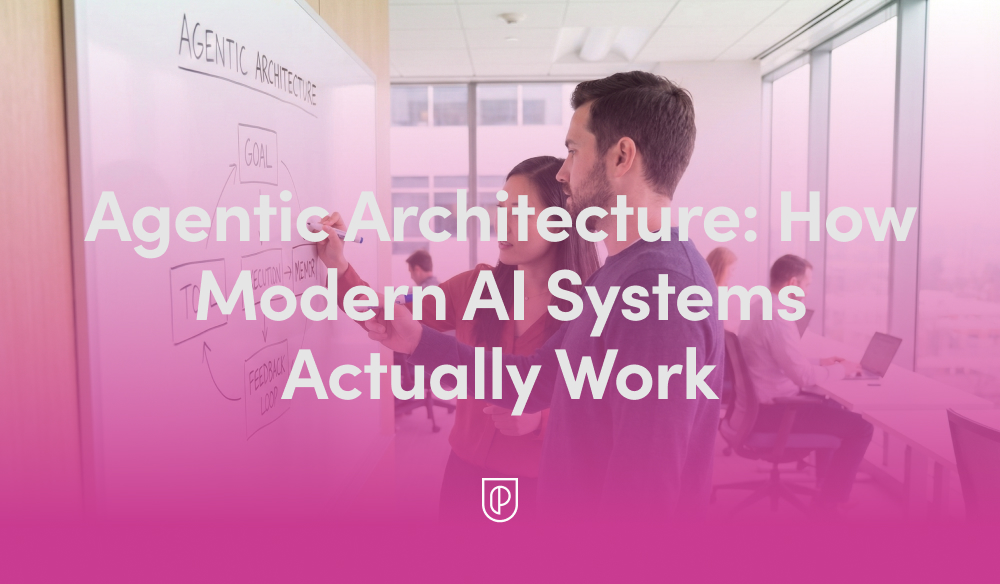
    In my role leading product teams at HighLevel, I’m often asked to explain what’s really happening behind the scenes of today’s AI products. The short answer is that modern systems are built on "Agentic Architecture: How Modern AI Systems Actually Work"—not just a single model, but a coordinated loop of planning, tool use, memory, and evaluation. Once you see that pattern, the design decisions snap into focus and the roadmap becomes far easier to prioritize.

    At its core, agentic AI treats the model as a reasoning engine embedded within an AI workflow. The agent interprets intent, plans steps, calls the right tools and APIs, grounds itself in trusted data, and then evaluates outcomes before deciding to continue or stop. This loop creates reliability, reduces hallucinations, and enables the system to operate in real-world, multi-step scenarios.

    Here’s the practical lifecycle I rely on. A user provides intent (a goal or request). We run a retrieval-first pipeline to ground the model in accurate, current data. Prompt engineering structures the task and primes the agent with constraints and success criteria while managing context window management. The agent generates a plan, executes steps by calling tools or services, evaluates intermediate results, reflects or revises as needed, and only then returns a final answer with clear citations or evidence.

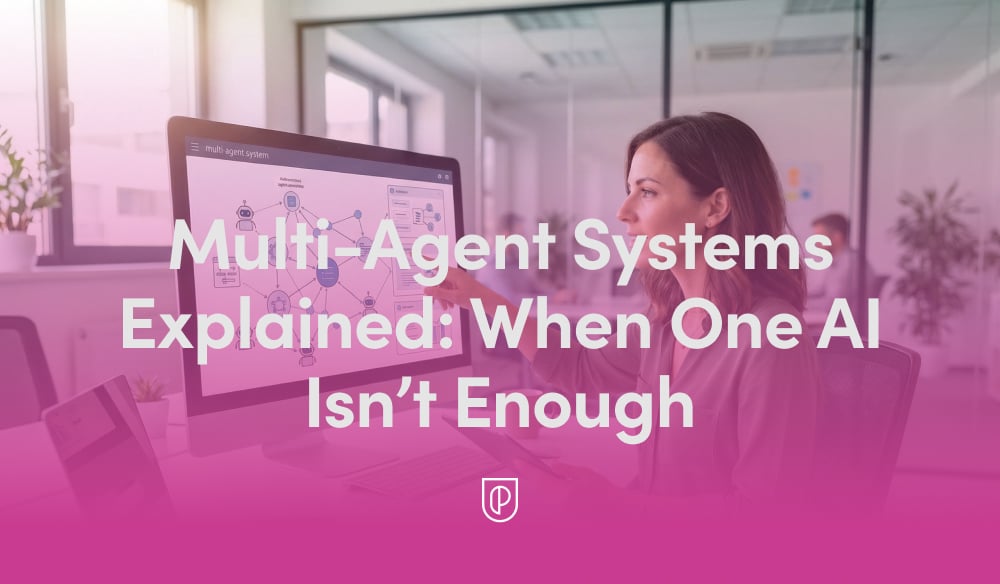
    For more complex work, I orchestrate multiple specialized agents—commonly a planner, a solver, and a critic—coordinated by a lightweight controller. This multi-agent pattern reduces single-agent blind spots, encourages self-checking, and mirrors how empowered product teams collaborate. Whether it’s conversation design for support flows or a voice AI agent driving hands-free tasks, orchestration is the difference between a clever demo and a dependable product.

    Memory is the second pillar. Short-term working context sits in the prompt, while long-term memory lives in vector stores or databases to track past interactions, preferences, and outcomes. Retrieval augments the model with the right facts at the right time, and tight context window management ensures the agent stays focused on signal, not noise. The result is faster responses, lower costs, and far better accuracy.

    Reliability is earned through eval-driven development and robust AI risk management. I define offline and online evaluations, guardrails, and human-in-the-loop checkpoints before scaling traffic. These evaluations become living, automated tests that protect against regressions as prompts, models, and tools evolve. The payoff is real: fewer escalations, higher trust, and measurable improvements to quality over time.

    From a product strategy perspective, I resist over-engineering. Start with a simple retrieval-first pipeline and a single agent; prove value; then layer in multi-agent orchestration only where it moves key metrics. Instrument everything—latency, cost, grounding coverage, and outcome quality—and build Agent Analytics dashboards so teams can diagnose issues and iterate with confidence.

    If you’re looking for a practical playbook, here’s mine: clarify the user intent and success criteria; design the tools the agent can call; ground with authoritative data; write prompts that constrain scope and define termination conditions; add reflection and automated evaluations; and ship behind feature flags for safe, staged rollout. Each step compounds reliability without killing velocity.

    The diagram and the video above bring these patterns to life. If you watch closely, you’ll see the same loop—plan, retrieve, act, evaluate—show up in every effective implementation, regardless of domain. That repetition isn’t accidental; it’s the backbone of agentic architecture and a blueprint you can adapt to your own stack.

    Ultimately, what matters is outcomes. When we build around agentic AI, we create systems that are explainable to stakeholders, maintainable by engineers, and genuinely helpful to customers. That’s how we move past hype to durable impact—shipping AI products that plan, learn, and execute at scale.


    Inspired by this post on Product School.


    Book a consult png image
  • Inside Amplitude’s AI Acquisition: Career Lessons Product Managers Can Use to 10x Impact

    Inside Amplitude’s AI Acquisition: Career Lessons Product Managers Can Use to 10x Impact

    I’m often asked how to translate early-stage experience into outsized product impact at scale. In my own practice, I study real career arcs that crystallize the habits of high-leverage product managers—especially those operating at the intersection of analytics and AI strategy.

    Consider this path: Lucas is a Product Manager at Amplitude. Previously, he was employee #1 at Command AI, acquired by Amplitude in October 2024. Lucas studied computer science at Princeton.

    What stands out to me is the compounding effect of being an early builder. When you are employee #1, you live close to the user problem, own outcomes end-to-end, and develop a bias toward focused, continuous discovery. That foundation creates durable instincts around product strategy, sharp prioritization, and empowered product teams—skills that transfer directly to later-stage environments where clarity and speed become competitive advantages.

    Acquisition integration is where those instincts meet enterprise rigor. Folding Command AI into a unified analytics platform like Amplitude requires disciplined product roadmapping and sprint planning, precise stakeholder management, and a strong POV on where AI augments core “Amplitude analytics” versus where it creates net-new value. The north star remains unchanged: deliver measurable customer outcomes that strengthen product-led growth and reduce time-to-value.

    On the AI front, I’ve seen the most successful PMs treat gen ai and LLMs for product managers as means, not ends. They anchor use cases to concrete analytics workflows—accelerating insight generation, surfacing anomaly detection, improving retention analysis, and driving user activation—while validating each step through continuous discovery and rigorous experiment design. This balance of ambition and evidence protects teams from shiny-object drift and keeps investment tethered to business impact.

    Execution-wise, the playbook is straightforward but unforgiving: clarify the problem through customer interviews; define crisp outcomes vs output OKRs; map the journey end-to-end; ship in thin slices; and iterate with observability baked into every release. Along the way, keep your cross-functional partners close—solutions engineering, customer success, and GTM—so that your learning loops extend beyond the product surface and into real adoption dynamics.

    If you’re building analytics or AI-powered experiences today, borrow these lessons: translate early-stage builder energy into enterprise-scale focus; make AI serve the product, not the other way around; and use Amplitude analytics to close the loop from idea to impact. That is how PMs compound credibility, accelerate careers, and, most importantly, create products customers can’t live without.


    Inspired by this post on Amplitude – Best Practices.


    Book a consult png image
  • Ship MVPs in Days, Not Months: My Proven Prompt Prototyping Playbook for Product Teams

    Ship MVPs in Days, Not Months: My Proven Prompt Prototyping Playbook for Product Teams

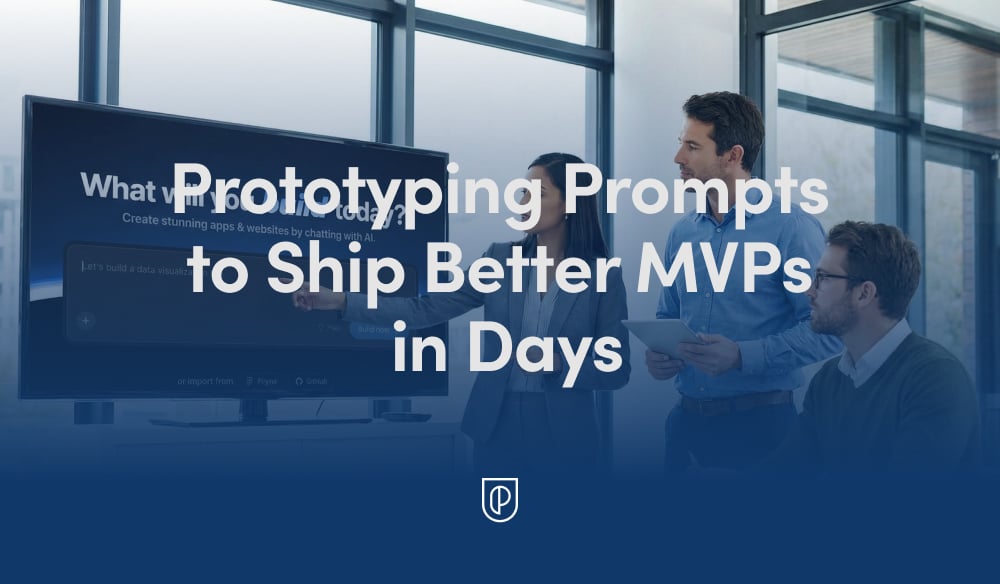
    Most MVPs take too long, cost too much, and still miss the mark. Over the past year, I’ve shifted my team to a prototyping prompts approach that lets us validate problem-solution fit in days, not months. The result is faster learning loops, clearer tradeoffs, and a dramatically higher hit rate on features that actually move the needle.

    When I say prototyping prompts, I mean structured, layered instructions that guide gen ai systems to produce the right artifacts at the right fidelity. Instead of jumping straight to code, we generate concise problem briefs, user stories, interaction flows, low-fidelity UI descriptions, and test plans. Each pass is constrained by acceptance criteria and business outcomes, which keeps the work grounded in value rather than output.

    Here’s the playbook my product trios use to go from idea to a testable MVP in 48–72 hours. First, we anchor on outcomes vs output OKRs and clarify the customer job-to-be-done using evidence from customer interviews and support data. This is classic continuous discovery, but we compress it by focusing on the single riskiest assumption to de-risk this week.

    Second, we build a prompt scaffold. We specify the role, constraints, target users, success metrics, and the exact output format we expect. We also define evaluation upfront, borrowing from eval-driven development. For example, before any generation, we list the acceptance tests that a good solution must pass, including edge cases and compliance considerations. This discipline keeps hallucinations in check and improves repeatability.

    Third, we spin up multiple prototypes in parallel. One prompt generates a lean product brief; another outlines user flows; a third proposes UI states and error handling. If we’re exploring voice, we add prompt engineering for voice to script dialogs and repair strategies. For data-heavy features, we call out retrieval-first pipeline patterns so the model references source-of-truth data rather than guessing.

    Fourth, we validate with real users using the lightest-weight experiment possible. Fake-door tests, concierge workflows, and guided click-throughs let us measure intent before we invest. Where we can, we run quick A/B testing and size the effort using minimum detectable effect (MDE) so we don’t over- or under-sample. The point isn’t perfection; it’s fast, directional signal to inform the next iteration.

    Fifth, we instrument and ship behind feature flags. We track activation, task completion, and time-to-value from day one. On the delivery side, we watch DORA metrics and deployment frequency to ensure we’re learning continuously rather than batching big bets. This bridges discovery and delivery so roadmaps reflect real-world feedback, not assumptions.

    One recent example: we needed to evaluate a voice AI agent for appointment scheduling. In 72 hours, prompts produced the problem brief, dialog flows, error recovery strategies, and a sandbox to simulate inbound requests across three user personas. We exposed a thin slice to a pilot cohort, captured call outcomes, and iterated the repair prompts twice before writing any production code. The pilot converted at a higher rate than our control flow and gave us the confidence to invest in full integration.

    This approach only works if we treat governance as a first-class concern. We bake in privacy-by-design, clear data governance boundaries, and AI risk management from the start. Prompts include guardrails on personally identifiable information, explicit constraints on data use, and links to approved sources. We also maintain a prompt repository with versioning and automated evaluations so changes are observable and reversible.

    Practically, strong prompt scaffolds share three traits. They’re specific about context and constraints, they define success in measurable terms, and they separate concerns by artifact type. I’ll often ask for three variants with different tradeoffs, then run a quick synthesis prompt that highlights points of parity and differentiation. This gives the team structured options rather than a single, brittle path.

    If you’re starting from zero, begin with one high-leverage workflow. Write a crisp outcome statement, draft your acceptance tests, and create a prompt that outputs a one-page brief, three user flows, and the top five risks with mitigations. Validate with five users in 48 hours, then decide: double down, pivot, or park. Rinse and repeat, and your product roadmapping and sprint planning will shift from speculation to evidence.

    The bottom line is simple. Prototyping prompts won’t replace product judgment, but they will accelerate it. By turning ideas into testable artifacts in hours, you minimize waste, maximize learning, and ship better MVPs—fast.


    Inspired by this post on Product School.


    Book a consult png image