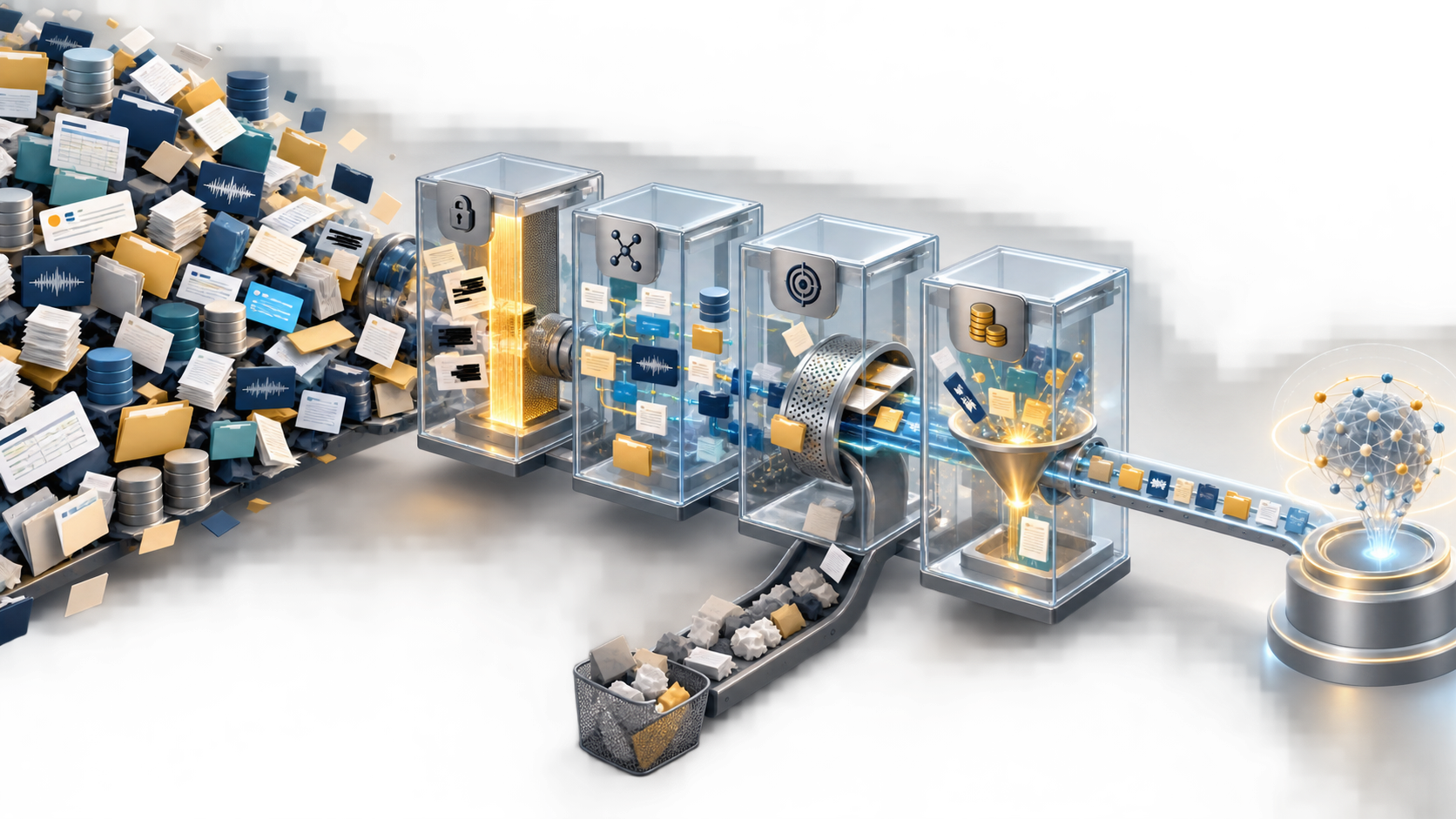
Build vs. buy is a decision that never truly goes away, and with AI reshaping the economics of software, I’m revisiting this question more frequently—and with more nuance—than ever. The temptation to “just build it” is real when prototypes are cheaper, shipping feels faster, and small tools can rival big platforms. But the real decision has never been about code; it’s about value, data, and long-term responsibility.
Across product orgs at every stage, I see the same pattern: AI makes building feel easier—but it doesn’t eliminate the tradeoffs. The hard part is separating what differentiates your product from what simply supports it. That’s why I start by asking whether the capability is truly core to my value stream, and then I force myself to reason about ownership and maintenance, not just velocity.
My rule of thumb remains simple: If something isn’t core to your value stream, don’t build it. And even when it is core, vendors may still be better positioned—especially for payments, invoicing, and infrastructure. Those domains carry deep operational complexity, continuous compliance, and reliability requirements that are easy to underestimate and painful to own.
Here’s how this plays out for me. I would never build my own blogging platform. I moved from WordPress to Ghost, because publishing isn’t where I differentiate, and the long tail of upgrades, security, and performance is a drag on focus. The platform does the job, my audience gets a better experience, and my team avoids owning commodity maintenance work.
On the other hand, I did build my own task management system—despite the abundance of excellent tools like Trello, Evernote, and OmniFocus. For me, tasks, notes, and workflows are deeply personal and idiosyncratic. I wanted my system to reflect how I think, plan, and communicate, with tight integration to my daily product rituals. In this case, the underlying data became the real product—and owning and controlling that data changed the equation.
That’s the heart of the decision: When the underlying data becomes the real product, ownership matters. Task management, notes, and workflows evolve into a personalized operating system. The moment your data model represents your unique value—and your future differentiation—build vs. buy is no longer a tooling choice; it’s a strategy choice.
AI is pushing this even further. Cheaper prototyping and “vibe coding” lower the cost of building. Tools like Claude Code and platforms from OpenAI make it viable to ship smaller, targeted tools that would have been uneconomical a few years ago. That expands the frontier of what teams can build without committing to a monolithic platform—and it puts pressure on vendors to improve data portability.
Which brings me to vendor lock-in. Exports aren’t always enough. When I evaluate CRMs or course platforms, I look for more than CSV dumps. I want robust, well-documented APIs, webhook coverage, import/export parity, schema transparency, and a clear migration path. I’ve seen teams drown in brittle integrations with Salesforce or HubSpot, struggle to unwind course data from Teachable, or get stuck in signature workflows around DocuSign without a clean escape hatch. Portability is table stakes now.
I treat build vs. buy as a discovery problem. Options are assumptions to test. On the build side, I run feasibility spikes: proof-of-concept integrations, latency checks, cost-to-serve models, and a sober read on maintenance. On the buy side, I trial vendors, not their marketing. I replicate a real workflow, test the edges, validate data portability, and simulate failure modes like vendor downtime or schema changes.
A word of caution on complexity: “we can build anything” is not the same as “we should build this.” Long-lived products accumulate hidden complexity over time—security, privacy, performance, observability, SRE runbooks, QA automation, documentation, and compliance. Be honest about engineering capabilities and maintenance costs, especially when uptime and regulatory exposure are in play.
My practical checklist looks like this: Is this core to our differentiation? Do we need to own the data model? How strong is data portability (APIs, webhooks, mapping, re-import)? What’s the true total cost of ownership over three years (people, ops, security, compliance)? Are there regulatory or reliability constraints better handled by a vendor? What’s the opportunity cost of not building something more strategic? And if we buy, what’s our exit plan?
Ultimately, build vs. buy isn’t just about speed or cost—it’s about core value, data ownership, and long-term responsibility. AI lowers the barrier to building, but it doesn’t erase complexity. Treat build vs. buy decisions like any other discovery effort: test assumptions, prototype, and validate before committing. Ask not just can we build it, but should we own it?
If you’re wrestling with vendor lock-in, fielding pressure to “just build it,” or rethinking your stack in an AI-first world, this lens will help you ask better questions before you commit. And if you’re exploring targeted builds alongside platforms like Stripe, Dropbox, Obsidian, or Ghost, I’d love to hear what’s working for you and where portability remains a hurdle.
Inspired by this post on Product Talk.