

I recently had a deep-dive conversation with Mark Frein, the Chief People Officer & Head of Alumni Programs at Lambda School. Previously, Mark served as the Chief People Officer at both InVision and Return Path. He also ran his own leadership development consultancy and taught on HR topics as an adjunct professor. As someone who scales product organizations, I was energized by how his people-first principles map directly to product management leadership.
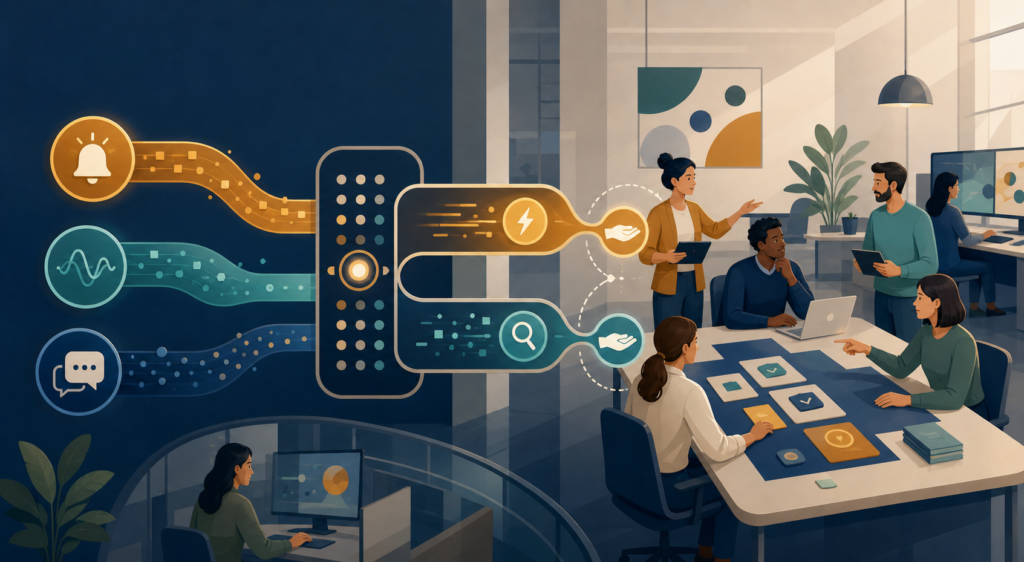
Mark has an invaluable perspective and tons of advice to share after setting up several people orgs in a range of different companies. In our discussion, he shared his approach to the CPO role and his philosophy around the function more generally, including why he thinks at its core, it’s a data and analytical function and how to match the employee experience to your company’s competitive positioning. From my vantage point, that alignment looks like building clear hypotheses, instrumenting the employee journey, and iterating based on signals—exactly how we pursue product-market fit internally.
He also gets incredibly tactical on a wide range of topics, from how to hire with empathy and advice for approaching skip-levels, to gathering employee feedback and driving career conversations. I translate these into playbooks my teams can use: structured, empathy-forward hiring; predictable skip-level rhythms; always-on feedback loops; and career frameworks that make growth expectations explicit.
On hiring with empathy, I lean on behavioral evidence, job simulations, and transparent expectations to reduce bias and improve candidate experience. When we model empathy from the first touchpoint, we accelerate trust, improve close rates, and lay the foundation for employee retention at startups.
For skip-levels, I approach them as discovery interviews—open, curious, and non-defensive. I triangulate themes across teams, synthesize the data, and close the loop publicly so people see action. That transparency compounds trust and gives me the earliest possible signal on risks and opportunities.
When it comes to gathering employee feedback, I blend lightweight pulse surveys with qualitative listening tours and manager office hours. The key is to turn insights into visible change, or we create survey fatigue. We anchor this work to outcomes vs output OKRs so we’re optimizing for impact, not activity.
Driving career conversations requires clarity. I publish ladders, competency matrices, and sample development plans, then coach on the IC to manager transition for those who want to lead. Empathy training for managers helps them ask better questions, calibrate feedback, and co-create growth paths that match both ambition and business needs.
If you’re a founder or early-stage people leader, this approach will help you scale the people function with intention. If you’re a current or aspiring manager, these tools sharpen your leadership and development chops. Most importantly, they weave empathy and data into a single operating system for your culture.
Inspired by this post on First Round.








Leave a Reply