I’ve led enough multi-tool product organizations to know how quickly momentum erodes when insights and actions live in different places. When my teams bounce between Notion, Atlassian, Slack, Linear, and analytics dashboards, we pay a real tax in context switching. That’s why I’m excited about what Amplitude is enabling with Agent Connectors—bringing our daily work and our data-driven decisions into one fluid, agentic AI workflow.
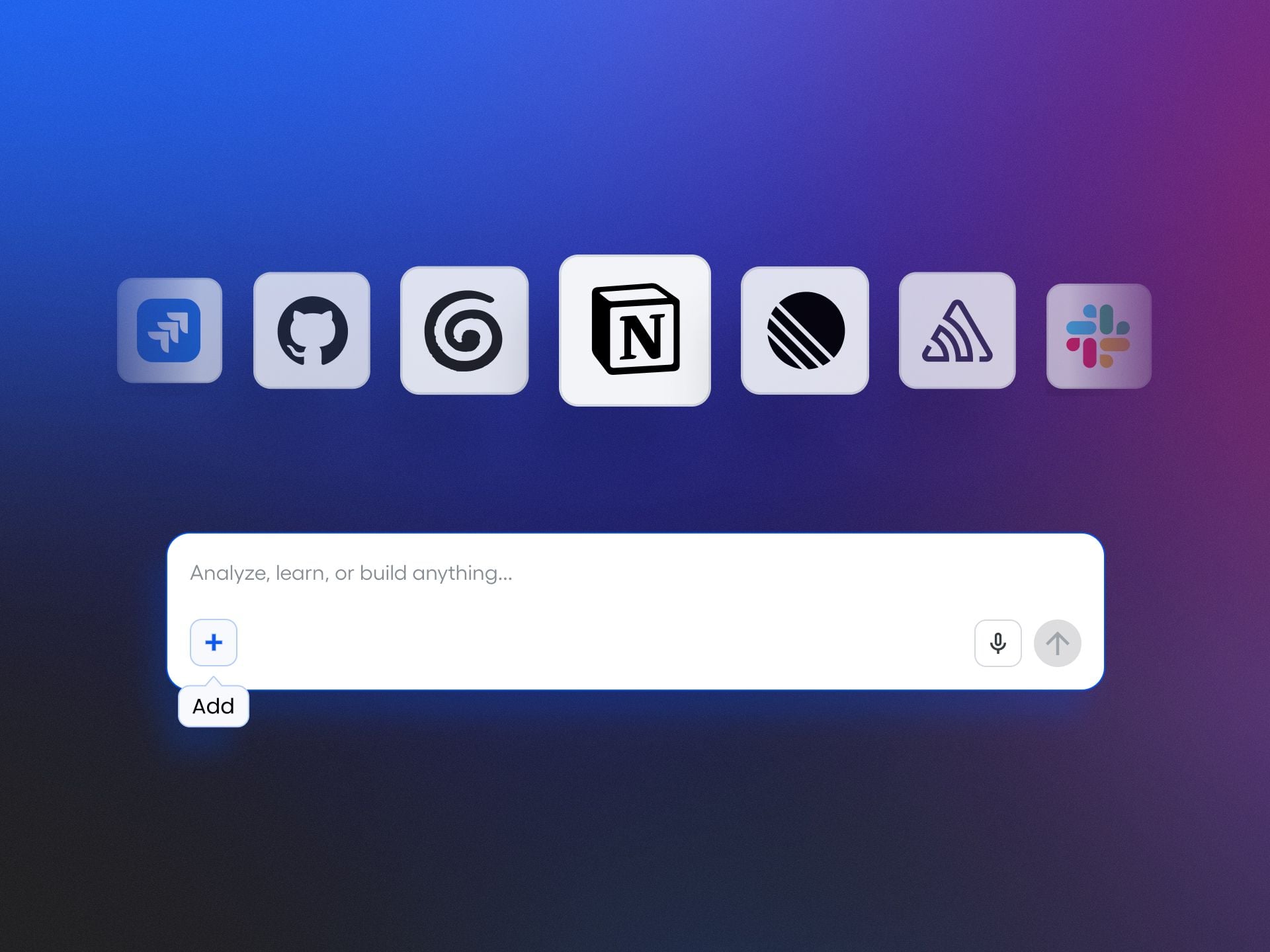
Connect Notion, Atlassian, Slack, Linear, and more to Amplitude's Global Agent. Get richer analysis and take action across tools without leaving Amplitude.
Practically, this means I can treat Amplitude analytics as a unified analytics platform where analysis and execution finally meet. Instead of exporting charts or copying insights into docs, I can drive Agent Analytics directly from the same surface where I manage behavioral analytics, reducing friction and accelerating decisions. For my product strategy, that’s a meaningful shift—from “insight later” to “insight-to-action now.”
Here’s how I’d use it on a typical day: I ask the agent to synthesize signals from recent feature usage, spotlight anomalies, and then draft a concise summary for our Slack channel. In the same flow, I can prompt it to reference our Notion specs for context and queue next steps in Linear, keeping Atlassian stakeholders looped in without any extra swiveling between tabs. The value isn’t just faster execution; it’s tighter alignment across teams because the analysis and the plan live together.
From an operating model perspective, this is how I scale AI workflows responsibly. I can define clear prompts, approval paths, and ownership so the agent augments—not replaces—expert judgment. Data governance and permissions remain front and center: the agent sees what your teams are allowed to see, and we maintain auditability on critical workflow steps. The outcome is a trustworthy, repeatable system that compounds learning over time.
If you’re exploring agentic AI for product teams, start small and instrument your ROI. Pick one or two connectors (Slack and Notion are great first choices), define a measurable workflow—like pushing weekly retention insights and creating prioritized follow-ups in Linear—and iterate using continuous discovery. In my experience, the first wins appear as reduced time-to-insight, fewer meetings to align, and faster cycle time from observation to shipped change.
The big picture is simple: bring your work to your analytics, and your analytics to your work. With Agent Connectors, Amplitude’s Global Agent helps close the loop from understanding behavior to taking action—without leaving the place where your insights are born.
Inspired by this post on Amplitude – Best Practices.