Tag: product roadmapping and sprint planning

  • From KPIs to Comebacks: How I Lead Through Setbacks with Curiosity, Care, and Discovery

    From KPIs to Comebacks: How I Lead Through Setbacks with Curiosity, Care, and Discovery

    Setbacks are the tax we pay for doing meaningful product work. As a VP of Product Management, I’ve learned that what separates resilient teams from the rest isn’t a lack of failures—it’s how we metabolize them. This episode of All Things Product with Teresa Torres and Petra Wille is a powerful reminder that recovery, reflection, and rigorous product discovery are as essential as speed and execution.

    Listen to this episode on: Spotify https://open.spotify.com/episode/10LYRya7boYJBHTYBnE79E?ref=producttalk.org | Apple Podcasts https://podcasts.apple.com/kh/podcast/dealing-with-setbacks/id1794203808?i=1000737190520&ref=producttalk.org

    What struck me most is how Teresa shares a deeply personal story about her long recovery from an injury—and how that journey mirrors the nonlinear reality of product development. In product, just like in healing, progress is rarely a straight line. We have surges, stalls, and moments that feel like reversals. Yet with the right mindset and rituals, we still move forward.

    Professionally, we all face moments when your product fails to move a single KPI, when a launch falls flat, or when you just feel stuck. I’ve been there—in quarterly reviews, post-launch standups, and board prep. The instinct is to sprint straight into solutions. The wiser move is to respond with curiosity, emotional honesty, and resilience, then re-engage our discovery habits with intention.

    If you’re a PM, designer, or researcher, consider this an invitation to rebalance. Recovery and reflection are just as important as velocity and success. That’s not soft talk—it’s how empowered product teams build durable performance without burning out.

    On the emotional reality of setbacks, I’ve learned to normalize naming the loss. We put immense pressure on ourselves, and it’s okay (and necessary) to grieve product failures. When we acknowledge the disappointment, we regain the ability to observe clearly—and to learn.

    Leaders play a crucial role here. I create space for teams to recover before jumping into post-mortems. We don’t whiteboard over feelings; we schedule time for decompression, then conduct a crisp, blameless review. That sequencing transforms the quality of insights and strengthens psychological safety.

    Another lesson that resonates is the danger of tying performance too tightly to outcomes. Outcomes matter, but they are lagging indicators influenced by many externalities. I evaluate performance on behaviors: clarity of problem framing, rigor in discovery, quality of decision-making, and stakeholder alignment. This aligns with outcomes vs output OKRs and keeps us focused on controllable excellence.

    How do we build resilience? Continuous discovery builds resilience by normalizing failure. When we test assumptions routinely with customers and data, we turn large, risky bets into a series of small, learnable steps. Teams recover faster because failure becomes feedback—frequent, cheap, and informative.

    For perspective, I often use the 10–10–10 framework (from Decisive by Chip & Dan Heath). I ask: How will this setback feel in 10 minutes, 10 months, and 10 years? The answers de-escalate urgency, expand our time horizon, and produce better, calmer decisions.

    Here are the key takeaways I’m carrying forward. Setbacks are not just inevitable—they’re part of doing meaningful product work. Giving teams time and space to process failure builds long-term resilience. Mourning losses is just as important as celebrating wins.

    Healthy discovery cultures embrace reflection, psychological safety, and emotional honesty. And most importantly, staying consistent with discovery habits helps teams recover faster and learn more deeply.

    Notable moments that stood out for me include: [00:02:00] Teresa shares the story of her injury and what it’s taught her about patience and setbacks. The parallel to product cadence is both humbling and motivating.

    [00:10:00] Petra talks about a team whose carefully planned launch didn’t move a single KPI. I’ve led similar debriefs; when we anchor on customer insight gaps rather than blame, the next iteration improves dramatically.

    [00:20:00] Discussion on allowing space for grief and frustration after failure. In my teams, we time-box “emotional processing” before we enter analysis mode—it humanizes the work and sharpens the learning.

    [00:30:00] Why organizations must decouple performance reviews from short-term outcomes. I align evaluations to strategy execution quality, hypothesis discipline, and cross-functional collaboration.

    [00:40:00] How continuous discovery can help teams normalize—and even learn to appreciate—setbacks. When discovery is weekly, momentum becomes self-healing.

    If you want to dig deeper, here are useful links from the episode. Follow Teresa Torres: https://ProductTalk.org

    Follow Petra Wille: https://Petra-Wille.com

    Mentioned in the episode: Decisive by Chip & Dan Heath — The 10–10–10 framework for perspective in decision-making https://heathbrothers.com/books/decisive/?ref=producttalk.org

    Teresa Torres’ Continuous Discovery Habits — Building resilience through ongoing discovery practices. https://www.amazon.com/Continuous-Discovery-Habits-Discover-Products/dp/1736633309?dchild=1&keywords=continuous+discovery+habits&qid=1621385051&sr=8-2&linkCode=sl1&tag=teresatorres-20&linkId=34bc439ac78da06e1398f7bf069b219e&language=en_US&ref_=as_li_ss_tl&ref=producttalk.org

    Join the Conversation: Have thoughts on this episode? Leave a comment below. I’d love to hear how you create space for recovery while sustaining product velocity.

    Full Transcript: Full transcripts are only available for paid subscribers.


    Inspired by this post on Product Talk.


    Book a consult png image
  • Inside PendomoniumX London: AI Transformation, Real-World Wins, and Product Innovation

    Inside PendomoniumX London: AI Transformation, Real-World Wins, and Product Innovation

    Walking into PendomoniumX London, I could feel the AI revolution hitting its stride. The conversations were sharper, the demos more grounded, and the outcomes more measurable—a clear signal that AI Strategy is moving from slideware to shipped value in modern product management. PendomoniumX’s sixth stop brought 350+ software leaders together for a day of AI transformation, real-world stories, and product innovation. What stood out to me was the shift from hype to execution. Teams compared playbooks for gen ai and Generative AI, shared lessons from LLMs for product managers, and showed how they’re threading AI into product discovery, product roadmapping and sprint planning, and go-to-market motions. The focus was pragmatic: drive adoption, accelerate time-to-value, and make better decisions with cleaner signals. On the product-led growth front, I saw compelling examples of using Pendo’s in-app guides and product tours to increase user activation and reduce friction in key onboarding moments. When AI-enhanced experiences are paired with clear guidance and behavioral analytics, customers don’t just try features—they build habits. What I appreciated most were the leadership narratives: empowered product teams aligning around outcomes, candid retros on where AI prototypes missed the mark, and crisp frameworks for prioritizing the highest-leverage bets. The conference networking felt purposeful, with operators trading hard-won insights on experimentation velocity, data governance, and building trust into AI-infused experiences. My takeaway: AI is no longer a side project—it’s a core capability in product management. If we anchor our AI Strategy in clear customer problems, instrument for learning, and iterate with discipline, we can consistently turn innovation into impact. And with the right mix of PLG mechanics, in-app education, and thoughtful design, those gains compound across the product lifecycle.

    Inspired by this post on Pendo – Perspectives.


    Book a consult png image
  • How I Use ChatGPT to Supercharge PM: Smart Workflows, Killer Prompts, and Real-World Wins

    How I Use ChatGPT to Supercharge PM: Smart Workflows, Killer Prompts, and Real-World Wins

    Every week, I lean on ChatGPT to cut through noise, reduce rework, and move faster with more confidence. It’s not a silver bullet, but it has become an unfair advantage in my day-to-day leadership of product strategy, discovery, and delivery. Unlock workflows, prompts, and real PM tips showing how ChatGPT quietly reshapes product management behind the scenes.

    Here’s my stance: ChatGPT doesn’t replace product judgment. It amplifies it. Used well, it accelerates product discovery, clarifies roadmaps, sharpens positioning, and strengthens stakeholder management. Used poorly, it creates noise and risk. What follows are the specific workflows and prompts that reliably save me hours while protecting quality and trust.

    Discovery and research are where I see the biggest upside. I use ChatGPT to draft interview guides, transform raw notes into theme clusters, and generate “Jobs to Be Done” problem statements—then I validate them with customers. I anonymize inputs to protect privacy and follow privacy-by-design and data governance commitments; AI risk management matters more than ever when we’re handling real user data.

    When I move from insight to definition, ChatGPT helps me spin up crisp PRDs and user stories. I provide context about our users, constraints, and success metrics and ask for structured outputs: goals, non-goals, acceptance criteria, and risks. This keeps our product trios aligned and focused on outcomes vs output OKRs, not just shipping features.

    For competitive analysis and positioning, I feed in public information and ask for points of parity, points of differentiation, and potential messaging angles. I treat the output as a starting point for my value proposition and battlecards—not the final word. It’s a fast way to surface hypotheses and pressure-test our product-led growth narrative.

    Roadmapping and sprint planning also benefit. I use ChatGPT to map dependencies, draft milestone narratives, and transform epics into well-formed backlogs. When we align quarterly plans, I ask for risk scenarios and contingency options so we can make trade-offs explicit before we commit.

    On analytics and experiments, ChatGPT is my drafting partner. It helps me define A/B testing plans, clarify the minimum detectable effect (MDE), and outline instrumentation requirements. I still verify numbers in our analytics stack, but the scaffolding is done in minutes, not hours—freeing me to focus on retention analysis and activation levers.

    Stakeholder communication is where the time savings compound. I use ChatGPT to produce executive summaries, QBRs vs OKRs comparisons, and board-ready narratives that highlight outcomes, risks, and next steps. It’s a powerful way to stay crisp and consistent across leadership updates without losing the nuance that matters.

    Prompt patterns make or break results. I keep four rules: set the role, provide rich context, define constraints, and specify the output format. For example: “You are a senior PM advisor. Context: [user, market, problem]. Constraints: [privacy, timeline, budget]. Output: PRD with goals, acceptance criteria, and risks.” With larger inputs, I use context window management by chunking content and asking for summaries before synthesis.

    For internal knowledge, I lean on a retrieval-first pipeline. Instead of pasting long docs, I reference curated, approved sources so answers track to current reality. CustomGPT workflows and a simple ChatGPT connector help with governance: they increase speed while reducing the chance of hallucinations and stale information.

    Guardrails are non-negotiable. We never paste sensitive data into prompts; we redact PII, spot-check against source-of-truth systems, and red-team important outputs. AI risk management isn’t just a checkbox—it’s how we maintain trust while scaling productivity with gen ai.

    Finally, enablement turns personal productivity into team capability. I run short playbooks for empowered product teams: discovery synthesis, PRD drafting, roadmap storytelling, and stakeholder-ready updates. The result is higher-quality thinking, faster cycles, and fewer meetings to align on the essentials.

    ChatGPT for product managers isn’t hype; it’s a practical edge when you apply discipline. Start with one workflow that drains your time, add a prompt template, and measure the outcome. In a week, you’ll have proof. In a quarter, you’ll have a new operating system for how your team learns, decides, and ships.


    Inspired by this post on Product School.


    Book a consult png image
  • Taming 1,000+ Vendor Emails: How Xelix’s AI Helpdesk Delivers Fast, Confident Answers

    Taming 1,000+ Vendor Emails: How Xelix’s AI Helpdesk Delivers Fast, Confident Answers

    Chaos in vendor communications is a problem I see across finance operations: sprawling accounts payable inboxes, slow response times, and missed context. That’s why this build caught my attention—not just because it’s GenAI, but because it’s a disciplined product strategy that converts email overload into measurable outcomes.

    Accounts payable inboxes can see 1,000+ vendor emails a day. Xelix’s new Helpdesk turns that chaos into structured tickets, enriched with ERP data, and pre-drafted replies—complete with confidence scores.

    I dug into the end-to-end approach with the team—Claire Smid — AI Engineer, Xelix; Emilija Gransaull — Back-End Tech Lead, Xelix; Talal A. — Product Manager, Xelix—focusing on how they scoped the problem, iterated fast, and de-risked AI in production.

    Their product thesis is refreshingly pragmatic. They prototyped with “daily slices” (Carpaccio-style) and built a retrieval-first pipeline that matches vendors, links invoices, and drafts accurate responses—before a human ever clicks “send.” That framing matters: enrichment and matching take center stage, with the model amplifying precision instead of improvising.

    We unpacked the tricky bits that make or break an AI helpdesk at scale: vendor identity matching, Outlook threading, UX pivots from “inbox clone” to ticket-first views, and the metrics that prove real impact (handling time, stickiness, auto-closed spam). The pipeline architecture and email processing choices were grounded in operational realities, not just AI aspirations.

    Several takeaways are worth pinning to any AI product roadmap. “Start narrow to win: pick high-volume, high-cost requests (invoice status & reminders).” “Enrichment > magic: accurate replies come from great retrieval/matching, not just a bigger LLM.” “Design for adoption: familiar inbox view helps onboarding, but a ticket-first UI unlocks AI features.” These are the kinds of decisions that drive adoption, trust, and ROI.

    Data enrichment challenges dominated early learning curves: stitching ERP context into tickets, handling vendor identification at scale, managing email thread continuity, and calibrating response generation for accuracy. On the generation side, the team emphasized precision over verbosity—clean responses that reflect system-of-record truth—then instrumented the experience to “Evaluate System Performance” with production-grade telemetry.

    Trust was treated as a product feature. “Measure outcomes, not vibes: track ‘messages sent from Helpdesk’, % auto-resolved.” And critically, “Confidence builds trust: show match quality and response confidence so humans know when to edit.” By surfacing match quality and confidence scores, they shortened coaching loops and made human-in-the-loop supervision feel natural, not burdensome.

    What’s next is equally compelling: “targeted generation, multiple specialized responders, and more agentic routing.” That direction aligns with agentic AI patterns I recommend for operations-heavy workflows—route first, retrieve deeply, then generate with intent. It’s a scalable path from assistive AI to autonomous resolution while maintaining governance and auditability.

    If you want a quick map of the journey, the conversation flowed from 0:00 Meet the Team: Claire, Emilija, and Talal, 00:36 Introduction to Xelix and Its Products, 01:08 Understanding Accounts Payable Teams, 01:37 Help Desk Product Overview, 03:11 Challenges Faced by Accounts Payable Teams, 04:03 AI Integration in Help Desk, 05:47 Automating Reconciliation Requests, 07:45 Development Methodology: Carpaccio, 09:11 Prototyping and Beta Testing, 12:00 Manual Tagging and Data Collection, 16:39 Focusing on High-Impact Use Cases, 18:55 User Experience and Interface Design, 24:56 Pipeline Architecture and Email Processing, 28:21 Data Enrichment Challenges, 29:04 Handling Vendor Identification, 33:33 Email Thread Management, 36:15 Generating Accurate Responses, 40:48 Evaluating System Performance, 49:20 Future Developments and Goals.

    My takeaway for product leaders: when the domain is high-volume and rules-heavy (like AP), retrieval-first beats model-first. Start with the narrowest, costliest intents; prove lift with “messages sent from Helpdesk” and “% auto-resolved”; then graduate UX from familiar to AI-native (ticket-first) once trust is earned. That’s how you turn vendor chaos into answers—reliably, scalably, and fast.


    Inspired by this post on Product Talk.


    Book a consult png image
  • Global Invoicing Nightmares: Hard-Won Product Lessons on EU Tax, Compliance, and Customer Value

    Global Invoicing Nightmares: Hard-Won Product Lessons on EU Tax, Compliance, and Customer Value

    I hit play on Global Invoicing – All Things Product Podcast with Teresa Torres & Petra Wille and felt an immediate jolt of recognition. We’ve all launched a feature that looked solid—until a small, overlooked detail broke everything. Their stories about global invoicing and taxes echoed challenges I’ve faced leading product for international customers: if you don’t design for the last mile of compliance, you can accidentally block the very "moment of value creation" your product promises.

    Listen to this episode on: Spotify | Apple Podcasts

    The conversation starts as a candid rant about EU tax compliance and quickly becomes a precise product management lesson: when we fail to map the entire path to customer value—down to the tiniest regulatory requirement—we can ship something “done” that still doesn’t work in the real world. That gap between intention and outcome is where good product teams live or die.

    In my experience, the nightmare of global invoicing for small online businesses is very real. Even big platforms (like Squarespace and Teachable) miss the mark on EU tax compliance, and when they do, customers feel it immediately. It’s the kind of edge case that doesn’t show up in a demo but absolutely shows up in revenue. Or as Teresa put it, “It’s not a little detail when your client won’t pay the invoice.” — Teresa Torres

    I appreciated how the episode digs into the difference between passing a regulatory checklist and actually meeting customer needs. Put plainly: the product isn’t “done” when the ticket moves to Done; it’s done when the customer completes the job—receives an acceptable invoice, pays successfully, and can reconcile it without friction. That’s why I lean hard on story mapping for regulatory work; it exposes the invisible steps where value creation can silently fail.

    Here’s how the episode resonates with my own playbook: the nightmare of global invoicing for small online businesses is a systems problem; why even big platforms (like Squarespace and Teachable) miss the mark on EU tax compliance is a prioritization and discovery problem; how Petra and Teresa navigated invoicing across borders with Ableify and LearnWorlds highlights pragmatic tool choices and trade-offs; the key difference between meeting regulations and meeting customer needs is an outcomes-over-output mindset; what product teams can learn from regulatory edge cases is how to find the seams where markets, laws, and workflows collide; how missing a single detail can block the "moment of value creation" is a reminder that value is defined by customers; and why story mapping is critical for finding gaps between "we shipped it" and "customers got value" is the method that connects all of the above.

    Practically, that means I treat regulatory features like any other high-stakes product surface: do real product discovery with affected users; co-design the happy path and the ugly edge cases; write acceptance criteria that include jurisdictional and document-level specifics (e.g., VAT numbers, invoice formats, timing rules); align with finance and legal early; and instrument the journey from invoice issued to invoice paid so we can see where real customers get stuck. This is outcomes vs output OKRs in action, and it’s one of the fastest ways to earn trust with stakeholders.

    Key takeaways worth bookmarking: Customers define value, not your compliance checklist. Regulatory work still requires discovery—you can’t skip understanding user needs. The path to value doesn’t end when your feature works; it ends when your customer succeeds. “Sweating the details” isn’t micromanagement—it’s good product management.

    Memorable quotes to bring back to your team: “If you don’t sweat the details, people choose other platforms.” — Petra Wille. “It’s not a little detail when your client won’t pay the invoice.” — Teresa Torres.

    Follow Teresa Torres: https://ProductTalk.org | Follow Petra Wille: https://Petra-Wille.com

    Mentioned in the episode: Squarespace | Stripe | Product at Heart | Teachable | LearnWorlds | Ablefy | Become a Better Product Leader: A 52-Week Transformation Journey | Product Talk Academy

    Have thoughts on this episode? Leave a comment below.

    Full transcripts are only available for paid subscribers.


    Inspired by this post on Product Talk.

    Book a consult png image
  • From Sketch to Clickable Demo: My AI Prototyping Playbook to Build Apps in Hours

    From Sketch to Clickable Demo: My AI Prototyping Playbook to Build Apps in Hours

    I’ve spent much of my career compressing the distance between a napkin sketch and something real customers can touch. At HighLevel, my product teams use generative AI to validate ideas faster, reduce risk earlier, and win stakeholder trust with evidence instead of slides. The goal isn’t to be flashy—it’s to be precise, testable, and repeatable.

    Today, you can build it before you pitch it. AI prototyping can turn ideas into clickable demos in hours. Here are some tools to try and steps to follow.

    I start every AI prototyping sprint by sharpening the problem statement and the outcome we care about. That means being explicit about the target user, jobs-to-be-done, and the riskiest assumptions. I define a minimum detectable effect (MDE) and tie it to outcomes vs output OKRs so everyone aligns on what “good” looks like before we touch a tool.

    From there, I move from sketch to interface. I capture a rough flow (whiteboard, tablet, or even paper) and generate UI variations with my AI product toolbox—tools that translate structure into components and screens. I’ll iterate on information hierarchy and copy until the narrative supports the core job, borrowing techniques from UX writing. For product managers leaning into LLMs for product managers, this phase is about speed to feedback, not perfection.

    Next, I wire data and logic. I connect a lightweight backend or spreadsheet, stitch in a CRM integration if needed, and add LLM calls through a ChatGPT connector or Claude Code. If the concept benefits from multi-step autonomy, I introduce agentic AI to orchestrate tasks across APIs. CustomGPT workflows help me encapsulate business rules so the demo behaves consistently in user paths we care about.

    Governance is not optional at this stage. I apply privacy-by-design defaults, document data governance decisions, and run a quick AI risk management pass: input validation, prompt safety, rate limits, and fallback responses. This keeps the prototype credible and prevents false positives from polluting stakeholder perception.

    With a click-through in hand, I instrument the experience so learning compounds. I drop in Amplitude analytics to track activation, task completion, and drop-off, and set up simple A/B testing when there’s a meaningful design or copy choice. This makes the prototype a learning vehicle, not just a demo.

    Then I get it in front of users—fast. Five targeted conversations will beat fifty internal opinions. I run structured product discovery interviews, observe time-to-value, and capture objections. This is where empowered product teams shine: we make changes in real time, re-run the flow, and document what moves the needle for product-led growth.

    When speed matters, I use a four-hour cadence: Hour 1 for problem framing and MDE; Hour 2 for sketch-to-UI generation; Hour 3 for data wiring and AI logic; Hour 4 for instrumentation and user walkthroughs. By the end, we have a clickable demo, preliminary analytics, and a clear decision on whether to advance, pivot, or park.

    Finally, I translate insights into a concise artifact: the hypothesis we tested, the signal we observed, the trade-offs we made, and the next sprint plan for product roadmapping and sprint planning. The point is not to be right on the first try; it’s to learn precisely, cheaply, and quickly enough to invest with conviction.

    If you adopt this approach, you’ll find that stakeholder management becomes easier, team energy rises, and your roadmap earns credibility. Build it before you pitch it, and let real interactions—not wishful thinking—do the heavy lifting.


    Inspired by this post on Product School.


    Book a consult png image
  • Prototypes vs Products: How I De-risk Ideas Fast and Ship Reliable Value at Scale

    Prototypes vs Products: How I De-risk Ideas Fast and Ship Reliable Value at Scale

    Note: This is part of the product creator series of articles, based on the overview article, The Era of the Product Creator. This series is for anyone who wants to create a successful product—whether or not you’ve had formal training or experience in product management, product design, or engineering. Over the years, I’ve watched smart teams stumble because they treated a prototype like a product. The distinction is simple but vital: prototypes exist to learn; products exist to earn trust by delivering value reliably at scale. When we blur that line, we ship avoidable risk to customers and slow ourselves down later with rework. When I build a prototype, I’m testing assumptions as quickly and cheaply as possible. It might be a clickable Figma mock, a Wizard‑of‑Oz demo, or a quick script stitching together a ChatGPT connector with a CustomGPT workflow. It’s intentionally disposable. I expect missing edge cases, fake data, hand‑waving on latency, and limited attention to security or privacy. The only goal is to answer the riskiest questions fast. A product is a promise. It’s hardened for reliability, performance, security, and privacy‑by‑design. It’s observable with real analytics, supports CI/CD and rollback, meets accessibility guidelines, and can be maintained by empowered product teams. It has clear SLAs, incident management runbooks, and instrumentation that lets me track outcomes vs output OKRs and DORA metrics. Keeping prototypes and products separate makes us faster and safer. Prototypes accelerate discovery; products operationalize value. If I catch myself “polishing” a prototype, I pause and either discard it or define the path to production with the right engineering rigor, data governance, and stakeholder management. Here’s how I decide. In prototype mode, I timebox learning to days, not weeks, and focus on a single risky assumption—value, usability, or feasibility. I validate through qualitative research and usability tests, not vanity metrics. To graduate to product work, I require a crisp problem statement, evidence of problem‑solution fit, a technical plan for scale and observability, a privacy and threat modeling review, and a measurement plan (including minimum detectable effect) for upcoming A/B testing. AI adds new wrinkles. For gen AI and agentic AI, I evaluate model behavior offline before exposing anything to customers. That includes prompt design, context window management, guardrails to minimize hallucinations, and clear fallback strategies. I define red‑team scenarios, logging for auditability, and policies for data retention and encryption as part of AI risk management. A recent example: we prototyped an agent workflow in a day that felt magical in demos. We resisted the urge to ship. Instead, we added authentication, rate limiting, PII redaction, human‑in‑the‑loop review, observability, and in‑app guides and product tours for onboarding. Only then did we move to a limited release with a well‑defined go‑to‑market strategy and support readiness. One more trap to avoid: calling a prototype an MVP. An MVP is still a product—minimal in scope but complete enough to deliver value, gather trustworthy data, and support customers. If you wouldn’t put your name on it or support it in production, it’s a prototype, not an MVP. If you’re a product creator, align your product trios around this discipline. Use prototypes to learn quickly in discovery, and use products to deliver outcomes in delivery. That mindset protects customer trust, speeds iteration, and moves you toward product‑market fit with far less waste.

    Inspired by this post on SVPG.


    Book a consult png image
  • AI Context Pulling Playbook: How I Make Humans + LLMs Collaborate for Sharper Product Outcomes

    AI Context Pulling Playbook: How I Make Humans + LLMs Collaborate for Sharper Product Outcomes

    Over the last few years, I’ve learned that the fastest path to better product outcomes isn’t “more prompts,” it’s better context. When I combine thoughtful product judgment with disciplined context window management, LLMs become true partners—accelerating discovery, sharpening strategy, and improving execution.

    Learn a new way in which product professionals can collaborate with AI to get even better results on their projects.

    When I say “AI context pulling,” I’m talking about the intentional process of assembling, structuring, and compressing the right product evidence—customer insights, metrics, constraints, and goals—so an LLM can reason effectively. For LLMs for product managers, the win is simple: by feeding the right inputs and framing the right outcomes, we turn generic AI into a strategic co-pilot for Product Management and AI Strategy.

    I start by clarifying intent through outcomes vs output OKRs. Before I ask an LLM to ideate, critique, or plan, I anchor it in the product problem, the measurable outcomes we seek, and the guardrails we cannot cross (risk, privacy, brand). This keeps the collaboration focused and aligned with stakeholder management expectations.

    Next, I build a tight “context packet.” I pull customer quotes from discovery notes, usage trends from our unified analytics platform and Amplitude analytics, funnel friction from Intercom transcripts, and commercial constraints from HubSpot data. Then I summarize, deduplicate, and highlight contradictions—so the model gets the signal, not the noise.

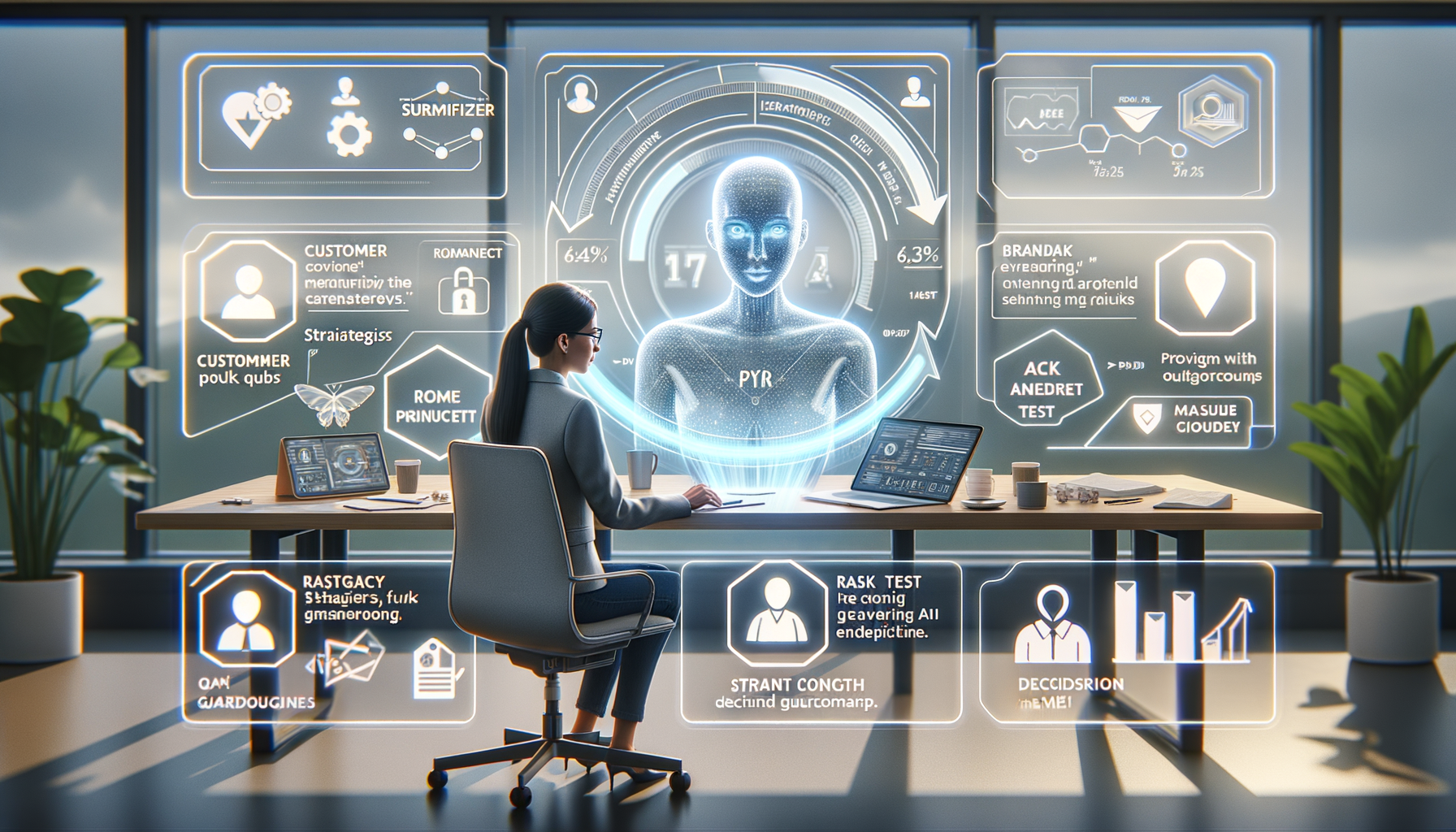
    From there, I run an agentic AI workflow. In my AI product toolbox, I use CustomGPT workflows with specialized roles: a Summarizer (compress evidence), a Strategist (propose options), and a Skeptic (stress-test assumptions). This agentic AI pattern reduces blind spots and produces artifacts I can share with empowered product teams and executives.

    I then bring the insights into a product trios forum (PM, Design, Engineering). We iterate on problem framing, explore solution narratives, and translate options into product roadmapping and sprint planning. The LLM helps us rapidly compare trade-offs, highlight dependencies, and craft crisp decision memos.

    Execution still demands rigor. We validate with A/B testing when appropriate, size our minimum detectable effect (MDE), and monitor activation and retention signals. The model helps generate experiment variants and risk checklists, but we own judgment, ethics, and the call to ship.

    Governance matters. I treat data governance and privacy-by-design as first-class constraints in every prompt, context packet, and workflow. Clear boundaries make collaboration safer—and paradoxically, more creative—because the LLM spends its cycles inside a well-defined sandbox.

    Here’s a simple example: when we explored a new onboarding flow, I fed the model a compressed brief (user segments, friction points, support tickets, and conversion deltas). It returned three viable patterns, each with hypotheses and measurement plans. Our trio refined them, launched a controlled test, and used LLM-powered analysis to summarize learnings for leadership. The result: faster clarity, better decisions, and a tighter feedback loop.

    The promise of AI context pulling isn’t that AI replaces product judgment—it’s that it elevates it. With the right structure, LLMs help us think more clearly, decide faster, and build what truly matters. If you’re ready to try this, start small: define an outcome, curate a context packet, and run a single agentic loop with your team. The compounding returns will surprise you.


    Inspired by this post on Pendo – Perspectives.


    Book a consult png image
  • From Code to Roadmaps: My Proven Playbook for Engineers Becoming Product Managers

    From Code to Roadmaps: My Proven Playbook for Engineers Becoming Product Managers

    "From code commits to boardrooms. Here are real stories of software engineers who swapped bugs for roadmaps on the road to product manager." I’ve made that leap myself and helped many engineers do the same. In this piece, I share the playbook I use to guide high-potential ICs into impactful product management roles—without losing the engineering rigor that makes them special.

    Engineers make exceptional product managers because we’re trained to decompose complex systems, debug ambiguity, and reason from first principles. The transition isn’t about abandoning code; it’s about expanding your scope from implementation details to customer outcomes, market context, and business impact.

    The first shift is mental: move from shipping outputs to driving outcomes. Features are a means; value is the end. I anchor this change with outcomes vs output OKRs, ensuring every roadmap item ties to a measurable user or business result rather than a checklist of tickets.

    Next, upskill deliberately in three areas: product discovery, product positioning, and stakeholder management. Learn to design unbiased customer interviews, synthesize patterns from qualitative and quantitative signals, and craft crisp value propositions that resonate with real segments. Then practice executive-ready communication—clear decisions, concise narratives, and no jargon crutches.

    Here’s the practical, low-risk way to get PM experience without changing your title: form a product trios working group (design, engineering, product) around a real problem. Lead discovery with a weekly cadence, run lightweight experiments, and translate insights into a draft product roadmapping and sprint planning artifact. Ship small, learn fast, and narrate the learning.

    Build a simple portfolio that proves product judgment. Include one-page problem briefs, discovery notes, customer quotes, prioritized opportunity trees, and a before/after roadmap snapshot. For each artifact, quantify the impact: activation lift, support ticket reduction, conversion improvement—whatever outcome your work influenced.

    If you want to pivot internally, propose a 90-day experiment. Volunteer to own a well-bounded problem, commit to an outcomes dashboard, and set a weekly stakeholder update. Keep a minimal engineering contribution during the trial to de-risk the transition for your team while you demonstrate PM leverage across the squad.

    If you’re interviewing externally, prepare two deep case studies: one discovery-led (how you reduced uncertainty) and one delivery-led (how you aligned stakeholders and shipped). Be explicit about trade-offs, risks you retired, metrics you moved, and lessons learned. The best signals of product sense are clarity under constraints and an ability to say “no” for good reasons.

    Once you land the role, use a 30-60-90 plan. In the first 30 days, map users, workflows, metrics, and decision rhythms; in 60, run a focused discovery sprint and align on your hypothesis-led roadmap; by 90, deliver a thin slice that proves value and establishes credibility with empowered product teams. Keep your communication tight, your dashboards honest, and your customers close.

    Common pitfalls: translating directly from solution space to roadmap without validating problems; equating stakeholder satisfaction with customer value; and mistaking velocity for progress. Avoid them by running small tests early, revisiting segment-specific value propositions, and anchoring trade-offs to product-market fit lessons.

    If you’re standing at the edge of this transition, start where you are: choose one user pain, one measurable outcome, and one small bet. Treat it like a product: define success, experiment thoughtfully, and learn in public. The road from engineer to product manager isn’t a title change—it’s a shift in how you create value.


    Inspired by this post on Product School.


    Book a consult png image
  • Impact Analysis Mastery: Proven Steps to Predict, Measure, and Maximize Product Outcomes

    Impact Analysis Mastery: Proven Steps to Predict, Measure, and Maximize Product Outcomes

    When I think about the difference between a roadmap that moves the business and one that simply ships output, impact analysis is the habit that changes everything. It gives me and my product trios a disciplined way to forecast value, align stakeholders, and de-risk bets before a single sprint starts. Over the years, I’ve seen great ideas fail not because they were bad, but because we couldn’t articulate, test, and track their true impact. That’s the problem impact analysis solves.

    Impact analysis, in practice, is a structured method for predicting how a proposed change will influence user behavior and business outcomes—and then validating those predictions with data. Uncover what impact analysis is, why it matters, and how to do it with proven methods and clear steps for product teams. When done well, it translates strategy into evidence-backed choices that strengthen our value proposition and accelerate product-led growth.

    I use impact analysis at three key moments: during product discovery to vet opportunities, in product roadmapping and sprint planning to prioritize, and post-launch to confirm that outcomes beat expectations. It is equally useful for net-new features, UX improvements, pricing changes, and even enablement like in-app guides or product tours.

    Step 1: Define the outcome with precision. I anchor every proposal to outcomes vs output OKRs, choose one primary success metric, and record the current baseline. If we plan to experiment, I estimate the minimum detectable effect (MDE) to ensure our A/B testing can actually validate the expected lift. This protects us from investing in ideas that are too small to measure or too broad to manage.

    Step 2: Map the causal chain. I translate the idea into a simple impact map: feature change → user behavior (activation, frequency, conversion, retention) → business outcome (revenue, cost, risk, satisfaction). This clarifies what must change in user behavior and why users would care—forcing us to revisit our value proposition if the link feels thin.

    Step 3: Size the upside and reach. I estimate who will be exposed (reach), how often (frequency), and the expected behavior change (conversion delta). I complement this with RICE (reach, impact, confidence, effort) or cost of delay to compare options. The goal isn’t perfect math; it’s consistent, transparent assumptions that we can pressure test with data.

    Step 4: Evaluate risk, complexity, and dependencies. I assess technical effort, privacy-by-design considerations, data governance needs, and cross-team sequencing. This is where stakeholder management becomes essential—aligning Engineering, Design, GTM, and Security early so we don’t discover hidden blockers mid-sprint.

    Step 5: Design the evidence plan. For changes where causality matters, I prefer A/B testing with the right MDE and guardrail metrics. I instrument events and set up dashboards in a unified analytics platform (Amplitude analytics, Pendo, or a homegrown stack) so we can monitor leading indicators quickly. If experiments aren’t feasible, I use sequential rollouts, synthetic controls, or pre-post analyses with clear caveats.

    Step 6: Communicate the decision. I share a one-page impact brief that summarizes objectives, hypotheses, metric choices, expected lifts, risks, and the test plan. This reduces debate time, improves stakeholder trust, and enables empowered product teams to move faster with clarity.

    Step 7: Ship, monitor, and learn. After launch, I track leading indicators within days and validate lagging outcomes over weeks. I run retention analysis and cohort reviews to confirm that behavior change sticks, and I write a short learning memo—especially when we miss—so future bets get sharper.

    On a recent initiative, our team debated whether to build a new onboarding flow or invest in targeted in-app guides. The impact analysis showed the guide approach would reach 3x more users in the next quarter, require half the effort, and be easier to A/B test end-to-end. We shipped the guides, saw a measurable lift in activation, and then recycled those insights to inform the broader onboarding redesign. The analysis didn’t just pick a winner—it created a faster path to compounding outcomes.

    Common pitfalls I watch for: chasing vanity metrics, assuming linear impact at scale, ignoring confidence and variance, and skipping instrumentation. Another trap is treating impact analysis as a heavyweight doc—keep it lightweight, comparable across initiatives, and tightly tied to decision-making.

    My lightweight template: one sentence on the desired outcome and OKR; a causal chain with the key behavior change; a simple sizing with reach, impact, and confidence; risk and dependency notes; the experimentation plan; and the decision. If we can’t write that in one page, we probably don’t understand the bet well enough to pursue it yet.

    The next time you review your roadmap, pick your top three bets and run this playbook. You’ll sharpen your prioritization, increase stakeholder confidence, and give your team a clear line of sight from product discovery to measurable outcomes. That’s how we build momentum, quarter after quarter.


    Inspired by this post on Product School.


    Book a consult png image
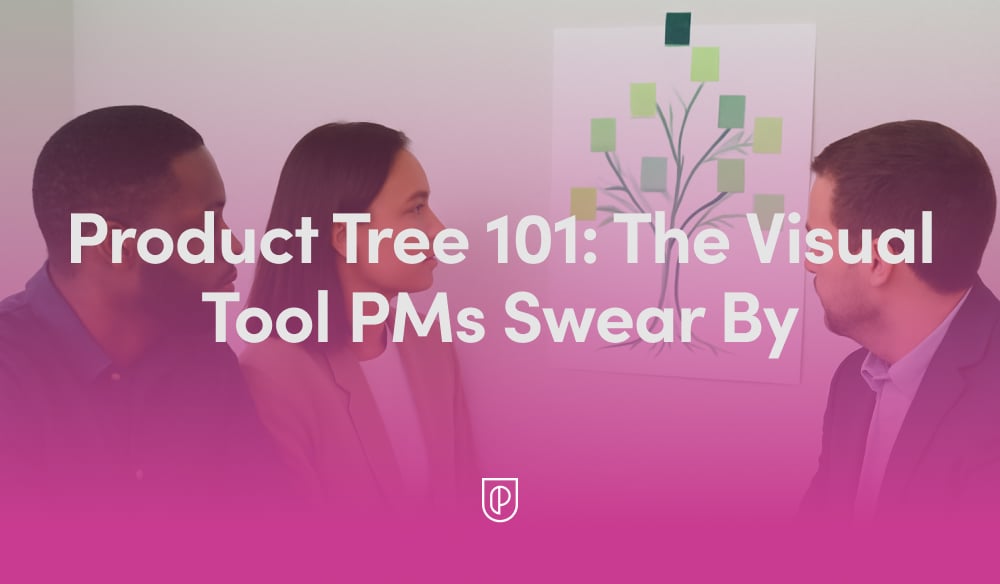
  • Product Tree 101: The Visual Prioritization Framework I Rely on to Align Teams Fast

    Product Tree 101: The Visual Prioritization Framework I Rely on to Align Teams Fast

    When my team is drowning in requests, the Product Tree is the visual tool that brings clarity and momentum. "Learn what a product tree is, how to use the product tree framework, and why it’s a powerful tool for smarter product prioritization." That’s exactly what I aim to share here—how I use it to align stakeholders, sharpen product strategy, and translate ideas into outcomes.

    A product tree is a simple yet powerful metaphor for your product. The trunk represents the core value, the roots are the technical foundations and platform capabilities, the branches are product areas or themes, and the leaves are features, experiments, or opportunities. By placing ideas as leaves on the right branches—and making sure roots can actually sustain that growth—we turn a messy backlog into a coherent product roadmap.

    Why do product managers swear by it? Because it forces outcomes over outputs, exposes trade-offs visually, and reveals where strategy is thin or overgrown. In one view, you see customer value, technical debt, and strategic focus—crucial for empowered product teams, product discovery, and stakeholder management. It’s also an excellent way to connect outcomes vs output OKRs to tangible delivery paths.

    Here’s how I set it up. First, I define the trunk with a crisp product value proposition and the minimum set of experiences that make the product viable. This anchors everything else so we don’t mistake a shiny leaf for the core of the tree.

    Next, I map branches to clearly named themes that mirror how customers perceive value—onboarding, activation, collaboration, analytics, or reliability. I keep branches aligned to outcomes to avoid feature-first thinking; this pays dividends during product roadmapping and sprint planning.

    Then I add leaves: research insights, customer requests, experiments, and enabling features. I note intent (e.g., drive activation, reduce churn), expected impact, and a rough effort signal. This quickly surfaces which leaves grow the product and which are just twigs.

    Finally, I draw roots—the enabling platform work and technical investments that make the branches sustainable. Performance, data governance, privacy-by-design, and scalability belong here. If the roots can’t support the canopy, the tree is at risk, and that becomes a visible, prioritizable problem rather than an invisible liability.

    Once the tree is sketched, I facilitate a collaborative session with product trios and cross-functional partners. We prune low-impact leaves, cluster work by outcomes, and explicitly link branches to OKRs. In QBRs vs OKRs reviews, the tree becomes our single source of truth for trade-offs, helping stakeholders see why some requests move up and others wait.

    In practice, I use the Product Tree to shape a near-term delivery plan and a longer-horizon narrative. Near term, it informs sprint planning and sequencing by ensuring the right roots land before the heavier branches. Longer term, it clarifies the growth story for product-led growth—what we’ll grow next and why it matters for customers.

    A few tips from the trenches: anchor branches to customer outcomes, not internal org charts; spotlight enabling work so platform investments aren’t deprioritized; and revisit the tree after each discovery cycle to keep it fresh. The moment the tree feels lopsided, that’s your signal to rebalance bets or revisit assumptions in product discovery.

    If you’re preparing for your next planning cycle, try a 60-minute Product Tree workshop. You’ll come away with a shared mental model, sharper prioritization, and a roadmap that is easy to communicate and defend—because everyone can see the product’s future taking shape right in front of them.


    Inspired by this post on Product School.


    Book a consult png image
  • Stop Shipping for the Sake of It: Master Outputs vs. Outcomes to Build Products That Win

    Stop Shipping for the Sake of It: Master Outputs vs. Outcomes to Build Products That Win

    Too many teams still celebrate what they ship rather than what they change. I’ve learned—sometimes the hard way—that the most expensive mistake in product management is confusing outputs with outcomes. Understand the key differences between output vs. outcome in product management — and how to keep your team focused on what really drives results.

    Here’s how I draw the line: outputs are the features, tickets, and releases we produce; outcomes are the measurable changes in user behavior and business performance we create—activation rates, retention, expansion, and time-to-value. If an initiative doesn’t move a metric that matters, it’s output without impact. That’s how feature factories are born.

    The confusion is costly because it distorts incentives. Teams optimize for velocity, story points, or deployment frequency and mistake motion for progress. Engineering excellence and DORA metrics matter, but they’re not substitutes for product outcomes. When OKRs drift into task lists, we ship more and learn less. I’ve seen ambitious roadmaps hit every delivery date and still miss the market because we didn’t change customer behavior.

    To break that cycle, I anchor planning and reviews to outcome-based OKRs. A good objective might be: increase new-account user activation from 28% to 45% this quarter. The anti-pattern is: ship onboarding redesign v2. The former sets a clear behavioral target; the latter constrains creativity and locks us into a solution before discovery. This is the practical heart of outcomes vs output OKRs.

    From there, I define leading indicators that predict the desired outcome—time-to-first-value, completion of core actions, day-7 retention—and instrument them early. Tools like Amplitude analytics help us see whether an experiment is unlocking behavior change or just producing activity. I also set guardrail metrics (support volume, performance, and NPS) so we don’t “succeed” by creating a new failure mode.

    The delivery model matters, too. Empowered product teams—built as product trios of product, design, and engineering—own the problem and the outcome. We invest in product discovery to validate assumptions, size opportunities, and find the minimum viable change that moves the metric. A/B testing with a clear minimum detectable effect (MDE) makes our experiments faster, cheaper, and more conclusive.

    Roadmaps then become strategic bets rather than feature lists. Each bet articulates the opportunity, the hypothesized solution, the expected outcome, and the evidence that would change our mind. In sprint planning, we slice increments to learn sooner, not just to deliver sooner. CI/CD accelerates shipping; outcome instrumentation accelerates learning.

    Stakeholder conversations shift as well. Instead of debating which features to build, we align on the customer problem, the value proposition, and the measures of success. QBRs showcase what changed—activation, adoption, retention—not just what shipped. This is how we move from feature requests to outcome commitments and sustain product-led growth.

    I’ve found that outcomes-first execution energizes teams. Clarity of purpose invites creativity, and the autonomy to experiment fuels ownership. When we celebrate behavior change over backlog burn-down, we stop playing to the roadmap and start playing to win the market.

    If your team is stuck in output mode, start small: rewrite one key objective as an outcome, instrument a leading indicator, and run a scoped experiment. When the metric moves, let that win reset the culture. Momentum follows outcomes.


    Inspired by this post on Product School.


    Book a consult png image