Tag: product roadmapping and sprint planning

  • Unlock B2B Product Excellence: Essential Benchmarks to Outperform Your Tech Peers

    Unlock B2B Product Excellence: Essential Benchmarks to Outperform Your Tech Peers

    I rely on disciplined product benchmarks to turn strategic intent into measurable progress. In B2B technology, benchmarks give me and my team the clarity to prioritize what truly matters, align executives around shared outcomes, and course-correct before small gaps become growth-stalling problems.

    Discover exclusive data and strategies from our Product Benchmark Report. Compare the B2B technology industry’s performance across key product metrics.

    When I assess product health across a portfolio, I start with a core set of product benchmarks: activation rate, onboarding completion, time-to-first-value, weekly and monthly active accounts, feature adoption, cohort-based retention, expansion and contraction revenue, and support deflection. Together, these metrics show where the product creates value, where users get stuck, and which levers most efficiently drive product-led growth.

    Benchmarks are only powerful if they inspire action. I instrument reliable analytics (Amplitude analytics) to capture consistent event data, pair that with in-app guides and product tours (Pendo, Intercom) to test friction hypotheses, and run A/B testing to validate changes with statistical rigor. From there, I translate insights into outcomes-based OKRs, so roadmapping and sprint planning focus on the few bets most likely to move our key product metrics.

    I’ve seen this approach pay off repeatedly. When peer benchmarks revealed our user activation lagged, we simplified onboarding, clarified value propositions with sharper UX writing, and launched targeted in-app nudges. We didn’t just ship features—we improved the experience against a clear yardstick, and the subsequent lift in activation and early retention validated the strategy.

    Cross-functional alignment is critical. I partner with customer success to interpret retention analysis by segment, with marketing to ensure messaging supports time-to-value, and with engineering to keep quality and reliability high. While product metrics lead, I also keep an eye on complementary signals like incident management and DORA metrics to ensure we’re not trading speed for stability.

    If you’re leading a product organization, use benchmarks to calibrate ambition and create focus. Start by identifying the one or two metrics most predictive of long-term retention, set peer-informed targets, and iterate with continuous discovery. The result is a product strategy that is evidence-based, resilient to opinion cycles, and capable of compounding gains over time.

    Ultimately, benchmarks aren’t about vanity; they are about velocity. With a shared view of where you stand against the B2B technology industry, you can make sharper bets, accelerate product-market fit, and turn your roadmap into a reliable engine for growth and customer value.


    Inspired by this post on Amplitude – Perspectives.


    Book a consult png image
  • Playing the 25-Year Game: Rethinking Networking, Ditching OKRs, and Owning the Full Stack

    Playing the 25-Year Game: Rethinking Networking, Ditching OKRs, and Owning the Full Stack

    I’m drawn to builders who choose decades over exits. The story behind Meter—providing full-stack networking infrastructure as a service for businesses—captures that ethos with unusual clarity. From day one, the strategy hinged on vertical integration, business model innovation, and committing to a multi-decade horizon. As a product leader, I see this as the rare combination that compounds: patient R&D, an earned right to own the stack, and a commercial model aligned with customer outcomes.

    Why think in 25-year horizons? In entrenched, often monopolistic markets like networking, short-term optimization simply doesn’t move the needle. Incumbents such as Cisco and Meraki shape expectations around procurement, installation, and support. If you want to reset the standard, you can’t iterate around the edges—you have to re-architect the experience end-to-end and give yourself the time to do it right. That’s the difference between building a product and building a company.

    I also share the contrarian stance on planning. Rituals can easily masquerade as rigor. “We don’t do OKRs” doesn’t mean don’t align; it means don’t confuse activity with progress. I prefer crisp narratives, simple success metrics, and a cadence that keeps teams close to customers. Planning without over-planning lets you steer with first principles: what problem are we solving, for whom, and how do we know it’s working?

    On that note, I relentlessly track unhappy customers. Satisfaction scores and dashboards are lagging indicators; the real signal is in the gaps, escalations, and stuck use cases. Building a habit of surfacing and resolving those moments creates the operational muscle you need later when you scale. It’s also how you find “seller-market fit” and sharpen your go-to-market motion.

    The origin story matters. Meter spent four-plus years in heads-down R&D, even scrapping a year of OS work during the process. That discipline—killing good work to unlock great work—is the hallmark of teams that play the long game. Shenzhen accelerated progress by compressing feedback loops between design, manufacturing, and iteration, a reminder that sometimes geography itself is a strategy choice.

    Getting to a sales-ready product requires intentional sequencing. Own the interfaces, the telemetry, the install experience, and the service envelope—not just the code. In networking, that means controlling the full stack so performance, reliability, and support converge into one promise. The surprising thing you should innovate isn’t only the feature set—it’s the business model. Turning networking into a service aligns incentives, reduces complexity for customers, and creates durable revenue with clear SLAs.

    Avoiding the one-trick pony trap is also central. The best teams design for adjacent expansion from day one: new sites, new form factors, new service layers. The secret to finding an excellent market is to look where switching costs and frustration are both high; that’s where a superior end-to-end experience can pry open demand. That’s also why Meter didn’t sell via traditional channels—a direct motion builds intimacy with the customer problem, strengthens pricing power, and helps validate “seller-market fit.”

    Resilience is the throughline: surviving COVID, Apple’s M1 transition, and “a thousand bad days.” In those stretches, pace and patience matter more than theatrics. I’ve learned to decouple management from authority, reduce meta-work, and tackle performance issues quickly—“when the person is the problem,” clarity and speed are an act of care for the whole team. There’s inherent value in going slowly when it preserves quality, trust, and optionality.

    For founders and product leaders, the takeaway is simple: build a company you’ll want to run for as long as possible. Focus on first principles decision making, empower product teams, and choose the few metrics that truly reflect customer value. Resist the comfort of templates; adopt only the practices that raise your odds of learning faster than the market evolves. Owning the full stack, rethinking the model, and extending your time horizon can transform even the most entrenched categories.

    This is how I aim to run product: fewer rituals, tighter feedback loops, and a relentless bias toward long-term compounding. When you commit to decades, you earn the right to define the category—one thoughtful release, one delighted customer, and one resolved escalation at a time.


    Book a consult png image
  • Train Leaders First: How Product Leadership Unlocks Real Transformation and Discovery

    Train Leaders First: How Product Leadership Unlocks Real Transformation and Discovery

    I recently listened to Role of Leadership in Transformations – All Things Product Podcast with Teresa Torres & Petra Wille, and it crystallized a pattern I’ve seen across multiple transformations: teams often get trained in continuous discovery, but nothing changes because leadership habits stay the same. If you want to move from projects to true product thinking, “train your leaders first” isn’t a catchy mantra—it’s a prerequisite.

    The episode digs into why discovery training can be stellar while adoption still stalls. I’ve witnessed this firsthand: teams return excited to interview customers and test ideas, but leaders continue to manage via features, roadmaps, and approvals. The result is predictable—discovery fades. When leaders evolve how they evaluate work, talk about outcomes, and shape rituals, discovery sticks. Without that shift, even energized, empowered product teams drift back to output.

    What resonated most was how organizational dynamics kick in the moment teams start bringing real customer evidence to the table. Discovery uncovers conflicts. Sales, account management, stakeholders, and executives all feel the impact when the old “my job is to tell teams what to build” mindset collides with evidence-driven practices. Hierarchy also clashes with modern product practices—because in discovery, “all ideas come equal.” Product culture isn’t an accident; it must be intentionally created through norms, expectations, and systems that prioritize outcomes over output.

    I’ve also seen the leadership skills gap up close. Many product leaders never learned continuous discovery themselves, so they aren’t equipped to coach it, critique it, or celebrate it. This is where great product management leadership shows up: the ability to assess discovery quality, reinforce outcomes vs output OKRs, and run cadences that create momentum. Leaders who invest in building these muscles—often through communities of practice and structured coaching—transform the operating environment for product trios and cross-functional teams.

    The episode’s discussion of pilot teams is spot-on. Start small to surface hidden blockers—the corporate “immune system”—before going broad. Pilots expose decision bottlenecks, misaligned incentives, and policy friction that standard training never reveals. Tools like the Product Leadership Wheel help set clearer expectations for the craft of product leadership, while a coherent Product Operating Model makes the path from pilots to full transformation explicit and durable. I’m particularly excited about resources like the Discovery Habits Toolbox because they give leaders practical ways to coach continuous discovery without reverting to feature policing.

    Here are the big takeaways I’m carrying forward. Skills training isn’t enough—if leaders still manage through feature requests and static roadmaps, teams will abandon discovery even if they loved the training. Leaders need training too—they must know how to evaluate discovery work, talk about outcomes, and create rituals that reinforce new habits. Discovery will surface conflicts—plan for stakeholder management, alignment with sales and account teams, and executive sponsorship. Product leadership is a craft—seniority alone doesn’t create clarity, systems, or culture. And transformations should start with leaders and pilot teams—because that’s where the real blockers live.

    If you want to go deeper, listen to this episode on Spotify: https://open.spotify.com/episode/5cBTEbYX1YW3BF6icAPXzi or Apple Podcasts: https://podcasts.apple.com/kh/podcast/role-of-leadership-in-transformations/id1794203808?i=1000740342572. It’s a concise masterclass on why leadership behaviors—not just team skills—determine whether continuous discovery thrives.

    For further exploration, I recommend these resources. Follow Teresa Torres: https://ProductTalk.org. Follow Petra Wille: https://Petra-Wille.com. Product Talk Academy’s Train Your Team by Teresa Torres: https://learn.producttalk.org/train-your-team. Melissa Perri’s “Train leaders first, not last.” Linkedin post: https://www.linkedin.com/posts/melissajeanperri_train-leaders-first-not-last-most-product-activity-7380927349732839424-sqBJ/. Coaching for Product Leaders/Executives by Petra Wille: https://www.petra-wille.com/coaching-packages. Product Leadership Wheel by Petra: https://www.petra-wille.com/plwheel.

    To get hands-on with discovery skills, check out Story-Based Customer Interviews: https://learn.producttalk.org/course/story-based-customer-interviews. For visual management, see An idea board—do we see enough potential?: https://images.squarespace-cdn.com/…/idea_board3.png and Four Taskboards in a simple illustration: Idea Board, Product Overview Board, Product Discovery Board and Development Team Board: https://images.squarespace-cdn.com/…/boards.png. Opportunity Assessment: Do We Want to Invest in Discovering This Idea?: https://www.petra-wille.com/blog/opportunity-assessment-do-we-want-to-invest-in-discovering-this-idea?rq=taskboard.

    If you’re preparing your organization to adopt a product operating model, read Is Your Organization Ready to Adopt the Product Operating Model?: https://www.producttalk.org/organizational-readiness/ and The Product Operating Model Explained: From Pilot Teams to Full Transformation: https://www.producttalk.org/the-product-operating-model/. Communities of practice can accelerate leadership growth: Community of Practice by Petra: https://www.petra-wille.com/community-of-practice. For foundational texts, see TRANSFORMED: Moving to the Product Operating Model: https://www.svpg.com/books/transformed-moving-to-the-product-operating-model/ and EMPOWERED: Ordinary People, Extraordinary Products: https://www.svpg.com/books/empowered-ordinary-people-extraordinary-products/.

    I’d love to hear how you’re enabling continuous discovery in your context. What leadership behaviors have made the biggest difference? Where does your corporate immune system show up, and how are you addressing it with pilot teams, clearer expectations, and a consistent product operating model? Share your perspective—I read every comment.


    Inspired by this post on Product Talk.


    Book a consult png image
  • Master the Kano Model: Prioritize Features That Delight and Drive Product-Led Growth

    Master the Kano Model: Prioritize Features That Delight and Drive Product-Led Growth

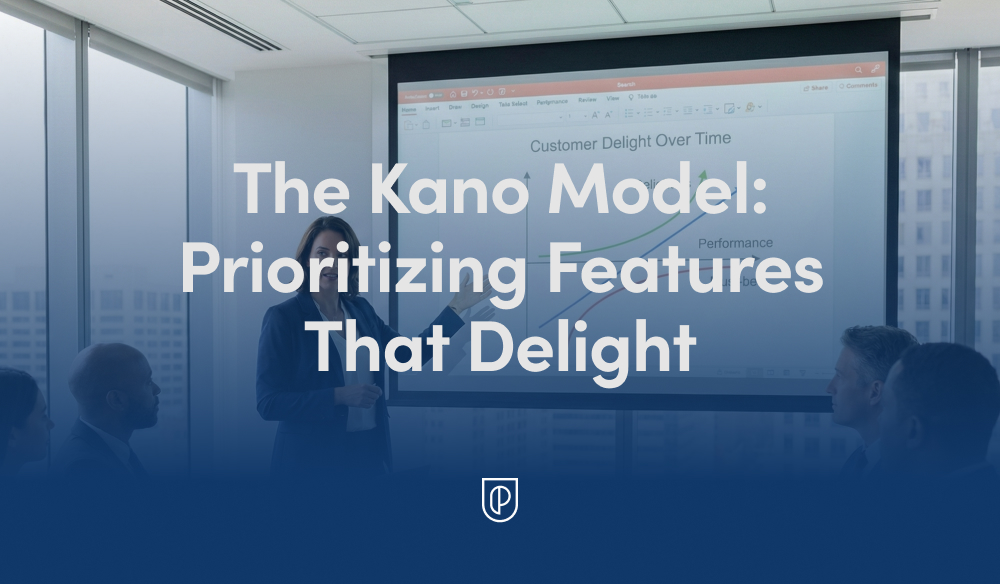
    When I sit down with our product trios to shape the next quarter’s roadmap, I rely on The Kano Model to cut through the noise and focus on what actually moves the needle for customers and the business. It gives me a rigorous, human-centered lens for separating baseline expectations from differentiators and sustained value creation.

    Learn how the Kano Model prioritizes the product features that matter by categorizing them into must-haves, satisfiers, and delighters.

    Here’s how I think about each category in practice. Must-haves are the non-negotiables—if they’re missing or broken, no amount of innovation will save the experience. Satisfiers scale linearly with user happiness; do them better, and customers feel the improvement immediately. Delighters surprise users with unexpected value that elevates the product’s perceived quality and creates memorable moments that fuel advocacy.

    In continuous discovery, I mix quantitative Kano surveys with qualitative interviews to validate which capabilities land in each bucket for specific segments. We ask both functional and dysfunctional questions (e.g., “How would you feel if this feature existed?” and “How would you feel if it didn’t?”) to avoid false positives and to distinguish true delighters from nice-to-haves. This approach de-risks assumptions and keeps our product discovery anchored in real customer voice.

    Translating insights into action starts with outcomes vs output OKRs. Must-haves protect core outcomes like reliability, trust, and activation. Satisfiers inform product roadmapping and sprint planning by tying investment to measurable improvements such as speed, accuracy, or completion rate. Delighters earn a deliberate share of the roadmap to strengthen competitive differentiation and to refresh our value proposition before market expectations shift.

    Kano also sharpens product-led growth motions. By aligning satisfiers with key activation steps and running retention analysis on cohorts exposed to delighters, we can see where excitement features become habit-forming behaviors. When a delighter consistently correlates with improved retention or expansion, it graduates into the backbone of our product positioning.

    Stakeholder management gets easier with a shared framework. I present the portfolio as a balanced mix: must-haves that protect reputation, satisfiers that demonstrate continuous improvement, and delighters that signal vision. This narrative connects short-term reliability with long-term strategy and helps leaders understand why some high-effort ideas are best sequenced behind critical must-haves or high-yield satisfiers.

    A quick caution: delighters decay. What delights today often becomes tomorrow’s must-have. I schedule periodic re-reads of our Kano results, especially after major releases or market shifts, to recalibrate where features sit. Combined with A/B testing and usage analytics, this habit prevents us from over-investing in fading differentiators and ensures our roadmap stays crisp and customer-centered.

    If your roadmap feels crowded or your team debates priorities without resolution, bring The Kano Model to your next planning session. It adds structure to product discovery, clarifies trade-offs, and helps us deliver a roadmap that not only works—but wins.


    Inspired by this post on Product School.


    Book a consult png image
  • How Amplitude AI Feedback Turns Noise into Product Signal You Can Ship With Confidence

    How Amplitude AI Feedback Turns Noise into Product Signal You Can Ship With Confidence

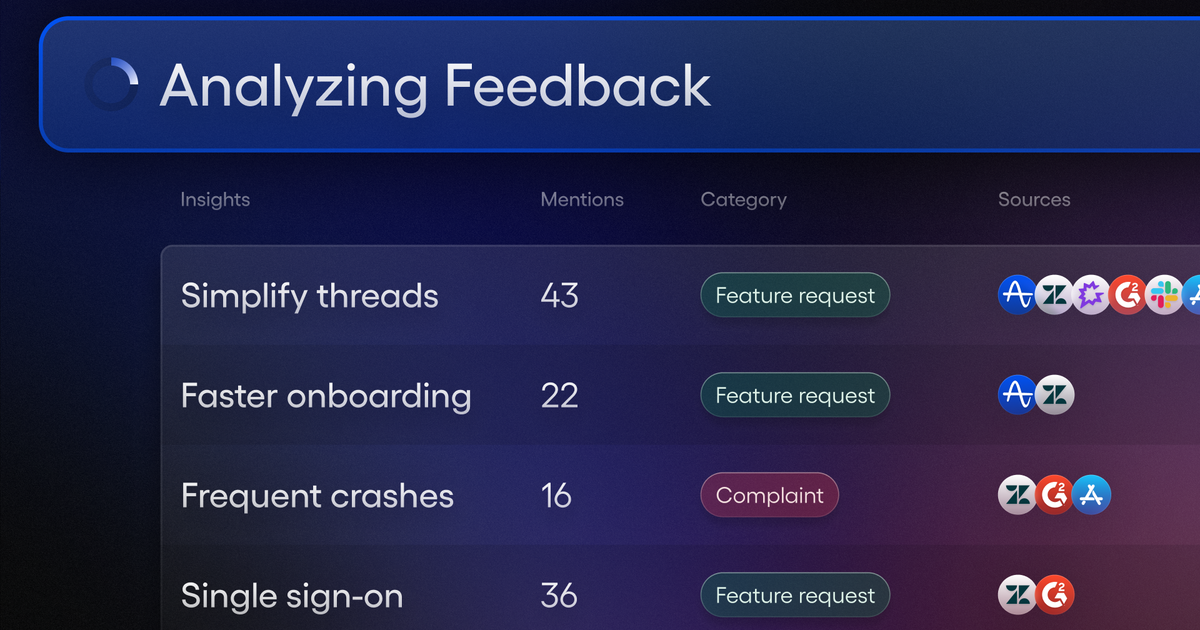
    I’ve spent enough time in the trenches of product management to know the hardest part isn’t collecting feedback—it’s separating signal from noise. When every channel is buzzing, the real question becomes: what should we build next, and why? That’s where Amplitude AI Feedback has changed how I work. It gives me a disciplined, data-informed way to turn messy qualitative input into clear, defensible roadmap decisions.

    Learn how Amplitude AI Feedback leverages AI to transform massive volumes of customer feedback into actionable product insights.

    In practice, this means I can synthesize input from support tickets, NPS responses, user interviews, sales notes, and reviews—then connect those insights to product behavior data from Amplitude analytics. The result isn’t just a list of requests; it’s a ranked problem set grounded in evidence, which makes product discovery and continuous discovery faster, clearer, and less biased.

    A recent example: we were hearing recurring complaints about onboarding friction, but it wasn’t obvious which steps truly mattered. By pairing feedback themes with activation and retention signals, I could zero in on the first-session setup tasks that correlated with drop-off. That clarity guided product roadmapping and sprint planning decisions we could stand behind, and it accelerated user activation without bloating the backlog.

    My workflow is straightforward: aggregate feedback, cluster themes, validate with behavioral metrics, and translate insight into outcomes. I look for patterns tied to user activation, retention analysis, and moments that drive product-led growth. When the evidence shows a request is both frequent and high-impact, it earns a place on the roadmap; when it’s loud but low-impact, it becomes a targeted experiment rather than a default commitment.

    What I appreciate most is the confidence this brings to stakeholder conversations. Instead of debating opinions, we review the evidence: quantified themes, clear user stories, and measurable KPIs. That turns “Finally, Signal That Tells You What to Build” from a slogan into an operating principle, and it helps empowered product teams move faster with fewer reversals.

    If you’re building your AI Strategy or exploring LLMs for product managers, this is one of the highest-leverage moves you can make: use a unified analytics platform to connect qualitative feedback with quantitative behavior. It sharpens prioritization, improves time-to-learning, and keeps the team focused on outcomes—not outputs.


    Inspired by this post on Amplitude – Best Practices.


    Book a consult png image
  • Inside My Product Playbook: How I Use the Amplitude Blog to Elevate Strategy and Growth

    Inside My Product Playbook: How I Use the Amplitude Blog to Elevate Strategy and Growth

    I build products at scale, and I write about how we make them successful. When I need a clear, evidence-based perspective on what actually drives outcomes, I turn to the Amplitude Blog. It’s a dependable source for sharpening my thinking on "digital analytics, product strategy, and product-led growth"—and it consistently helps me translate analytics into business impact.

    What keeps me coming back is the way practical, well-structured guidance meets real-world constraints. Whether I’m refining our event taxonomy in Amplitude analytics, evaluating a unified analytics platform approach, or aligning stakeholders on the right success metrics, I find concrete patterns I can apply immediately. The content connects data literacy with product management leadership, the exact combination required to navigate complex roadmaps and high-stakes decisions.

    Here’s how I apply these insights day to day. I anchor our experiments in A/B testing best practices and set a minimum detectable effect that matches our traffic realities. I guide teams to prioritize user activation and retention analysis over vanity metrics, and I frame plans with outcomes vs output OKRs so we stay focused on customer and business value. In parallel, I reinforce continuous discovery and product discovery habits—feeding learning back into product roadmapping and sprint planning without losing speed.

    The payoff shows up in the details: better funnel instrumentation, cleaner cohorts, and faster hypothesis cycles that reduce rework. When we operationalize these ideas—tying activation to onboarding flows, clarifying value moments, and aligning cross-functional owners—we see measurable lifts without bloating scope. That’s the discipline I expect from a modern, product-led growth motion: rigorous analytics paired with empowered execution.

    If you’re scaling a team or modernizing your analytics practice, make the Amplitude Blog part of your weekly ritual. Use it to pressure-test your strategy, level up experimentation, and build a shared language for data-informed decisions. The right "tips and examples" can save months of trial and error—and, more importantly, help you ship products that customers return to again and again.


    Inspired by this post on Amplitude – Best Practices.


    Book a consult png image
  • From Output to Outcomes: How I Align Stakeholders Around a True Product Operating Model

    From Output to Outcomes: How I Align Stakeholders Around a True Product Operating Model

    When I push our organization to adopt the product operating model, I’m emphasizing a foundational shift—from “shipping roadmaps of features (output)” to solving real customer and business problems, measured by “business results (outcomes)”. That’s the difference between activity and impact, and it’s the only way to build durable value at scale.

    This change inevitably reaches beyond the product organization. It reshapes how company stakeholders in Sales, Marketing, Customer Success, Finance, Legal, Security, and Operations engage with product teams, and it reframes what they expect from us. Instead of asking, “When will feature X ship?” they learn to ask, “How will we move the outcome that matters?”

    In practice, the product operating model is a contract: product teams commit to outcomes, and stakeholders commit to partnership. That partnership means we co-own the problem, align on evidence, and share accountability for results. The reward is clarity—everyone sees how their work ladders to strategy and why the sequence of work makes sense.

    Here’s how I align stakeholders around this model. First, I ground everything in outcomes vs output OKRs. We replace feature roadmaps with a clear strategy, prioritized problems, and measurable objectives. Our product roadmapping and sprint planning then serve the objectives—not the other way around—so capacity is allocated to the highest-leverage bets.

    Second, I build empowered product teams around product trios (product, design, engineering). We practice continuous discovery with stakeholders: we share opportunity trees, test riskiest assumptions early, and bring partners into research when it informs go-to-market strategy, pricing, or enablement. This keeps us honest and avoids late-stage surprises.

    Third, I establish operating rhythms that make outcomes visible. Monthly stakeholder reviews focus on progress toward objectives and what we’re learning—not status theater. Quarterly, we connect OKRs to business performance so leaders can see the throughline from discovery and delivery to pipeline, retention, or margin. If priorities shift, we renegotiate objectives explicitly.

    Fourth, I define metrics that stakeholders trust. We use a balanced set of leading indicators (activation, engagement, cycle time) and lagging indicators (revenue, retention, unit economics). We socialize definitions early so no one debates the scoreboard mid-game. The result: faster decisions and less “data whiplash.”

    Fifth, I invest in change management. Moving from outputs to outcomes can feel threatening if your success has historically been measured by launch volume or roadmap commitments. I address this head-on with training, transparent comms, and clear decision rights. The message is simple: outcomes create more autonomy for empowered product teams and more predictability for stakeholders.

    At HighLevel, this approach has been especially powerful when cross-functional dependencies are high. For example, when we set an objective to improve user activation for a new CRM integration, we didn’t promise a bundle of features. We committed to a measurable lift in activation and a shorter time-to-value, co-owned with Customer Success and Marketing. That alignment unlocked smarter experiments, tighter enablement, and a more credible launch narrative.

    The anti-patterns are predictable: treating OKRs as a renaming of the roadmap, equating discovery with indecision, or isolating product decisions from go-to-market strategy. The cure is equally consistent: bring stakeholders into discovery, attach every bet to an objective, and show progress with evidence—not just demos.

    Ultimately, the product operating model is a leadership choice. It asks us to trade certainty theater for learning velocity, and feature checklists for business impact. When stakeholders see that shift pay off—in faster cycles, clearer priorities, and results that matter—support for the model moves from compliance to conviction.


    Inspired by this post on SVPG.


    Book a consult png image
  • Unlock AI Product Roadmaps: Essential Tools Every PM Needs to Prioritize and Ship Faster

    Unlock AI Product Roadmaps: Essential Tools Every PM Needs to Prioritize and Ship Faster

    In my role leading product teams, the AI product roadmap isn’t just a plan—it’s the operating system for how we discover value, prioritize with rigor, and ship with confidence. The pace has changed, the stakes are higher, and the best product managers are now orchestrating AI capabilities, data, and customer insight in near-real time.

    Master the evolving art of the AI product roadmap. Prioritize smarter, turn data into direction and insight into action, only much faster.

    When I say “AI product roadmap,” I’m talking about a living system that blends strategy, discovery, and delivery. It’s less about dates and more about outcomes, risk reduction, and sequencing learning. In practice, that means combining AI Strategy with product roadmapping and sprint planning, then validating each bet with real customer signals.

    For prioritization, I anchor on outcomes vs output OKRs and connect them to measurable signals across the funnel. Continuous discovery keeps insights flowing, while a unified approach to analytics and retention analysis tells me where the lift is. This lets me rank initiatives not just by impact and effort, but by how quickly we can learn, iterate, and compound value.

    On discovery, product trios are non-negotiable. We prototype early with gen ai and LLMs for product managers to accelerate concept validation and reduce ambiguity. When customers can co-create through in-app guides or lightweight product tours, we turn vague needs into crisp problem statements and testable hypotheses far faster.

    On delivery, I pair tight feedback loops with experimentation. A deliberate cadence of A/B testing and strong instrumentation ensures we’re learning every sprint, not just launching. The goal is to de-risk decisions quickly, keep momentum high, and translate signals into roadmap movement without thrash.

    Under the hood, the AI stack matters. I rely on a retrieval-first pipeline to ground models in trusted data, and I’m intentional about privacy-by-design and data governance from day one. As agentic AI patterns emerge, I put evaluation workflows in place so we can ship confidently—and safely—without slowing down innovation.

    Finally, alignment is the multiplier. Clear narrative roadmaps tied to customer outcomes help stakeholders see trade-offs, while crisp interfaces with go-to-market and CRM integration close the loop from roadmap to revenue. When everyone can trace a line from AI strategy to shipped value, prioritization becomes easier and trust grows.

    If you’re feeling the acceleration, you’re not alone. With the right AI product toolbox—rooted in discovery, grounded in data, and delivered through tight feedback loops—you can move faster, learn smarter, and build products your customers can’t live without.


    Inspired by this post on Product School.


    Book a consult png image
  • AI Product Owner in 2026: The High-Impact Role Every Team Needs to Win With AI

    AI Product Owner in 2026: The High-Impact Role Every Team Needs to Win With AI

    By 2026, the AI Product Owner will be the keystone role that turns AI strategy into measurable business outcomes. In my teams, this seat bridges market insight, model capability, data governance, and shipping velocity—so product decisions are not just clever, but compliant, reliable, and fast.

    I often describe the remit simply: "Here is your clear guide to the AI product owner role (skills, responsibilities, how it differs from PM) and ways AI tools supercharge delivery." In practice, the AI Product Owner translates business goals into model-backed experiences, aligns cross-functional execution, and ensures the product’s AI behavior remains safe, lawful, and on-brand under real-world constraints.

    How does this differ from a traditional PM? While Product Management sets portfolio strategy, positioning, and market narratives, the AI Product Owner owns the AI experience end-to-end—data readiness, evaluation harnesses, safety guardrails, and the iterative model improvements that drive outcomes vs output OKRs. I anchor the role inside empowered product teams and product trios (PM/Design/ML Eng) to keep discovery continuous and delivery disciplined.

    On responsibilities, I expect four pillars. First, discovery: continuous discovery with customers and internal experts to uncover use cases where generative AI or LLMs beat the status quo. Second, experience: define the right interaction patterns for AI UX, including retrieval-first pipeline choices, context window management, and feedback loops for human-in-the-loop correction. Third, governance: privacy-by-design, AI risk management, data governance, and regulatory compliance baked into the roadmap. Fourth, delivery: CI/CD for models and prompts, observable evaluation with A/B testing and minimum detectable effect (MDE), and SRE-grade incident management when AI behavior drifts.

    Skills-wise, I look for product sense plus technical fluency. That includes LLMs for product managers (prompting, grounding, RAG), analytics mastery (Amplitude analytics, retention analysis, activation metrics), and comfort with DORA metrics and deployment frequency to keep iteration high but safe. Strong stakeholder management and clear writing are non-negotiable—AI capabilities evolve fast, and leaders must see risk, cost, and ROI with no ambiguity.

    AI tools truly supercharge delivery when they eliminate bottlenecks. My practical stack: an AI product toolbox with Claude Code and a ChatGPT connector for rapid prototyping; CustomGPT workflows for support triage and internal knowledge; Pendo product tours and in-app guides to validate behavior changes; Intercom for customer support ai strategy; and tight CRM integration via HubSpot to measure revenue impact. The outcome is faster idea-to-learning cycles, sharper telemetry, and far cleaner handoffs.

    For roadmapping, I prioritize thin slices that prove value early—shipping narrowly scoped assistants or copilots, then expanding with product roadmapping and sprint planning that ties capability unlocks to outcomes. A unified analytics platform helps compare human-only baselines to augmented workflows, while agentic AI patterns automate routine steps under strict guardrails.

    Risk is a product surface, not a side task. I require explicit policy gates (PII handling, red-teaming, bias audits), clear escalation paths, and incident playbooks. When we treat policy and reliability as features, customers reward us with deeper adoption and higher trust.

    If you’re pursuing the AI Product Owner path, build a portfolio around shipped learnings: the experiment you killed with data, the safety constraint you designed, the postmortem you led, and the business metric you moved. That story—evidence of disciplined discovery, responsible delivery, and real-world results—is exactly what teams (and boards) want to see in 2026.


    Inspired by this post on Product School.


    Book a consult png image
  • How I Use ChatGPT to Supercharge Product Management: Workflows, Prompts, and PM Playbooks

    How I Use ChatGPT to Supercharge Product Management: Workflows, Prompts, and PM Playbooks

    I treat ChatGPT as a force multiplier across the entire product lifecycle—from discovery and strategy to delivery and growth. Unlock workflows, prompts, and real PM tips showing how ChatGPT quietly reshapes product management behind the scenes.

    My goal is pragmatic: turn generative AI into repeatable, measurable leverage for product discovery, product roadmapping and sprint planning, stakeholder management, and product-led growth without sacrificing quality, privacy-by-design, or judgment. This is how I apply LLMs for product managers in a way that strengthens customer empathy and speeds up decision cycles.

    In discovery, I use ChatGPT to synthesize interviews, categorize sentiment, and surface emergent themes faster than a manual pass. I’ll feed it anonymized notes and ask for Jobs-to-be-Done statements, contradictory signals to validate, and the top three risks to our hypotheses. When the corpus gets large, I pair it with a retrieval-first pipeline and apply context window management so outputs stay grounded in real customer data.

    On strategy and positioning, I draft and refine a crisp value proposition, clarify points of parity, and identify competitive differentiation. I ask ChatGPT to convert inputs into outcomes vs output OKRs, pressure-test assumptions, and produce a one-page narrative that even non-technical stakeholders can engage with. The result is faster alignment and fewer meetings to get to the same level of clarity.

    For planning and delivery, I use ChatGPT to accelerate PRD outlines, user stories, and acceptance criteria, while explicitly requesting edge cases, failure states, and non-functional requirements. I’ll have it map risks to mitigations and suggest simple instrumentation aligned to DORA metrics and incident management readiness—useful when we’re iterating within a CI/CD cadence.

    In experimentation, ChatGPT helps me frame strong A/B testing plans, calculate a minimum detectable effect (MDE), and sanity-check sample sizes. I also use it to translate metrics into plain language updates for the team, connect learnings to the next experiment, and propose follow-up analyses for retention analysis or activation bottlenecks.

    For growth and onboarding, I prompt ChatGPT to generate hypotheses for user activation, in-app guides, and tooltip design that match personas and JTBDs. It drafts variations I can quickly test through Pendo or similar tools, supports product-led growth motions, and helps craft contextual copy that aligns with our value proposition without adding cognitive load.

    Stakeholder communications get sharper and faster. I’ll ask for concise executive summaries, a version tailored for engineering leaders, and another for customer-facing teams. It’s especially effective for QBRs vs OKRs updates, where I need crisp narratives tied to outcomes, plus a plain-English articulation of risks and trade-offs for empowered product teams.

    The guardrails matter. I set clear AI risk management boundaries, prevent any sensitive data from entering prompts, and align usage with data governance and regulatory compliance requirements. I also version and review prompts just like product artifacts, so the best ones evolve into a durable AI product toolbox the whole team can use.

    If you’re getting started, pick one high-friction workflow—say, interview synthesis or PRD drafting—and timebox a week to build a repeatable prompt set and review rubric. Measure cycle-time savings and quality deltas, then expand to a second workflow. Within a month, you’ll have a lightweight operating model for AI Strategy that compounds across your roadmap.


    Inspired by this post on Product School.


    Book a consult png image
  • Scaling 16 ‘Startups Within a Startup’: My Enterprise GTM, PMF, and Sales Hiring Playbook

    Scaling 16 ‘Startups Within a Startup’: My Enterprise GTM, PMF, and Sales Hiring Playbook

    I’ve long believed the most resilient software companies master two hard things at once: they move decisively from mid-market to enterprise, and they ship multiple “best-of-breed” products without losing focus. The operating model that makes this possible — running 16 “startups within a startup” — resonates with how I build product organizations. In this piece, I’m unpacking the frameworks I use to make that model work at scale, from “product-market-sales fit” to capacity-driven go-to-market.

    Why do companies get stuck in the mid-market? In my experience, it’s rarely just sales execution. It’s usually a product readiness gap hiding inside a distribution story. Enterprise customers expect battle-tested architecture, deep security and compliance, robust RBAC, data governance, audit trails, and predictable SLAs. They also expect a clear value proposition, strong references, and a crisp “who do we beat and why” articulation. If any one of those is fuzzy, your deals elongate or disappear. The fix starts by designing intentionally for enterprise and mid-market from day one: plan for scale, extensibility, change management, and procurement complexity — then validate with lighthouse customers, not just friendly pilots.

    Sometimes the hardest enterprise move is saying no. I’ve advised teams to walk away from a marquee logo like Netflix when the requirements force unnatural acts that derail your roadmap. It feels counterintuitive — especially when the logo is irresistible — but your ideal customer profile must govern priorities. Your long-term velocity compounds when you align deeply with the customers who value your native strengths.

    I differentiate between “product-market-fit” and “product-market-sales fit.” The former tells me a product delivers undeniable value; the latter tells me my distribution system can reproduce that value at scale. I watch for signals beyond anecdotes: win rates by segment, cycle time, ramp time to first deal, multi-threading depth, net revenue retention, and the percentage of customers who expand within two quarters. When these lag, I diagnose whether I have a product problem (insufficient value or clear “must-have” outcomes) or a distribution problem (positioning, enablement, or segmentation). The diagnosis determines whether I ship features, sharpen messaging, or rewire the motion.

    On go-to-market, I build a capacity-driven machine instead of chasing deals. That means matching pipeline health to quota capacity, calibrating territories to intent density, and instrumenting enablement so new reps reach productivity with consistent talk tracks and crisp objection handling. I prefer simple, repeatable plays that compound: a precise ICP, strong proof packages, and a pricing model that meets customers where they are. When those are humming, founder-led GTM transitions smoothly to a scalable sales engine without losing the product’s original edge.

    Hiring your first head of sales is a leverage point. I look for four things: pattern recognition in my specific segment, a builder’s mindset (process and playbooks without bureaucracy), rigorous pipeline hygiene, and the ability to partner with product on “where we win and why.” In the interview, I run scenario loops: how they’d disqualify non-ICP deals, how they’d recover a late-stage stall, how they’d deliver the first 90 days plan, and how they’d coach to a consistent message. Early founders absolutely need to learn sales — not to become the forever closer, but to encode customer truth into the product and the motion.

    Strategic timing matters, too. There’s a well-known case of selling three days pre-IPO; whether or not you’d make the same call, the lesson stands: market timing, certainty of outcome, and board alignment are strategic variables, not afterthoughts. A healthy board brings independent thinking, timely guidance on capital and risk, and a unified narrative — especially when the market is volatile.

    On competition, I pressure-test our narrative around points of parity and a “binary differentiator.” In crowded markets, incremental advantages don’t move the needle. You need one thing customers can’t ignore — faster time-to-value, a step-function in accuracy, or a cost curve that resets the category. I ask every team to prove a binary outcome: if we’re in the eval, there’s a clear, testable reason we win.

    Launching multiple products simultaneously demands ruthless clarity. I structure the org as “startups within a startup,” each with its own GM, product roadmap, and GTM targets, but anchored to a shared platform for identity, data, and extensibility. Product managers operate as mini-entrepreneurs — owning P&L-like metrics, customer outcomes, and crisp product positioning — while a central platform team ensures consistency and speed. The rallying cry across these teams is simple: “We need to be best of breed.” If a product can’t credibly win on its merits, we either sharpen it until it does or we stop investing.

    Execution lives in the details. I emphasize outcomes vs output OKRs, product trios for tight alignment, and continuous improvement powered by CI/CD so we can learn faster. We track DORA metrics like deployment frequency to ensure our cadence supports enterprise reliability. Weekly operating reviews focus on value delivered: have we solved the customer’s core job, and can our sales and success teams prove it with repeatable stories? When the answer is yes, expansion follows naturally.

    Bringing it all together: moving upmarket, building “product-market-sales fit,” and running 16 product lines under one roof is achievable with the right structure and discipline. Design for enterprise from the start, let your ICP guide every trade-off, anchor GTM in capacity and repeatability, hire sales leaders who build with you, enforce a “binary differentiator,” and empower product managers as owners. Do that, and the “startups within a startup” model becomes a force multiplier — not just a slogan.


    Book a consult png image
  • UX Product Manager Playbook: Master the Design-PM Overlap and Fast-Track Your Career

    UX Product Manager Playbook: Master the Design-PM Overlap and Fast-Track Your Career

    I’ve spent years leading product organizations where the best outcomes emerged from a tight handshake between design rigor and product strategy. The role that consistently sits at that high-impact intersection is the UX product manager. Done well, it’s the engine of product-led growth: deeply empathetic with users, relentlessly focused on outcomes, and fluent in both discovery and delivery.

    Curious about the UX product manager role? Discover how it overlaps with design, PM, and why it might be the next step in your career.

    At its core, a UX product manager owns the customer experience end-to-end while steering the business toward measurable outcomes. I translate user insights into prioritized problems, shape the solution space with designers and engineers, and validate decisions with data. Unlike a traditional PM who may skew toward market sizing and business cases, or a designer who may emphasize interaction patterns and visual systems, I integrate both frames to ensure we ship experiences that users adopt, retain, and recommend.

    On the design side, I work hand-in-hand with product designers and UX writing to define the problem, craft flows, and stress-test usability. I obsess over clarity, affordances, and friction—especially during onboarding. Strong UX writing often makes or breaks first-run experiences, and I treat microcopy as part of the product, not an afterthought.

    On the product management side, I anchor teams on outcomes vs output OKRs, facilitate product discovery, and drive prioritization against clear value propositions. I operate within empowered product teams and build tight product trios with design and engineering so we can validate assumptions fast, reduce waste, and increase the surface area for innovation.

    Day-to-day, my craft blends qualitative research and quantitative analysis. I lean on tools like Amplitude analytics, Pendo, and Intercom to instrument funnels, run A/B testing, and perform retention analysis. When I experiment, I’m explicit about the minimum detectable effect (MDE) to avoid inconclusive reads. I measure the impact of changes on activation, time-to-value, and core feature adoption—and I make sure we can trace improvements to specific user segments.

    User activation is my early warning system. If activation is lagging, I revisit the first-mile experience: guidance, progressive disclosure, in-app guides, product tours, and contextual tooltip design. I also ensure our onboarding is sequenced around the critical path to value rather than a feature parade. When activation improves, downstream KPIs like retention and expansion usually follow.

    If you’re looking to become a UX product manager, start by strengthening three pillars: customer insight, product strategy, and experience design. Build a habit of continuous product discovery—co-creating with users, running lightweight experiments, and synthesizing findings into actionable decisions. Learn to translate insights into a product roadmapping and sprint planning cadence that energizes the team and keeps stakeholders aligned.

    Your portfolio should read like a decision journal, not a gallery of screens. For each case study, frame the problem, outline constraints, describe alternatives considered, and show the experiments you ran. Include the metrics that mattered (activation, adoption, retention), the instrumentation you used, and the decisions you made when data was ambiguous. Hiring managers want to see your thinking under uncertainty and how you rallied cross-functional partners.

    Communication and stakeholder management are differentiators. I tailor narratives for executives (trade-offs and business impact), for engineers (clarity on constraints and sequencing), and for design (user jobs, heuristics, and the narrative arc of the experience). Clear, frequent updates keep momentum high and reduce thrash, especially when priorities shift.

    On the execution side, I make sure delivery never drifts from discovery. Every sprint is tied to a learning goal or outcome. We pair quick prototypes with production experiments, and we celebrate killing ideas that don’t move the needle. That discipline keeps us focused on outcomes and accelerates iteration speed without sacrificing quality.

    Finally, a few career accelerators: get comfortable with analytics, learn the language of UX writing, practice story-based demos, and go deep on onboarding patterns. If you can move activation, you can change the trajectory of the business. Pair that with a strong perspective on product-led growth and you’ll be ready to lead product work that compounds.

    The UX product manager role is a force multiplier. It’s where rigor meets empathy, and where design and PM converge to create experiences customers love—and businesses rely on. If that intersection energizes you, you’re already on the right path.


    Inspired by this post on Product School.


    Book a consult png image