
Tag: product-led growth

  • 9 Proven Collaboration Practices to Unite Teams and Deliver Exceptional Digital Experiences

    9 Proven Collaboration Practices to Unite Teams and Deliver Exceptional Digital Experiences

    Every standout digital experience I’ve shipped has one thing in common: deep, consistent collaboration across product, marketing, and data. When we align on outcomes and operate from a shared truth, we move faster, reduce rework, and create value our customers actually feel.

    Discover best practices to fuel cross-functional collaboration and help product, marketing, and data teams create better digital experiences.

    Over the years, I’ve refined nine practices that reliably elevate team performance and customer outcomes. They’re simple to state, practical to implement, and powerful when they compound together in day-to-day execution.

    1) Align on outcomes, not output. I start every initiative by clarifying the customer problem, success metrics, and “outcomes vs output OKRs.” When everyone can name the desired behavior change and the KPIs that prove it, teams earn the autonomy to solve creatively—and the discipline to say no when work doesn’t move the needle.

    2) Establish a shared source of truth. A unified analytics platform gives product, marketing, and data teams the same lens on activation, engagement, conversion, and retention. I insist on event hygiene, operational definitions, and self-serve dashboards so decisions are informed by facts, not folklore—especially when running retention analysis or growth experiments.

    3) Form empowered product trios. I routinely pair a product manager, a designer, and a tech lead as a decision-making nucleus. This “product trios” model accelerates discovery, balances desirability/feasibility/viability, and prevents handoff theater. Extended partners (marketing, data science, support) join early to shape solutions, not just rubber-stamp them.

    4) Codify decision-making rituals. Speed comes from clarity. We document DRIs, timebox debates, and use first-principles reasoning to cut through ambiguity. Lightweight decision records (why we chose X over Y) keep context intact for future contributors and reduce unproductive re-litigation.

    5) Co-create the roadmap—and keep it alive. I bring stakeholders into roadmap and sprint planning to surface dependencies, risks, and opportunities upfront. We review priorities regularly, tie bets to strategy, and maintain traceability from objectives to epics to experiments. This is stakeholder management in service of focus, not bureaucracy.

    6) Make insights travel. We weave discovery into delivery: problem interviews, concept tests, instrumented prototypes, and in-product feedback loops. Marketing shapes messaging early; product refines UX writing; data validates signals. The result is tighter problem-solution fit and fewer surprises late in the game.

    7) Communicate early, often, and in plain language. I favor one-page briefs, narrative memos, and short demo videos over sprawling docs. Clear artifacts make collaboration inclusive, reduce meeting load, and help new collaborators ramp quickly without losing nuance.

    8) Shorten the feedback loop in production. We rely on feature flags, small batch releases, and in-app guides or product tours to educate users and capture behavioral data. This supports product-led growth by turning every release into a learn-and-iterate cycle tied to the metrics that matter.

    9) Default to transparency and respect. Shared channels, open calendars, and visible roadmaps build trust. When disagreements arise, we return to customer outcomes and the evidence. Healthy friction pushes the work forward; psychological safety keeps the team together.

    None of these practices are exotic. The magic is in the consistency: aligning on outcomes, measuring what matters, and giving talented people clear guardrails and room to run. When we work this way, collaboration becomes a force multiplier—and customers feel the difference in every click and interaction.


    Inspired by this post on Amplitude – Perspectives.


    Book a consult png image
  • Vibe Check Playbook: Harness GenAI for Marketing Without Killing Your Brand’s Vibe

    Vibe Check Playbook: Harness GenAI for Marketing Without Killing Your Brand’s Vibe

    Vibe is more than a brand voice—it’s the emotional resonance customers feel at every touchpoint, from onboarding to support. As I’ve scaled products and go-to-market motions, I’ve learned that preserving that resonance while introducing AI is both a strategic advantage and a delicate balancing act. In this three-part series, I’m sharing the approach I use to unlock AI-powered velocity without sacrificing authenticity or trust.

    Learn how to get the benefits of AI-powered vibe marketing without accidentally killing the vibe for your customers in part 1 of our 3-part series.

    When I say “vibe marketing,” I’m talking about the consistent, context-aware expression of your brand’s personality across channels—delivered with precision and warmth. GenAI can amplify that consistency at scale, but without the right safeguards, it risks drifting into uncanny, off-brand territory. In Part 1, I’ll center on strategy and governance—how we set up the foundation so the vibe feels intentionally human, even when AI assists the work.

    Start with clarity: document your brand’s voice, tone, and emotional targets. I create a living voice and tone guide with examples of “do” and “don’t” language, aligned to specific customer moments like activation, upgrade prompts, renewal nudges, and recovery from a failed workflow. This artifact becomes the north star for prompts, training snippets, and review criteria—so AI doesn’t invent a persona you never approved.

    Next, map the end-to-end journey and choose high-leverage use cases where AI can enhance relevance without increasing risk. My favorite entry points are in-app guides, lifecycle emails, contextual tooltips, and product tours—places where we can A/B test safely, measure impact on activation and retention, and iterate quickly. Keep the highest-judgment moments—pricing, security, compliance, and incident communications—squarely human-led, with AI supporting drafts and analysis, not final decisions.

    Guardrails are non-negotiable. I establish prompt patterns that include brand attributes, audience, channel, goal, and constraints (length, reading level, regional spelling, accessibility). We also implement a human-in-the-loop review for net-new narratives, plus automatic checks for tone drift, sensitive topics, and jargon density. When governance is clear, teams move faster with more confidence—and customers feel the cohesion.

    Measurement keeps the vibe honest. I track leading indicators like message clarity scores, reading time, and click-through alongside business outcomes such as activation rate, conversion to aha moment, support deflection, and retention analysis. Segment results by persona and lifecycle stage to catch subtle mismatches—what delights power users can overwhelm first-time builders.

    Pragmatically, I use GenAI for rapid prototyping of variations. We generate multiple voice styles aligned to the guide, then test them in controlled experiments. The winner becomes the new baseline, and we codify it back into our prompt library. That tight loop—prototype, test, codify—prevents ad-hoc drift and compounds learning across product, marketing, and customer success.

    Finally, empower product trios to own the vibe where it matters most: inside the product. Your PM, design, and engineering leaders should collaborate on UX writing and microcopy patterns, ensuring that AI-generated suggestions harmonize with product positioning and value proposition. This is how vibe marketing transcends campaigns and becomes a product-led growth advantage.

    In Part 2, I’ll share playbooks and prompt templates for high-impact channels, including onboarding sequences, upgrade nudges, and contextual in-app experiences. In Part 3, I’ll cover instrumentation and analytics patterns so you can operationalize learning across teams.

    For now, here’s the checklist I use to avoid “killing the vibe”: a codified voice and tone guide, journey-mapped use cases with risk tiers, prompt patterns with constraints, human-in-the-loop review, automated tone and compliance checks, and outcome-oriented experiments measured against activation and retention. With that foundation, AI stops being a gimmick and starts being a force multiplier for authenticity and growth.


    Inspired by this post on Amplitude – Perspectives.


    Book a consult png image
  • Inside the AI Tornado: How I Deliver Fast and Secure—Lessons from Vercel’s Aparna Sinha

    Inside the AI Tornado: How I Deliver Fast and Secure—Lessons from Vercel’s Aparna Sinha

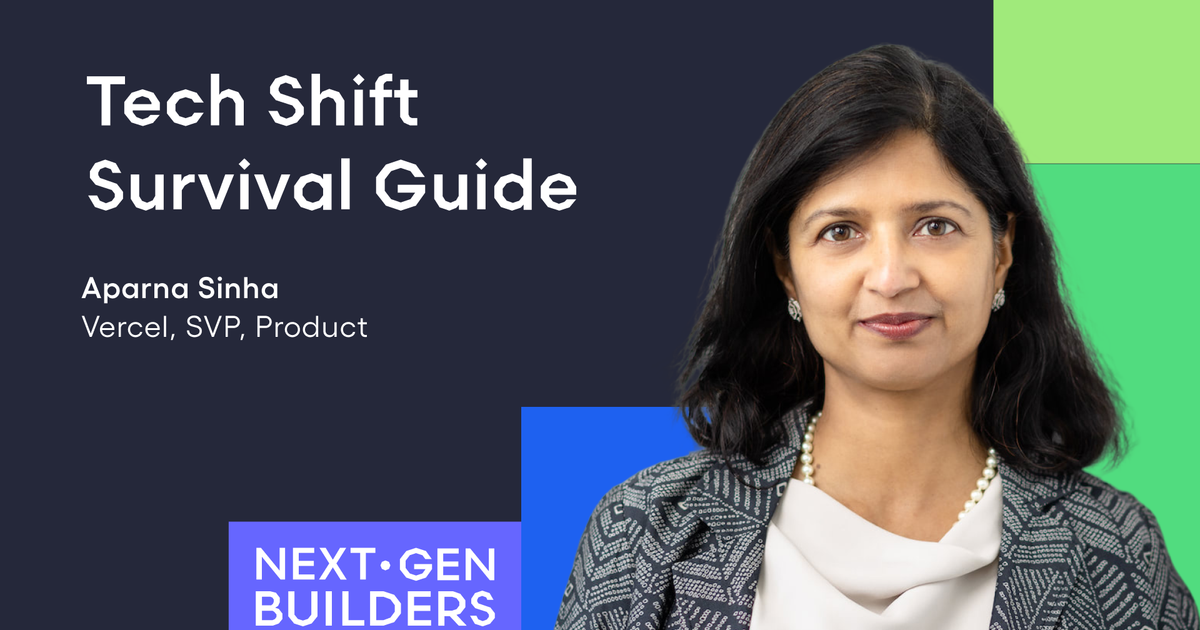
    I’ve spent the past few years building in what often feels like an AI tornado—intense velocity, shifting requirements, and unforgiving expectations for security and quality. When I think about how to turn that chaos into momentum, I’m reminded of a guiding prompt: "Learn how Aparna Sinha, SVP of Vercel, builds in the AI tornado quickly and securely. Aparna shares her practical advice for builders everywhere." That mandate resonates with how I lead product teams to move decisively while protecting our customers and our brand.

    In practice, building quickly and securely starts with clarity. I anchor the team on a crisp value proposition, define outcomes over output, and align product discovery with a tight feedback loop. We plan with product roadmapping and sprint planning that front-loads risk: data governance, threat modeling, and privacy-by-design are non-negotiable guardrails. This lets us unlock developer velocity without compromising trust—precisely the balance elite product management leadership aims to achieve.

    On the execution side, I use lightweight gen ai experiments to accelerate insight and reduce uncertainty. For gen ai for product prototyping, we spin up narrow, testable slices that validate feasibility, usability, and safety in parallel. Two-week iteration cycles, clear exit criteria, and a secure-by-default posture keep us honest. We instrument a unified analytics view to measure real outcomes, then double down where signal is strongest and deprecate what doesn’t move the needle.

    Team topology matters just as much as process. I empower product trios to own customer value end-to-end, pair forward deployed engineers with design and PM for rapid discovery, and practice developer evangelism to amplify adoption patterns early. This creates the foundation for product-led growth: a self-reinforcing loop where users teach us what to build next, and we respond with precision. Strong stakeholder management keeps go-to-market aligned so we can scale learnings into repeatable wins.

    Security is everyone’s job, not a final checklist. We embed data governance and compliance considerations from day one—so speed becomes sustainable, not reckless. The outcome is a product culture that moves fast with conviction: disciplined experimentation, clear decision frameworks, and a shared commitment to quality.

    If you’re building in the AI tornado, focus on three levers: sharpen outcomes (what matters), reduce uncertainty (prove it fast), and codify trust (bake in safety). Do this consistently, and your team will ship faster with fewer reversals—while compounding credibility with customers and the market.


    Inspired by this post on Amplitude – Perspectives.

    Book a consult png image
  • Crack User Drop‑Off Fast: My Step‑by‑Step Amplitude Playbook for High‑Impact Growth

    Crack User Drop‑Off Fast: My Step‑by‑Step Amplitude Playbook for High‑Impact Growth

    When I see a drop‑off curve flattening our growth, I don’t panic—I get curious. Drop‑off is a signal, not a failure, and with the right workflow it becomes one of the fastest paths to unlocking activation, retention, and product‑led growth.

    Understanding user behavior is the foundation of every great product. Here’s how to start doing that with Amplitude.

    I start by defining the journey that matters most: the path from first touch to first value. That means choosing a clear activation milestone, articulating the “aha” moment, and writing down the specific questions I need Amplitude to answer—where users hesitate, which segments suffer most, and what behaviors correlate with long‑term success.

    Before analysis, I ensure the instrumentation is trustworthy in Amplitude analytics. I align on an event taxonomy, enforce data governance and naming conventions, and attach the right properties (channel, plan, device, role). Clean, consistent data is non‑negotiable—without it, you’re optimizing noise.

    Next, I build a simple funnel in Amplitude: sign‑up → verification → setup → first key action. I compare conversion and drop‑off by acquisition channel, device, geo, plan, and cohort. This immediately reveals friction points and clarifies whether the problem is message‑market fit, onboarding, or feature discoverability.

    To go beyond the first click, I pair funnels with retention analysis and pathing. I review day‑1/7/30 retention, unbounded retention, and lifecycle stages, then cohort users who hit the “aha” versus those who don’t. The contrast tells me which behaviors predict durability and where a timely nudge can change the trajectory.

    Insights only matter if they drive action. I translate each friction point into a targeted onboarding improvement: in‑app guides to nudge setup, product tours that surface the core value proposition, and thoughtful tooltip design at moments of uncertainty. For product‑led growth, I prioritize small, testable changes over wholesale redesigns.

    Execution is a team sport. Product trios work with forward deployed engineers and customer support to ship experiments quickly. We schedule them in product roadmapping and sprint planning, and measure impact with shared dashboards in our unified analytics platform. That alignment empowers product teams to move fast without guessing.

    If you only have an hour, here’s my quick start: connect your data, define 4–6 events that describe the activation path, build a funnel from sign‑up to first value, segment by new versus returning users, and pick one high‑impact experiment to run this week. Close the loop with lightweight product discovery interviews to validate the why behind the numbers.

    Drop‑off isn’t a verdict—it’s a map. Use Amplitude to trace where users hesitate, meet them with timely guidance, and iterate until the journey feels effortless.


    Inspired by this post on Amplitude – Best Practices.


    Book a consult png image
  • How I Craft Product Surveys Users Love: Proven Tactics for Actionable, High-Quality Feedback

    How I Craft Product Surveys Users Love: Proven Tactics for Actionable, High-Quality Feedback

    When I need fast, trustworthy insight into what to build next, I turn to product surveys. Done well, they feel respectful, take minutes, and deliver signal we can ship against. Done poorly, they frustrate users and mislead product teams. Over the years, I’ve refined a simple, repeatable approach that consistently yields high response rates and actionable insights across product discovery, onboarding, and product-led growth motions.

    Create effective product surveys that capture actionable user feedback, improve features, and support smarter product decisions.

    I always start with the decision I need to make. Am I validating a value proposition, prioritizing a feature, diagnosing friction in onboarding, or measuring retention risk? That clarity shapes everything—who I ask, when I ask, and how I phrase the questions. It also aligns the survey with outcomes, not outputs, so results directly inform product roadmapping and sprint planning instead of becoming a vanity report.

    Question design is where UX writing discipline pays off. I keep surveys short (5–7 questions), bias-free, and written in the same voice we use in-app. I mix two or three crisp quant questions (e.g., confidence, usefulness, likelihood to continue) with one or two open-ended prompts to surface the “why.” That blend gives me both trend lines and the qualitative texture I need to make confident trade-offs with stakeholders.

    Timing and targeting often matter more than question count. I trigger in-app micro-surveys at meaningful moments—right after a user finishes onboarding, explores a product tour, or engages with a newly released feature. For deeper discovery, I segment cohorts (new vs. power users, retained vs. churning) to avoid muddy averages. The right context earns higher completion rates and more honest feedback.

    Trust drives participation. I set expectations upfront: how long it will take, why it matters, and how their feedback will shape the roadmap. I also share back the outcome—what we learned and what we shipped—so users see the loop closing. That simple follow-up builds goodwill and sustains response rates over time.

    On analysis, I combine lightweight quant with rigorous qualitative synthesis. I chart response and completion rates, then use thematic coding on open text to spot repeating patterns. Where it helps, I apply gen AI to accelerate clustering and sentiment analysis, then validate the themes manually. Finally, I triangulate with product telemetry in Amplitude analytics to confirm that what users say matches what they do.

    The most valuable step is translation: turning feedback into decisions. I map insights to clear problem statements, rank them by user impact and strategic fit, and convert them into opportunities on our roadmap. In planning, I pair these opportunities with success metrics tied to activation, adoption, or retention analysis, so we can measure whether changes actually move the needle.

    Surveys aren’t a substitute for interviews, but they’re a powerful complement. They help me spot signals at scale, de-risk bets between cycles, and align cross-functional stakeholders around evidence rather than opinions. When surveys are concise, contextual, and connected to action, users feel heard—and teams ship smarter.


    Inspired by this post on Amplitude – Best Practices.


    Book a consult png image
  • Create Irresistible Product Tours Users Love: Boost Onboarding, Feature Adoption, and Satisfaction

    Create Irresistible Product Tours Users Love: Boost Onboarding, Feature Adoption, and Satisfaction

    I’ve learned that the fastest way to earn user trust is to guide people to value within minutes, not weeks. As a VP of Product Management, I treat product tours as a strategic asset for product-led growth—not a band-aid for unclear UX. When we get them right, new users reach that first “aha” moment quickly, power users discover deeper capability, and support tickets quietly decline.

    Learn how to create effective product tours that improve onboarding, feature adoption, and the user experience without overwhelming users.

    My starting point is simple: every tour must serve a single job-to-be-done. I resist the urge to teach everything. Instead, I define one outcome (for example, sending a first campaign or inviting a teammate) and design a clear, three-to-five step flow. Strong UX writing does most of the heavy lifting—short, actionable language, consistent labels with the UI, and thoughtful tooltip design that highlights only what’s essential.

    I rely on a small toolkit of in-app guides that meet users where they are. A concise welcome modal sets expectations and reiterates the value proposition. A checklist breaks the outcome into bite-sized wins. Hotspots and tooltips provide contextual nudges at the exact moment of need. Empty states teach by doing, showing an example and prompting the next action. Together, these patterns turn guidance into momentum without piling on cognitive load.

    Personalization is non-negotiable. I segment tours by role, plan, and intent signal. New admins shouldn’t see the same flow as experienced creators. I trigger guides contextually—after users click into a feature, not on login—and I let them skip, snooze, or revisit the tour from a help menu. Respecting autonomy builds trust and keeps engagement high.

    Measurement guides every decision. Before launch, I define success metrics like activation rate, time-to-value, and feature adoption. I instrument funnels with Amplitude analytics to track completion, drop-off by step, and follow-on behaviors (did they invite a teammate or create a second project?). I pair this with retention analysis to see whether guided users come back and expand usage. Then I A/B test copy, step order, and trigger timing until the data—and user feedback—tell a consistent story.

    Operationally, I put a product trio—PM, design, and engineering—in charge of the tour experiments and integrate them into product roadmapping and sprint planning. We maintain a style guide for in-app guides and UX writing, so the experience feels native and respectful of the brand. Governance matters: we audit what’s live each quarter to avoid guide sprawl and content conflicts as the product evolves.

    There are a few traps I avoid. Long, linear tours that try to teach the entire product almost always underperform. Overlapping tooltips can frustrate power users. And no tour should be a substitute for fixing a confusing flow. When a guide consistently underperforms, I treat it as a product discovery signal to simplify the experience itself.

    If you’re getting started, here’s a pragmatic plan I use: pick one high-impact flow tied to activation, define a crisp outcome, draft the microcopy, and build a lightweight in-app guide with a checklist and two or three tooltips. Ship to a small cohort, instrument with Amplitude analytics, and review results after a few days. Iterate fast, roll out broader once you see lift, and continue refining as the product and audience evolve.

    Thoughtful product tours don’t just teach; they accelerate confidence. When users feel capable quickly, everything improves—adoption, satisfaction, and long-term growth.


    Inspired by this post on Amplitude – Best Practices.


    Book a consult png image
  • Master Points of Parity in SaaS: Nail Table Stakes, Earn Trust, and Unlock Differentiation

    Master Points of Parity in SaaS: Nail Table Stakes, Earn Trust, and Unlock Differentiation

    Early in any market, I obsess over one thing before splashy features or clever messaging: are we meeting the table stakes that buyers expect? Points of parity (POPs) are the baseline capabilities that put us on a buyer’s shortlist and establish the credibility to compete. Without them, even the best differentiators won’t land.

    Understand how points of parity are crucial to getting your foot in the door. Explore different strategies to make POPs work for your SaaS business.

    Here’s how I define POPs in practice: they’re the “no-regrets” features, assurances, and experiences that customers assume you have because your competitors already do. In SaaS, that often includes security certifications (e.g., SOC 2), SSO, predictable performance (SLAs/Uptime), clear pricing, responsive support, and integrations with the rest of the customer’s stack.

    POPs differ from points of difference (PODs). PODs are what make you unique; POPs are what make you viable. I’ve seen teams try to lead with innovation before building credibility, only to stall in procurement. You earn the right to showcase differentiation after you meet parity.

    For SaaS, POPs frequently map to procurement checklists. Think InfoSec reviews, role-based access controls, audit logs, encryption standards, user management, and integrations with systems like Salesforce, HubSpot, or Slack. These aren’t glamorous, but they remove friction, reduce perceived risk, and accelerate time-to-value—cornerstones of product-led growth and a healthy go-to-market motion.

    To identify the right POPs, I triangulate across four inputs: customer interviews focused on buying criteria, win/loss analysis to understand disqualifiers, competitor teardowns to benchmark table stakes, and support data to spot recurring gaps eroding trust. Collectively, these inputs reveal the minimum viable promises we must keep.

    Prioritization matters. I translate POPs into outcomes (not output) and align them with our roadmapping and sprint planning. For example, instead of “Ship SSO,” I set an objective like “Reduce enterprise security objections by 60%” and measure RFP pass rates, security review cycle time, and sales stage conversion. This keeps us anchored to impact, not just checkboxes.

    Execution should be pragmatic. With POPs, “good enough” is often the right bar—reliable, discoverable, and well-documented. Over-engineering POPs slows you down and diverts resources from differentiation. I focus on stable defaults, clear UX patterns, great docs, and in-app guides that help users activate parity features without friction.

    Measuring POP health is straightforward if you wire it into your system. I monitor activation rates for parity features (e.g., SSO enabled), support volume tied to trust blockers (security, performance, billing), and the presence of POP gaps in win/loss notes. Retention and expansion are the ultimate validators: when POPs are solid, renewal conversations shift from risk mitigation to value creation.

    Consider two tangible examples. For a messaging platform, POPs may include 99.9% uptime, message deliverability guarantees, two-factor authentication, and role-based permissions. For a product analytics tool, POPs could include granular event tracking, user privacy controls, standard dashboards, and self-serve onboarding. None differentiate you alone, but missing any one of them can disqualify you.

    Common pitfalls I warn teams about: over-indexing on shiny features while losing deals on basics; inconsistent messaging that promises parity you can’t operationalize; ignoring pricing and packaging parity (buyers expect clear tiers and predictable billing); and underinvesting in enablement, leaving sales to “sell around” missing POPs.

    Communicating POPs is as important as building them. I make sure parity shows up on our pricing page, security and reliability pages, and in crisp one-pagers for buying committees. In the product, I highlight parity features during onboarding with checklists and tooltips so customers experience trust quickly. For founder-led GTM, a tight narrative—“Yes, we meet the table stakes; here’s where we go beyond”—keeps discovery calls focused on outcomes.

    My playbook is simple: meet parity fast, prove reliability visibly, and then pour fuel on your differentiators. When POPs are nailed, sales cycles shorten, support debt drops, and your unique value finally gets the stage time it deserves.


    Inspired by this post on Amplitude – Best Practices.


    Book a consult png image
  • Product Tooltips That Drive Adoption: A Proven Playbook to Guide Users and Boost Engagement

    Product Tooltips That Drive Adoption: A Proven Playbook to Guide Users and Boost Engagement

    Over the years, I’ve learned that small, well-timed UI nudges can unlock outsized gains in user engagement and feature adoption. Product tooltips are one of those quiet power tools—subtle, contextual, and incredibly effective when they’re crafted with intention.

    Learn how to create effective product tooltips that improve user engagement, boost feature adoption, and guide users through key product actions.

    When I say “product tooltips,” I’m talking about lightweight, contextual hints that appear in-app to clarify what something does, when to use it, or why it matters. Unlike full tours or intrusive modals, tooltips meet users in the flow of work. They’re especially valuable in product-led growth motions where in-app guides must do the heavy lifting for onboarding, feature discovery, and self-serve education.

    I use tooltips for four moments that matter: first-time onboarding (helping new users get to value fast), feature discovery (revealing capabilities at the precise moment of need), error prevention (reducing missteps with just-in-time guidance), and upgrade nudges (ethically highlighting premium value without derailing the task at hand). The common thread is relevance—contextual help only when it’s truly helpful.

    Great tooltips start with audience and intent. I segment by role, plan, and behavior so each message is specific to the user’s job-to-be-done. Brevity and clarity are non-negotiable: start with an action verb, state the outcome, and, when useful, add the “why” in a single line. If users must think to understand a tooltip, it isn’t a tooltip—it’s a help article.

    Here’s the playbook my teams and I rely on. First, identify the core user jobs and the friction points where users stall or make errors. Second, map these moments to the journey and choose no more than one or two high-impact tooltip placements per screen. Third, write microcopy that is plain, specific, and benefit-oriented. Fourth, set precise triggers (first-run, role-based, behavioral thresholds) and a frequency cap to avoid noise. Fifth, design for unobtrusiveness—clear placement, no occlusion of critical UI, and obvious dismissal. Sixth, instrument every tooltip with analytics. Seventh, A/B test copy, placement, and timing, then iterate.

    Instrumentation is where the gains compound. I track impressions, hovers, clicks, dismissals, follow-on actions, task completion, time-to-value, and downstream retention. With Amplitude analytics, I can segment by cohort and see which tooltips truly move activation or adoption, not just generate clicks. If a tooltip doesn’t correlate with a measurable behavior change, I retire or rewrite it.

    Design details matter. I favor minimal animation, consistent styling, and a clear “escape” path so users never feel trapped. On mobile, placement and tap targets must respect ergonomics and screen real estate. Accessibility is integral: keyboard navigation, screen reader labels, sufficient contrast, and reduced motion preferences ensure tooltips help everyone.

    Localization and governance keep tooltips trustworthy at scale. I maintain a content system with reusable templates, versioning, review cadences, and explicit owners. Every tooltip has an expiry date and a performance KPI. This prevents content drift and ensures we only show guidance that’s current and effective.

    I’ve also learned what not to do. Don’t ship tooltips to compensate for confusing core UX—fix the UX. Don’t stack multiple tips on a single screen—sequence them over time. Don’t be vague—generic hints like “Check this out!” create noise. And never block primary actions; tooltips should guide, not gate.

    For microcopy, a simple formula works: Action + Outcome + Benefit. For example, “Schedule this workflow now to automate follow-ups and reduce no-shows.” Keep it short, test variants, and watch how small language changes affect completion rates and feature adoption.

    When done right, product tooltips reduce cognitive load, accelerate onboarding, and turn hidden features into everyday habits. Start small: pick one critical task, add a single contextual tooltip, measure the impact, and iterate. The compounding effect on engagement, conversion, and retention is real—and it’s one of the most reliable levers I’ve used to guide users through key product actions.


    Inspired by this post on Amplitude – Best Practices.


    Book a consult png image
  • In-App Guides That Convert: My Playbook with Amplitude to Boost Engagement and Retention

    In-App Guides That Convert: My Playbook with Amplitude to Boost Engagement and Retention

    Shipping features isn’t enough; users adopt what they understand and trust at the moment of need. Over the last several years leading product at HighLevel, I’ve seen in-app guides become one of the highest-leverage tools for engagement, smoother onboarding, and long-term retention when they’re built and measured with rigor.

    Discover actionable strategies to boost engagement, reduce friction, and improve retention with Amplitude’s in-app guides

    Why do in-app guides matter so much? They operationalize product-led growth by meeting customers in context—inside the workflow—so users reach time-to-value faster and revisit features more confidently. When paired with Amplitude analytics, guides become a closed-loop system: we target cohorts precisely, experiment safely, and connect each nudge to measurable outcomes rather than vanity metrics.

    I start by mapping the end-to-end journey and identifying moments that cause friction: first-run onboarding, the “aha” moment, advanced feature discovery, and support deflection. From there, I prioritize one high-impact objective—activation rate, time-to-value, or retention—and choose a single surface to improve before expanding. This focus avoids guide sprawl and keeps the team aligned on outcomes, not output.

    Effective guide design is contextual, concise, and progressive. Tooltips, checklists, hotspots, and coachmarks should appear only when the user’s intent and state warrant it. Keep copy crisp, show one step at a time, and provide an obvious escape hatch. Respect accessibility with clear contrast, keyboard navigation, and screen-reader-friendly text. Above all, guides should reduce cognitive load—not add it.

    Targeting is where Amplitude shines. I build behavioral cohorts (e.g., signed in 3 times, viewed feature X but never completed action Y) and trigger guides based on event conditions such as page, role, device, or prior completion. I set frequency caps, recency windows, and cool-down rules to prevent fatigue. Each guide is tied to a single KPI, with guardrails to avoid overlapping experiences.

    Every guide is an experiment. I A/B test variants of copy, ordering, and UI pattern, measuring uplift on activation, task completion, time-to-value, and downstream retention. I instrument success and drop-off events end to end, confirm sample size and duration, and review results in Amplitude funnels and cohorts so we can attribute behavior change to the guide—not to adjacent releases.

    Operationalizing this work requires product trios to move in lockstep. We maintain a guide library with reusable templates, a naming and versioning scheme, and a simple governance workflow so marketing and support can contribute without creating noise. Localization, role-based targeting, and changelog notes ensure new experiences land smoothly across segments.

    Common pitfalls to avoid: launching blocking modals that interrupt flow, over-instructing users who already know the path, and shipping guides without a removal plan once the metric improves. Another mistake is treating guides as support bandaids for poor UX. When a guide highlights friction, we turn that insight into a backlog item and fix the underlying design.

    In practice, I’ve seen meaningful lifts in activation and retention by sequencing a welcome checklist, a contextual tooltip on the first critical action, and a just-in-time coachmark that offers help only after an error or hesitation. The pattern is simple: teach less, learn more, and let the data decide what stays.

    If you’re getting started, try this five-step sprint: map the journey and choose one KPI; define a precise cohort in Amplitude; design the smallest contextual guide that unblocks the next step; A/B test with clear success events; and retire or iterate based on cohort impact. Repeat this loop across the journey to scale adoption without overwhelming users.

    In-app guides work best when they are invisible helpers. With Amplitude, we can target with precision, measure what matters, and continuously refine experiences that earn engagement, reduce friction, and sustain retention.


    Inspired by this post on Amplitude – Best Practices.


    Book a consult png image