You probably do not need another chatbot beside a stack of browser tabs. You need a controlled path from a research question to a defensible manuscript – without losing track of which paper supports which claim.
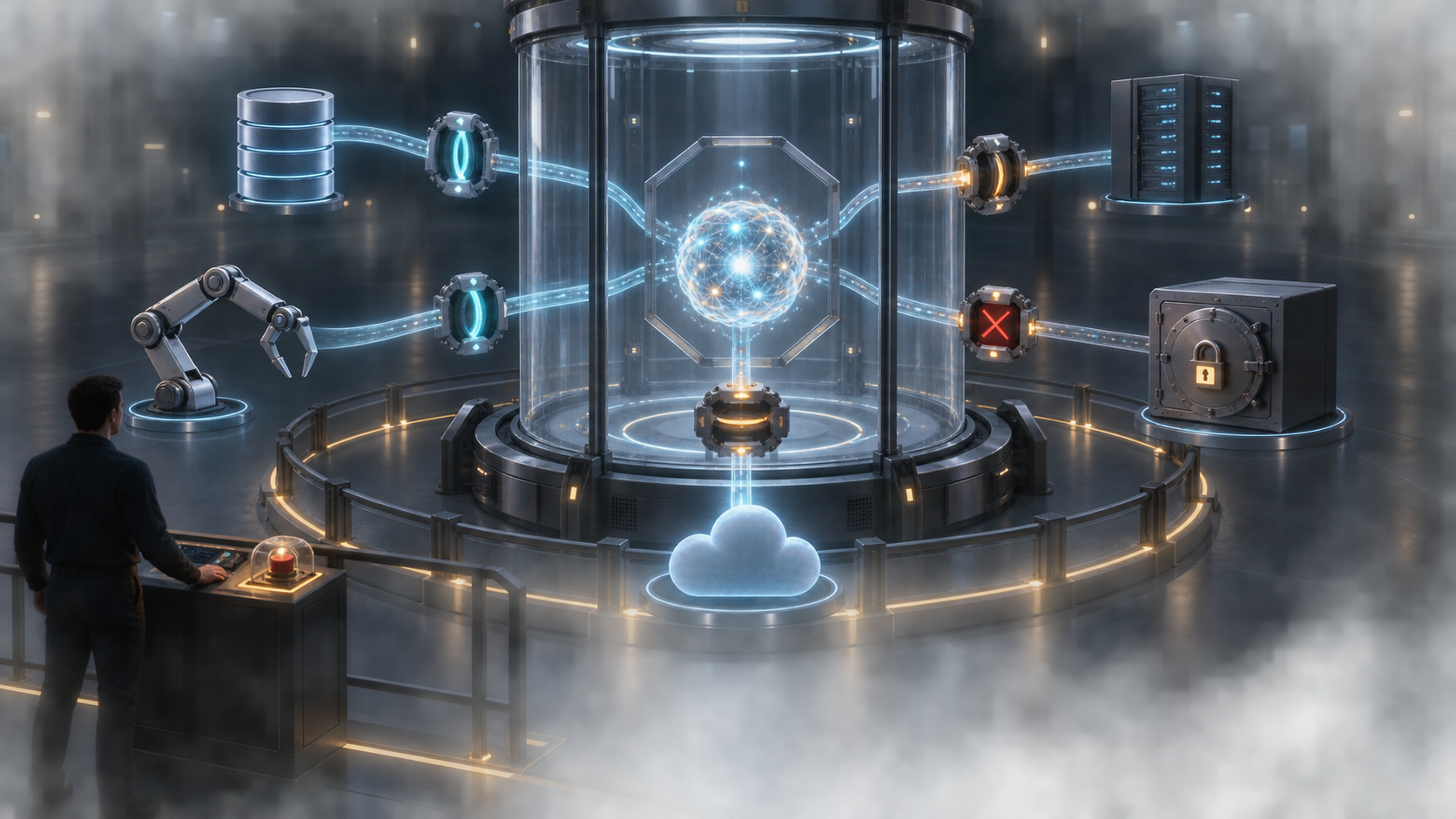
The most useful AI-assisted workflow does not ask AI to do your research for you. It gives AI narrow jobs inside a process you can inspect: organizing a corpus, extracting comparable evidence, testing a synthesis, drafting from verified notes, and proposing edits you approve.
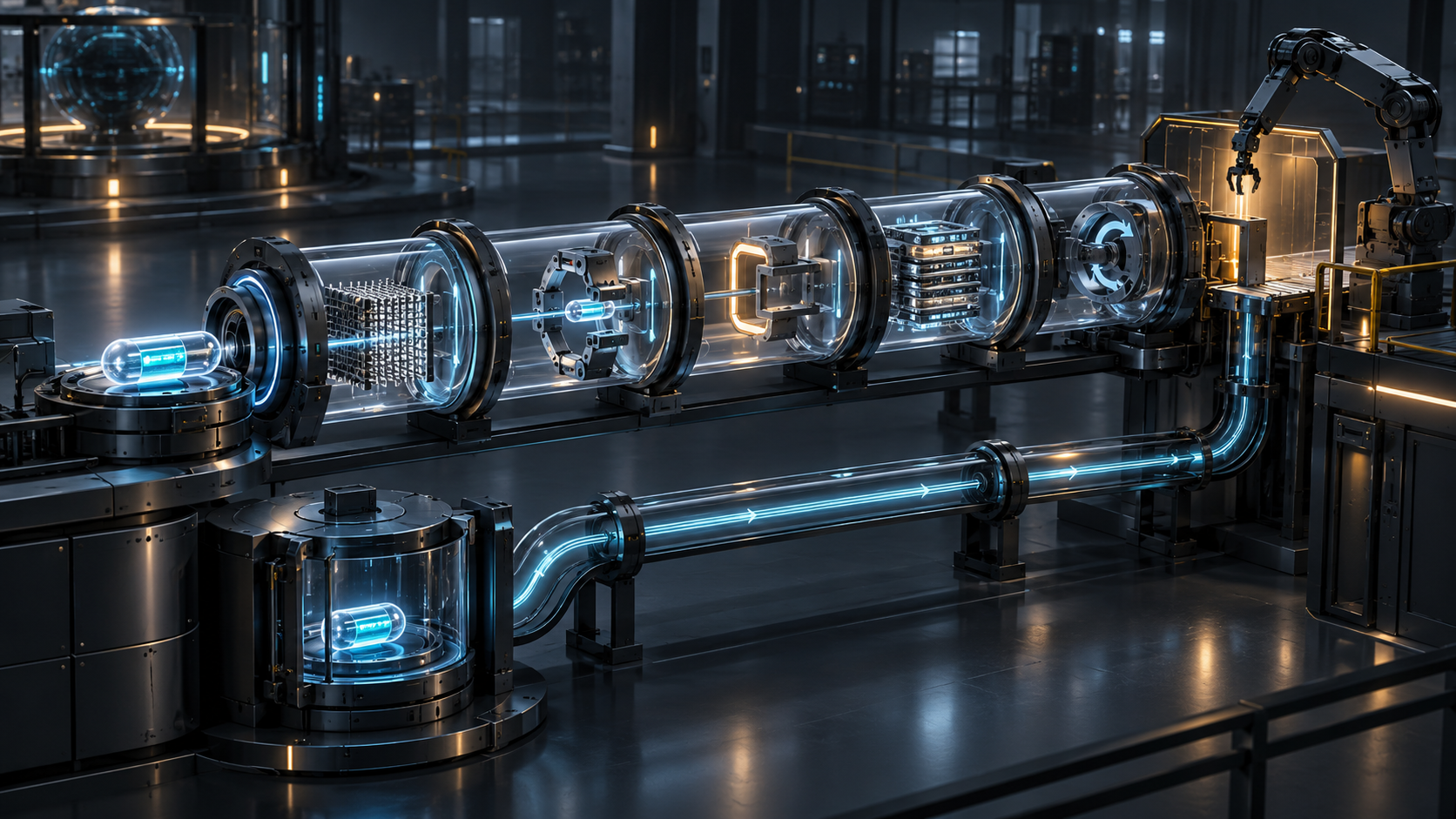
Treat AI as a pipeline, not a co-author
Research quality depends on decisions that a language model cannot own: what question matters, which material is eligible, whether methods are comparable, how much confidence a result deserves, and what you are prepared to claim. AI can reduce the clerical load around those decisions, but it should not make the decisions invisibly.
Start by separating the work into distinct stages. Each stage should produce an artifact that you can inspect before moving forward:
- Question: a research brief that defines scope and exclusions.
- Collection: a bounded set of papers with an inclusion log.
- Extraction: structured notes tied to locations in the original papers.
- Synthesis: a claim ledger showing support, disagreement, and uncertainty.
- Drafting: prose generated only from the approved ledger and outline.
- Editing: visible suggestions reviewed inside the manuscript.
- Audit: a final paper-by-paper check of claims, citations, and disclosure requirements.
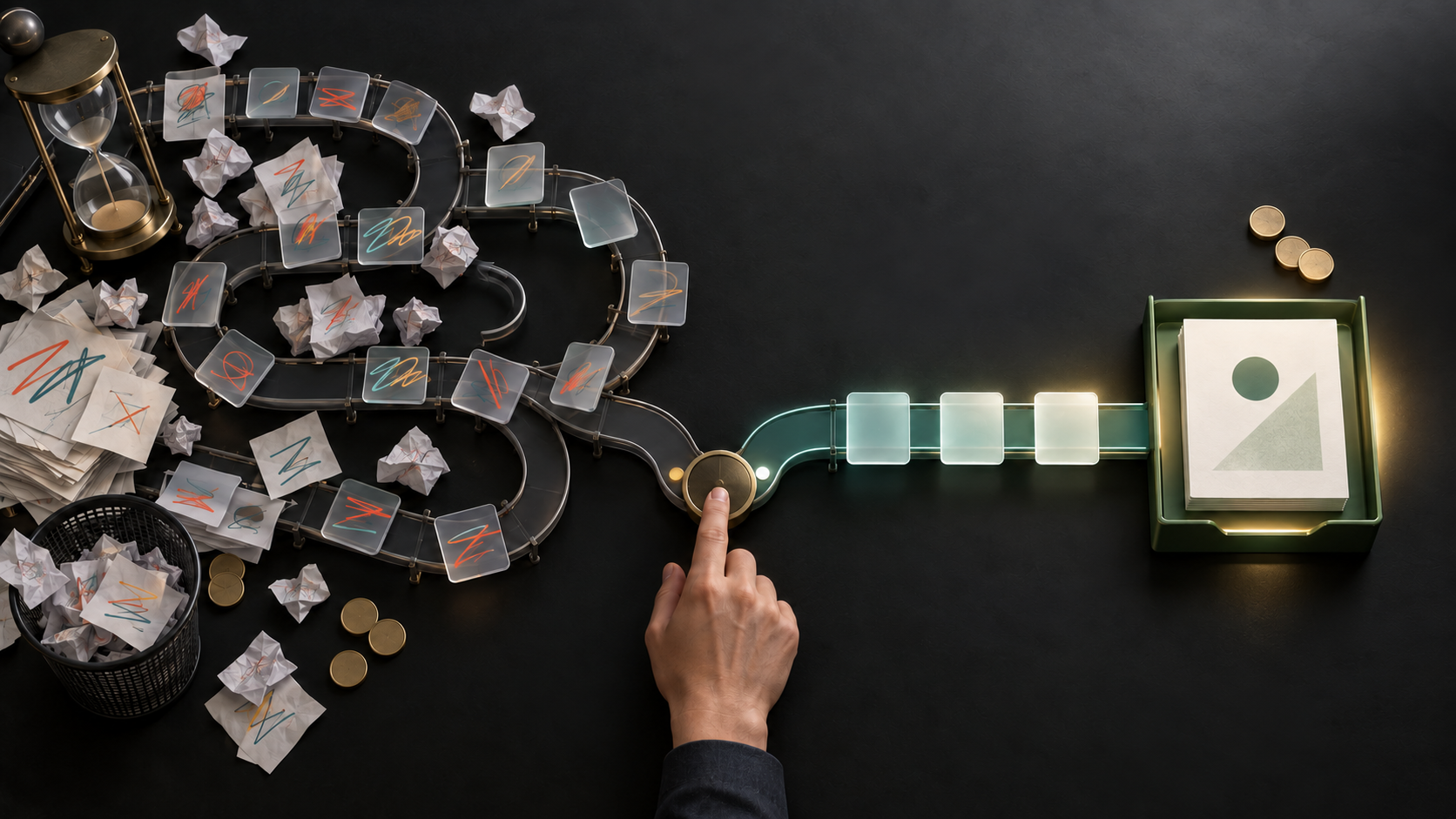
This separation matters because a polished paragraph can hide a weak extraction. If collection, interpretation, and writing happen in the same prompt, you cannot tell where an error entered the process. A staged workflow makes the error observable while it is still cheap to correct.
Before opening an AI tool, write a short research contract. Include the question, population or context, relevant concepts, acceptable evidence types, exclusions, intended output, and unresolved terminology. Add one explicit constraint: when evidence is missing or ambiguous, the assistant must say so rather than complete the thought.
Build a bounded corpus before asking for conclusions
An assistant cannot distinguish the literature from whatever happens to be in its current context. If you upload papers opportunistically and begin asking broad questions, you risk treating an accidental collection as a representative body of evidence.
Create one project library for one research question. Platforms such as SciSpace can combine project folders, uploaded PDFs, papers added from its catalog, Zotero imports, collection-level questions, manuscript work, and citation management. The important design choice is not the brand. It is the persistent boundary around the material the assistant is allowed to use.
Keep an inclusion log beside that library. For every candidate paper, record:
- Its verified bibliographic identity.
- Whether it is included, excluded, or awaiting review.
- The reason for that decision.
- Which part of the research question it informs.
- Whether you have the complete text or only partial material.
- Any access, translation, or version limitation that could affect interpretation.
Do not let the assistant silently turn search results, abstracts, and complete papers into equivalent evidence. An abstract may help you decide whether to inspect a paper, but it does not expose all the methodological qualifications you may need for synthesis.
When the collection is ready for analysis, freeze a working snapshot. You can add material later, but record that change and rerun any affected comparison. Otherwise, your conclusions can shift because the corpus changed, while the prose still looks internally consistent.
If you already maintain references in Zotero, use an import to reduce duplicate handling, but keep the verified reference record under your control. A convenient transfer does not guarantee that every author name, title, publication detail, identifier, or version is correct.
Extract evidence before requesting a synthesis
Paper summaries are attractive because they are fast. They are also a weak foundation for serious synthesis. Each summary chooses what to omit, and the omissions become difficult to see once several papers have been compressed into a smooth narrative.
Ask for a structured evidence map instead. Use the same fields across the collection so that comparisons are based on like-for-like information. Useful fields include the research purpose, context or population, method, data, intervention or exposure where relevant, measured outcomes, principal findings, limitations, author-stated conclusions, and the page or section where each item appears.
A grounded extraction prompt can be direct:
Prompt: Use only the papers in this project folder. For each requested field, provide the paper identifier and the page, table, figure, or section where the information appears. Distinguish reported results from the authors’ interpretation. If a field is absent, write not found. Do not infer a value or create a citation.
Then inspect the original paper wherever the output will influence a claim. The locator is a verification aid, not proof that the extraction is correct. If the cited passage does not support the extracted statement, correct the record before asking for any cross-paper analysis.
Once the extraction is verified, ask comparison questions one dimension at a time:
- Which papers ask genuinely comparable questions?
- Where do definitions differ enough to make a direct comparison unsafe?
- Which findings agree despite different methods?
- Which apparent disagreement could be explained by population, context, measurement, or study design?
- Which conclusion depends heavily on a single paper?
- Which expected field was not reported in the material available?
Be especially careful with requests to identify a research gap. Absence from your folder is not evidence of absence from the field. Treat a proposed gap as a search hypothesis: restate it in searchable terms, look specifically for disconfirming work, and describe it as a corpus-level observation until you have checked beyond the collection.
Draft from a claim ledger, not from a blank prompt
The safest moment to use generative writing is after you know what the draft is allowed to say. Build a claim ledger that connects every planned assertion to its evidence and qualifications.
| Ledger field | What to record | Question it answers |
|---|---|---|
| Claim | The narrow statement you may make | What exactly am I asserting? |
| Support | Verified papers and evidence locations | Where can I check it? |
| Counterevidence | Conflicting or qualifying findings | What resists this claim? |
| Method caveat | Limits on comparison or generalization | How far does the evidence travel? |
| Status | Approved, revise, or evidence needed | May this enter the draft? |
Make the ledger narrow enough that a reviewer could challenge one claim without unraveling the entire section. Statements such as several papers support this approach are too broad unless the papers studied the same construct in sufficiently comparable ways. Record the actual relationship: agreement, partial agreement, methodological conflict, or unresolved difference.
Next, create an evidence outline. Each paragraph should have a job: make a claim, present the relevant evidence, state the qualification, and explain why the point matters to the research question. Only then should you ask AI for prose.
Prompt: Draft this section using only approved claims in the ledger and only the citations attached to those claims. Preserve uncertainty and disagreement. Do not introduce new papers, facts, quotations, or causal language. If the outline requires unsupported evidence, insert [EVIDENCE NEEDED] instead of completing the sentence.
This changes the assistant’s task from inventing a plausible section to expressing an already governed argument. You still need to inspect the result for meaning. Watch for stronger verbs, broader populations, collapsed time frames, and causal wording that was not present in the ledger. Small linguistic changes can materially overstate a finding.
Do not accept a bibliography simply because its formatting looks credible. Open every cited work, confirm that it exists in your approved collection, verify its metadata, and check that it supports the sentence where it appears. If the assistant introduces an unfamiliar citation, remove it from the draft until you have independently located and reviewed it.
Edit the manuscript in separate, visible passes
Moving AI-generated prose between a chat window and a word processor creates a second problem: the reasoning change and the formatting change arrive together. You may spend as much time reconstructing headings, references, and document styles as you saved while drafting.
When your tool supports direct document editing, keep the work inside a reviewable manuscript. An AI agent can edit Word documents while preserving existing formatting and present revisions as tracked, reversible changes. That is useful only if you keep each request narrow enough to evaluate.
Run separate editing passes:
- Argument pass: flag claims that do not follow from the cited evidence, repeated reasoning, missing qualifications, and transitions that hide a logical jump.
- Clarity pass: shorten dense sentences, remove ambiguity, define terminology consistently, and preserve the technical meaning.
- Structure pass: test whether headings and paragraph order match the evidence outline.
- Compliance pass: apply the required manuscript template, heading structure, and other submission requirements without rewriting substantive claims.
- Reviewer-response pass: connect each requested correction to a visible manuscript change and leave unrelated sections untouched.
Accept or reject changes individually. A redline tells you what changed, but not whether the change is academically sound. Compare substantive revisions with the claim ledger and the original evidence, especially when an edit makes the prose more decisive or concise.
Keep an untouched version before any broad reorganization or formatting operation. If a tool corrupts references, moves text into the wrong section, or changes meaning across many passages, a clean copy is safer than trying to reconstruct the previous state from memory.
Audit the chain from manuscript back to evidence
Your final review should move in the opposite direction from drafting. Start with each manuscript claim and trace it back through the ledger, extraction, and original paper. That reverse path catches errors that a normal front-to-back proofread will miss.
- Claim audit: Can every material assertion be traced to verified evidence or clearly identified as your interpretation?
- Citation audit: Does each cited paper support the exact sentence, with correct bibliographic information?
- Qualification audit: Did any edit remove limitations, uncertainty, population boundaries, or methodological differences?
- Contradiction audit: Did you represent meaningful disagreement, or did the synthesis average it away?
- Corpus audit: Can you explain why each paper was included and what changed after the working snapshot?
- Disclosure audit: Have you followed the applicable university, journal, funder, or supervisor rules for AI assistance and authorship?
Also check what you were permitted to upload. Do not place confidential peer-review material, restricted datasets, unpublished work belonging to someone else, or sensitive participant information into an external AI service without the necessary permission and an acceptable data-handling arrangement. The convenient workflow is not worth an unauthorized disclosure.
Pause the workflow when the assistant cannot identify an evidence location, repeatedly attributes material to the wrong paper, invents references, or changes conclusions after minor prompt variations. Those are not cosmetic defects. They mean the current output is not a reliable basis for drafting and the affected work must be rechecked from the papers.
Key takeaways
- Define the question, inclusion rules, and uncertainty policy before asking AI to analyze anything.
- Use a bounded project library so the assistant’s working material is explicit and reviewable.
- Extract structured evidence with paper and location references before requesting a narrative synthesis.
- Treat a proposed literature gap as a search hypothesis, not as a conclusion from an incomplete folder.
- Draft only from an approved claim ledger, and never allow the assistant to create missing citations.
- Edit in narrow, tracked passes, then audit every material claim against the original paper.
Apply this workflow to one live subsection before expanding it across a thesis or manuscript. If you can move from a sentence in the draft back to the exact evidence, limitation, and inclusion decision behind it, the AI is reducing research friction without taking control of the scholarship. If you cannot, tighten the pipeline before generating more prose.
References