Tag: stakeholder management

  • How Fast Is Fast Enough? Turn Deployment Frequency into a Durable Competitive Advantage

    How Fast Is Fast Enough? Turn Deployment Frequency into a Durable Competitive Advantage

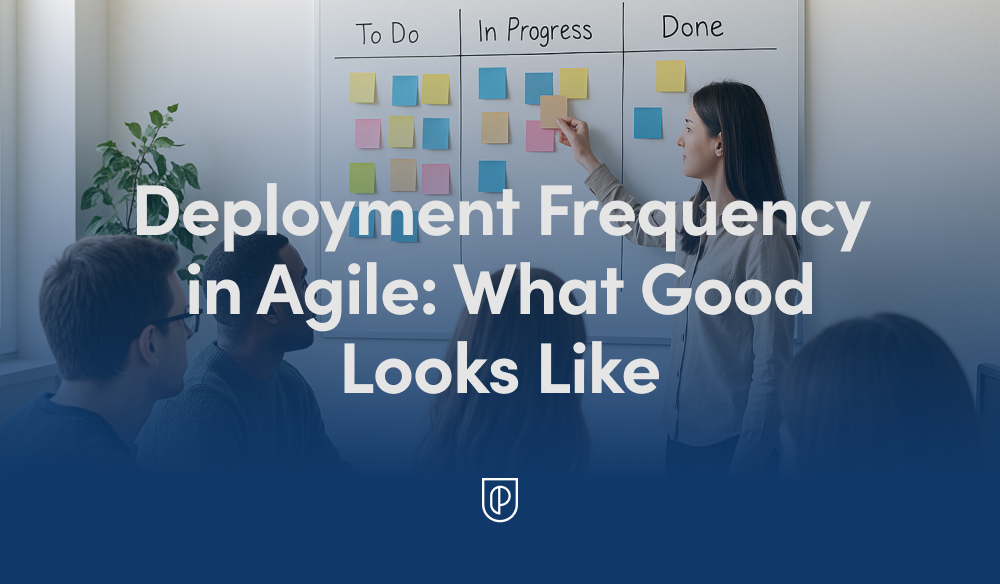
    Every product leader I know wrestles with the same question: how fast is fast enough when it comes to shipping? Over the years, I’ve learned that deployment frequency isn’t just a DevOps vanity metric—it’s a direct lever on customer value, risk, and competitive advantage.

    When I talk about deployment frequency, I mean how often a team puts code into production, per service or product, in a given time period. It sits alongside lead time for changes, change failure rate, and mean time to recovery (MTTR) as part of the DORA metrics—together, they tell a coherent story about delivery performance and reliability.

    If you’re looking for a compass, here’s how I calibrate expectations. Elite teams deploy on demand—often multiple times per day—because they’ve engineered safety into their CI/CD pipeline and decoupled deploy from release. High-performing teams comfortably ship daily to weekly. Medium performers land in the weekly-to-monthly range. These bands aren’t moral judgments; they’re context-aware guideposts. The goal isn’t to copy someone else’s speed, but to reach the fastest sustainable cadence your business, architecture, and risk profile can support.

    So what does “fast enough” look like in practice? It depends on your product’s blast radius, regulatory constraints, and architecture. Microservice-heavy platforms with strong automated testing, feature flags, and progressive delivery generally sustain higher cadences with lower risk. Monoliths and highly coupled systems can still move quickly, but they need disciplined trunk-based development, robust test pyramids, and strong release controls to avoid brittle deployments.

    At HighLevel, we’ve moved products from a cautious weekly train to safe daily (and eventually on-demand) deploys without increasing incident volume. The breakthrough wasn’t a single tool—it was a system: smaller batch sizes, automated tests that actually fail when they should, immutable artifacts, canary releases, and feature flags that decouple deployment from exposure. The result was faster learning loops, fewer late surprises, and more predictable delivery.

    If you’re not measuring deployment frequency yet, start simple. Instrument your CI/CD pipeline or GitOps tooling to count production deployments by service each day. Normalize for rollbacks and re-deploys to avoid inflating the metric. Visualize by team and product area so you can spot bottlenecks and trend improvements over time. Pair it with change failure rate and MTTR to ensure you’re not trading speed for stability.

    Once you’ve got a baseline, focus on the levers that actually move the needle. Reduce batch size by merging smaller, well-scoped changes. Embrace trunk-based development to minimize long-lived branches. Accelerate feedback with fast, reliable unit and integration tests, contract testing for services, and ephemeral environments for preview. Use feature flags to control exposure, and progressive delivery (canary, blue-green) to verify in production safely. Automate change approvals where policy allows, and replace heavyweight gates with observable, auditable pipelines.

    Watch out for common anti-patterns. Batching several unrelated features into a single deploy increases risk and slows learning. Heroic “release nights” mask systemic issues. Friday deploy bans are a smell; if you can’t safely deploy on Friday, you can’t safely deploy any day—invest in recovery speed and blast-radius controls instead. And never treat deployment frequency as a target in isolation; it’s only healthy when reliability improves or holds steady.

    For strategy alignment, I tie deployment goals to outcomes, not outputs. If your objective is time-to-value or activation improvement, a higher cadence of small, measurable changes aligns perfectly. If your objective is stability for a major seasonal event, slow the cadence temporarily and increase release controls. The point is to let business outcomes set the tempo while engineering creates the conditions for safe speed.

    Here’s a pragmatic 30-day plan I’ve used with teams: Week 1, baseline deployment frequency and map your current release process end-to-end. Week 2, choose two services and cut batch size in half while enabling feature flags for new code paths. Week 3, refactor the pipeline for faster test feedback and add canary or blue-green for one critical service. Week 4, publish a dashboard that shows deployment frequency alongside change failure rate and MTTR, and run a retrospective to decide the next bottleneck to remove.

    Culturally, celebrate small, frequent, reversible changes. Reward teams for boring deploys, rapid recovery, and high-quality instrumentation. Build psychological safety around rollback and kill switches—confidence breeds cadence.

    Track deployment frequency, optimize it, and watch delivery speed turn into a competitive edge. Explore how in this article!

    Fast enough isn’t a number you copy; it’s a capability you build. When deployment frequency rises in tandem with reliability, you unlock faster learning, happier customers, and a durable advantage in your market.


    Inspired by this post on Product School.


    Book a consult png image
  • Global Product Manager Playbook: Build Borderless Products, Align Teams, Win Every Market

    Global Product Manager Playbook: Build Borderless Products, Align Teams, Win Every Market

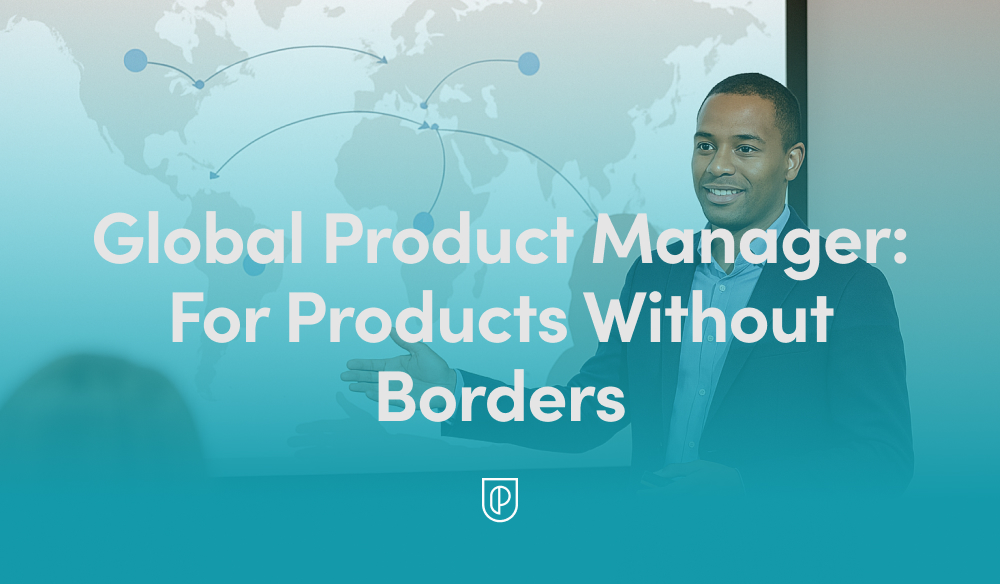
    Products without borders are exhilarating—and unforgiving. In my role leading product strategy, I’ve learned that “global” isn’t a launch plan; it’s a system. It’s the discipline of creating one product vision that flexes to many markets without breaking the core experience, the roadmap, or the business.

    Here’s what a Global Product Manager does, key skills, tools, challenges, and how to grow into this high-impact role.

    At its heart, the Global Product Manager role orchestrates product-market fit in multiple regions simultaneously. I translate a unified value proposition into localized realities—aligning product positioning, go-to-market strategy, pricing and packaging, and compliance—while keeping the platform cohesive. That means partnering closely with product trios, regional leaders, sales, customer success, and marketing to drive outcomes vs output OKRs that actually move the business.

    Operationally, I start with deep product discovery across segments and geographies: what pains are universal, and where do we need regional nuance? From there, I map points of parity we must maintain globally and the differentiators we’ll localize—copy, workflows, payments, support models, and integrations. The art is delivering a consistent core with flexible edges so we can scale without fragmenting the codebase or the customer experience.

    Trust is the non-negotiable. I build privacy-by-design into the product and roadmap, and I collaborate early with legal and security on data governance, data residency, and evolving regulations like GDPR. The right guardrails reduce rework later and enable faster regional launches—because compliance is a feature customers feel, even when they don’t see it.

    On the commercial side, I partner on consumption SaaS pricing, product-led growth motions, and country-level market entry. Some markets need lighter onboarding and in-app guides; others demand concierge support or partner-led distribution. I use retention analysis to identify fit and inform sequencing, then adjust messaging and activation flows to shorten time-to-value and improve user activation by region.

    My analytics and enablement stack is intentionally boring—and ruthlessly consistent. A unified analytics platform with Amplitude analytics gives us comparable funnels across countries. For experimentation, I run A/B testing with a clear minimum detectable effect (MDE) and disciplined rollout plans. Pendo powers product tours and in-app guides tailored by locale, while Intercom and CRM integration with HubSpot help me close the loop with GTM and support teams. The outcome is a learning system, not just a dashboard.

    The hardest part isn’t translation—it’s alignment. Time zones, competing priorities, and matrixed ownership test even strong cultures. I rely on stakeholder management, crisp decision records, and product roadmapping and sprint planning rituals that respect regional input without derailing the global plan. When tension rises, I return to first principles decision making and the try do consider framework to make trade-offs transparent and repeatable.

    If you’re growing into this role, start by owning a multi-region initiative end to end: lead localization for a critical workflow, run market-specific A/B testing with clear MDE, and publish a country launch plan that ties discovery insights to OKRs and resourcing. Build your credibility by shipping outcomes, not artifacts—then scale your impact by mentoring peers and creating shared templates for pricing, positioning, and experimentation. That’s how you shift from capable PM to trusted global operator.

    Ultimately, a Global Product Manager is a force multiplier. We reduce complexity for the organization while increasing resonance for customers. If “products without borders” is your mandate, build the systems—analytics, governance, enablement, and decision-making—that make borderless execution reliable, repeatable, and fast.


    Inspired by this post on Product School.

    Book a consult png image
  • From Walls to Bridges: How I Unite Siloed Teams and Eliminate the Illusion of Work

    From Walls to Bridges: How I Unite Siloed Teams and Eliminate the Illusion of Work

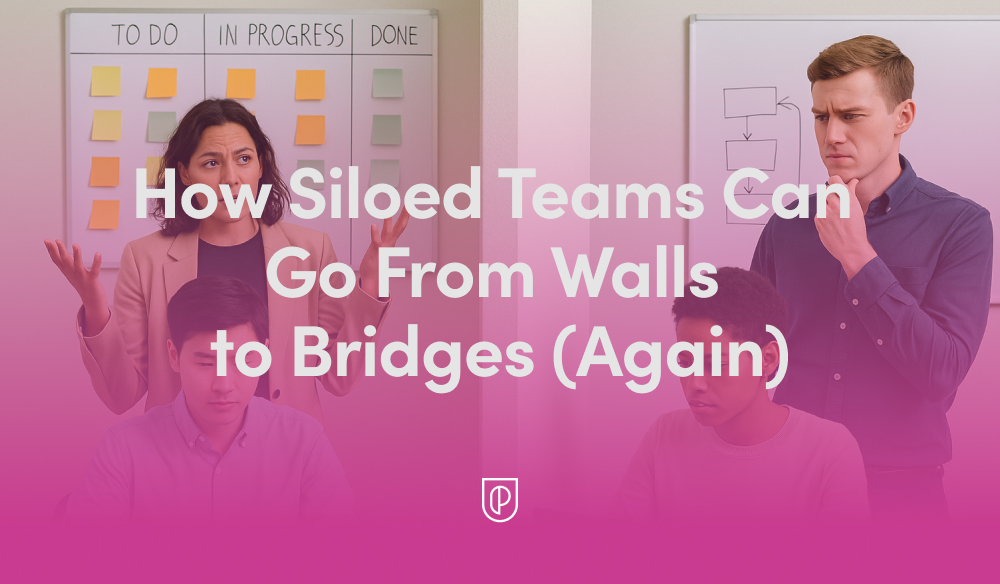
    I’ve seen what happens when talented teams drift into silos: priorities splinter, timelines slip, and what looks like progress turns out to be motion without momentum. My job is to turn those walls into bridges—aligning product, engineering, design, and go-to-market around outcomes that matter to customers and the business.

    For siloed teams, walls go up, and unnecessary work gets done. Learn the signs, the damage, and the way to break free from the illusion of work.

    The signs show up early if you know where to look: duplicated efforts across squads, decision-making that bounces between functions, roadmap debates grounded in opinions rather than data, and “busy” sprints that ship outputs without measurable outcomes. These are classic stakeholder management breakdowns, often masked by perfect decks and full calendars.

    The damage is real. Customers feel friction and inconsistency, product-market fit signals get missed, and we over-invest in features that don’t drive user activation or retention. Morale takes a hit as teams lose the thread of purpose. That’s the “illusion of work” in action—activity that crowds out impact.

    Here’s how I build bridges. First, I organize around empowered product teams and product trios (product, design, engineering) who own customer outcomes, not just velocity. We practice first principles decision making, write decisions down, and align early with adjacent functions so there are no surprises when we move from product discovery to delivery.

    Second, I anchor planning in outcomes vs output OKRs. We commit to a small set of measurable outcomes, then use QBRs vs OKRs cadences to inspect progress, cut scope that doesn’t move the needle, and recalibrate with clarity. This shifts the conversation from “What did we ship?” to “What changed for customers and the business?”

    Third, I make impact measurable and visible. We instrument the funnel end to end, define a minimum detectable effect (MDE) for experiments, and use A/B testing to de-risk bets before we scale them. A unified analytics platform—with Amplitude analytics, Pendo, Intercom, and HubSpot tied back to our CRM integration—keeps everyone looking at the same truth so we can diagnose what’s working and what’s noise.

    Fourth, I bring collaboration into the core rituals: transparent product roadmapping and sprint planning, weekly cross-functional reviews, and fast, lightweight artifacts that clarify hypotheses, success metrics, and trade-offs. By the time we launch, stakeholders already understand the why, the how, and the expected impact.

    If parts of your organization feel stuck, start small: pick one shared outcome, form a cross-functional trio, define your leading indicators, and run one experiment with clear MDE and a two-week readout. The momentum you create will turn walls into bridges—and busywork into business results.


    Inspired by this post on Product School.

    Book a consult png image
  • AI vs. Product Managers by 2035: What Will Change—and How to Future‑Proof Your Career

    AI vs. Product Managers by 2035: What Will Change—and How to Future‑Proof Your Career

    Will AI replace product managers, or simply transform their role? Discover what AI can and cannot do, plus insights from PMs on the future of work.

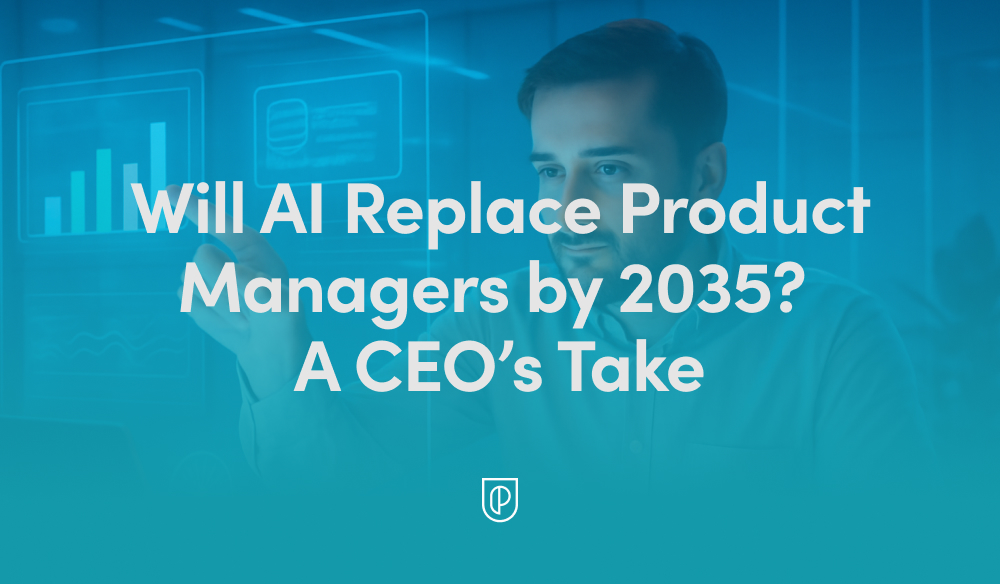
    I’m asked this question in nearly every leadership meeting now, and my answer is consistent: AI won’t replace great product managers by 2035—but it will radically reshape how we operate. The PMs who thrive will pair sharp product judgment with an intentional AI Strategy and a practical AI product toolbox, unlocking speed, clarity, and scale without sacrificing vision.

    Here’s what AI already does well for us today. With LLMs for product managers, I can synthesize customer feedback at scale, draft PRDs and acceptance criteria, transform notes into user stories, and even auto-generate experiment plans with a minimum detectable effect (MDE) calculation. When I connect these models to Amplitude analytics, Pendo, Intercom, and HubSpot through a unified analytics platform and CRM integration, I accelerate discovery, prioritize confidently, and tighten the loop between signal and action. CustomGPT workflows now handle routine backlog grooming, competitive landscaping, and early concept testing, freeing my team to focus on higher-order decisions.

    By 2035, I expect agentic AI to operate as an execution co-pilot: autonomously scheduling A/B testing, launching targeted in-app guides and product tours, monitoring user activation and onboarding funnels, and raising anomalies via Agent Analytics long before a dashboard review. These systems will propose playbooks, draft UX writing and tooltip design, and recommend next-best actions—then wait for human approval when stakes are high. Think of it as the ultimate forward deployed engineer for operational work, working within clear guardrails.

    What AI cannot do—and is unlikely to master soon—is the essence of product leadership. It won’t craft a resonant value proposition for a new segment, define points of parity vs. competitive differentiation, or set outcomes vs output OKRs that align messy stakeholder incentives. It won’t navigate board management, reconcile conflicting narratives from sales and engineering, or make ethically grounded trade-offs under uncertainty. That’s where privacy-by-design, data governance, and AI risk management converge with human judgment, context, and accountability.

    As the tooling matures, the PM role will tilt from artifact production to decision quality. We’ll spend less time writing and more time deciding: which bets to place, which risks to accept, and where to concentrate our empowered product teams. Product discovery deepens, product positioning sharpens, and product roadmapping and sprint planning become faster and more adaptable—because the busywork is handled, not because the thinking is outsourced.

    Practically, I’m evolving team design and rituals now. We operate as product trios, pair PMs with forward deployed engineers, and embed gen ai into daily workflows. We standardize prompts, set review thresholds, and instrument everything for observability. Our stakeholder management improves because we bring clearer narrative artifacts—and because we can test assumptions earlier and share evidence in real time.

    If you’re building your own AI Strategy, start with three tracks. First, foundations: instrument data pipelines, establish data governance, and codify privacy-by-design. Second, acceleration: deploy CustomGPT workflows for research synthesis, PRD drafting, retention analysis, and experiment design, while keeping humans in the loop for decisions. Third, automation with guardrails: let agentic AI run low-risk playbooks (in-app guides, content suggestions, ops checks) and require human approval for anything customer-facing and irreversible.

    Future-proofing your career is about skill stacking. Double down on first principles decision making, storytelling, and cross-functional influence, and pair that with hands-on fluency in gen ai, prompt engineering, model evaluation, and risk controls. Learn how to frame trade-offs, architect outcomes vs output OKRs, and translate strategy into experiments that AI can help execute. The combination—human judgment plus machine speed—is the new competitive advantage.

    So, will AI replace product managers by 2035? No. It will transform average PMs into good ones and great PMs into force multipliers. The ones who lead will embrace AI as leverage, cultivate empowered product teams, and stay relentlessly focused on customer outcomes. The future belongs to product creators who can wield intelligent tools without surrendering accountability for the product’s direction and impact.


    Inspired by this post on Product School.

    Book a consult png image
  • Make Data Work Together: Build a High-Trust, Data-Driven Culture with Amplitude and Slack

    Make Data Work Together: Build a High-Trust, Data-Driven Culture with Amplitude and Slack

    Data collaboration isn’t a tool you buy; it’s a culture you build. In my role leading product teams, I’ve learned that the fastest way to better decisions is aligning on a shared language of metrics and weaving insights into our daily rituals. When we do that well, momentum compounds—roadmaps clarify, stakeholder debates get healthier, and teams ship with confidence.

    Break down data silos and align teams with Amplitude: define shared metrics, share insights in Slack, and build better habits together.

    Here’s how I operationalize that guidance. First, we create a crisp measurement framework—one North Star metric supported by a few input metrics that map to customer value. We document definitions in a living “metrics glossary,” enforce data governance, and design a clean Amplitude taxonomy so events, properties, and user identities are consistent across the product. This is the foundation of a unified analytics platform that everyone can trust.

    Next, we make insights unavoidable. Amplitude dashboards are curated by product trios and subscribed into Slack channels so context meets people where they work. I ask teams to pair charts with a one-paragraph narrative: what changed, why it likely changed, and what we’ll try next. This simple habit closes the loop between analysis and action—and it catalyzes product-led growth.

    We institutionalize these behaviors in our operating cadence. Weekly insights reviews focus on outcomes vs output OKRs. Sprint planning starts with what the data says, not what we wish were true. In QBRs, we connect customer journeys to retention analysis and A/B testing results, making sure tests are designed with an appropriate minimum detectable effect (MDE). Empowered product teams own decisions; stakeholder management shifts from opinion trading to hypothesis testing.

    A few pragmatic enablers make this stick: clean CRM integration to join product usage with lifecycle and segment data; privacy-by-design guardrails; clear ownership for instrumentation; and lightweight documentation that evolves with the product. I also encourage teams to ship in-app guides when we launch a feature so we can measure activation and iterate quickly based on Amplitude analytics.

    The cultural side matters just as much. I celebrate learnings (even when metrics dip) and spotlight teams that translate insights into experiments quickly. Psychological safety unlocks better questions, and better questions unlock better products. Over time, this builds the high-trust environment required for durable, data-informed decision-making.

    If you’re just getting started, pick one product surface and one customer journey. Define the shared metrics, wire up Amplitude, pipe key dashboards into Slack, and run a single, well-powered experiment. You’ll feel the difference in a sprint or two—and you’ll have a repeatable playbook to make data truly work together across your organization.


    Inspired by this post on Amplitude – Best Practices.


    Book a consult png image
  • Turning Community Noise into Action: My Product Lessons from Zencity’s AI That Listens

    Turning Community Noise into Action: My Product Lessons from Zencity’s AI That Listens

    I’m constantly looking for ways to turn messy, multi-source signals into decisions leaders can trust. Recently, I dug into how Zencity powers government decision-making with community voices—and it’s a masterclass in building AI products that are both responsible and useful.

    Noa Reikhav, Head of Product, Zencity; Andrew Therriault, VP of Data Science, Zencity; and Shota Papiashvili, SVP of R&D, Zencity share a comprehensive view of how they designed an AI that listens and acts without sacrificing rigor.

    How do you use AI to help city leaders truly hear their residents?

    I was struck by the clarity of their platform vision—“They share how Zencity brings together survey data, 311 calls, social media, and local news into a unified platform that helps cities understand what people care about—and act on it.” That single line captures the essence of a unified analytics platform done right.

    You’ll hear how the team built their AI assistant and workflow engine by being thoughtful about their data layers, how they combined deterministic systems with LLM-driven synthesis, and how they keep accuracy and trust at the core of every AI decision.

    It’s a fascinating look at how modern AI infrastructure can turn noisy, messy civic data into clear, actionable insight.

    Here are the takeaways that resonated with me most, and they align closely with how I approach AI Strategy and product management leadership. Data architecture defines what AI can do. Guardrails and transparency matter more than flashy outputs. Agentic systems become powerful when grounded in real, multi-tenant data. AI in the public sector can make democracy more responsive—if built responsibly.

    The team’s layered data model is the backbone that enables trustworthy synthesis: raw data → elements → highlights → insights → briefs. As a product leader, I love how each layer introduces meaning and structure while preserving traceability. It’s the difference between a demo-friendly prototype and a durable platform.

    Why context is everything when building AI for civic use. That’s not a platitude—it’s a requirement. Community conversations are hyper-local, emotionally charged, and policy-laden. Without context and rigorous data governance, you risk misclassification, bias, and broken trust.

    How the team designed their AI assistant using MCP servers to safely negotiate data access. This is a smart pattern for privacy-by-design: let the assistant request access, let the system adjudicate, and make the boundary explicit and auditable. In multi-tenant environments, that clarity is the difference between scaling confidently and shipping risk.

    Balancing agentic flexibility with deterministic trust. I’ve found this to be the most practical framing for real-world agentic AI: give the system room to explore, but bind its outputs to deterministic rails where it matters—taxonomy, citations, permissions, and evaluation criteria.

    Evaluating accuracy when latency matters: how they think about evals, citations, and model-as-judge systems. I appreciate the pragmatism here. In production, you don’t have the luxury of slow truth-finding. You need tight feedback loops, interpretable citations, and layered evals to keep both precision and speed.

    Using workflows like annual budgeting or crisis communication to deliver AI-generated briefs to the right people at the right time. This is where product-market fit shows up: not in features, but in end-to-end workflows aligned to real decision cycles and stakeholders.

    Why government workflows are the ultimate “jobs to be done” framework. When the job is a public process—with deadlines, accountability, and high scrutiny—you don’t just need insights; you need timely, contextualized briefs that match the cadence of the work.

    From my lens, the magic isn’t any single model. It’s the orchestration: deterministic systems with LLM-driven synthesis, strong guardrails, transparent citations, and an orchestration layer that routes the right brief to the right role at the right moment. That’s how you turn community noise into legitimate signal—and signal into action.

    If you’re building AI for regulated, high-stakes environments, take note: invest in your data layers, make context a first-class citizen, embrace privacy-by-design with clear access negotiation, and treat evaluation as a living system. Do that, and you’ll earn the trust that makes your AI assistant—and your organization—indispensable.


    Inspired by this post on Product Talk.


    Book a consult png image
  • Urgent Alert: Spot Fraudulent Job Offers Impersonating Pendo—and Protect Your Career

    Urgent Alert: Spot Fraudulent Job Offers Impersonating Pendo—and Protect Your Career

    In my role leading product management, I take brand trust and cybersecurity seriously—especially when it affects people’s livelihoods. Over the past few weeks, I’ve seen a troubling uptick in brand impersonation and social engineering targeting candidates. It’s a reminder that protecting our community isn’t just a technical problem; it’s a product management leadership and stakeholder management responsibility.

    We want to warn you about recent instances of fraudulent job offers purporting to be from Pendo and/or its affiliate companies.

    If you receive an unexpected outreach claiming to be from Pendo with a fast-track offer, requests for payment, or a push to move conversations to informal channels, treat it as a red flag. Scammers often spoof logos, clone profiles, and use vague role descriptions to create urgency. Their goal is to extract personal data, money, or access—classic social engineering tactics that undermine data governance and privacy-by-design principles.

    Here’s how I advise candidates to protect themselves while keeping their job search momentum. Validate every opportunity through the company’s official careers page and confirm the recruiter’s identity through corporate channels. Check that email addresses and domains match publicly listed corporate information, and be wary of communication conducted exclusively through messaging apps. Never pay fees, buy equipment up front, or share sensitive data like Social Security numbers or banking information before a formal, verified offer is in place.

    If something feels off, pause and verify. Contact the company via the channels listed on its website, ask for a video meeting with the recruiter using an official corporate account, and request written details on the role and interview process. If it’s fraudulent, report it to the company, the platform where the outreach occurred, and—when appropriate—local authorities. Acting quickly helps with threat detection and response and protects other candidates from harm.

    From a product and security perspective, this is a cross-functional issue that benefits from AI risk management discipline. Strong signals include clear public guidance on recruiting practices, a dedicated reporting mailbox for suspected scams, and hardened email authentication (SPF, DKIM, DMARC). Pair these with privacy-by-design reviews for hiring workflows, recruiter verification checklists, and ongoing education for talent teams. These measures reduce attack surface while reinforcing brand integrity.

    If you believe you’ve shared information with a fraudulent recruiter, take immediate steps: change any reused passwords, enable two-factor authentication, place fraud alerts or freezes with credit bureaus as appropriate, and monitor accounts for suspicious activity. Document all communications; they can help security teams and platforms act faster.

    Recruitment fraud is emotionally taxing and can erode confidence in the process. Don’t let scammers slow your momentum. Stay vigilant, verify before you trust, and share this warning so others can avoid similar traps. If you’re ever unsure about a message that appears to come from Pendo, pause, validate through official channels, and prioritize your safety first.


    Inspired by this post on Pendo – Best Practices.


    Book a consult png image
  • The Only 3 Dashboards Product Executives Actually Use to Drive Outcomes, Alignment, and Growth

    The Only 3 Dashboards Product Executives Actually Use to Drive Outcomes, Alignment, and Growth

    I’ve learned the hard way that more charts don’t equal more clarity. One challenge that comes with this is knowing what matters at the right level of leadership. Executives everywhere are busy, and they don’t need the nitty-gritty details to do their jobs well. When I’m operating at the VP level, I rely on just three dashboards that give me fast signal, reduce noise, and keep teams aligned to outcomes—not output.

    These dashboards sit on top of a unified analytics platform that connects product analytics (Amplitude analytics or Pendo), CRM and revenue data (e.g., HubSpot), billing, and support signals. Consistent definitions, data governance, and outcomes vs output OKRs ensure we’re making decisions with confidence, not gut feel. The goal is simple: a shared, executive-ready view that ties product strategy to business impact.

    Dashboard 1: Outcomes and Strategy Alignment. This is the north star view I use to orient the company. It highlights ARR, NRR, and GRR trends; progress against our outcomes vs output OKRs; our product-led growth funnel; and our primary value proposition metric (e.g., activation-to-time-to-value). I include a 12-month view with quarter-over-quarter deltas, a short written narrative, and the top three strategic bets we’re funding. In board management and QBRs vs OKRs discussions, this keeps focus on what we achieved, what moved, and what we’re changing next.

    Dashboard 2: Customer Value, Adoption, and Retention. This is where retention analysis meets product discovery. I track activation rate, time-to-value, feature adoption cohorts (from Amplitude analytics or Pendo), retention curves by segment, and expansion vs contraction signals. Leading indicators include NPS and CES alongside qualitative themes from support and sales. I also monitor funnel drop-offs and in-app guides or product tours performance to see where users get stuck. The intent is to connect behavior to revenue so we can prioritize changes that actually improve customer outcomes.

    Dashboard 3: Execution Health and Quality. This helps me assess whether our operating system is working. I look at delivery predictability against product roadmapping and sprint planning, cycle time and throughput, escaped defects, incident volume, and MTTR. I also review experiment velocity and A/B testing readiness (including minimum detectable effect) to ensure we’re learning at pace. Resource allocation across strategic initiatives and a clear risk register support proactive stakeholder management.

    I review these dashboards weekly with my product trios and monthly with cross-functional leaders, then synthesize a concise narrative for the executive team and the board. Each dashboard is a decision engine: it has an owner, a single source of truth, clear thresholds, and a list of next actions. By grounding conversations in the same views, we reduce back-and-forth and keep momentum high.

    A few implementation rules have served me well: keep the signal dense and the visuals simple; lock metric definitions and ownership; avoid vanity metrics; and instrument privacy-by-design from the start. When data is trustworthy and the story is tight, teams focus on the right problems and progress compounds.

    If you find yourself wading through dozens of reports, try consolidating to these three executive dashboards. You’ll spend less time arguing about the data and more time driving product-led growth, accelerating alignment, and delivering customer value at scale.


    Inspired by this post on Pendo – Best Practices.


    Book a consult png image
  • Urgent Alert: Spot Fraudulent Job Offers Impersonating Pendo—and Protect Your Career

    Urgent Alert: Spot Fraudulent Job Offers Impersonating Pendo—and Protect Your Career

    In my role leading product management, I take brand trust and cybersecurity seriously—especially when it affects people’s livelihoods. Over the past few weeks, I’ve seen a troubling uptick in brand impersonation and social engineering targeting candidates. It’s a reminder that protecting our community isn’t just a technical problem; it’s a product management leadership and stakeholder management responsibility.

    We want to warn you about recent instances of fraudulent job offers purporting to be from Pendo and/or its affiliate companies.

    If you receive an unexpected outreach claiming to be from Pendo with a fast-track offer, requests for payment, or a push to move conversations to informal channels, treat it as a red flag. Scammers often spoof logos, clone profiles, and use vague role descriptions to create urgency. Their goal is to extract personal data, money, or access—classic social engineering tactics that undermine data governance and privacy-by-design principles.

    Here’s how I advise candidates to protect themselves while keeping their job search momentum. Validate every opportunity through the company’s official careers page and confirm the recruiter’s identity through corporate channels. Check that email addresses and domains match publicly listed corporate information, and be wary of communication conducted exclusively through messaging apps. Never pay fees, buy equipment up front, or share sensitive data like Social Security numbers or banking information before a formal, verified offer is in place.

    If something feels off, pause and verify. Contact the company via the channels listed on its website, ask for a video meeting with the recruiter using an official corporate account, and request written details on the role and interview process. If it’s fraudulent, report it to the company, the platform where the outreach occurred, and—when appropriate—local authorities. Acting quickly helps with threat detection and response and protects other candidates from harm.

    From a product and security perspective, this is a cross-functional issue that benefits from AI risk management discipline. Strong signals include clear public guidance on recruiting practices, a dedicated reporting mailbox for suspected scams, and hardened email authentication (SPF, DKIM, DMARC). Pair these with privacy-by-design reviews for hiring workflows, recruiter verification checklists, and ongoing education for talent teams. These measures reduce attack surface while reinforcing brand integrity.

    If you believe you’ve shared information with a fraudulent recruiter, take immediate steps: change any reused passwords, enable two-factor authentication, place fraud alerts or freezes with credit bureaus as appropriate, and monitor accounts for suspicious activity. Document all communications; they can help security teams and platforms act faster.

    Recruitment fraud is emotionally taxing and can erode confidence in the process. Don’t let scammers slow your momentum. Stay vigilant, verify before you trust, and share this warning so others can avoid similar traps. If you’re ever unsure about a message that appears to come from Pendo, pause, validate through official channels, and prioritize your safety first.


    Inspired by this post on Pendo – Perspectives.


    Book a consult png image
  • 3 Powerful Ways AI Is Reshaping Cybersecurity—from Ruthless Attacks to Rapid Defense

    Every week, I watch the cybersecurity landscape bend under the pressure of AI. The pace isn’t linear—it’s compounding. What worked for IT teams last quarter often needs a rethink today, and the difference between merely coping and truly competing lies in how quickly we adapt our strategy, tooling, and operating rhythms.

    Learn the ways in which AI is transforming both cybersecurity offense and defense for IT teams.

    From my vantage point leading product strategy, I see three shifts that matter most right now: AI is supercharging attackers, accelerating defenders, and reshaping governance. Together, they redefine how we prioritize investments, measure risk, and align product and security roadmaps.

    First, AI has leveled up the offense. Large language models can industrialize social engineering—hyper-personalized spear-phishing at scale, deepfake voice notes that spoof executives, and highly convincing support chats that trick users into bypassing controls. Code-generation tools lower the barrier to crafting polymorphic malware and automating reconnaissance. The net effect is ruthless efficiency: more credible lures, faster campaigns, and broader reach with fewer human operators. I now assume adversaries have an AI co-pilot—and plan defenses accordingly.

    Second, AI is accelerating the defense. Modern detection and response stacks are moving beyond rules to behavioral analytics—correlating identity signals, endpoint telemetry, and network events to spot subtle anomalies that signature-based tools miss. Copilot-style assistants are augmenting SecOps by summarizing incidents, explaining probable root cause, and proposing next steps. The aim isn’t blind automation; it’s decision acceleration—shrinking mean time to detect and respond while reducing analyst toil. On the build side, AI-assisted code scanning and dependency analysis help teams shift security left, catching vulnerabilities earlier and turning secure defaults into muscle memory.

    Third, governance is being rewritten in real time. As AI models ingest sensitive data and generate code and content, data governance and privacy-by-design move from compliance checklists to active risk management. We’re formalizing AI risk management alongside traditional AppSec: model inventories, usage policies, red-teaming prompts, and guardrails against prompt injection and data leakage. Identity remains the control plane—zero trust principles, least privilege, and continuous verification become nonnegotiable. I’ve found that aligning security, product, and IT leadership on a single policy-as-code backbone prevents drift and keeps audits predictable.

    Practically, I guide teams to start with a crown-jewel inventory: What data and systems would materially impact customers, revenue, or brand if compromised? Map data flows, instrument comprehensive telemetry, and prioritize detection coverage where it matters most. Choose AI to augment before you automate—prove the loop with humans in the middle, then graduate to higher autonomy levels with clear rollback paths and audit logs.

    Culturally, this is a product problem as much as a security one. We bring empowered product teams and SecOps into the same room, set measurable objectives (signal-to-noise ratio, mean time to contain, escaped defect rate), and iterate with the same cadence we use for product features. When security outcomes are treated as customer outcomes, adoption soars and friction recedes.

    The takeaway: AI has tilted the field, but not inevitably against defenders. With a clear AI strategy, disciplined data governance, and pragmatic automation, IT leaders can turn reactive security into a proactive advantage—meeting attackers’ speed with speed, and outlasting them with better judgment.


    Inspired by this post on Pendo – Perspectives.


    Book a consult png image
  • 5 powerful reasons I can’t wait for INDUSTRY 2025: The Product Conference to supercharge strategy

    5 powerful reasons I can’t wait for INDUSTRY 2025: The Product Conference to supercharge strategy

    I’m gearing up for INDUSTRY 2025: The Product Conference in Cleveland, Ohio, and I can already feel the energy that comes when the brightest product minds gather. As someone who lives at the intersection of product management leadership, execution discipline, and customer-centric innovation, this event is where I refine my craft and pressure-test my roadmap against the best.

    Join Pendo at INDUSTRY in Cleveland, Ohio.

    Reason 1: Elevate strategy from outputs to outcomes. I’m looking forward to sharpening how we align outcomes vs output OKRs with product roadmapping and sprint planning. INDUSTRY consistently surfaces practical frameworks to translate vision into measurable value—exactly what empowered product teams need to prioritize with confidence and communicate trade-offs to stakeholders.

    Reason 2: Deepen discovery with data that actually drives decisions. I plan to compare notes on product discovery techniques that blend qual and quant—pairing interviews with a unified analytics platform, retention analysis, and a clear minimum detectable effect (MDE) to validate signal. The bar keeps rising on evidence-based decisions, and I’m eager to bring back new ways to reduce bias while accelerating learning.

    Reason 3: Double down on product-led growth. From onboarding to activation, I’m focused on refining in-app guides and product tours that meet users at the moment of need. INDUSTRY is a great place to trade patterns for scalable, context-aware experiences that convert, retain, and expand without adding friction—fueling a durable product-led growth motion.

    Reason 4: Build a responsible, practical AI Strategy. The conversations around gen ai for product prototyping, agentic AI, data governance, and privacy-by-design are evolving fast. I’m excited to learn how teams are balancing speed with AI risk management—turning experimentation into real features while protecting customers and preserving trust.

    Reason 5: Level up leadership and influence. Product management leadership is as much about people as it is about prioritization. I’m excited to trade tactics on stakeholder management, strengthening product trios, and growing ICs through the IC to manager transition. These are the muscles that turn strategy into momentum.

    Between keynotes, hallway conversations, and hands-on sessions, I plan to leave Cleveland with fresh approaches to discovery, clearer OKR alignment, and new ideas to operationalize PLG at scale. If you’re passionate about building products that customers love—and businesses rely on—let’s connect and compare notes on what’s working now.

    I’ll share my takeaways after the conference, including actionable frameworks, templates, and experiments to run with your teams the very next sprint. If you see me in a session on analytics, onboarding, or AI, say hello—I’m always up for a quick debrief and a few what-would-it-take questions.


    Inspired by this post on Pendo – Perspectives.


    Book a consult png image
  • 4 Hidden AI Risks Every CIO Must Tackle Now—and a Proven Playbook to Mitigate Them

    4 Hidden AI Risks Every CIO Must Tackle Now—and a Proven Playbook to Mitigate Them

    Across enterprises, I’m watching AI sprint from lab experiments to business-critical workflows. That velocity is exciting—and it’s also where risk compounds. In my role partnering with CIOs and IT leadership, I’ve learned that winning with AI is as much about disciplined risk management as it is about breakthrough use cases.

    Learn about the risks that AI poses to IT teams, and how they can mitigate them.

    I frame the challenge as “4 AI risks for CIOs (and a guide to solve them)”: data governance and compliance, model reliability and bias, security and supply chain exposure, and operational cost/ROI drift. Below, I outline the risks I see most often and the concrete actions I take to de-risk them without slowing innovation.

    Risk 1: Data governance and compliance. The fastest way to stall an AI Strategy is to overlook consent, lineage, and access controls. I establish privacy-by-design from day one: data minimization, clear retention policies, role-based access control, and auditable logs for training, inference, and feedback loops. I also insist on defensible vendor reviews (DPA, SOC2/ISO, regional data residency), PII classification, and internal model cards that document sources, sensitivities, and acceptable-use constraints. This makes IT leadership comfortable scaling from prototype to production.

    Risk 2: Model reliability, hallucinations, and bias. AI that fabricates or skews output erodes trust and creates downstream risk. I operationalize quality with evaluation harnesses, golden datasets, human-in-the-loop review for high-impact actions, and red-teaming for safety. Retrieval-augmented generation with citations, content filters, and grounded prompts reduce error rates. To quantify progress, I define precision/recall targets and a minimum detectable effect (MDE) for experiments so we know when a change is truly better—not just different.

    Risk 3: Security and AI supply chain. New surface area invites prompt injection, data exfiltration, and compromised dependencies. I apply zero-trust principles: strict allow/deny lists for tools and connectors, secrets isolation, egress controls, sandboxed environments for agents, and output validation before execution. Every model and plugin goes through threat modeling, dependency scanning, and vendor security reviews. For agentic AI patterns, I gate high-risk actions behind explicit approvals and granular scopes.

    Risk 4: Operational cost and ROI drift. AI workloads can balloon with hidden inference costs, shadow IT, and duplicated platforms. I put governance around spend using consumption SaaS pricing guardrails, usage caps by environment, tagging by app/team, and a unified analytics platform to monitor latency, quality, and cost per transaction. This lets me reallocate budget toward the highest-impact use cases while sunsetting low-yield experiments.

    Your 90-day playbook. Days 0–30: Inventory AI use cases, classify data sensitivity, choose one or two critical business workflows, and stand up core guardrails (access, audit, red-teaming). Days 31–60: Pilot with a cross-functional product trio (PM, design, engineering), define OKRs, instrument evaluations, and enable human-in-the-loop. Days 61–90: Productionize the winning flow, set usage and spend policies, enable observability dashboards, and roll out training for frontline teams with clear escalation paths.

    The organizational layer matters as much as the technical one. I align stakeholders early, empower product trios to iterate quickly within boundaries, and deploy forward deployed engineers to embed with the business. This keeps trust high, reduces handoffs, and ensures that governance accelerates value rather than blocking it.

    Done well, these practices turn AI risk into a competitive moat. By pairing disciplined governance with pragmatic experimentation, we capture the upside of gen ai while protecting customers, teams, and the business. That’s how I’ve helped enterprises move from scattered pilots to measurable, scalable impact—safely.


    Inspired by this post on Pendo – Perspectives.


    Book a consult png image